What would a new Israeli government mean for Arab neighbors? More of the same is expected, with some small positives predicted.

Read the original at Deutsche Welle ↗
Cite

Schaer, C. (2026, October 28). What would a new Israeli government mean for Arab neighbors? More of the same is expected, with some small positives predicted. Deutsche Welle. https://www.dw.com/en/what-would-a-new-israeli-government-mean-for-arab-neighbors-more-of-the-same-is-expected-with-some-small-positives-predicted/a-79788174?maca=en-rss-en-world-4025-rdf

Dated from the outlet's own feed. Check the original for its byline.

Deutsche Welle · collected 2026-10-28 · by Cathrin Schaer

Quick Summary

Israeli politicians are attempting to form a coalition government following an inconclusive election. Arab neighbors have remained largely silent regarding the potential outcomes, anticipating that regardless of whether Netanyahu or his opponents form the new government, there will be minimal changes in foreign policy and relations with neighboring countries like Syria, Lebanon, Jordan, Egypt, and Gulf states. Observers predict continuity in policies toward Palestinians as well, given the widespread rejection of a two-state solution across most Jewish Israeli parties. Analyst Beth Oppenheim notes that while domestic policies might shift slightly—such as halting judicial reforms or addressing conscription issues—foreign policy is expected to remain largely unchanged due to a consensus among major political factions on security doctrine and territorial control.
Written locally by qwen2.5:14b on 2026-10-28, using this article's own text rather than the other coverage of the same event (that is the story summary below).

AI analysis runs on qwen2.5:14b, locally

Story summary

As Israeli politicians begin forming a coalition government following an inconclusive election, reactions from surrounding Arab countries have been minimal. The outcome is unclear regarding whether the new government will continue with Prime Minister Benjamin Netanyahu’s policies or adopt a more moderate approach under his opponents. Most analysts predict that Israel's foreign relations with neighboring countries like Syria, Lebanon, Jordan, and Egypt, as well as Gulf states, will remain largely unchanged. Similarly, there is little expectation of significant shifts in Israeli policy toward Palestinians, an issue deeply concerning to Arab populations in the region.

Egyptian politician Mostafa Bakry suggested on X that both Netanyahu and his main opponent Gadi Eisenkot represent similar ideologies: "Arab joy at Netanyahu’s fall may be premature."

Written for “New Israeli Government Prospects” on 2026-10-28, grounded in this article and the 0 other(s) covering the same event.
Why this leaning score
The model judged this article politically coded and scored it +0.50, but 1 quote(s) could not be found in the article and the other 2 are attributed speech rather than the article's own narration, so the score is not published.
Written under an earlier scoring contract, which gave a paragraph rather than checkable quotes. Re-analysing this article replaces it.
Leaning score withheld for article 112351: no verified evidence · logged 2026-10-28

Story

📰 New Israeli Government Prospects
Politics · 1 article(s) covering the same event.

Compared with similar articles

This article reads unscored and hedges 21% of its claims. Each row says how that neighbour differs.
CBS News
⚖️ Leans strongly right 🔴 18% hedged 10 of 57 📰 publisher trust 66
“The articles discuss different aspects of Israel's political situation: Article A focuses on the election and its potential outcome, while Article B discusses reactions from Arab neighbors after an inconclusive election result.”
South China Morning Post
⚖️ leaning not scored 🔴 33% hedged 1 of 3 📰 publisher trust 64
“Article A describes the ongoing suspense and uncertainty following an election due to no clear winner. Article B discusses potential reactions from Arab neighbors after Israeli politicians begin trying to form a government, implying a later phase of the political process.”
Al Jazeera
⚖️ Leans left 🔴 32% hedged 12 of 38 📰 publisher trust 60
“The articles discuss different stages of the political process in Israel - one focuses on the election itself and its immediate aftermath, while the other discusses the potential implications after an unclear winner emerges.”
Al Jazeera
⚖️ Leans strongly left 🔴 9% hedged 3 of 32 📰 publisher trust 60
“The articles discuss similar themes but refer to different points in time regarding Israel's political situation and its impact on Lebanon.”
Al Jazeera
⚖️ Leans left 🔴 33% hedged 12 of 36 📰 publisher trust 60
“The articles discuss different aspects of Israeli politics related to elections but do not describe the same specific incident or occurrence.”
Al Jazeera
⚖️ Leans left 🔴 0% hedged 0 of 5 📰 publisher trust 60
“While both articles discuss Israeli elections and potential policies, they describe different aspects of the same broader context and are not reporting on a single specific incident.”
A guide to Israel’s elections different event · 85%
The Hindu
⚖️ Leans left 🔴 8% hedged 4 of 49 📰 publisher trust 78
“Article A discusses the upcoming election on October 27, while Article B covers the aftermath and formation of a coalition government post-election, indicating they describe different phases of the broader process.”
The Guardian
⚖️ Leans left 🔴 15% hedged 5 of 33 📰 publisher trust 66
“The articles discuss different aspects of the political situation in Israel following an election but do not describe the same specific incident or occurrence.”
The Straits Times
⚖️ Leans left 🔴 11% hedged 3 of 27 📰 publisher trust 68
“The articles discuss Israel's election and its potential impact on neighboring Arab countries, but they do not describe the identical incident or occurrence.”
How this article was measured signals, leaning charts, publisher record, byline, topics and claims

Signals How these are calculated →

Claims extracted
43
sentences that state something as happening or true
Uncertain
21%
9 of 43 hedged ("reportedly", "may", "according to")
Leaning
withheld
no quote in the article backed the model's score
Publisher signals
95/100
Deutsche Welle's corrections and hedging, across everything collected from it. Not a measure of accuracy.
Outlets on this story
1
Politics
Same framing elsewhere
1
articles that frame the event the way this one does
Analyzed 2026-10-28 · how these are computed

How this is being covered How these are calculated →

Article leaning vs. publisher reliability
Source leaning vs. consistency

Publisher

Deutsche Welle · 529 article(s) · 0 correction(s) detected
No corrections detected for this publisher. That may mean careful reporting, or simply that nothing has been checked.

Who wrote this

Cathrin Schaer
10 article(s) here · 1 carrying a prediction
🔮 This may be because, for the time being anyway, it remains unclear as to whether the new Israeli government will continue with "business as usual" under incumbent Prime Minister Benjamin Netanyahu or whether a new government headed by Netanyahu's opponents will take what is expected to be a more moderate domestic course.
🔮 These new policies could derail Najab's plans.
2026-10-26 · assertive framing · A bad omen? Syria bans women from university courses
🔮 human military analysts would have had to look at a wide array of different sources to try to find those, the CSIS researchers wrote.
🔮 After the announcement that Morocco would appoint its first female head of government – Marrakech mayor Fatima Zahra Mansouri – citizens interviewed by local television reporters were mostly enthusiastic.
🔮 There are regular reports about billion-dollar, international investments and projects and, speaking at the Arab Media Summit in Dubai on Tuesday, Syrian President Ahmad al-Sharaa predicted Syria's economy would be worth around $50 billion (approx. €44 billion) this year, up from around $20 billion in 2024.
2026-09-23 · assertive framing · Is Syria's 'new' economy for the rich only?
🔮 And the Houthis now appear to be doing things that Hezbollah couldn't — for example, bringing down a Saudi F-15 fighter jet this week using a missile the group said it modified itself.
2026-09-20 · assertive framing · Yemeni militants: How powerful are the Houthis now?
🔮 And the Houthis now appear to be doing things that Hezbollah couldn't — for example, bringing down a Saudi F-15 fighter jet this week using a missile the group said it modified itself.
🔮 If you don't, maybe we will take her to the house of the sisters,"
2026-09-09 · assertive framing · Syria: How the 'house of sisters' threat split society
🔮 A spokesperson sent DW a statement similar to one previously sent to other media outlets and human rights organizations that said Israel detains Syrians that it suspects might wish it harm.
2026-08-21 · assertive framing · Why is Israel's military presence growing in Syria?
🔮 In July, authorities in the United Arab Emirates made a headline-grabbing offer: If UAE residents could entice visitors there between July and October this year, the residents would qualify for a package of perks worth around $800.
2026-08-18 · assertive framing · UAE economy: On the brink or bouncing back?
Also by Cathrin Schaer
Is Syria's 'new' economy for the rich only?
2026-09-23 · Deutsche Welle
Nothing else under this byline is closely related to this article, so these are simply their most recent.
All 10 articles by Cathrin Schaer →

Topics

Arab Israel Israeli Jewish Palestinian

Subjects

Israel GPE · 7× Netanyahu PERSON · 7× Israeli NORP · 6× Arab NORP · 5× Palestinian NORP · 5× Eisenkot PERSON · 4× Jewish NORP · 3× Gaza GPE · 2× Oppenheim PERSON · 2× Palestinians NORP · 2×

Narrative

Palestinian Territories: No two-state solution One of the election campaign posters for Netanyahu's Likud party bore a stark message — "The right or Palestine" — the message being that if voters did not choose Netanyahu and his right-wing allies, his opponents would be too accommodating toward Israel's Arab-led political parties and would be open to the establishment of a Palestinian state.
framing: mixed · carried by 1 article(s) · first seen 2026-10-28
🔮 This may be because, for the time being anyway, it remains unclear as to whether the new Israeli government will continue with "business as usual" under incumbent Prime Minister Benjamin Netanyahu or whether a new government headed by Netanyahu's opponents will take what is expected to be a more moderate domestic course.

Claims (43 extracted, 9 hedged)

As Israeli politicians begin to try to build a coalition government, after an election that saw no clear winner, response from politicians in surrounding Arab countries has been muted or non-existent. asserted
response → begin → countries
This may be because, for the time being anyway, it remains unclear as to whether the new Israeli government will continue with "business as usual" under incumbent Prime Minister Benjamin Netanyahu or whether a new government headed by Netanyahu's opponents will take what is expected to be a more moderate domestic course. uncertain
what → remain → opponents
Nor is it likely to produce very different policies toward Palestinians, which many Arab populations in the region feel strongly about. asserted
populations → produce → region
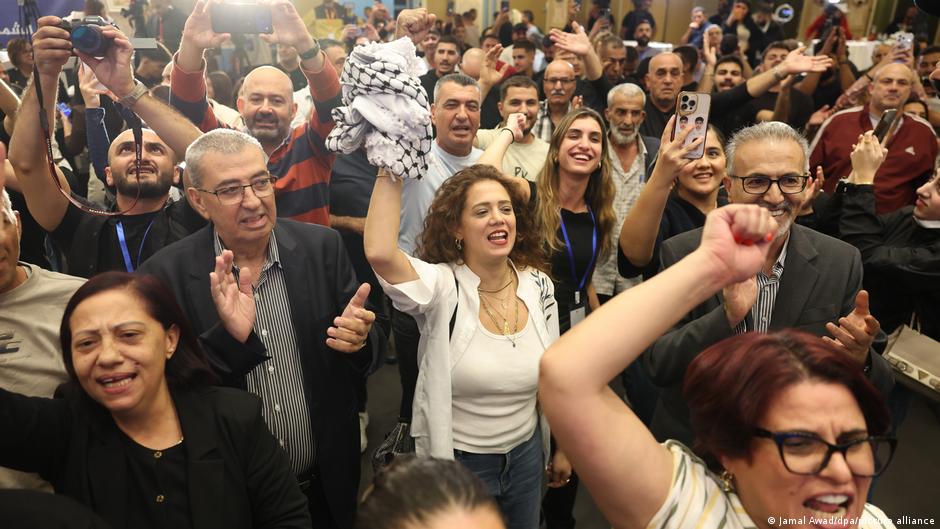
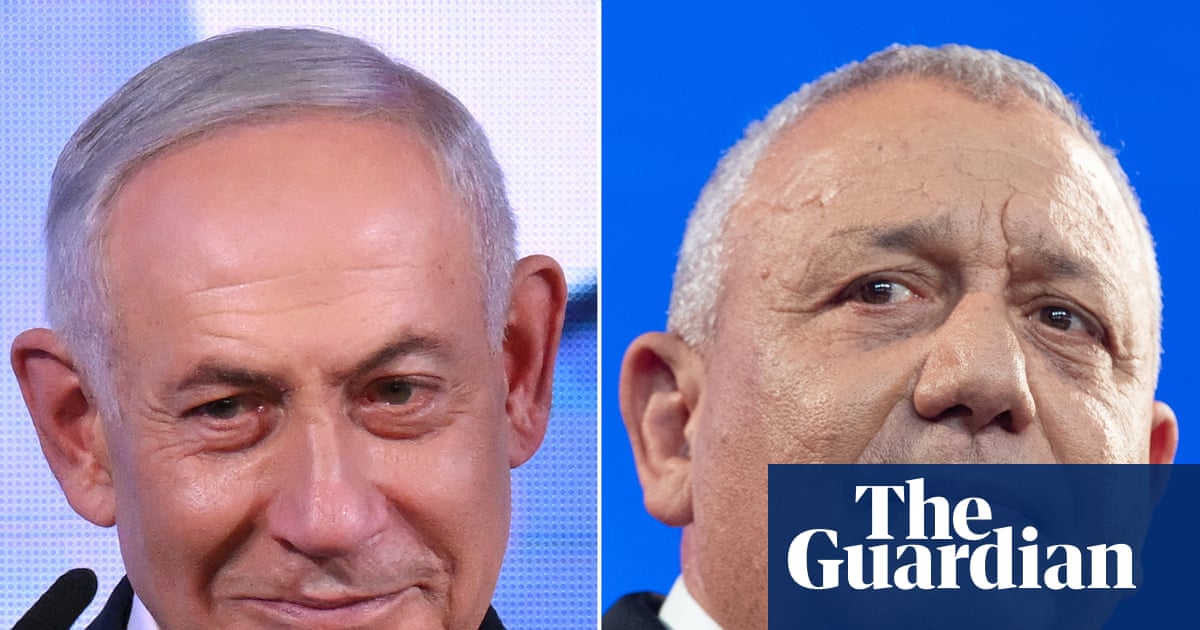
Both Netanyahu and his main opponent Gadi Eisenkot "are two sides of the same coin," Egyptian politician Mostafa Bakry wrote on X after exit polls seemed to indicate an Eisenkot victory (something that's increasingly contested) and Israeli-Arab parties had displaced Netanyahu's far-right allies. asserted
parties → write → allies
"Arab joy at Netanyahu's near-failure to form the government does not mean that what is to come … differs greatly from his predecessor." asserted
is → form → predecessor
"An Eisenkot government would likely be politically fragile, limiting its room for maneuver," Beth Oppenheim, a policy fellow in the Middle East and North Africa program at the European Council on Foreign Relations, wrote in a commentary last week. asserted
Oppenheim → limit → commentary
"The biggest differences from the current government would be at home: It would halt the judicial overhaul, open a state commission of inquiry into October 7th and pass a conscription law." However, Oppenheim explained, "when it comes to foreign policy, there would not be a fundamental transformation. asserted
it → halt → policy
Netanyahu's post-October 7th security doctrine — pre-empting threats, operating far beyond Israel's borders and holding 'buffer zones' in neighboring territories — has been embraced by nearly all Jewish Israeli parties." asserted
doctrine → pre → parties
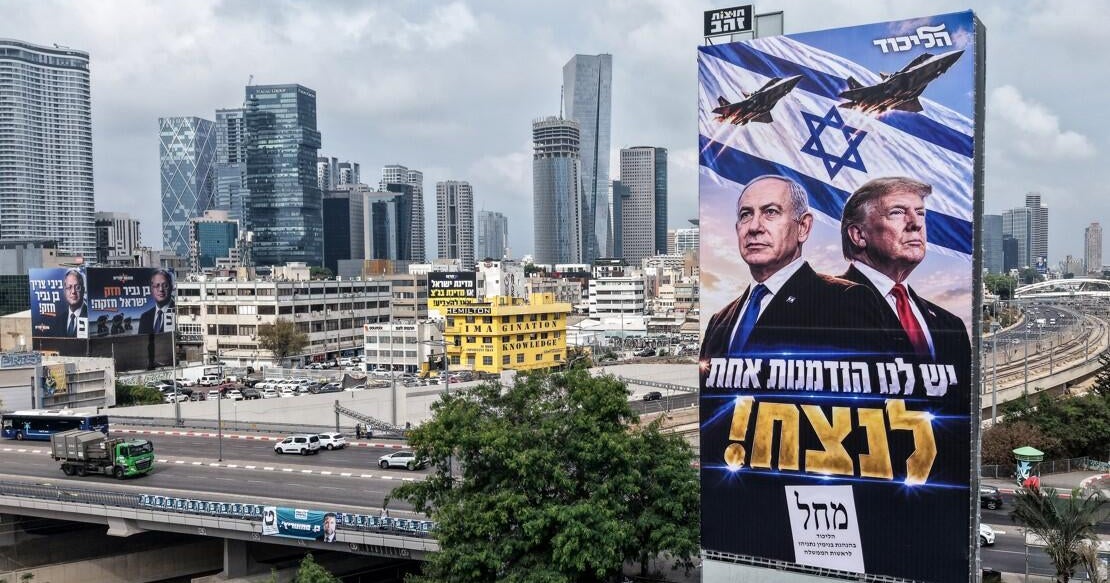
Palestinian Territories: No two-state solution One of the election campaign posters for Netanyahu's Likud party bore a stark message — "The right or Palestine" — the message being that if voters did not choose Netanyahu and his right-wing allies, his opponents would be too accommodating toward Israel's Arab-led political parties and would be open to the establishment of a Palestinian state. asserted
opponents → bear → state
But observers believe that message is exaggerated, and that the two-state solution is already dead. asserted
solution → believe → ?
"Support for Palestinian statehood has collapsed across most of the Jewish political spectrum, and permanent Israeli control over Palestinians has become normalized," Oppenheim pointed out. asserted
Oppenheim → collapse → Palestinians
With the exception of one party, "all mainstream Jewish parties support, or at least acquiesce in, the settlement enterprise in some form and publicly oppose a Palestinian state on the 1967 lines. asserted
parties → support → lines
In August this year, Eisenkot himself said that, "there is no Palestinian state, and no Palestinian state will be established under the government we form." asserted
we → say → government
An Eisenkot-led government would, however, cooperate with more left-wing Israeli parties, which have previously supported a two-state solution. asserted
which → lead → solution
Any new coalition may also need the backing of Israel's Arab-led parties, who are currently thought to have increased their seats in parliament to around 19. uncertain
who → need → 19
But as Mairav Zonszein, senior Israel analyst at the International Crisis Group, told the news agency Associated Press this week, "At best, [a new government] would be able to slow down the extremely crazy acceleration that we've seen in the last four years of every aspect of Israel's aggression in the occupied territories and inside Israel itself. asserted
we → tell → Israel
A less extreme government would tone down religious messaging, might be less demanding when it came to conditions on disarming Hamas in Gaza, and could potentially move forward with the next stage of the Gaza ceasefire, agreed to in late 2025, but barely implemented. uncertain
it → tone → 2025
It might also do more to contain settler violence in the West Bank. uncertain
It → do → Bank
"That's because [settler extremism] is a phenomenon that doesn't enjoy the support of the majority of Israelis, damages Israel's international reputation, and suppressing it is feasible," Elizabeth Tsurkov, a senior fellow at the Washington-based think tank, the Middle East Policy Council, explained on social media. asserted
Tsurkov → enjoy → media
"[A new Israeli government] would keep expanding the settlements and Palestinian statehood would remain taboo," Oppenheim wrote. asserted
Oppenheim → keep → settlements
"Without a diplomatic track with the Palestinians, further flare-ups of violence in the West Bank and Gaza are inevitable, destabilizing the region — and normalization with Saudi Arabia will remain off the table. asserted
normalization → destabilize → table
" Saudi Arabia: Could anti-Netanyahu bloc bring normalization? uncertain
bloc → bring → normalization
After the October 7, 2023, attack on Israel by Hamas and Israel's ensuing military campaign, which has resulted in at least 70,000 Palestinians killed and Gaza devastated, Saudi Arabia's conditions for normalization with Israel have hardened. asserted
conditions → ensue → Israel
The country, hugely influential in the Muslim world, has put out several statements saying there could be no path to normalizing relations with Israel without some progress on Palestinian statehood. uncertain
country → put → statehood
Last week, at a meeting of foreign ministers from Saudi Arabia, Pakistan, Turkey and Egypt, the Saudis co-signed a communique in which the four countries said Israel was "the fundamental source of instability in the region and beyond." But there is some cooperation between the two countries behind the scenes. asserted
Israel → co → scenes
Analysts say that if a government less hardline than Netanyahu's gets into power in Israel, it will be easier for countries like Saudi Arabia — but also the United Arab Emirates, Jordan and Egypt, which all have varying levels of backchannel cooperation and contact with Israel — to admit to this kind of behind-the-scenes diplomacy. asserted
which → say → diplomacy
Security agreement revived? asserted
agreement → revive → ?
According to a study published last week by Syrian think tank, Etana, Israeli troops have come as far as 1,160 kilometers (721 miles) into Syria from the two countries' disputed border, occupied Syrian land as far as 400 kilometers from it and carried out 1,996 ground operations in southwest Syria between January and September this year. uncertain
troops → accord → January
Before elections this week there was no chance of any kind of withdrawal from Syria because it would have been seen as "defeat," Ksenia Svetlova, an associate fellow at Chatham House and a former member of the Israeli parliament, told online publication Syria in Transition this month. asserted
Svetlova → be → Transition
But if the anti-Netanyahu bloc gets into power, that could change, she suggested. uncertain
she → get → power
"A security agreement with Syria will become more probable, as many potential stakeholders [in a new, more centrist Israeli government] have spoken favorably about it in the past," noted Svetlova, who is also director of the Tel Aviv-based Regional Organization for Peace, Economics and Security, which works on Israeli-Palestinian-Arab partnerships. asserted
which → become → partnerships
"However I do expect that it will take time as this government will be constantly attacked by the extreme right." asserted
government → expect → right
For months this year, Israel and Syrian diplomats negotiated a security agreement under the US' stewardship. asserted
Israel → negotiate → stewardship
But it came to nothing in late 2026 after Israel apparently refused to withdraw back to boundary lines established under a 1974 disengagement agreement. asserted
Israel → come → agreement
Lebanon: More diplomacy wanted asserted
diplomacy → want → ?
Observers and media commentators in Lebanon say the Lebanese government would prefer to have Eisenkot's anti-Netanyahu bloc in power. asserted
bloc → say → power
Lebanon and Israel are continuing to negotiate an Israeli withdrawal from southern Lebanon, where the Israelis claim they have established a "buffer zone" to facilitate their fight against Lebanese militia group, Hezbollah. uncertain
they → continue → group
The Lebanese argue the Israelis have in fact invaded their country. asserted
Israelis → argue → country
And when it comes to negotiations around disarming Hezbollah and withdrawing Israeli troops, there's a perception in Lebanese political circles that Eisenkot would be easier to deal with than Netanyahu and his extremist allies. asserted
Eisenkot → come → Netanyahu
This is despite the fact that Eisenkot is widely seen as the inventor of the so-called "Dahiyeh Doctrine," a military strategy that calls for asymmetric warfare in areas like Beirut's southern suburbs, where Hezbollah is based, to pressure both militants and their civilian support base. asserted
Hezbollah → see → militants
…and 3 more, not listed.

💬Give feedback
🕘History 🎫Support