‘Like 1984’: University of Sydney’s plans for campus surveillance under fire

Read the original at The Sydney Morning Herald ↗
Cite

Rawsthorne, S. (2026, October 28). ‘Like 1984’: University of Sydney’s plans for campus surveillance under fire. The Sydney Morning Herald. https://www.smh.com.au/national/nsw/like-1984-university-of-sydney-s-plans-for-campus-surveillance-under-fire-20261028-p618vc.html?ref=rss&utm_medium=rss&utm_source=rss_feed

Dated from the outlet's own feed. Check the original for its byline.

The Sydney Morning Herald · collected 2026-10-28 · by Sally Rawsthorne

Quick Summary

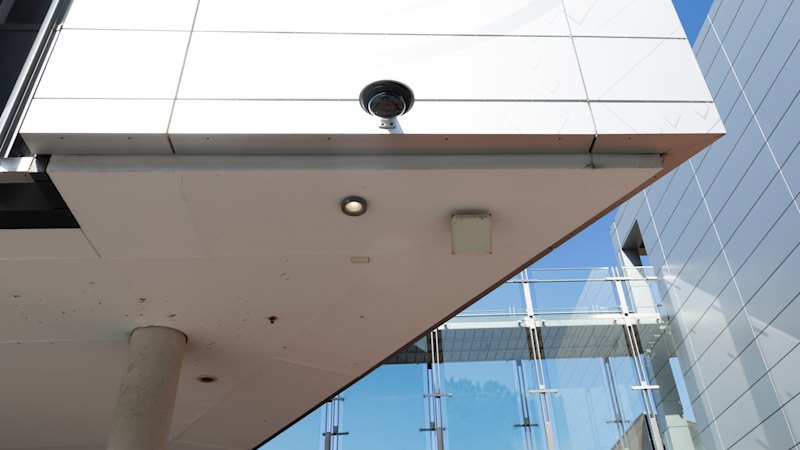
The University of Sydney is considering implementing advanced surveillance technologies such as AI-powered facial recognition and CCTV watch lists, along with body-worn cameras for security guards. These measures are intended to address theft and threats of violence but have drawn comparisons to George Orwell's "1984" due to concerns about privacy and freedom of speech. Critics argue that these policies contradict the university’s tradition of supporting activism and political engagement on campus.
Written locally by qwen2.5:14b on 2026-10-28, using this article's own text rather than the other coverage of the same event (that is the story summary below).

AI analysis runs on qwen2.5:14b, locally

Story summary

The University of Sydney has proposed implementing advanced surveillance measures, including AI-powered facial recognition and CCTV watch lists, drawing comparisons to George Orwell’s *1984*. According to a draft video surveillance policy, the technology will primarily target theft and threats of violence. When an individual is added to a watch list within the CCTV system, facial recognition featuring AI would be used under very limited circumstances; however, human verification would also be required before any action is taken. The move comes amid heightened tensions between the university and student activists over antisemitism and pro-Palestinian activism, with staff staging two walkouts in recent months.

Written for “University Of Sydney Campus Surveillance Plans” on 2026-10-28, grounded in this article and the 0 other(s) covering the same event.
Why this leaning score
The model judged this article politically coded and scored it -0.35, but 1 quote(s) could not be found in the article and the other 1 are attributed speech rather than the article's own narration, so the score is not published.
Written under an earlier scoring contract, which gave a paragraph rather than checkable quotes. Re-analysing this article replaces it.
Leaning score withheld for article 111442: no verified evidence · logged 2026-10-28

Story

📰 University Of Sydney Campus Surveillance Plans
Education · 1 article(s) covering the same event.

Compared with similar articles

Nothing to compare against. No article is close enough to this one for the pipeline to have linked or judged the pair.
How this article was measured signals, leaning charts, publisher record, byline, topics and claims

Signals How these are calculated →

Claims extracted
21
sentences that state something as happening or true
Uncertain
0%
0 of 21 hedged ("reportedly", "may", "according to")
Leaning
withheld
no quote in the article backed the model's score
Publisher signals
61/100
The Sydney Morning Herald's corrections and hedging, across everything collected from it. Not a measure of accuracy.
Outlets on this story
1
Education
Same framing elsewhere
1
articles that frame the event the way this one does
Analyzed 2026-10-28 · how these are computed

How this is being covered How these are calculated →

Article leaning vs. publisher reliability
Source leaning vs. consistency

Publisher

The Sydney Morning Herald · 5304 article(s) · 13 correction(s) detected
Running correction rate · 13 correction(s)

Who wrote this

Sally Rawsthorne
8 article(s) here · 1 carrying a prediction
🔮 The draft policy said artificial intelligence would be used for facial recognition, with a human also required to verify the match for “action is taken”.
🔮 More than 130,000 degree-qualified jobs could be wiped out by AI within a decade, a sobering government report by the agency tasked with assessing the nation’s future skills has warned.
🔮 “This is where AI can come on board to prioritise that and look into combinations that could be efficacious before we go into the lab experiments.
🔮 “I would take eight gap years and five years discovering myself.
🔮 The class of litigants is expected to include staff from campuses in Sydney and the Blue Mountains, and elsewhere across the country.
🔮 On Thursday, family WhatsApp chats exploded as overseas relatives weighed up sweeping reforms that will bar family members coming to Australia on conditions attached to student visas.
🔮 Tomorrow’s leaders will also need to understand AI’s ethical, social and environmental impacts, and possess the ability to work with this technology critically and responsibly.
Also by Sally Rawsthorne
An arts degree or a trade: How to futureproof your career
2026-10-25 · The Sydney Morning Herald
Cranbrook gardener charged over alleged child abuse material
2026-10-10 · The Sydney Morning Herald
Nothing else under this byline is closely related to this article, so these are simply their most recent.
All 8 articles by Sally Rawsthorne →

Topics

Australia Palestine TEQSA pro-Palestinian the University of Sydney

Subjects

Palestine GPE · 4× Australia GPE · 2× ChatGPT ORG · 1× George Orwell’s PERSON · 1× Lucas Pierce PERSON · 1× Pierce PERSON · 1× TEQSA ORG · 1× pro-Palestinian NORP · 1× the Student Representative Council’s ORG · 1× the University of Sydney ORG · 1×

Narrative

A university spokesperson said facial recognition featuring AI would be used under very limited circumstances and “generally related to ongoing theft or specific threats of violence” when an individual was added to a watch list within the CCTV system. “The cameras will then send an alert to security when that individual enters campus grounds,” they said.
framing: assertive · carried by 1 article(s) · first seen 2026-10-28
🔮 The draft policy said artificial intelligence would be used for facial recognition, with a human also required to verify the match for “action is taken”.
2026-10-28 · The Sydney Morning Herald
‘Like 1984’: University of Sydney’s plans for campus surveillance under fire · assertive framing

Claims (21 extracted, 0 hedged)

AI-powered facial recognition, CCTV watch lists and body-worn cameras for all security guards are under consideration at the University of Sydney in a move that has been likened to George Orwell’s dystopian novel 1984. asserted
that → power → novel
A draft video surveillance policy shows the nation’s oldest university is contemplating using the technology for “recording details of access” and “identifying people involved in relevant conduct” under a shake-up of security operations. asserted
university → show → operations
The proposed changes, which the university says are designed to tackle theft and threats of violence, come against a backdrop of increasingly strained relations between the university and student activists. asserted
university → propose → university
Tensions over antisemitism and how to manage pro-Palestinian activism have remained high since the months-long encampment took hold on the grounds in 2024, while the university’s embrace of AI has been polarising and staff have twice walked off the job in the past few months. asserted
staff → manage → months
The draft policy said artificial intelligence would be used for facial recognition, with a human also required to verify the match for “action is taken”. asserted
action → say → match
A university spokesperson said facial recognition featuring AI would be used under very limited circumstances and “generally related to ongoing theft or specific threats of violence” when an individual was added to a watch list within the CCTV system. “The cameras will then send an alert to security when that individual enters campus grounds,” they said. asserted
they → say → grounds
University ID photographs will not be fed into the CCTV system, the spokesperson said. asserted
spokesperson → feed → system
The university says the move to introduce body-worn cameras, like those used by police, was in response to the university watchdog’s 2025 message to universities that they must “strengthen how they manage risks ... including potential risks associated with people from outside accessing our campuses”. asserted
people → say → campuses
TEQSA encouraged universities to make those changes after the encampments supporting Palestine that gripped some of Australia’s universities in 2024. asserted
that → encourage → 2024
“It’s like 1984,” said the Student Representative Council’s Lucas Pierce, who will on Thursday convene a forum protesting the university’s controversial new ChatGPT deal. asserted
who → ’ → deal
“The university has a tradition of activism and politics, it has a history of movements and campaigns. asserted
it → have → movements
It’s a reputation that the university actively tries to foster in some ways, at least in their PR. asserted
university → ’ → PR
But this proves otherwise,” Pierce said. asserted
Pierce → prove → ?
“At the front of the quadrangle is a plaque commemorating the Freedom Ride, but what is really happening today is the university is trying to repress what is happening on campus, particularly around activism for Palestine. asserted
what → commemorate → Palestine
The university said that it remained committed to freedom of speech and academic freedom, but had “an obligation to foster a safe, respectful and inclusive environment”. asserted
it → say → environment
“This new policy alongside our other measures will strengthen our ability to achieve that.” asserted
policy → strengthen → that
The university was the site of Australia’s first encampment supporting the Palestinian cause in 2024 which ended after nine weeks and put vice-chancellor Mark Scott under immense political pressure. asserted
which → support → pressure
Later that year, the university banned camping and protesting in buildings and was slammed as a “full-scale offensive” on students’ rights. asserted
university → ban → rights
There was also a proposed “civility rule” that would require staff and students to make their intended meaning clear when using phrases like “From the river to the sea, Palestine will be free”. asserted
Palestine → be → sea
That did not eventuate. asserted
That → eventuate → ?
At the Royal Commission on Antisemitism and Social Cohesion this year, Scott apologised to Jewish students and staff. asserted
Scott → apologise → students

💬Give feedback
🕘History 🎫Support