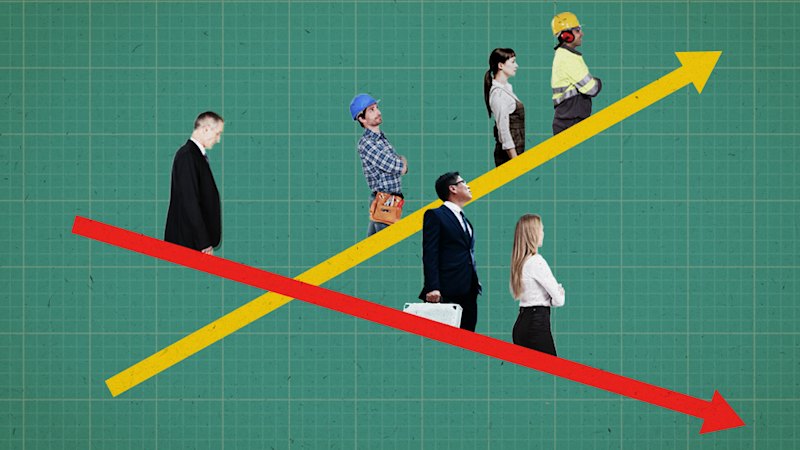
More than 130,000 degree-qualified jobs could be wiped out by AI within a decade, a sobering government report by the agency tasked with assessing the nation’s future skills has warned.
uncertain
report → qualify → skills
Jobs and Skills Australia has forecast “around 139,000” fewer jobs requiring a university degree in 10 years, with four of the top 10 occupations for graduates of commerce/management and society and culture at “medium risk” of automation.
asserted
occupations → forecast → automation
Futurist Michael McQueen said studying the humanities or forgoing university for a trade will give people entering the workforce an advantage over those in “highly cognitive but repetitive roles”.
asserted
studying → say → roles
Essential to future-proofing is letting go of the idea of “university as the ultimate and the ideal” and giving vocational jobs equal consideration, McQueen said.
asserted
McQueen → let → consideration
“It’s no longer a sensible paradigm.”
asserted
It → ’ → ?
Within universities, the critical thinking and creativity engendered by arts degrees make them a good option, he said.
asserted
he → engender → degrees
“It’s a way of thinking more than the actual skills that you’re learning,” he said, cautioning against going to university “because it’s the right thing to do”.
asserted
it → ’ → university
The JSA analysis earlier this month shows jobs that are popular with university graduates are among those at risk.
asserted
that → show → risk
They have also been deemed at medium risk of “complete displacement” from AI automation.
asserted
They → deem → automation
Management and commerce graduates’ other top occupational choices – advertising/media, sales and executive roles – have been rated at a low risk of AI replacement.
asserted
choices → rat → replacement
For society and culture graduates, top occupations with a low risk of AI replacement include health, education and advertising/media.
asserted
occupations → include → health
But a number of those occupations are rated as high risk of AI taking over some elements of the industry.
asserted
AI → rat → industry
Jobs and Skills’ acting commissioner Trevor Gauld said: “The future is not fixed.”
asserted
future → act → ?
“It is true that entry-level roles may have some exposure challenges.
uncertain
roles → have → challenges
But what we know is that human judgment, expertise and adaptability remains crucial.
asserted
judgment → know → what
You gain many of those skills through those entry-level pathways.
asserted
You → gain → pathways
If we don’t choose to ensure that we maintain those entry-level roles, how will the next generation of workers develop those judgment skills?
asserted
generation → choose → skills
While 139,000 degree-qualified workers may find themselves out of work, “a responsive skills market” would result in 106,000 more vocational jobs in the economy in 10 years, JSA said.
uncertain
JSA → qualify → years
Australia’s persistent trade shortages are set to multiply over the coming years, as potential immigration changes loom.
asserted
changes → set → years
These will all create further demand for vocational workers, particularly in construction, engineering and automotive roles.
asserted
These → create → roles
Gauld agrees that people starting their careers should consider a trade or something that involves critical thinking.
asserted
that → agree → thinking
“When you look at the priorities in this nation right now, we’re talking about housing, we’re talking about the care economy,” he said.
asserted
he → look → economy
“We’re talking about a future made in Australia.
asserted
We → talk → Australia
Huge numbers of these roles require an apprenticeship or traineeship pathway.
asserted
numbers → require → pathway
“But even those occupations with higher exposure, we still need that human judgment, we still need that critical thinking.”
Start the day with a summary of the day’s most important and interesting stories, analysis and insights.
asserted
we → need → stories
 The Aporia