Birds are able to stay perched securely on branches even when sleeping due to specialized foot and leg structures, particularly in passerine birds which have three forward-facing toes and one backward-facing toe called the hallux. When a bird lands, its legs bend, stretching tendons that cause the toes to grip automatically around the branch without requiring conscious effort. Research shows this mechanism varies among species; for example, European starlings can maintain balance through a stable foot position rather than just gripping tightly with their toes.
Written by the local model on 2026-09-15,
using this article's own text rather than the other coverage of the
same event (that is the story summary below).
Story summary
Birds can sleep safely while perched on thin branches without falling off due to unique adaptations in their legs and feet. Most small birds that regularly sit on branches belong to a group called perching birds (passerines), which have specialized foot structures with three forward-facing toes and one backward-facing toe called the hallux. This configuration allows them to grip different sides of a branch securely.
When a perching bird lands, its legs bend at the knee and ankle, stretching tendons that run from the back of the leg into the toes, causing them to curl around the branch automatically. According to The Cornell Lab of Ornithology, this mechanism tightens foot tendons when weight is placed on the feet, ensuring the toes remain closed around the perch even during sleep. This natural reflex helps birds maintain their grip without needing conscious effort, unlike humans who may lose their hold if muscles relax while sleeping.
Written for “Bird Sleep Physiology” on 2026-09-15,
grounded in this article and the 0 other(s) covering the same event.
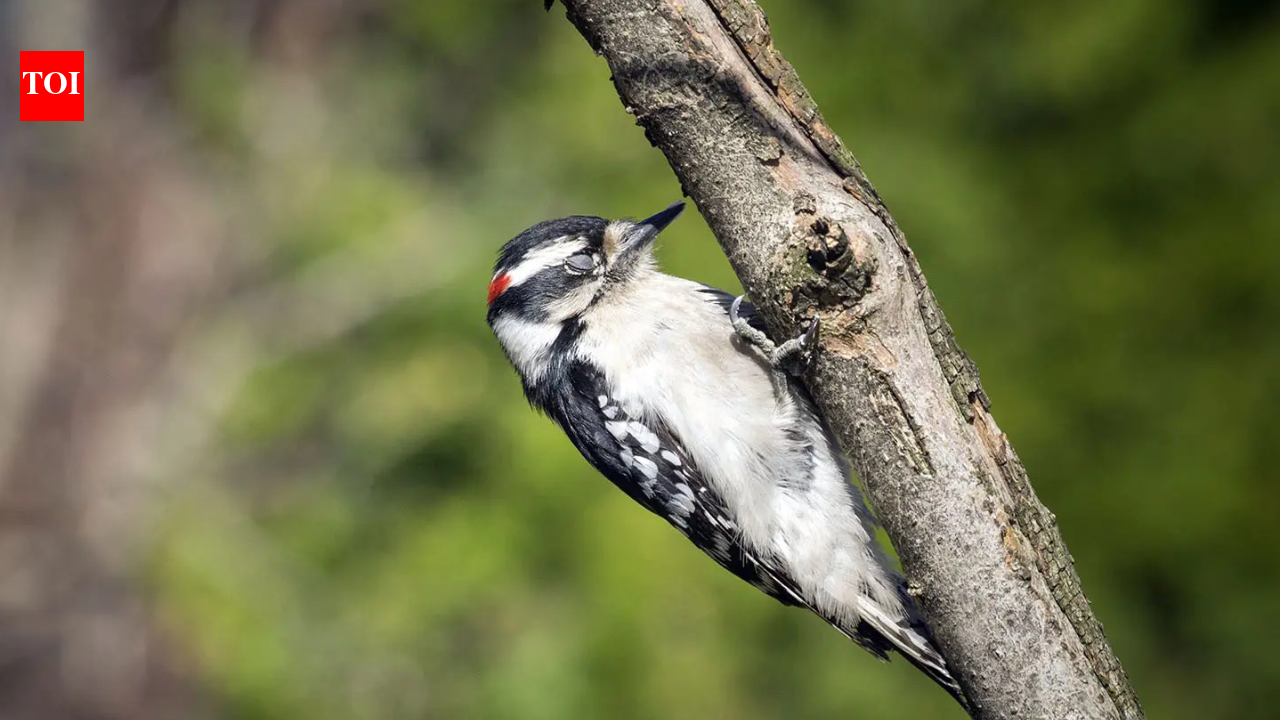
Have you ever seen a bird sleeping on a thin tree branch and wondered why it does not fall?
asserted
it → see → branch
While humans may lose their grip when their muscles relax during sleep, many birds can remain safely perched for hours.
uncertain
birds → lose → hours
The answer lies in the structure of their legs, feet and tendons.
asserted
answer → lie → legs
How birds hold on to branches while sleeping
Most small birds that regularly sit on branches belong to a group known as perching birds (passerine).
asserted
that → hold → birds
These birds have feet adapted for gripping branches, with three toes pointing forward and one toe pointing backwards.
asserted
toe → have → branches
The backward-facing toe is called the hallux.
asserted
toe → face → ?
Together, the toes help the bird hold a branch from different sides.
asserted
bird → help → sides
When a perching bird lands on a branch, its legs bend at the knee and ankle.
asserted
legs → perch → knee
This stretches the tendons running down the back of the leg and into the toes.
asserted
This → stretch → toes
The movement causes the toes to curl around the branch, helping the bird maintain its grip without having to consciously hold on.
asserted
bird → cause → grip
The Cornell Lab of Ornithology explains that when a bird places weight on its feet, the leg muscles tighten the foot tendons, keeping the toes closed around the perch.
asserted
muscles → explain → perch
This means a sleeping bird does not need to keep thinking about gripping the branch.
asserted
bird → mean → branch
Its leg structure helps maintain the hold while it rests.
asserted
it → help → hold
The grip is not simply about strong muscles
Birds such as flamingos, herons and many other species can rest on one leg.
asserted
Birds → rest → leg
For years, the common explanation was that a bird’s toes automatically lock around a branch as soon as it bends its legs.
asserted
it → lock → legs
However, scientific research has shown that the mechanism is more complicated.
asserted
mechanism → show → ?
A 2012 study published in The Anatomical Record examined the perching behaviour of European starlings.
asserted
study → publish → starlings
The researchers found that sleeping starlings did not always tightly curl their toes around the perch.
asserted
starlings → find → perch
Instead, their feet often formed a stable, saddle-like position, allowing them to balance their weight over the central pad of the foot.
asserted
them → form → foot
The study also found that starlings could remain perched even when the usual tendon-locking mechanism was not working.
uncertain
mechanism → find → ?
This suggests that some birds rely not only on toe gripping but also on balance and the shape of their feet.
uncertain
birds → suggest → feet
So, the popular explanation that all sleeping birds simply lock their claws around a branch is too broad.
asserted
birds → sleep → branch
The exact mechanism differs between species.
asserted
mechanism → differ → species
Why sleeping birds do not lose their balance
Birds have several physical adaptations that help them remain stable on a perch.
asserted
them → sleep → perch
Their legs are positioned differently from human legs.
asserted
legs → position → legs
What appears to be a bird’s backward-bending knee is usually its ankle.
asserted
appears → appear → ?
The actual knee is higher up and is often hidden beneath feathers.
asserted
knee → hide → feathers
The arrangement of the bones and tendons allows a bird to keep its body balanced above its feet.
asserted
bird → allow → feet
In some birds, the tendons also help reduce the muscular effort needed to remain perched.
asserted
tendons → help → effort
A 2019 review published in Frontiers in Neuroscience examined how birds sleep while standing.
asserted
birds → publish → Neuroscience
It noted that birds can sometimes enter rapid eye movement, or REM, sleep while perched, even on one leg.
asserted
birds → note → leg
The review discussed both tendon mechanisms and the role of muscle tone in maintaining balance.
asserted
review → discuss → balance
This is different from most humans, who normally lie down during REM sleep because muscle tone decreases.
asserted
tone → lie → sleep
Some birds sleep on one leg
Birds such as flamingos, herons and many other species can rest on one leg.
asserted
Birds → sleep → leg
This reduces the amount of heat lost through their legs and feet, which can be useful in cold conditions.
asserted
which → reduce → conditions
Small birds may also pull one leg up into their feathers while sleeping.
uncertain
birds → pull → feathers
The Cornell Lab of Ornithology notes that birds often tuck one leg close to the body and
asserted
birds → note → body
Their fluffy down feathers help trap body heat during the night.
asserted
feathers → help → night
A bird resting on one leg still needs to maintain balance.
asserted
bird → rest → balance
Researchers believe that the arrangement of the hip, leg and foot helps, but some muscle activity is also involved.
asserted
activity → believe → hip
…and 30 more, not listed.
 The Aporia