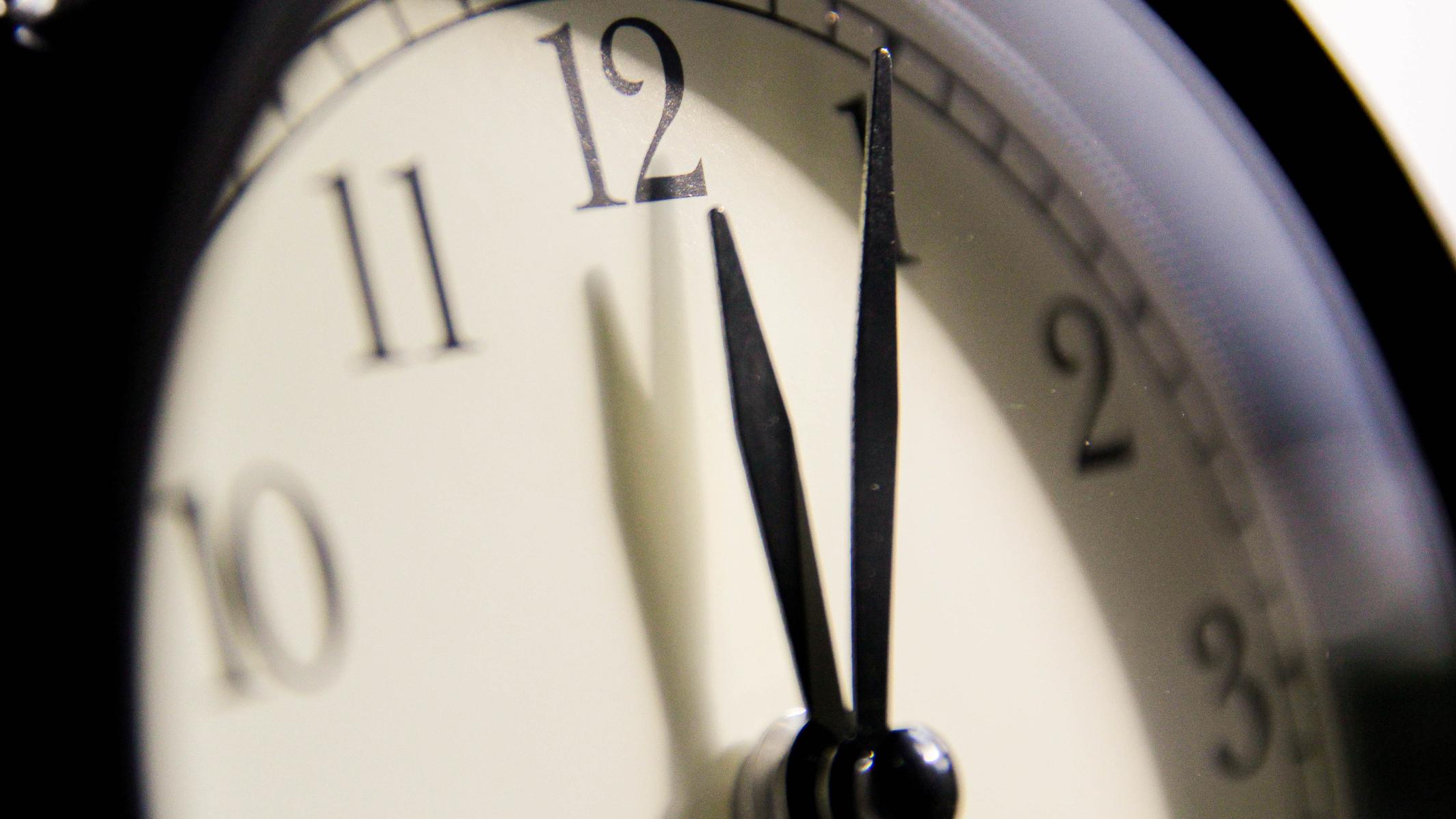
Daylight Saving Time Ends This Week. Here’s How to Best Prepare Yourself for the Time Change

Read the original at TIME ↗
Cite

Lee, C. (2026, October 26). Daylight Saving Time Ends This Week. Here’s How to Best Prepare Yourself for the Time Change. TIME. https://time.com/article/2026/10/26/daylight-saving-time-standard-clock-change-2026-sleep-health-bill/

Dated from the outlet's own feed. Check the original for its byline.

TIME · collected 2026-10-26 · by Chantelle Lee

Quick Summary

Daylight Saving Time ends this Sunday at 2 a.m., when clocks fall back one hour across most of the United States, leading to earlier sunrises and sunsets. This change affects sleep patterns; while moving to Standard Time is generally easier for most people as it allows an extra hour of sleep, transitioning back to Daylight Saving Time in March requires more adjustment due to losing an hour of sleep. Dr. Andrea Matsumura advises maintaining regular sleep schedules ahead of the time change and continuing habits that promote good sleep hygiene, such as exposure to morning light and avoiding late caffeine consumption. Meanwhile, there is ongoing debate over a bill called the Sunshine Protection Act, which aims to make Daylight Saving Time permanent but faces opposition from some lawmakers and sleep experts.
Written by AI on 2026-10-29, from this article's own text only (the story summary below draws on all the coverage).

AI analysis

Story summary

Daylight Saving Time ends on Sunday, November 1, at 2 a.m. local time in most of the U.S., meaning clocks should be set back one hour before bed. This change brings darker afternoons but an extra hour of sleep for most Americans. Health experts like Patricia Lakin-Thomas from York University and the American Medical Association advocate staying on standard time year-round, citing benefits for health due to how sunlight affects the body's internal clock.

Some lawmakers backed by President Donald Trump are pushing a bill through Congress to make Daylight Saving Time permanent, ending the biannual time shift. However, this proposal faces opposition from other legislators and sleep experts who argue it disrupts circadian rhythms. Dr. Alex Dimitriu likens the twice-yearly clock change to an hour of jet lag, emphasizing the need for preparation such as getting morning sunlight to help reset the body's internal clock faster.

An AP-NORC poll last year found that only 12% of American adults support the biannual time changes, while almost half oppose it. The upcoming shift is part of a larger debate about whether to abolish daylight saving time entirely or keep it as an annual occurrence.

Written for “Daylight Saving Time Changes” on 2026-10-29, grounded in this article and the 1 other(s) covering the same event.
Why this leaning score
This article does not take a side on a contested political question, so it has no leaning score. That is an answer rather than a gap: a match report or a rescue can be warmly or critically written without being left or right, and scoring it anyway is how approval of a subject gets recorded as a political position.
No political leaning scored for article 108873 · logged 2026-10-29

Story

📰 Daylight Saving Time Changes
Politics · 2 article(s) covering the same event. See how they differ ↓

Compared with similar articles

This article reads unscored and hedges 3% of its claims. Each row says how that neighbour differs.
Toronto Star
Hedges 1 of 37 claims Outlet record 64/100
Evening Standard
Hedges 10 of 46 claims Outlet record 65/100
“While both articles discuss the end of Daylight Saving Time, they do not describe the same specific incident or occurrence but rather provide general advice and context about the time change.”
Toronto Star
Hedges 6 of 28 claims Outlet record 64/100
“While both articles discuss the end of Daylight Saving Time in general, Article A focuses on a broader U.S. perspective and includes details about legislation, whereas Article B specifically addresses Ontario residents with exact timing instructions.”
How this article was measured signals, leaning charts, publisher record, byline, topics and claims

Signals How these are calculated →

Claims extracted
31
sentences that state something as happening or true
Uncertain
3%
1 of 31 hedged ("reportedly", "may", "according to")
Leaning
not political
takes no side on a contested political question
Publisher signals
59/100
TIME's corrections and hedging, across everything collected from it. Not a measure of accuracy.
Outlets on this story
2
Politics
Same framing elsewhere
1
articles that frame the event the way this one does
Analyzed 2026-10-29 · how these are computed

How this is being covered How these are calculated →

Article leaning vs. publisher reliability
Source leaning vs. consistency

Publisher

TIME · 748 article(s) · 2 correction(s) detected
Running correction rate · 2 correction(s)

Who wrote this

Chantelle Lee
21 article(s) here · 1 carrying a prediction
🔮 The clocks in most of the U.S. will fall back an hour this weekend as Daylight Saving Time once again comes to an end.
🔮 The U.S. Supreme Court said Tuesday that it will take up a case to decide whether a watchdog organization can obtain information to help establish whether the now-defunct Department of Government Efficiency (DOGE) is subject to a federal public records law.
🔮 In less than a month, most of the U.S. will fall back an hour, continuing the cycle of biannual clock changes.
🔮 A poll conducted by the New York Times/Siena University between Sept. 21-30, for instance, found that 49% of likely Texas voters said they would back Hinojosa for governor, while 46% said they would re-elect Abbott.
🔮 Ferrato opened her remarks by honoring her mother, who she said was a survivor and “will be forever the inspiration for my work.” “I pledge allegiance to survivors of domestic abuse and sex trafficking,” Ferrato said.
🔮 President Donald Trump’s Administration is rolling out a new rule that experts predict will make it more difficult for immigrants to get green cards if they access public assistance programs, such as Medicaid and food stamps—and could deter those hoping to obtain the status from enrolling in public benefits.
🔮 He said that she had his “Complete and Total Endorsement for Re-Election” before telling voters that Salazar “WILL NEVER LET YOU DOWN!”
🔮 The on-the-ground team—dubbed the “Democracy Protectors”—will be wearing blue to distinguish themselves, and will be trained in de-escalating conflicts and documenting any potential “bad actors and bad behavior.”
🔮 “I’m still not quite back to 100%, but I’ve assured [Senate Majority Leader John Thune] that, as I continue with physical therapy on the advice of my doctors, I will do my best to be present for tough votes when our Conference needs me,” McConnell said.
Also by Chantelle Lee
Nothing else under this byline is closely related to this article, so these are simply their most recent.
All 21 articles by Chantelle Lee →

Topics

Congress Matsumura Standard Time U.S. the American Academy of Sleep Medicine

Subjects

Matsumura PERSON · 3× Congress ORG · 2× Senate ORG · 2× U.S. GPE · 2× Alex Dimitriu PERSON · 1× Andrea Matsumura PERSON · 1× Dimitriu PERSON · 1× Donald Trump PERSON · 1× Hawaii GPE · 1× the American Academy of Sleep Medicine ORG · 1×

Narrative

The looming clock change comes as some lawmakers, with the backing of President Donald Trump, have been trying to push a bill through Congress that would make Daylight Saving Time permanent and end the biannual time change.
framing: assertive · carried by 1 article(s) · first seen 2026-10-29
🔮 The clocks in most of the U.S. will fall back an hour this weekend as Daylight Saving Time once again comes to an end.

Claims (31 extracted, 1 hedged)

The clocks in most of the U.S. will fall back an hour this weekend as Daylight Saving Time once again comes to an end. asserted
Time → fall → end
Early Sunday morning, most of the country will switch back to observing Standard Time, resulting in earlier sunrises and earlier sunsets. asserted
most → switch → sunrises
The looming clock change comes as some lawmakers, with the backing of President Donald Trump, have been trying to push a bill through Congress that would make Daylight Saving Time permanent and end the biannual time change. asserted
Time → loom → change
But the bill has been met with pushback from other lawmakers and sleep experts. asserted
bill → meet → lawmakers
Here’s everything you need to know about the clock change this fall, and the state of the bill that’s trying to put a stop to the cycle of changing the clocks twice a year. asserted
that → ’ → clocks
When do the clocks fall back in 2026? asserted
clocks → fall → 2026
Daylight Saving Time will end on Nov. 1 at 2 a.m. local time. asserted
Time → end → a.m.
At that time, the clocks will fall back an hour, to 1 a.m. local time. asserted
clocks → fall → a.m.
How can I prepare for the clock change? asserted
I → prepare → change
Dr. Alex Dimitriu, a psychiatrist and sleep medicine physician, likens the practice of changing the clocks twice a year to “an hour of jet lag,” adding that it can be an adjustment for many people. asserted
it → liken → people
But the transition to Standard Time also means that people will gain an extra hour of sleep. asserted
people → mean → sleep
“Typically, moving to Standard Time is actually in sync with our circadian rhythm,” says Dr. Andrea Matsumura, a sleep medicine physician and spokesperson for the American Academy of Sleep Medicine. asserted
Matsumura → move → Medicine
“Most people have a fairly easy transition into Standard Time; it’s the Daylight Saving Time that you have to do a lot more work to adjust [to] losing an hour of sleep. asserted
you → have → sleep
In the days leading up to the start of Daylight Saving Time—which will happen next March—Matsumura typically advises that people start going to bed a little earlier to help make the time change “a little less painful.” asserted
change → lead → bed
But there’s less preparation needed in the days leading up to Standard Time; in fact, Matsumura recommends that people simply stick to their regular sleep schedule ahead of Nov. 1. asserted
people → ’ → Nov.
Matsumura does suggest that people continue to take steps that normally help improve sleep, such as getting some daylight when they wake up in the morning and not drinking caffeine too late in the afternoon. asserted
they → suggest → afternoon
Similarly, Dimitriu recommends that people do some physical movement in the morning, such as going for a walk, and avoid eating food too late in the evening. asserted
people → recommend → evening
What’s the status of the bill that would make Daylight Saving Time permanent? asserted
Time → make → bill
Most states in the U.S. change their clocks twice a year: once in March as Daylight Saving Time begins, and again in November for Standard Time. asserted
Time → change → Time
Under the current federal law, states are permitted to opt out of Daylight Saving Time and remain in Standard Time year-round. asserted
states → permit → Time
Hawaii and most of Arizona have chosen that option, and so observe Standard Time throughout the year. asserted
Hawaii → choose → year
Federal law does not, though, allow states to remain in Daylight Saving Time year-round. asserted
states → allow → Time
A bill known as the Sunshine Protection Act, if passed by Congress and signed into law by the President, would change that. asserted
bill → know → that
The measure would result in the country observing Daylight Saving Time year-round, though individual states could choose to forgo that path and instead stay in Standard Time permanently. uncertain
states → result → Time
The Sunshine Protection Act passed the House with bipartisan support in July. asserted
Act → pass → July
But the measure is facing an uncertain fate in the Senate. asserted
measure → face → Senate
Earlier this month, Senate Majority Leader John Thune told POLITICO that “there’s no clear path forward or consensus” on the bill yet. asserted
Thune → tell → bill
Some lawmakers in the upper chamber, such as Sen. Tom Cotton of Arkansas, have criticized the proposal. asserted
lawmakers → criticize → proposal
Critics have argued that permanent Daylight Saving Time would mean much later sunrises in some parts of the country, resulting in people going to school and work in the dark. asserted
people → argue → dark
Still, Trump has slammed critics of the Sunshine Protection Act and continued to push for the bill. asserted
Trump → slam → bill
At the beginning of October, he accused Cotton of “holding up” the bill, and urged his followers on Truth Social to “call Tom on his cellphone” to express support for the Sunshine Protection Act. asserted
he → accuse → Act

💬Give feedback
🕘History 🎫Support