A new Reuters/Ipsos poll shows declining trust in measles vaccines among Americans, with only 76% now believing they are safe for children compared to 84% in May 2020. This drop is particularly significant among Republican voters and coincides with recent efforts by President Donald Trump's administration to reduce the number of childhood vaccinations. The country is experiencing its worst measles outbreaks since 1991, with over 3,000 confirmed cases and three deaths reported in Pennsylvania alone this year.
Written by the local model on 2026-09-16,
using this article's own text rather than the other coverage of the
same event (that is the story summary below).
Story summary
A new Reuters/Ipsos poll conducted over four days and completed on September 14, revealed that 76% of Americans now believe vaccines for measles, mumps, and rubella are safe for children, down from 84% in a similar survey in May 2020. The decline is most notable among Republicans due to some party figures' efforts to minimize the importance of vaccines. Meanwhile, President Donald Trump signed an executive order aiming to reduce recommended childhood immunizations from 17 to 11, echoing his health official's stance: Robert F. Kennedy Jr., a longtime anti-vaccine activist before being appointed by Trump. This shift is concerning as measles cases are surging in states like Pennsylvania, Utah, and South Carolina, with the U.S. at risk of losing its status as a country that eliminated measles decades ago due to ongoing domestic transmission.
Written for “Measles Vaccine Trust Falling Usa” on 2026-09-17,
grounded in this article and the 2 other(s) covering the same event.
Trust in measles vaccines falls in US, Reuters/Ipsos poll finds
WASHINGTON –
asserted
poll → fall → US
Americans’ trust in vaccines for deadly childhood diseases, including measles, has fallen in recent years, a new Reuters/Ipsos poll found, a troubling sign for the country as it experiences its worst measles outbreaks in decades.
asserted
it → include → decades
The four-day poll, completed on Sept 14, showed that a bipartisan majority of the nation still backs vaccinating children against measles, a disease that largely disappeared from the US for more than two decades until a resurgence took hold in recent years following a decline in vaccination rates.
asserted
resurgence → complete → rates
Some 76 per cent of Americans said they believe vaccines against measles, mumps and rubella are safe for kids, down from 84 per cent in a May 2020 Reuters/Ipsos poll.
uncertain
vaccines → say → poll
The declining trust was most pronounced among Republicans, as some in the party have downplayed the importance of vaccines.
asserted
some → decline → vaccines
US President Donald Trump signed an executive order in August that called for reducing the number of immunisations on the federal childhood vaccination schedule from 17 to 11.
asserted
that → sign → 11
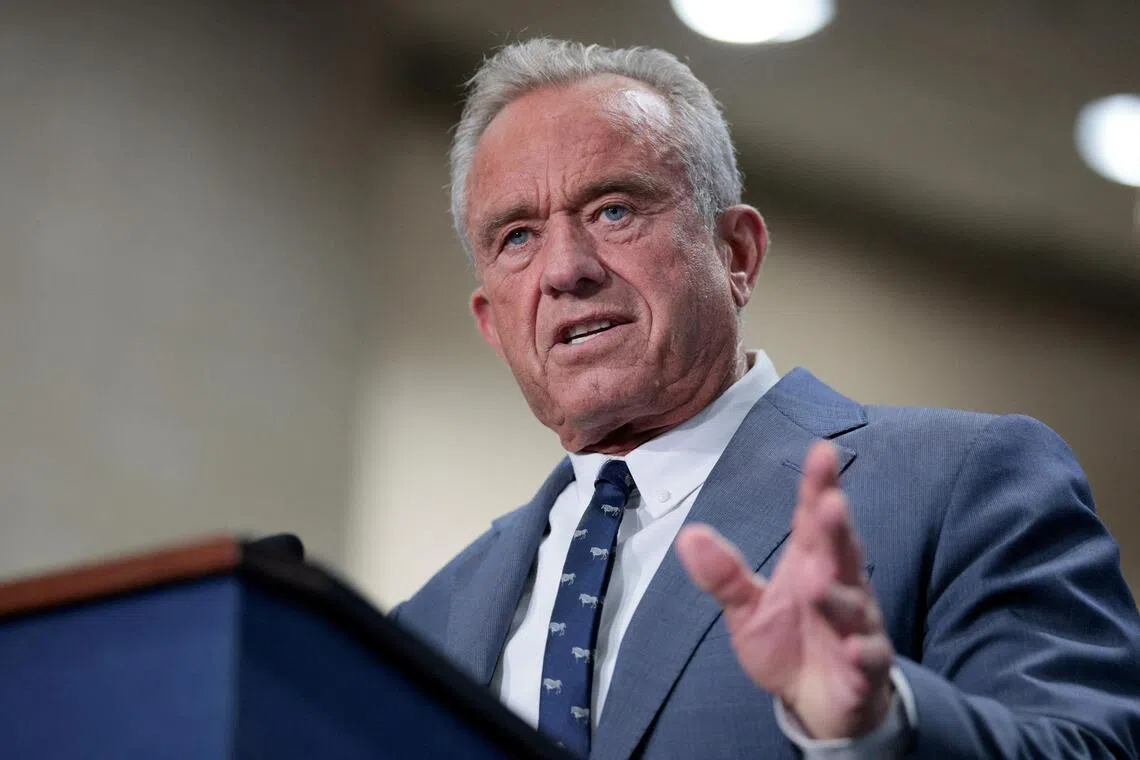
The Republican President’s top health official, Robert F. Kennedy Jr, was a long-time anti-vaccine activist before Trump made him health secretary.
asserted
him → make → ?
In that role, he has sought to overhaul US vaccine policy, pushing for fewer vaccines for children.
asserted
he → seek → children
Worst outbreak in 35 years
Pennsylvania, Utah and South Carolina are grappling with measles outbreaks in 2026.
asserted
Pennsylvania → grapple → 2026
Pennsylvania announced three measles-related deaths in recent weeks.
asserted
Pennsylvania → announce → weeks
The country has tallied more than 3,000 confirmed infections in 2026, the most in 35 years.
asserted
country → tally → years
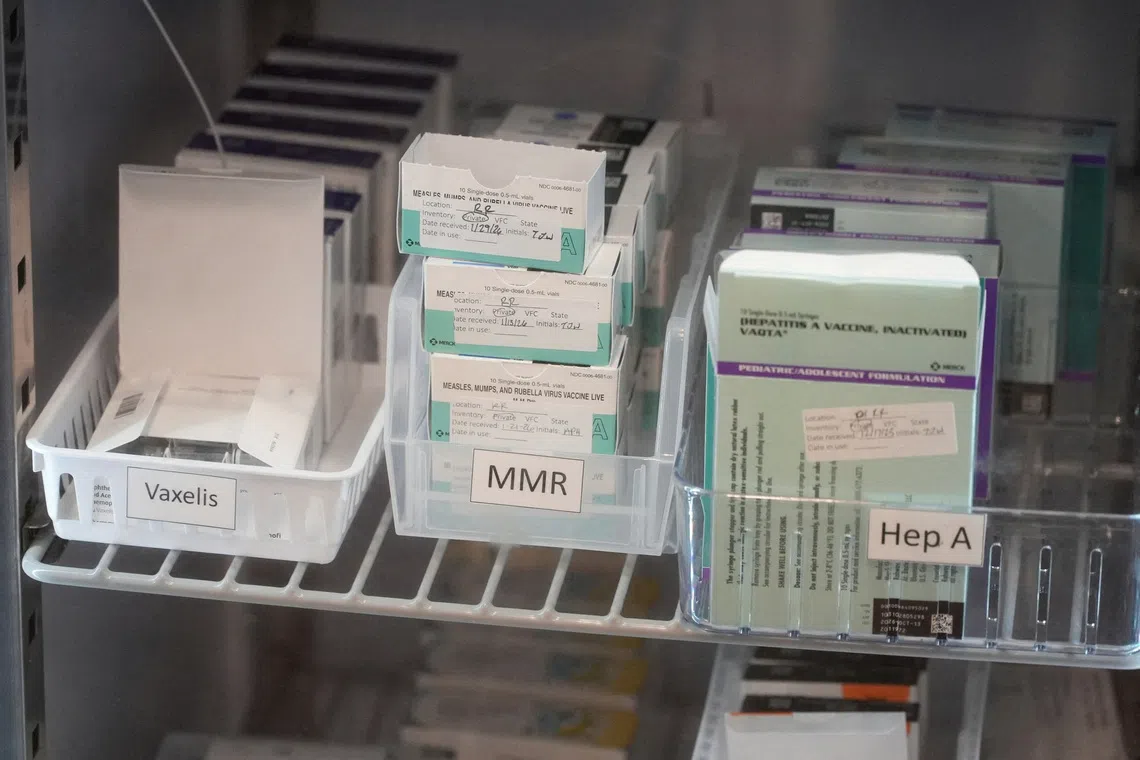
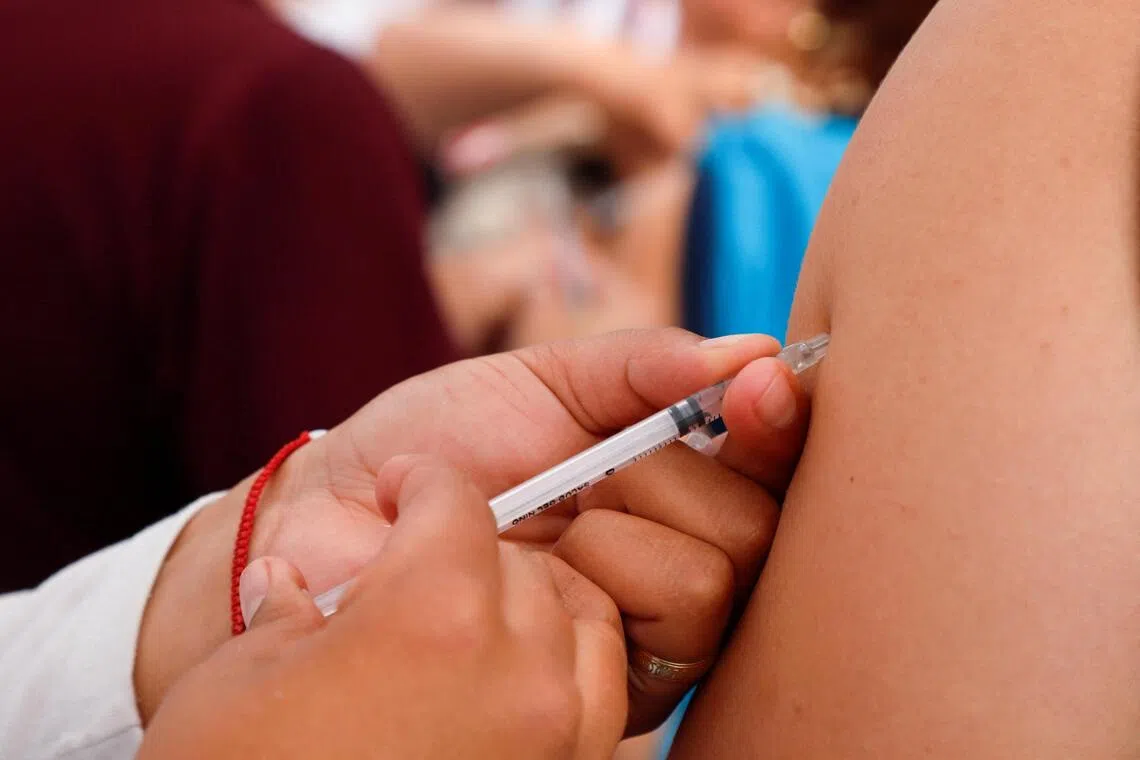
Measles, which can cause symptoms including fever, rash and respiratory issues, is highly contagious but easily preventable with the measles, mumps and rubella combination vaccine, a routine shot for children that is 97 per cent effective in preventing infection after two doses.
asserted
that → cause → doses
It is typically given at age 12 months to 15 months and then again at age four years to six years.
asserted
It → give → years
Average US vaccination coverage among kindergarten children dropped in 2025 to 92.5 per cent, according to data from the US Centers for Disease Control and Prevention, below the 95 per cent level experts say is necessary to achieve so-called herd immunity that can protect those in the community unable to get the vaccine.
uncertain
that → drop → vaccine
The Reuters/Ipsos poll showed just 19 per cent of Americans approve of Trump’s handling of the measles outbreak, compared with 52 per cent who disapprove.
asserted
who → show → cent
The rest said they did not have a view or did not answer the question.
asserted
they → say → question
Trump has rarely spoken about the measles outbreak, even as the US is widely expected to lose its measles elimination status later in 2026 after outbreaks that began in 2025 led to sustained transmission.
asserted
that → speak → transmission
That is a once-unthinkable milestone for a country that had prided itself on eradicating the disease more than two decades ago through high vaccination rates.
asserted
that → pride → rates
Registered voters in the Reuters/Ipsos survey picked Democrats over Republicans by 45 per cent to 25 per cent when asked which party has a better approach to stopping infectious diseases like measles.
asserted
party → pick → measles
That might be worrisome for some Republicans as the party seeks to keep control of Congress in the Nov 3 midterm elections, though vaccines and disease are far from the top concerns to voters.
uncertain
vaccines → seek → voters
Some 31 per cent of voters said they were very worried about measles outbreaks, compared with 58 per cent who said the same about their cost of living.
asserted
who → say → living
After Pennsylvania announced two measles-related deaths in August, Kennedy again repeated the false claim that the MMR vaccine contains aborted foetus debris and cast doubt on whether measles played a role in the deaths.
uncertain
measles → announce → deaths
Pennsylvania announced a third measles-related death this week.
asserted
Pennsylvania → announce → death
The Reuters/Ipsos poll, which was conducted online and nationwide, gathered responses from 1,143 US adults and had a margin of error of 3 percentage points.
asserted
which → conduct → points
 The Aporia