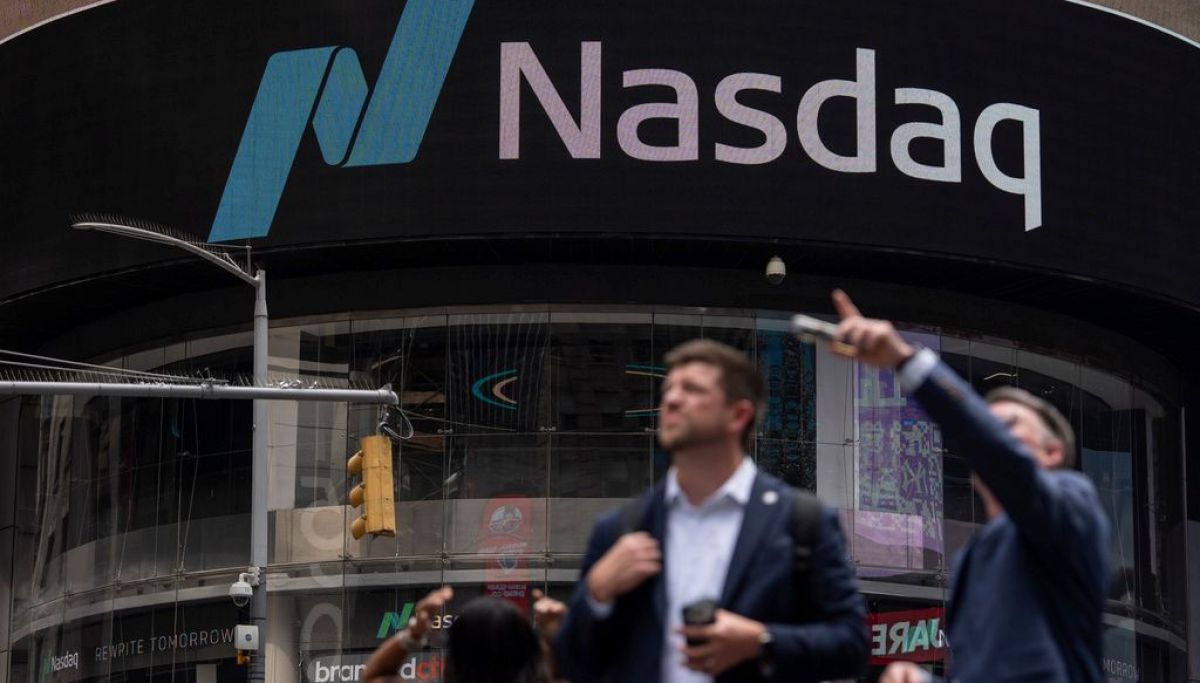
Will Donald Trump or AI blow up financial markets first?

Read the original at ABC News (AU) ↗
Cite

Verrender, I. (2026, October 26). Will Donald Trump or AI blow up financial markets first? ABC News (AU). https://www.abc.net.au/news/2026-10-27/will-donald-trump-or-ai-blow-up-financial-markets-first/107311432

Dated from the outlet's own feed. Check the original for its byline.

ABC News (AU) · collected 2026-10-26 · by Ian Verrender

Quick Summary

Financial markets are facing a dilemma between two significant debt concerns: long-standing government debts, particularly in the U.S., and more recent speculative investments in artificial intelligence (AI) technology. The article highlights that both issues could lead to market instability if interest rates rise further, with the cost of U.S. government debt reaching its highest post-war level at 126% of GDP due to increased borrowing for various expenses including military engagements and tax cuts. Meanwhile, the AI sector is experiencing a downturn as seen in the sharp decline of companies like Firmus and NextDC, indicating growing public opposition to AI infrastructure projects.
Written locally by qwen2.5:14b on 2026-10-26, using this article's own text rather than the other coverage of the same event (that is the story summary below).

AI analysis runs on qwen2.5:14b, locally

Story summary

Financial markets are facing a dilemma between two major sources of debt-related stress: government debt accumulated over decades and the rapid growth in artificial intelligence (AI) investment funded by borrowed money. As civil unrest spreads globally, investors are increasingly concerned about which crisis—sovereign debt or AI market collapse—will be more damaging to financial stability. In recent weeks, borrowing costs have risen dramatically as these dual pressures converge. The US Federal Reserve's actions on interest rates are seen as a critical factor in potential market meltdowns. Investors must decide whether the impending issues from government spending or the speculative bubble in AI will cause less harm to their portfolios.

Written for “Artificial Intelligence And Markets” on 2026-10-26, grounded in this article and the 0 other(s) covering the same event.
Why this leaning score
The model judged this article politically coded and scored it -0.35, but every quote it verified points right, so the score is not published.
Written under an earlier scoring contract, which gave a paragraph rather than checkable quotes. Re-analysing this article replaces it.
Leaning score withheld for article 108037: score contradicts its own evidence · logged 2026-10-26

Story

📰 Artificial Intelligence And Markets
Economy/Business · 1 article(s) covering the same event.

Compared with similar articles

This article reads unscored and hedges 7% of its claims. Each row says how that neighbour differs.
The foolish AI stock freak-out different event · 95%
Washington Examiner
⚖️ Leans right 🔴 25% hedged 1 of 4 📰 publisher trust 70
“The articles discuss different aspects and timelines related to financial market sentiment and concerns about AI and debt, rather than the same specific incident.”
The Sydney Morning Herald
⚖️ Leans left 🔴 7% hedged 3 of 44 📰 publisher trust 61
“The articles discuss related financial market issues but describe different specific events and contexts.”
Los Angeles Times
⚖️ Leans left 🔴 34% hedged 15 of 44 📰 publisher trust 95
“The articles discuss similar themes but focus on different aspects and timespans related to AI and economic uncertainty under Trump's presidency, not a single specific incident.”
How this article was measured signals, leaning charts, publisher record, byline, topics and claims

Signals How these are calculated →

Claims extracted
57
sentences that state something as happening or true
Uncertain
7%
4 of 57 hedged ("reportedly", "may", "according to")
Leaning
withheld
no quote in the article backed the model's score
Publisher signals
68/100
ABC News (AU)'s corrections and hedging, across everything collected from it. Not a measure of accuracy.
Outlets on this story
1
Economy/Business
Same framing elsewhere
1
articles that frame the event the way this one does
Analyzed 2026-10-26 · how these are computed

How this is being covered How these are calculated →

Article leaning vs. publisher reliability
Source leaning vs. consistency

Publisher

ABC News (AU) · 3994 article(s) · 10 correction(s) detected
Running correction rate · 10 correction(s)

Who wrote this

Ian Verrender
9 article(s) here · 1 carrying a prediction
🔮 But investors now are being forced to consider which poison will cause the least harm.
🔮 Across the developed world, including here in Australia, political momentum has shifted from the centre to the fringes in an increasingly bipolar world that, if it continues, ultimately will render any attempt at consensus futile.
🔮 A kid, straight out of school with no real future mapped out, no obvious talents, just a general inclination that he might be suited to journalism.
🔮 Australia may be good at innovation and invention (think wi-fi and over-the-horizon radar, along with a host of medical breakthroughs and advances), but as a nation we don't have a great track record in attracting investment to fund those brilliant ventures.
2026-10-12 · assertive framing · Is the Firmus fiasco a crack in the AI boom?
🔮 Last week, Reserve Bank governor Michele Bullock batted away the idea that a recession was inevitable but finally conceded that unless inflation was brought to heel in a timely manner, it was a possibility. "If we don't address this, inflation will get worse, and interest rates will have to be higher, and the economy in a worse position in order to address that,"she said.
🔮 By next Friday, Oliver Curtis is expected to emerge a billionaire; the driving force behind one of Australia's biggest ever stock market listings, second only to Telstra's privatisation in the 1990s.
🔮 Investors have begun to lose faith in the once almighty US dollar, and in the past few weeks, a coup has been launched against Washington.
🔮 In short: Former treasurer Joe Hockey says voters will not back meaningful fiscal reform unless there is a "financial crisis".
🔮 It is difficult enough to predict what will happen next month, let alone 40 years from now.
Also by Ian Verrender
Nothing else under this byline is closely related to this article, so these are simply their most recent.
All 9 articles by Ian Verrender →

Topics

America Firmus Iran NextDC The US Federal Reserve

Subjects

ASIC ORG · 2× Firmus ORG · 2× America GPE · 1× Australian NORP · 1× Goodman Group ORG · 1× Iran GPE · 1× Melbourne GPE · 1× NextDC ORG · 1× Sydney GPE · 1× The US Federal Reserve ORG · 1×

Narrative

Then there are the "innovative" financing arrangements such as "Special Purpose Vehicles" financed by industry suppliers and investors, along with what is known as "chip financing" as well as debt guarantees and lease arrangements that cloud the boundaries between financing definitions.
framing: assertive · carried by 1 article(s) · first seen 2026-10-26
🔮 But investors now are being forced to consider which poison will cause the least harm.
2026-10-26 · ABC News (AU)
Will Donald Trump or AI blow up financial markets first? · assertive framing

Claims (57 extracted, 4 hedged)

But investors now are being forced to consider which poison will cause the least harm. asserted
poison → force → harm
With civil unrest running rampant across the developed world, just as global investors are desperately seeking exits from the great artificial intelligence boom, a double dose of debt worries has suddenly infected the world of finance. asserted
dose → run → finance
One is a problem decades in the making, as governments spent their way out of various crises with nary a care about the cost. asserted
governments → spend → cost
The other has arisen in a frighteningly short space of time, driven by a manic investment boom using trillions of dollars of borrowed cash to fund a technology with debatable benefits for society. asserted
other → arise → society
In the past eight weeks, the competing demands from those dual piles of debt have coalesced into a dramatic repricing on borrowing costs. asserted
demands → compete → costs
But they now find themselves debating whether a sovereign debt crisis would be worse than an undoing of a technology boom that has driven stock markets since before the pandemic. asserted
that → find → pandemic
The one thing over which there is no dispute is that, if there is a meltdown, interest rates will provide the trigger. asserted
rates → be → trigger
The US Federal Reserve meets tonight and tomorrow, and while there is little chance of an official US rate hike this time around, markets are convinced that December will likely see an increase. asserted
December → meet → increase
The US government has seen the cost of its long-term borrowings soar in recent months as bond markets, concerned about the mounting cost of its war in Iran coupled with massive tax cuts, have pushed debt costs higher. asserted
markets → see → costs
America's debt is now equivalent to 126 per cent of its economic output, the highest it has been in the post-war era, with no plan to reverse the trend. asserted
it → reverse → trend
The annual interest cost on that $US40 trillion ($56 trillion) debt has topped $US1trillion, creating a snowballing budget deficit. asserted
cost → top → deficit
The great AI unravelling They've been falling like bowling pins in recent weeks. asserted
They → unravel → weeks
It began with the Firmus float flop, an audacious $44 billion grab for cash that may have gotten across the line just a few months earlier. uncertain
that → begin → line
Last week, NextDC — a long-established Australian data centre builder with a strong track record — saw its share price plunge 42 per cent after Melbourne residents successfully delayed a monster computer shed in the suburbs. asserted
residents → establish → suburbs
There was a similar incident in Sydney recently when Goodman Group canned a data centre in the northern suburbs. asserted
Group → be → suburbs
It's a story resonating across the developed world. asserted
It → resonate → world
CoreWeave, a US neocloud like Firmus that rents out its chips and computing power to AI firms, has seen its stock drop 36 per cent in the past month on concern over its mounting debts. asserted
stock → rent → debts
The Nasdaq exchange, which is dominated by global technology firms, has just endured its worst fortnight since April as developed nations collectively turn their backs on the build-out of AI architecture. asserted
nations → dominate → architecture
A recent Gallup poll in the US found 71 per cent of Americans opposed data centres. asserted
cent → find → centres
Of those questioned, only 53 per cent opposed nuclear power plants. asserted
cent → question → plants
A continuation of those delays will dramatically slow the expected distribution of AI technology to businesses and firms. asserted
continuation → slow → businesses
That, in turn, could undermine revenue for AI firms and destabilise those that have taken on huge debts to fund their investment. Those concerns have escalated dramatically in the past two months. uncertain
concerns → undermine → months
ASIC takes a deep dive asserted
ASIC → take → dive
Unlike the global financial crisis, where debt problems emerged out of left field, monetary authorities and market regulators are warning and preparing for the worst this time around. asserted
authorities → emerge → worst
In Australia, the Australian Securities and Investments Commission (ASIC) is taking a helicopter view of national financial markets to ensure they are operating for the interests of all. asserted
they → take → all
From the deeply troubled Australian Securities Exchange (ASX) to private credit markets, fixed income, commodities and foreign exchange, it is holding round table talks to improve their operation and eliminate friction points. asserted
it → fix → points
ASIC commissioner Simone Constant says the watchdog has two key themes running across all markets: resilience and transparency. asserted
watchdog → say → markets
"Resilience gives you strength, transparency gives you trust," she says. asserted
she → give → trust
And the corporate watchdog is aware of the growing risk facing Australian investors and institutions. asserted
watchdog → grow → investors
"Global markets are becoming more integrated and are open more hours than ever. " asserted
markets → become → ?
Capital flows are going offshore as much as onshore because of the dominance of tech stocks. asserted
flows → go → stocks
During the 2008 financial crisis, a complete absence of transparency from ratings agencies, auditors and little-known corners of debt markets trading instruments that were mostly unregulated created panic across the financial system. asserted
that → know → system
No-one knew who owed what or which bank held a toxic pile of worthless IOUs. asserted
bank → know → IOUs
As trust evaporated, the system ground to a halt. asserted
system → evaporate → halt
ASIC's overview won't stop a market crash. asserted
overview → stop → crash
But it will limit the potential for regulators to be blindsided. asserted
regulators → limit → potential
"We're seeing movements in spreads and volatility that we haven't seen for a long time," Constant notes. asserted
Constant → see → time
The view from the helicopter may improve market efficiencies, she adds, the benefits of which will flow through to Australian investors, including those exposed through their superannuation funds. uncertain
benefits → improve → funds
"We don't want to be a regulator that fears the risk of the challenges ahead. " asserted
that → want → challenges
It's about adapting to it with that trust and with that strength, that resilience and transparency give." asserted
resilience → adapt → strength
…and 17 more, not listed.

💬Give feedback
🕘History 🎫Support