The chaos in France is a ‘warning signal’ for Australia’s public spending and rising costs

Read the original at The Guardian ↗
Cite

Commins, P. (2026, October 26). The chaos in France is a ‘warning signal’ for Australia’s public spending and rising costs. The Guardian. https://www.theguardian.com/business/2026/oct/27/the-chaos-in-france-is-a-warning-signal-for-australias-public-spending-and-rising-costs

Dated from the outlet's own feed. Check the original for its byline.

The Guardian · collected 2026-10-26 · by Patrick Commins

Quick Summary

Economists warn that Australia could face social unrest like France if it doesn’t address its budget concerns. In France, hundreds of thousands protested against underfunded schools and high living costs as fuel prices surged by 36% this year. Meanwhile, France’s public debt stands at nearly 120%, compared to Australia's 53%. Economists caution that without productivity improvements and fiscal restraint, Australia risks following a similar path with growing public spending now at 40% of GDP, the highest since 1990 outside pandemic times.
Written locally by qwen2.5:14b on 2026-10-26, using this article's own text rather than the other coverage of the same event (that is the story summary below).

AI analysis runs on qwen2.5:14b, locally

Story summary

The explosion of discontent and protests in France, which saw hundreds of thousands march to protest underfunded schools and rising cost-of-living pressures, serves as a "warning signal" for Australia. Economists warn that without an "honest conversation" about budget constraints, Australia could face similar issues. In France, fuel prices have increased by 36% this year, three times the increase in Australia, exacerbated by the US-Israel war on Iran pushing European gas prices even higher. Luke Hartigan from the University of Sydney notes that while there is no single factor behind the French discontent, soaring energy costs are a major contributor.

Written for “Chaos In France Warning For Australia” on 2026-10-26, grounded in this article and the 0 other(s) covering the same event.
Why this leaning score
The article's own words the score was based on. Each is quoted verbatim and was checked against the article text before being stored, so you can find it in the original.
Reading Leans strongly right (beta estimate) Confidence medium 2 quote(s) discarded as not found in the article
Leaning: leans strongly right for article 107973 (medium confidence, 1 verified quote) · logged 2026-10-26

Story

📰 Chaos In France Warning For Australia
Economy/Business · 1 article(s) covering the same event.

Compared with similar articles

This article reads leans strongly right and hedges 12% of its claims. Each row says how that neighbour differs.
Washington Examiner
⚖️ Leans strongly right 🔴 0% hedged 0 of 3 📰 publisher trust 70
“The articles discuss different aspects of protests and riots occurring in various parts of Europe and Australia, rather than describing a single, identical incident.”
The Hindu
⚖️ Leans right further left than this 🔴 2% hedged 1 of 41 📰 publisher trust 77
“Article A describes violent incidents such as arson at city halls, while Article B focuses on the broader context of protests due to underfunded schools and cost-of-living pressures without mentioning specific violent events.”
Al Jazeera
⚖️ Leans strongly left further left than this 🔴 6% hedged 3 of 50 📰 publisher trust 60
“The articles discuss related issues but describe different events: one focuses on violent unrest in France, while the other interprets French protests as a warning for Australia.”
France and the limits of liberalism different event · 90%
Noahpinion
⚖️ Leans strongly right 🔴 9% hedged 8 of 90
“The articles describe different stages of unrest in France: Article A covers widespread riots and property damage from a few days earlier, while Article B discusses ongoing protests and broader economic discontent but does not specifically report on the same specific violent incidents.”
The Hindu
⚖️ Leans left further left than this 🔴 0% hedged 0 of 1 📰 publisher trust 77
“Article A describes the arrests and clashes during a nationwide protest on October 25th, while Article B focuses on the broader context and implications of French protests for Australia, mentioning hundreds of thousands marching in cities across France but not specifying the same specific event.”
South China Morning Post
⚖️ leaning not scored 🔴 67% hedged 2 of 3 📰 publisher trust 64
“The articles discuss different perspectives on social unrest in France but describe distinct events and contexts, one from a Chinese standpoint focusing on European politics and another warning signal for Australia.”
The Independent
⚖️ Leans left further left than this 🔴 8% hedged 5 of 61 📰 publisher trust 59
“While both articles discuss protests in France related to cost of living issues, Article A focuses on the immediate violent protests across multiple European cities, whereas Article B presents a broader analysis and warns Australia about potential consequences based on events in France.”
The Guardian
⚖️ Leans strongly left further left than this 🔴 14% hedged 3 of 22 📰 publisher trust 69
“The articles discuss different aspects of protests in France and Europe at large, but do not describe the exact same specific incident occurring at the same time and place.”
The Guardian
⚖️ Leans left further left than this 🔴 2% hedged 1 of 42 📰 publisher trust 66
“The articles describe related protests in France but do not specify the exact same incident or time.”
Al Jazeera
⚖️ Leans left further left than this 🔴 29% hedged 2 of 7 📰 publisher trust 60
“Article A describes the immediate clashes and arrests during a single day of protests in France, while Article B discusses broader economic warnings for Australia based on recent events in France.”
How this article was measured signals, leaning charts, publisher record, byline, topics and claims

Signals How these are calculated →

Claims extracted
26
sentences that state something as happening or true
Uncertain
12%
3 of 26 hedged ("reportedly", "may", "according to")
Leaning
Leans strongly right
of the writing, not the subject · beta estimate
Publisher signals
66/100
The Guardian's corrections and hedging, across everything collected from it. Not a measure of accuracy.
Outlets on this story
1
Economy/Business
Same framing elsewhere
1
articles that frame the event the way this one does
Analyzed 2026-10-26 · how these are computed

How this is being covered How these are calculated →

Article leaning vs. publisher reliability
Source leaning vs. consistency

Publisher

The Guardian · 2481 article(s) · 6 correction(s) detected
Running correction rate · 6 correction(s)

Who wrote this

Patrick Commins
7 article(s) here · 1 carrying a prediction
🔮 The explosion of discontent that led to major protests and violence in France and across Europe is a “warning signal” that Australia could follow the same path without an “honest conversation” about the budget, economists say.
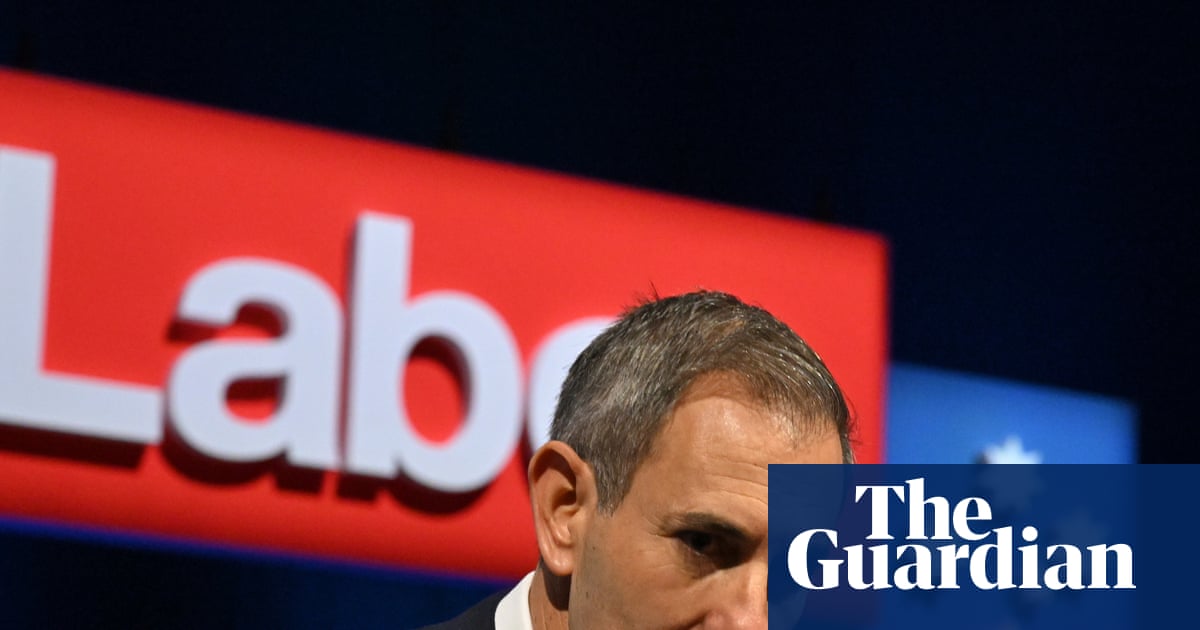
🔮 Jim Chalmers in a speech last week offered the scant encouragement that the economy would be “a bit better” in a year’s time.
🔮 Stephen Wu, an economist at investment bank UBS, said resilient consumer demand and a high inflation environment “may be allowing merchants to use the change as ‘cover’ to pass through broader cost pressures”.
🔮 Mark Cully, an economist and author of Waves of Plenty: Immigration and the Making of Australia, says such a policy would be “unprecedented”.
🔮 Would slashing net overseas migration “trash the economy” or deliver the necessary population “reset” to restore Australia’s stagnant living standards?
🔮 Yet there are signs that the central bank may be losing faith in this “slowly, slowly” strategy.
🔮 Tony Burke has promised to make Labor’s existing migration policy work better rather than announcing a dramatic cut in numbers, arguing that populist promises to slash net overseas migration will “trash Australian services and trash the Australian economy”.
Also by Patrick Commins
Nothing else under this byline is closely related to this article, so these are simply their most recent.
All 7 articles by Patrick Commins →

Topics

Australia France Iran Israel the University of Sydney

Subjects

France GPE · 13× Australia GPE · 5× Breunig PERSON · 3× Hartigan PERSON · 3× European NORP · 2× French NORP · 2× Iran GPE · 1× Israel GPE · 1× Luke Hartigan PERSON · 1× the University of Sydney ORG · 1×

Narrative

Amid structural pressures on the budget from an ageing population, the NDIS, higher interest rates, and the push for greater spending on national defence, Breunig agreed there were lessons for Australia in not allowing the country to drift too far and for too long. “We need an honest public conversation about what the government can be expected to do and what it can’t, and then a conversation about how much that would cost and whether we are willing to pay for that.” While the opposition has attacked what it sees as the deadening effect of high government spending on economic dynamism, Breunig said he was broadly “agnostic” whether repairing the budget involved lower spending or higher taxes.
framing: assertive · carried by 1 article(s) · first seen 2026-10-26
🔮 The explosion of discontent that led to major protests and violence in France and across Europe is a “warning signal” that Australia could follow the same path without an “honest conversation” about the budget, economists say.

Claims (26 extracted, 3 hedged)

The explosion of discontent that led to major protests and violence in France and across Europe is a “warning signal” that Australia could follow the same path without an “honest conversation” about the budget, economists say. uncertain
economists → lead → budget
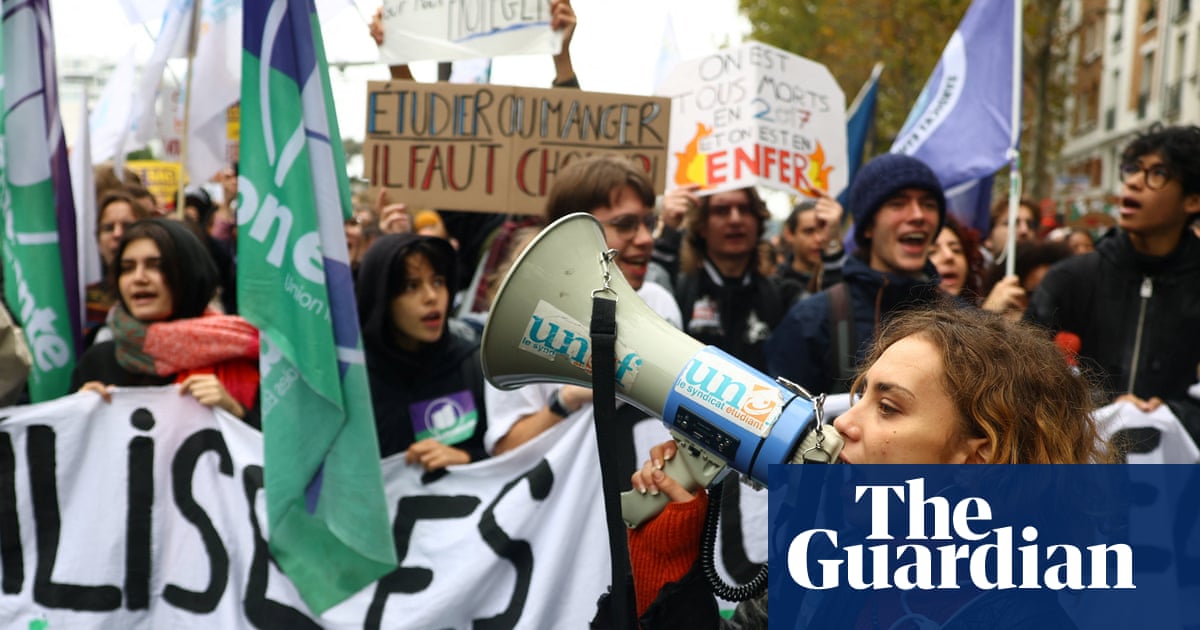
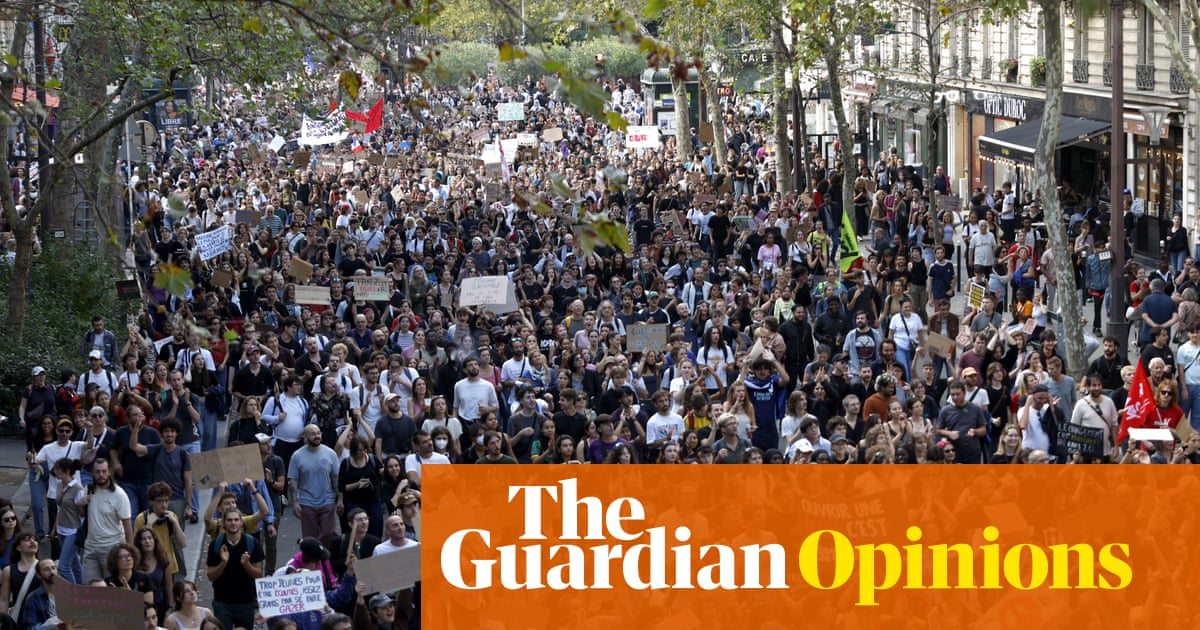
Hundreds of thousands marched in cities across France on Saturday to protest underfunded schools, as complaints of insufficient teacher numbers and dilapidated infrastructure mingled with broader discontent about cost-of-living pressures. asserted
complaints → march → pressures
Here, and across the developed world, people are struggling to cope with the affordability crisis, as households grapple with high and rising prices. asserted
households → struggle → prices
Luke Hartigan, a senior economics lecturer at the University of Sydney, said it was clear there was no single factor behind the discontent in France, but soaring energy costs were having a major impact. asserted
costs → say → impact
The US-Israel war on Iran has sent European gas prices soaring as the northern hemisphere approaches winter. asserted
hemisphere → send → winter
More fundamental, however, is that France’s finances are buckling under its generous welfare state. asserted
buckling → buckle → state
France’s high public debt, stagnant economy, and universal social security benefits have created a “binary” situation, Hartigan said, where citizens’ demands for better services and cost-of-living help are clashing with the country’s increasingly dire fiscal position. asserted
demands → create → position
France has not balanced its budget since 1974. asserted
France → balance → 1974
Meanwhile, total public debt as a share of the economy has swelled to nearly 120%, according to the International Monetary Fund. uncertain
debt → swell → Fund
Australia’s total government debt pile looks benign in comparison at 53%. asserted
pile → look → %
Hartigan said France’s lacklustre economy had compounded its fiscal problems, underlining how Australia needed to work hard to boost productivity. asserted
Australia → say → productivity
“If you think about trajectories, they [France’s challenges] give us an idea of where we could potentially be if we continue down this path,” Hartigan said. uncertain
Hartigan → think → path
“It’s a warning signal.” asserted
It → ’ → ?
Bob Breunig, the director of the ANU’s Tax and Transfer Policy Institute, said there was a growing gap between what voters believed the government should be able to do, and what politicians were able to deliver. asserted
politicians → say → what
“One thing that is happening everywhere is this narrative that the government should be able to solve all your problems, and that narrative has probably been pushed further in Europe than it has here. asserted
it → happen → Europe
It’s failing in both places, but it’s pointier there than here,” Breunig said. asserted
Breunig → fail → places
The evidence of this growing demand for government intervention is that French public spending now accounts for 58% of the economy, the IMF data shows. asserted
data → grow → economy
In contrast, Australia’s total public spending is equivalent to 40% of our national output – the highest in data stretching back to 1990, outside the pandemic, and at similar levels to the United States and the United Kingdom. asserted
spending → stretch → States
“All these protesters are asking the government to help them out, but the government has maxxed out the credit card,” Breunig said, who said France’s debt was “reaching levels that are unmanageable”. asserted
that → ask → levels
“The federal government here can still borrow and has a lot of flexibility, and the French just have no money.” asserted
French → borrow → money
President Emmanuel Macron’s decade in power has been marked with failed attempts to rein in spending. asserted
decade → mark → spending
“There’s a real sense that people don’t know what to do,” Breunig said. asserted
Breunig → ’ → what
The bond market reflects growing alarm with France’s fiscal trajectory. asserted
market → reflect → trajectory
France typically has to pay a higher interest rate on its 10-year debt than fiscally prudent Germany, and the gap between the two rates is a measure of financial markets’ confidence in France’s fiscal position. asserted
gap → have → position
Amid structural pressures on the budget from an ageing population, the NDIS, higher interest rates, and the push for greater spending on national defence, Breunig agreed there were lessons for Australia in not allowing the country to drift too far and for too long. “We need an honest public conversation about what the government can be expected to do and what it can’t, and then a conversation about how much that would cost and whether we are willing to pay for that.” While the opposition has attacked what it sees as the deadening effect of high government spending on economic dynamism, Breunig said he was broadly “agnostic” whether repairing the budget involved lower spending or higher taxes. asserted
repairing → age → spending
“At the end of the day, making these decisions is exactly what democracy is for.” asserted
democracy → make → what

💬Give feedback
🕘History 🎫Support