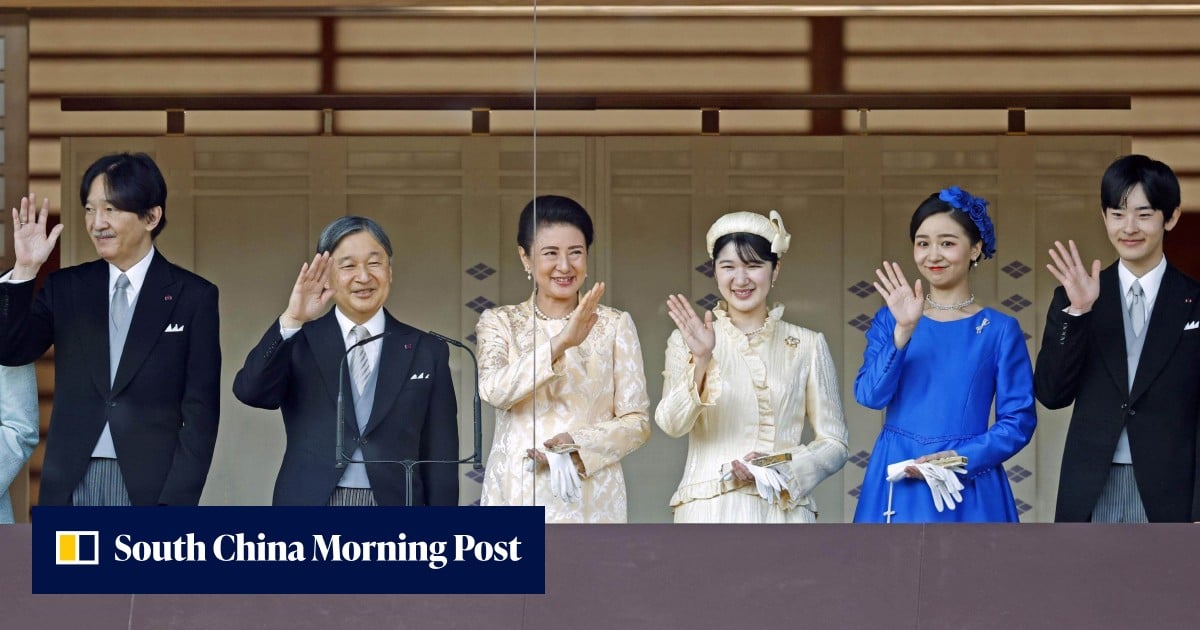
Japan’s unpopular revisions to the Imperial House Law that reinforce the male-only succession rules took effect Saturday.
asserted
that → reinforce → effect
The new rules are expected to bring historic changes to Japan’s 1,500-year-old monarchy.
asserted
rules → expect → monarchy
The changes include allowing the adoption of distant male relatives raised as commoners to become royals and father future heirs, and letting princesses keep their royal status after marrying commoners.
asserted
princesses → include → commoners
But the revised law bars Emperor Naruhito ‘s hugely popular daughter Princess Aiko, 24, from becoming his successor, and her future possible children from even becoming royals.
asserted
law → bar → royals
Critics say the revisions discriminate against people based on their family background or gender and put pressure on younger members of the royal family to produce male offspring.
asserted
revisions → say → offspring
The Imperial Household Agency has said officials are studying how to implement the measures.
asserted
officials → say → measures
The male-only succession rule means the line must move to the emperor’s younger brother Akishino, then to his 20-year-old nephew Prince Hisahito.
asserted
line → mean → nephew
Distant male adoptees are brought in to father male heirs
The revised law allows adoption of unmarried male descendants, aged 15 or older, of distant imperial relatives — but only of paternal lineage — into a branch of the royal family.
asserted
law → bring → family
The plan is to find candidates from families that renounced their royal status in 1947, which at the time was to ease the postwar financial burden on the monarchy.
asserted
which → find → monarchy
Four of the 11 such families remain, but they are at least 36 generations removed from Naruhito after splitting from a common male-line ancestor 600 years ago, officials said.
asserted
officials → remain → ancestor
The government efforts to make sure that male royals are producing male emperors have triggered criticisms.
asserted
royals → make → criticisms
Conservative scholars say there are a number of candidates, but so far nobody has come forward and many are skeptical if anyone will volunteer.
asserted
anyone → say → candidates
Experts also raise questions about the lack of transparency in the selection process.
asserted
Experts → raise → process
Princesses can remain royals after marriage, but with caveats
Previously, princesses who marry a commoner had to renounce their royal status and leave the royal family.
asserted
who → remain → family
The last one who did so, though willingly, was Mako, one of two nieces of Naruhito, who married her college boyfriend in 2021 and has moved to the U.S. where he became a lawyer.
asserted
he → do → U.S.
Five single princesses, including Aiko and her cousin, Kako, 31, can now choose whether to remain as royals if they marry.
asserted
they → include → royals
The change is intended to keep female royals from leaving, allowing them to pursue their work and help in official duties as the imperial lineage ages and declines.
asserted
lineage → intend → duties
But experts say the effect will be limited because the law does not give royal status to their future husbands and children.
asserted
law → say → husbands
The measure raises many questions and concerns.
asserted
measure → raise → questions
They include wedding rituals, where the princesses should live after marriage, and whether husbands or children can accompany princesses on official duties.
asserted
husbands → include → duties
Experts say their main concern is a possibility that some civil rights of commoner husbands and their children could be restricted as with the royals.
uncertain
rights → say → royals
Barring husbands and children from having royal status is clearly an attempt to prevent maternal-line succession, said Hideya Kawanishi, a Nagoya University professor and expert on monarchy.
asserted
Kawanishi → bar → monarchy
“We will find all kinds of issues that are incoherent.”
asserted
that → find → issues
People take to the streets to campaign for Aiko’s succession
All but one mainstream newspaper have criticized the revisions, and media surveys show a large majority of the public support female monarchs or maternal-line succession.
Influential cartoonist Yoshinori Kobayashi, who has written political comics and supports female monarchs and maternal-line succession, calls the revised law unconstitutional and is set to file a lawsuit against the government.
asserted
who → take → government
Japanese people, largely conservatives who are fans of Aiko or oppose the male-line succession, have taken to the streets in recent weeks and their movement is growing.
Earlier in October, hundreds of people marched in downtown Tokyo to campaign for Aiko’s succession rights and ask for another revision to the law.
asserted
hundreds → oppose → law
“Aiko-sama for crown prince!” they chanted.
asserted
they → chant → prince
 The Aporia