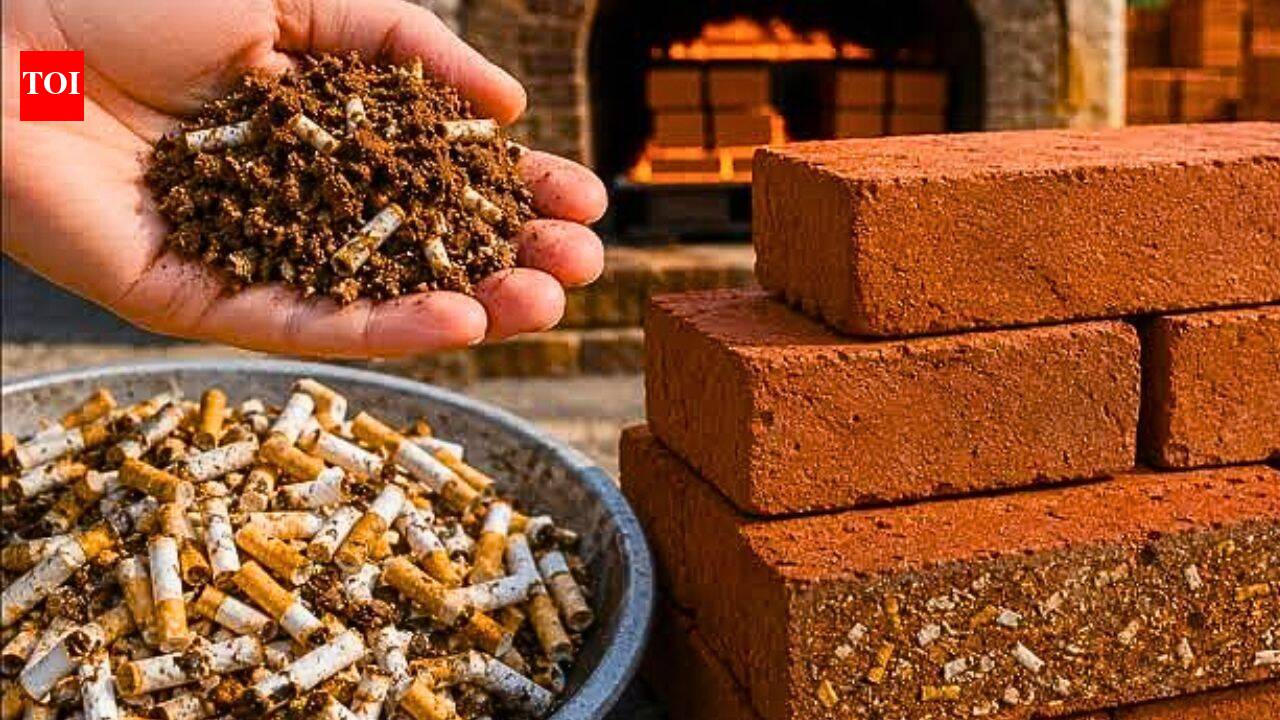
Cigarette butts are one of the world’s most common forms of litter, but the researchers have found a way to reuse this waste by incorporating it into bricks.
asserted
researchers → find → bricks
Their research explores how discarded cigarette filters could be collected, processed, and added to lightweight fired-clay bricks on an industrial scale.
uncertain
filters → explore → scale
Earlier RMIT research found that bricks containing 1% recycled cigarette butts could match the strength of conventional bricks while using less energy during production.
uncertain
bricks → find → production
The researchers also examined the health and safety concerns involved in handling cigarette waste, including harmful bacteria and heavy metals.
asserted
researchers → examine → bacteria
The approach could therefore help reduce cigarette butt litter while also lowering the energy required to produce bricks.
uncertain
approach → help → bricks
How cigarette waste could be used to make lightweight bricks
RMIT researchers developed a plan to recycle cigarette butts into bricks on a larger scale.
uncertain
researchers → use → scale
The approach builds on earlier work showing that fired-clay bricks containing 1% recycled cigarette butts can be as strong as conventional bricks.
asserted
bricks → build → bricks
The latest plan outlines how the brickmaking and waste management industries could work together to collect discarded filters and use them in brick production.
uncertain
industries → outline → production
Researchers examined several ways to add the material, including whole cigarette butts, shredded filters, or a pre-mix combined with other brickmaking ingredients.
asserted
Researchers → examine → ingredients
The plan also includes health and safety measures for both industrial production and handmade bricks to address the risks associated with handling cigarette waste.
asserted
plan → include → waste
PC: AI Generated
What makes discarded cigarette butts harmful to the environment
Cigarette butts contain toxic substances that can remain in the environment for years after they are discarded.
asserted
they → generate → years
According to RMIT, cigarette filters contain more than 60 chemicals known to cause cancer, along with heavy metals such as arsenic, chromium, nickel and cadmium.
uncertain
filters → accord → arsenic
When cigarette butts are left as litter, these substances can make their way into soil and waterways.
asserted
substances → leave → soil
The research also examines bacteria found on discarded filters and how heavy metals can enter the environment.
asserted
metals → examine → environment
“Firing butts into bricks is a reliable and practical way to deal with this terrible environmental problem, while at the same time cutting brickmaking production costs,” says lead researcher Abbas Mohajerani.
asserted
Mohajerani → deal → costs
This could help prevent these contaminants from spreading into streets, soil, rivers and waterways.
uncertain
This → help → streets
Recycled cigarette waste could offer benefits beyond waste reduction
Cigarette butts could serve a useful purpose during brick production rather than simply being sealed inside the finished product.
uncertain
butts → recycle → product
RMIT research found that replacing 1% of the brick material with cigarette butts could reduce the energy needed for firing by 10%.
uncertain
replacing → find → %
Brick firing can take up to 30 hours, so cutting the energy needed for this process could make manufacturing more efficient.
uncertain
manufacturing → take → process
The researchers also found that bricks containing cigarette butts are lighter and offer better insulation than conventional bricks.
asserted
bricks → find → bricks
These characteristics could help lower heating and cooling needs in buildings.
uncertain
characteristics → help → buildings
The recycled material could offer benefits during manufacturing and throughout the life of the finished bricks.
uncertain
material → offer → bricks
How much cigarette waste could be used in brick production
The sheer volume of cigarette waste makes collection an important part of the proposed recycling system.
uncertain
collection → use → system
RMIT reports that more than 6 trillion cigarettes are produced worldwide each year, generating about 1.2 million tonnes of toxic waste.
asserted
cigarettes → report → waste
The researchers note that specialised bins could help local authorities collect discarded cigarette butts before they become litter and make the material easier for brickmakers to access.
uncertain
brickmakers → note → butts
Their analysis found that using cigarette butts in just 2.5% of global brick production, at a rate of 1%, would match the number of cigarettes produced each year.
asserted
using → find → cigarettes
A reliable collection system would be essential to supply enough discarded butts for recycling.
asserted
system → supply → recycling
What measures could help reduce cigarette butt litter
The researchers say recycling technology alone will not be enough to tackle cigarette butt litter.
uncertain
technology → help → litter
Their plan also calls for stronger laws, tougher penalties for littering and specialised collection bins.
asserted
plan → call → littering
These measures could help keep cigarette butts out of streets, rivers and oceans while creating a steady supply of waste for recycling.
uncertain
measures → help → recycling
The team proposes dedicated recycling facilities linked to brickmaking in countries around the world.
asserted
team → propose → world
Such facilities could connect waste collection with brick production and make the process easier to manage on a larger scale.
uncertain
process → connect → scale
The researchers believe that combining recycling technology with organised collection systems and stronger anti-littering measures could help reduce cigarette waste and its impact on the environment.
uncertain
combining → believe → environment
 The Aporia