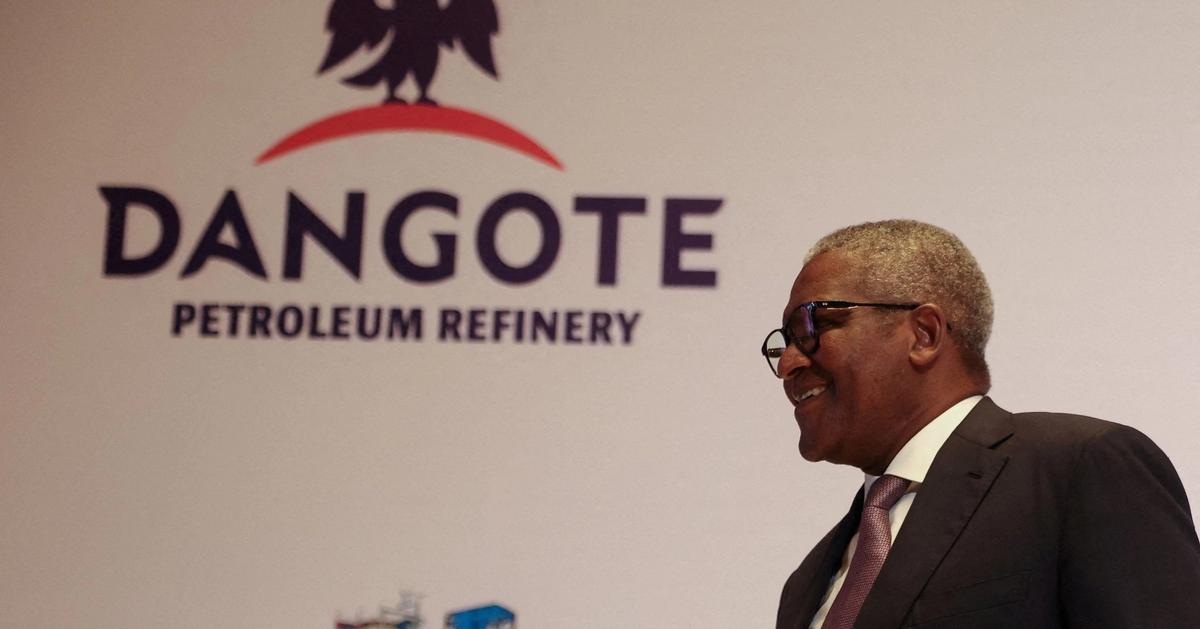
Nigeria’s trade surplus doubles to $9.5B

Semafor · collected 2026-09-15 · by Alexander Onukwue
Read the original at Semafor ↗

Summary

Nigeria reported a trade surplus of $9.5 billion in the second quarter, doubling from the previous year due to decreased fuel imports and increased exports of crude oil and raw materials. This growth was further bolstered by higher global oil prices and expanded refining capacity at the Dangote Refinery, contributing to Nigeria’s GDP expansion of 4.43% year-over-year, the fastest rate in five years. Despite this progress, Nigeria continues to import fuel due to regulatory requirements aimed at maintaining competition in the domestic market.
Written by the local model on 2026-09-15, using this article's own text rather than the other coverage of the same event (that is the story summary below).

Signals How these are calculated →

Claims extracted
6
claim-shaped sentences
Uncertain
0%
0 of 6 hedged
Leaning
not political
takes no side on a contested political question
Correction & hedging signals
94.9
corrections and hedging in what we collected; not a measure of accuracy
Outlets on this story
1
Economy/Business
Narrative spread
1
articles carrying this framing
Analyzed 2026-09-15 · how these are computed

AI analysis (generated at analysis time, not now)

Story summary

Nigeria's trade surplus doubled to $9.5 billion in the second quarter of this year compared to the same period last year, according to the government’s statistics agency. This growth was driven by a decrease in fuel imports and an increase in crude oil and raw material exports. The country's GDP expanded at its fastest pace in five years, growing 4.43% year-over-year, partly due to higher oil prices amid tensions with Iran.

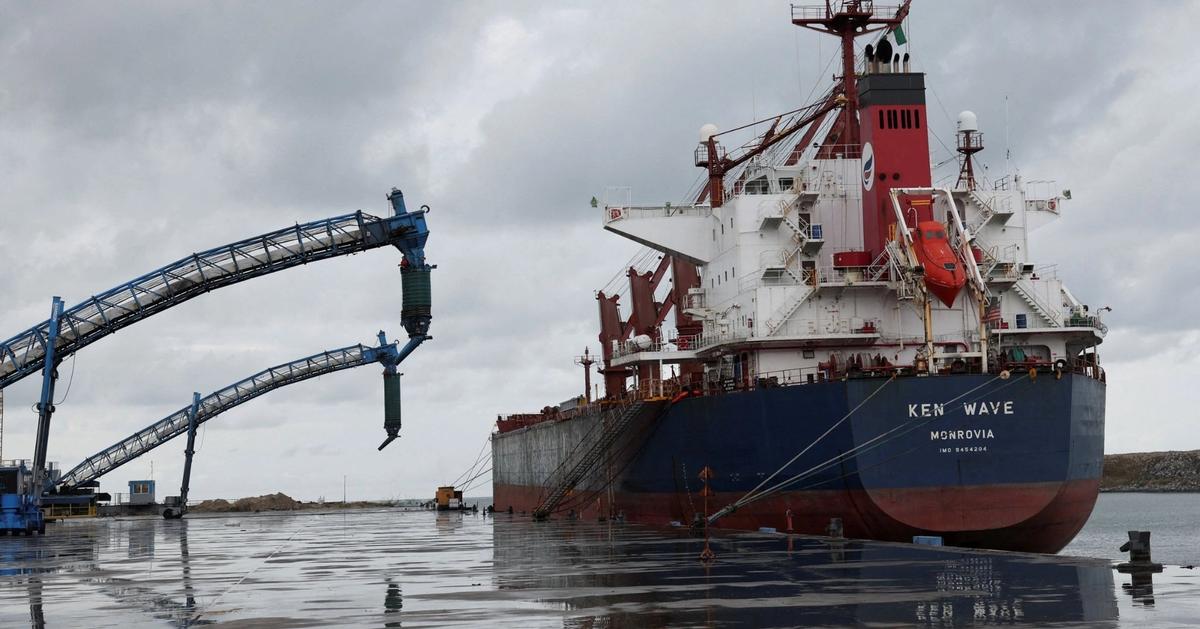
The improved trade balance is attributed to the Dangote Refinery, which reached full operational capacity this year after initially starting up in September 2024. The refinery has reduced Nigeria’s reliance on imported fuel by enhancing domestic refining capabilities. Dangote plans to double its output to 1.4 million barrels per day, further boosting local production and economic growth. However, despite these improvements, Nigeria continues to import significant amounts of fuel due to regulatory requirements aimed at maintaining competition in the downstream oil sector.
Written for “Nigeria Trade Surplus Increases” on 2026-09-17, grounded in this article and the 0 other(s) covering the same event.
Why this leaning score
This article does not take a side on a contested political question, so it has no leaning score. That is an answer rather than a gap: a match report or a rescue can be warmly or critically written without being left or right, and scoring it anyway is how approval of a subject gets recorded as a political position.
No political leaning scored for article 10642 · logged 2026-09-15

Story

📰 Nigeria Trade Surplus Increases
Economy/Business · 1 article(s) covering the same event. This is the one the site leads with.

How this is being covered How these are calculated →

Article leaning vs. publisher reliability
Source leaning vs. consistency

Compared with similar articles

Nothing to compare against. No article is close enough to this one for the pipeline to have linked or judged the pair.

Publisher

Semafor · 356 article(s) · 0 correction(s) detected
No corrections detected for this publisher. That may mean careful reporting, or simply that nothing has been checked.

Who wrote this

Alexander Onukwue
15 article(s) here · 1 carrying a prediction
🔮 Enhanced domestic refining capacity has reduced Africa’s biggest crude oil producer’s longstanding dependence on fuel imports, and that capacity is set to increase further with Dangote’s plans to double output to 1.4 million barrels per day.
2026-09-15 · assertive framing · Nigeria’s trade surplus doubles to $9.5B
🔮 But it remains unclear where the planned refinery in Lamu, which Dangote aims to complete by 2030, will secure its feedstock from: Kenya imports nearly all of its oil from the Middle East.
2026-09-15 · mixed framing · Dangote faces Kenya refinery hurdles
🔮 “Pay had to be subsidized to make drivers willing to take rides.
🔮 When the initial offer closes next month, the company will have raised more than $4 billion at about a $50 billion valuation, if demand matches the year-long buzz partly driven by the company’s pledge to pay dividends in US dollars.
2026-09-14 · assertive framing · Dangote launches Africa’s largest ever IPO
🔮 The initial public offering of the Dangote Refinery in Nigeria will open on Monday, in what is set to be the largest debut on any African stock exchange.
2026-09-12 · assertive framing · Dangote Refinery braced for IPO
🔮 The News Nigerian healthcare investors are positioning to take advantage of untapped commercial opportunities in a sector that new research says will generate more than $50 billion in sales by the end of the decade.
🔮 S&P Global Ratings downgraded Senegal’s long-term foreign currency rating, citing a high chance that the country will default on its debt following an agreement reached with the IMF for a $2.2 billion loan.
2026-09-07 · assertive framing · S&P downgrades Senegal on debt fears
🔮 The company, whose 700,000 barrels-a-day oil plant is Africa’s largest, is set to raise about $1.6 billion.
2026-09-07 · assertive framing · Dangote Refinery sets IPO price in Lagos
🔮 The company, which began offering new cars to Nigerian Uber drivers five years ago with a payment plan tied to daily earnings, is set to leave the country as Uber’s shock exit makes its business untenable, a person with knowledge of the plans said.
2026-09-07 · assertive framing · Uber’s unicorn partner Moove mulls Nigeria exit
🔮 The opposition African Democratic Congress said it will anchor its campaign on a promise to reinstate the multibillion-dollar program, whose removal three years ago drove up food and transportation prices to create a cost-of-living crisis that still persists in Africa’s most populous country.
2026-09-06 · assertive framing · Nigerian opposition vows to restore fuel subsidy
More on this subject from Alexander Onukwue
Dangote Refinery sets IPO price in Lagos
2026-09-07 · Semafor · 76% similar
Nigeria's economy grows at fastest pace in five years
2026-09-06 · Semafor · 72% similar
Dangote faces Kenya refinery hurdles
2026-09-15 · Semafor · 67% similar
Dangote Refinery braced for IPO
2026-09-12 · Semafor · 64% similar
All 15 articles by Alexander Onukwue →

Topics

Nigeria Nigerian the Iran war

Subjects

Nigeria GPE · 2× Nigerian NORP · 1×

Narrative

Enhanced domestic refining capacity has reduced Africa’s biggest crude oil producer’s longstanding dependence on fuel imports, and that capacity is set to increase further with Dangote’s plans to double output to 1.4 million barrels per day.
framing: assertive · carried by 1 article(s) · first seen 2026-09-15
🔮 Enhanced domestic refining capacity has reduced Africa’s biggest crude oil producer’s longstanding dependence on fuel imports, and that capacity is set to increase further with Dangote’s plans to double output to 1.4 million barrels per day.
2026-09-15 · Semafor
Nigeria’s trade surplus doubles to $9.5B · assertive framing

Claims (6 extracted, 0 hedged)

Nigeria’s trade surplus grew to $9.5 billion in the second quarter, doubling in size compared with the same period last year, the government’s statistics agency said. asserted
agency → grow → period
The shift was driven by a fall in fuel imports and a rise in the exports of crude oil and raw materials. asserted
shift → drive → oil
Higher oil prices as a result of the Iran war and increased exports have also helped drive broad economic growth, with Nigerian GDP expanding 4.43% year-on-year in the second quarter, the fastest pace in five years. asserted
GDP → increase → years
The trade data points to the impact of the Dangote Refinery, which began operating at full capacity this year, after initially coming online in September 2024. asserted
which → point → September
Enhanced domestic refining capacity has reduced Africa’s biggest crude oil producer’s longstanding dependence on fuel imports, and that capacity is set to increase further with Dangote’s plans to double output to 1.4 million barrels per day. asserted
capacity → reduce → day
Nigeria still maintains a sizable fuel import bill, however, as the downstream oil sector’s regulator insists that imports are necessary for local competition. asserted
imports → maintain → competition
💬 Give feedback
🕘 History 🎫 Support