It takes an average of just six weeks for opposing forces to develop a countermeasure to new technology deployed on the battlefield in Ukraine.
asserted
forces → take → Ukraine
That rapid pace of innovation, driven by drones and robotics, is forcing NATO and its member countries to rethink how they acquire military equipment, while raising questions about whether international law can keep up with modern warfare.
asserted
law → drive → warfare
The Canadian Press witnessed this technological race firsthand in Latvia, where Canada leads a NATO multinational brigade.
asserted
Canada → witness → brigade
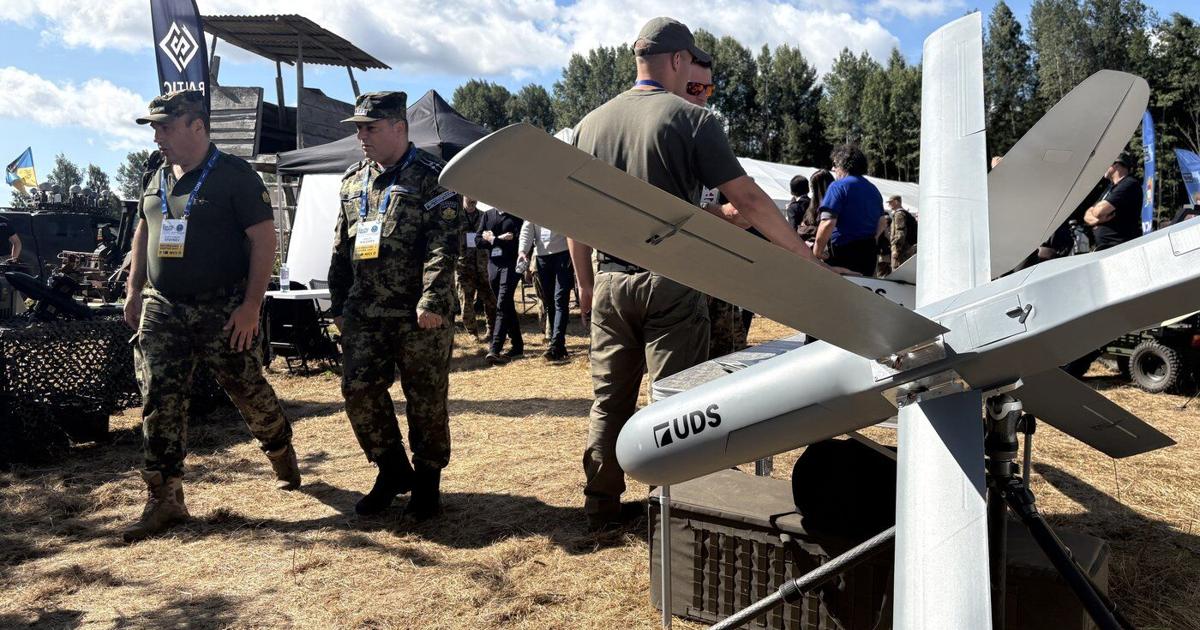
On Aug. 13, in a field near Selija in southwestern Latvia, the country’s prime minister, Andris Kulbergs, and Defence Minister Raivis Melnis gathered with military officials and representatives from 27 NATO countries, including Canada.
asserted
minister → gather → Canada
Under cloudy skies, a drone sped overhead before another aircraft suddenly appeared behind it.
asserted
aircraft → speed → it
The second drone, an NS3 interceptor capable of reaching speeds of 350 kilometres per hour, placed an explosive charge on the target drone, destroying it.
asserted
drone → reach → it
The dignitaries applauded.
asserted
dignitaries → applaud → ?
The company was among dozens of drone manufacturers participating in Baltic Trust, an exercise attended by 375 industry representatives hoping to persuade NATO military officials to purchase their technology.
asserted
company → participate → technology
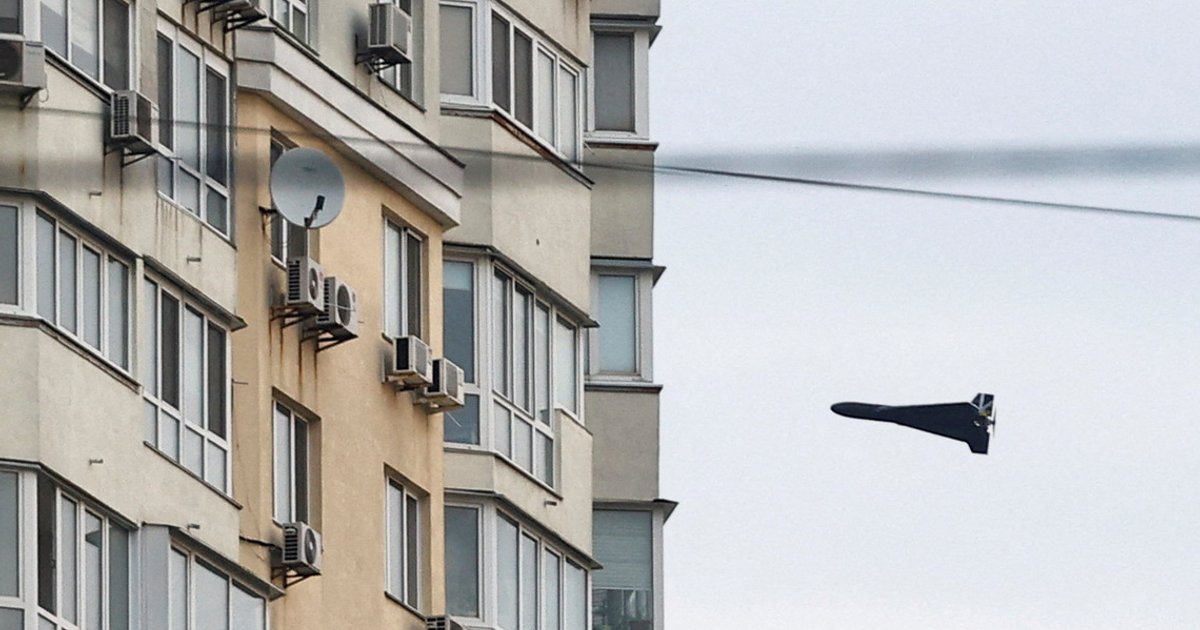
The exercise took place as Latvia faced repeated drone incursions suspected of originating from Russia and Belarus.
asserted
Latvia → take → Russia
Aleksandrs Stupans, DK Unity’s business development manager, said the company relies on constant feedback from Ukrainian soldiers to improve its products.
asserted
company → say → products
“We have all this technology developed with weekly reference from the battlefield because we have our partner company in Kyiv, in Ukraine, and they are working with more than 100 different battle units,” he said.
asserted
he → have → units
Some of the company’s drones are already being deployed in Ukraine.
asserted
Some → deploy → Ukraine
The six-week turnaround was documented in a recent analysis by a French parliamentary committee on foreign affairs and defence.
asserted
turnaround → document → affairs
Janis Kazocins, an expert at the Riga Centre for Geopolitical Studies and former national security adviser to Latvia’s president, said armies that adapt quickly gain an advantage.
asserted
that → say → advantage
The constant need to develop new countermeasures requires close collaboration between soldiers, scientists and private companies.
asserted
need → develop → soldiers
He recalled how Ukrainian forces developed an effective system to detect Russian drones by sound and shoot them down using heavy machine guns.
asserted
forces → recall → guns
“And then the Russians simply started flying them through at 400 metres higher, and the bullets didn’t reach that far,” he said.
asserted
he → start → them
The problem, he explained, is that while the hardware is relatively simple, software and communications systems are evolving so quickly that what works today may no longer work in six or eight weeks.
uncertain
works → explain → weeks
He warned NATO countries against assuming they could simply purchase large quantities of Ukraine’s most effective drones and store them in preparation for a potential Russian attack.
uncertain
they → warn → attack
“The most dangerous thing to do is to imagine that we now know how drones or robotics work,” he said.
“
asserted
he → do → ?
We need to buy a service, something which is developing all the time, to which we need to contribute our technology as well.”
asserted
we → need → technology
At the Ādaži military base in Latvia, Canadian Col. David Brassard, commander of NATO’s multinational brigade, said his unit is modernizing its procurement procedures to become more agile and respond to rapidly evolving technology.
asserted
unit → say → technology
He said innovation no longer comes exclusively from factories but increasingly from soldiers on the front lines.
asserted
innovation → say → lines
Ukrainian troops, for example, use computer programming and 3D printers to modify drones directly on the battlefield, adapting them to emerging threats.
asserted
troops → use → threats
Brassard acknowledged that NATO forces in Latvia have not yet reached the same level of adaptability as Ukrainian troops but expressed confidence they would get there.
asserted
they → acknowledge → confidence
Kazocins prefers the term “robots” to “drones,” noting that unmanned vehicles increasingly operate on land and at sea, not just in the air.
asserted
vehicles → prefer → air
Ukrainian forces, for example, are deploying autonomous maritime platforms, including the seven-metre-long Magura MV1, which reportedly can operate for seven days at sea and carry a payload of 2,200 kilograms.
uncertain
which → deploy → kilograms
“The Ukrainians are now using seaborne autonomous platforms, to bring in drones which fly off from these platforms and attack in Black Sea in the Crimean and the Russian coast,” Kazocins said.
asserted
Kazocins → use → coast
He compared the technological transformation to the shift from cavalry and horse-drawn transport to mechanized vehicles and tanks between the two world wars.
asserted
He → compare → wars
Artificial intelligence is also enabling the development of drone swarms, which the United Nations Institute for Disarmament Research describes as systems in which multiple robots coordinate their actions to accomplish a common objective.
asserted
robots → enable → objective
Kazocins said such tactics are already being used in Ukraine, where groups of drones carry out different missions, with some serving as decoys, others conducting surveillance and others carrying out attacks.
asserted
others → say → attacks
The operations rely on “very sophisticated software” and “very sophisticated communications technology,” he said.
asserted
he → rely → software
On April 13, Ukrainian President Volodymyr Zelensky announced that his forces had captured an enemy position exclusively using unmanned ground vehicles and explosive drones, in what he described as a first in the war.
asserted
he → announce → war
He said the operation was carried out without Ukrainian casualties.
asserted
operation → say → casualties
Zelensky also said Ukrainian unmanned ground vehicles had completed more than 22,000 frontline missions in three months, describing each mission as a life saved.
asserted
vehicles → say → life
The growing use of autonomous weapons is raising concerns among international organizations.
asserted
use → grow → organizations
In a joint appeal published Aug. 25, United Nations Secretary-General António Guterres and International Committee of the Red Cross President Mirjana Spoljaric urged countries to establish rules ensuring technological advances do not outpace international humanitarian law.
asserted
advances → publish → law
They warned that the autonomous targeting of human beings by machines risks crossing a moral red line.
asserted
targeting → warn → line
The warning came ahead of discussions in Geneva, where countries have been examining ways to regulate lethal autonomous weapons systems.
asserted
countries → come → systems
Over the past three years, the 65 countries participating in the Conference on Disarmament have examined ways to regulate lethal autonomous weapons systems.
asserted
countries → participate → systems
…and 3 more, not listed.
 The Aporia