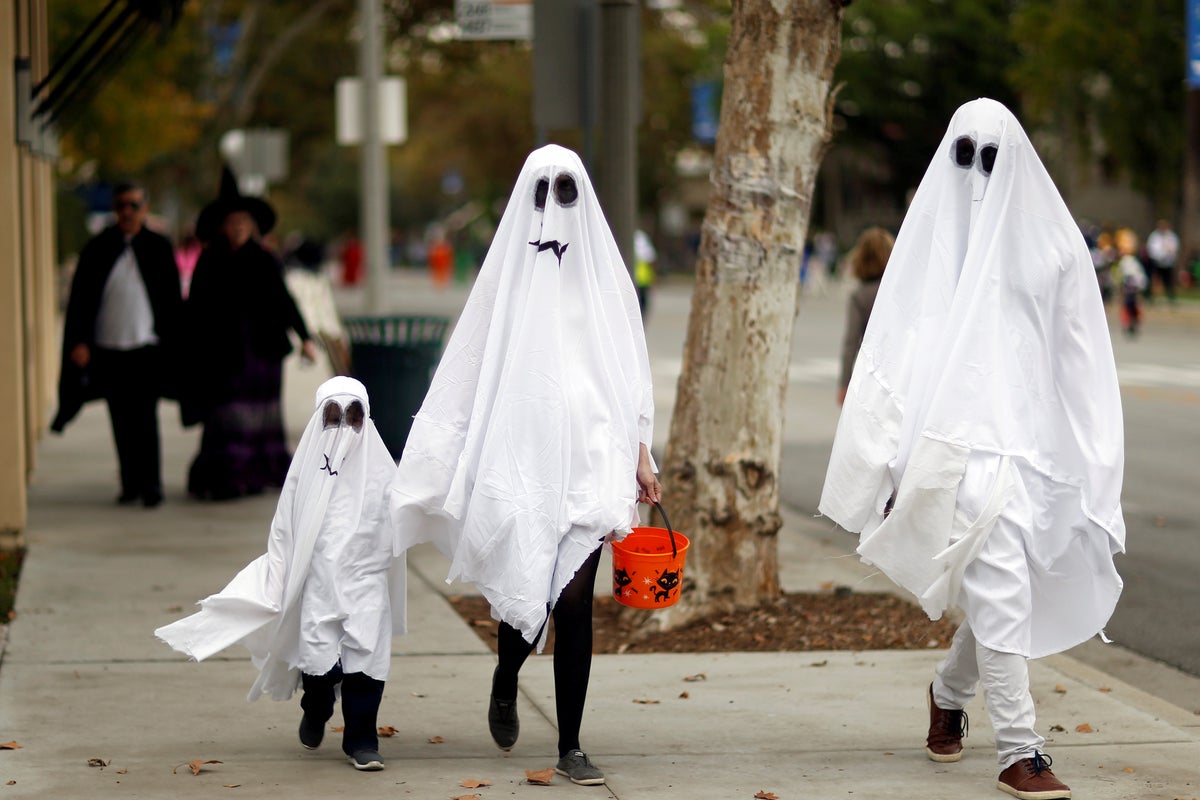
Halloween candy sales are off to a slow start amid high chocolate prices and affordability concerns

Read the original at Toronto Star ↗
Cite

Durbin, D. a. (2026, October 24). Halloween candy sales are off to a slow start amid high chocolate prices and affordability concerns. Toronto Star. https://www.thestar.com/news/world/united-states/halloween-candy-sales-are-off-to-a-slow-start-amid-high-chocolate-prices-and-affordability-concerns/article_f1f47537-81fd-5b1e-aea8-f293e57c4b58.html

Dated from the outlet's own feed. Check the original for its byline.

Toronto Star · collected 2026-10-24 · by Dee-ann Durbin

Quick Summary

Halloween candy sales in the United States are declining due to high living costs and rising chocolate prices, falling 6.7% from October 1 to October 17 compared to the same period last year according to NielsenIQ data. The decline follows an 11.7% drop in September. Chris Costagli of NielsenIQ attributes this trend to consumers prioritizing expenses like fuel and housing over discretionary items such as Halloween candy, noting that small bags are seeing growth while large sizes are declining significantly.
Written locally by qwen2.5:14b on 2026-10-24, using this article's own text rather than the other coverage of the same event (that is the story summary below).

AI analysis runs on qwen2.5:14b, locally

Story summary

Halloween candy sales in the U.S. are off to a slow start this year, falling 6.7% in the month ending October 17 compared to the same period last year, according to NielsenIQ, a market research firm. This decline follows an earlier drop of 11.7% in mid-September that erased early-season sales gains from previous years. Chris Costagli, a vice president and food thought leader at NielsenIQ, attributes this trend to high living costs and steep chocolate prices, exacerbated by rising fuel expenses. As of October 20, the average price for a gallon of regular gasoline was $4.29, up nearly 40% from last year. Consumers are cutting back on non-essential items like Halloween candy due to financial strain from increased costs in other areas such as housing and food.

Written for “Halloween Candy Sales Drop” on 2026-10-25, grounded in this article and the 2 other(s) covering the same event.

Story

📰 Halloween Candy Sales Drop
Economy/Business · 3 article(s) covering the same event. Compare every outlet's account →

Compared with similar articles

This article reads unscored and hedges 15% of its claims. Each row says how that neighbour differs.
New York Post · 0.99 cosine similarity
⚖️ Leans left 🔴 15% hedged 4 of 27 📰 publisher trust 66
“Both articles describe the same decline in Halloween candy sales due to high chocolate prices and living costs, citing identical data from NielsenIQ.”
The Independent
⚖️ Leans left 🔴 4% hedged 1 of 24 📰 publisher trust 59
“Both articles describe the identical situation of Halloween candy sales dropping in October 2026 due to high living costs and chocolate prices, citing the same market research data from NielsenIQ.”
How this article was measured signals, leaning charts, publisher record, byline, topics and claims

Signals How these are calculated →

Claims extracted
27
sentences that state something as happening or true
Uncertain
15%
4 of 27 hedged ("reportedly", "may", "according to")
Leaning
withheld
no quote in the article backed the model's score
Publisher signals
64/100
Toronto Star's corrections and hedging, across everything collected from it. Not a measure of accuracy.
Outlets on this story
3
Economy/Business
Same framing elsewhere
1
articles that frame the event the way this one does
Analyzed 2026-10-24 · how these are computed

How this is being covered How these are calculated →

Article leaning vs. publisher reliability
Source leaning vs. consistency

Publisher

Toronto Star · 9802 article(s) · 26 correction(s) detected
Running correction rate · 26 correction(s)
2026-10-24
Correction
2026-10-07
Correction
2026-09-24
Correction

Who wrote this

Dee-ann Durbin
6 article(s) here · 1 carrying a prediction
🔮 The El Niño weather pattern is also expected to hurt production, with hot, dry conditions expected through February.
🔮 Artificial intelligence tools help businesses decide what to charge by predicting how customers might respond.
🔮 Shoppers may not be spared indefinitely, though.
🔮 Starbucks is facing a consumer lawsuit over claims that the protein drinks labeled “sugar-free” on its cafe menus may actually contain more sugar than a Reese’s peanut butter cup.
🔮 But a taste for a cheap, crowd-pleasing meal may be something the two leaders share.
Also by Dee-ann Durbin
Nothing else under this byline is closely related to this article, so these are simply their most recent.
All 6 articles by Dee-ann Durbin →

Topics

Americans Costagli Nielsen NielsenIQ U.S.

Subjects

U.S. GPE · 4× Costagli PERSON · 3× Nielsen ORG · 2× NielsenIQ ORG · 2× Aldi ORG · 1× Americans NORP · 1× Chris Costagli PERSON · 1× Iran GPE · 1× Mars Inc. ORG · 1× the U.S. Bureau of Labor Statistics ORG · 1×

Narrative

Sally Lyons Wyatt, a global executive vice president and food industry adviser for the market research company Circana, said one way U.S. consumers have been handling higher grocery prices is by making smaller and more frequent trips to the supermarket and buying products right before they intend to use them.
framing: assertive · carried by 1 article(s) · first seen 2026-10-24
🔮 The El Niño weather pattern is also expected to hurt production, with hot, dry conditions expected through February.

Claims (27 extracted, 4 hedged)

Halloween candy sales are off to a slow start this year as U.S. consumers grapple with high living costs and eye-popping chocolate prices. asserted
consumers → grapple → costs
Halloween candy sales fell 6.7% in the month ending Oct. 17 compared to the same period last year, according to NielsenIQ, a market research firm. uncertain
sales → fall → NielsenIQ
Nielsen also noted an 11.7% decline in candy sales in mid-September, erasing the preseason gains that Halloween candy enjoyed the previous two years. asserted
candy → note → that
Chris Costagli, a vice president and food thought leader at NielsenIQ, said high gas prices have worsened Americans’ concerns about affordability, and that’s dampening demand for Halloween treats. asserted
that → say → treats
“I think what you’re seeing now is a consumer that’s spending so much additional money on fuel and housing and clothing and food,” Costagli said. asserted
Costagli → think → fuel
“Some of the decisions they’re making about Halloween candy, it’s not necessarily because, ‘I notice it’s more expensive than last year,’ it’s, ‘I can’t afford it this year because I’ve paid so much more for so many other things. asserted
I → make → things
I just don’t have the financial means to buy it this year.’” asserted
I → have → it
Small bags of candy were the only sizes seeing sales growth through mid-October, Costagli noted. asserted
Costagli → see → October
Large and extra-large bags were seeing the biggest declines. asserted
bags → see → declines
U.S. candy prices have been climbing faster than the rate of inflation for several years. asserted
prices → climb → years
As of September, candy and gum prices were up 44% over a five-year period, according to government data. uncertain
prices → accord → data
Prices for all food eaten at home rose 22.5% in the same period. asserted
Prices → eat → period
This week, discount grocer Aldi was advertising a 135-piece variety pack of Mars Inc. chocolate bars – including Milky Way, Trix and Snickers – for $19.87. asserted
Aldi → advertise → 19.87
That’s almost the same price consumers paid for a 250-piece variety pack five years ago. asserted
consumers → ’ → pack
Global cocoa prices reached a record high of $10,710 per metric ton in January 2025 because of poor weather in West Africa – which supplies 70% of the world’s chocolate — and speculative trading in the cocoa futures market, according to the U.S. Bureau of Labor Statistics. uncertain
which → reach → Statistics
Cocoa prices had been falling steadily since then, and hit $3,241 per metric ton in March. asserted
prices → fall → March
But they began climbing again in the spring as the Iran war disrupted Africa’s fertilizer supplies. asserted
war → begin → supplies
The El Niño weather pattern is also expected to hurt production, with hot, dry conditions expected through February. asserted
conditions → expect → February
But Costagli noted that even in cases where prices are lower than last year, consumer demand is muted. asserted
demand → note → year
The average price of non-chocolate Halloween candies, like gummies and lollipops, was $6.08 per pound in the nine weeks ending Oct. 17, which was about 3% lower than last year, according to Nielsen data. uncertain
which → end → data
But that didn’t lead to a bump in sales. asserted
that → lead → sales
Sally Lyons Wyatt, a global executive vice president and food industry adviser for the market research company Circana, said one way U.S. consumers have been handling higher grocery prices is by making smaller and more frequent trips to the supermarket and buying products right before they intend to use them. asserted
they → say → them
That makes her wonder if shoppers are waiting until closer to Halloween to buy candy this year. asserted
shoppers → make → candy
“People are very intentional and thoughtful about what they want to consume, not just for holidays, but in general,” she said. asserted
she → want → holidays
“I do believe we will still see softness overall with candy, but I don’t think Halloween is doomed.” asserted
Halloween → believe → candy
The National Confectioners Association, a trade group that represents candy makers like Mars, Smarties Candy Co. and Ferrara Candy Co., said it remains optimistic about Halloween sales. asserted
it → represent → sales
“We are just now entering the peak period for Halloween and consumer enthusiasm remains incredibly strong,” the group said Friday in a statement. asserted
group → enter → statement

💬Give feedback
🕘History 🎫Support