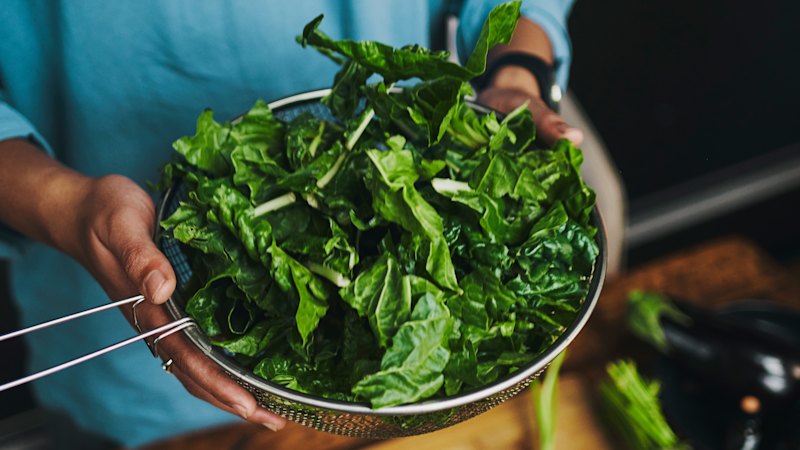
When Peter Sabato was a kid, his mother always served healthy meals to him and his seven siblings, though he admits he wasn’t always convinced.
asserted
he → serve → him
“I threw away the fruit in my school lunch many times and hid my vegies at dinner,” he recalls.
asserted
he → throw → dinner
Now, the 64-year-old Melbourne man says he enjoys an active lifestyle (mainly walking and golf) and a healthy diet – fruit and veg included.
asserted
fruit → say → lifestyle
“I now love my vegies and try to add them to meals,” he says.
asserted
he → love → meals
“Even if it’s a bought meal, I’ll bulk it up with extra broccoli and maybe add some olives and roasted capsicums to snack on with a bit of cheese beforehand.
asserted
I → ’ → cheese
While fruit and vegetables are a sure-fire benefit, sports dietitian Simone Austin says there are other important considerations for those in their 60s and beyond, when our body’s nutritional needs shift fundamentally.
asserted
needs → say → 60s
Muscle preservation, metabolic balance and nutrient absorption take centre stage, requiring a more targeted approach to what’s on our plates.
asserted
what → take → plates
Says Austin, “With hormonal changes such as a reduction in oestrogen in women and testosterone in both men and women, the body changes.
asserted
body → say → men
Women can put on excess weight more easily around the stomach region, and both men and women lose muscle mass more rapidly.”
asserted
men → put → mass
Austin says exercise, mainly for strength, is important during this time.
asserted
exercise → say → time
But the food we eat, particularly protein, is also critical to reducing our risk of falls and keeping us mobile and active.
asserted
we → eat → us
,” says Austin, who also notes that “some people, like athletes, might need 2 grams [per kilogram] a day”.
uncertain
people → say → kilogram
She recommends including protein at every meal.
asserted
She → include → meal
“Some examples include having eggs, canned fish or lean meat in a sandwich with salad at lunch.”
asserted
examples → include → lunch
She also recommends “leftovers from the night before, focusing on the meat, legumes, tofu or fish and plenty of veg”.
asserted
She → recommend → veg
Two of Sabato’s go-to protein ingredients are chicken and eggs.
asserted
Two → go → ingredients
“I make perfect poached eggs for brekkie or lunch some days, and I make a nice marinated chicken with olive oil, oregano, salt and pepper and cook it on the barbecue with a tomato, lettuce and cucumber salad,” he says.
asserted
he → make → salad
It’s not uncommon for appetite to reduce as we get older, but a few dietary tweaks can help.
asserted
tweaks → ’ → ?
Dietitian, nutritionist and CEO of Food Watch Jemma O’Hanlon says ageing affects not just muscle preservation but metabolic balance and nutrient absorption.
asserted
ageing → say → preservation
“Metabolic health relates to the body’s ability to process and use energy efficiently, and to regulate functions such as blood sugar, blood pressure and lipid levels,” she says.
asserted
she → relate → sugar
“As we age, the risk of developing metabolic syndrome increases, so it’s important to know our numbers and stay on top of our risk factors.
asserted
it → age → factors
It’s not uncommon for appetite to reduce as we get older, but a few dietary tweaks can help.
asserted
tweaks → ’ → ?
“If someone is struggling to eat regular meals and is at risk of muscle loss, high-protein smoothies may be recommended between meals,” O’Hanlon says.
uncertain
O’Hanlon → struggle → meals
“If a person is managing metabolic syndrome, a Mediterranean diet [emphasising plant-based foods and healthy fats] may be recommended alongside regular physical activity.
uncertain
diet → manage → activity
A good place to start with any diet tweaks is with vegetables, Austin adds.
asserted
Austin → start → vegetables
By increasing your intake and ensuring plenty of variety, you can help your body meets its nutritional needs.
asserted
body → increase → needs
“Vegetables should take up about a third of the plate at this age,” she says, “and your plate should have a rainbow of vegie colours on it.
asserted
plate → take → it
If you aren’t a huge fan of vegetables generally, Austin suggests cooking them in different ways, such as roasting or stir-frying, or adding flavour by using condiments such as salad dressing.
uncertain
Austin → suggest → dressing
This is an approach Sabato regularly takes.
asserted
Sabato → take → ?
“I’ve discovered the air fryer and have perfected crispy potatoes and roast capsicums, pumpkin and sweet potato.”
asserted
I → discover → potatoes
Variety is also important more broadly, as incorporating vegetables, protein and carbs helps you get the mix of nutrients you need.
asserted
you → incorporate → nutrients
Austin says to start with a big base of vegetables, then add your protein – “lean meat, fish, chicken, or legumes such as canned or dried kidney beans, chickpeas, black beans, edamame – second.
asserted
Austin → say → beans
“Then add calcium for bone strength and a high-fibre carb, which is important for energy and B-group vitamins.”
asserted
which → add → vitamins
Good examples include wholemeal pasta, wholemeal bread, brown rice, quinoa, corn, potatoes and sweet potato.
asserted
examples → include → pasta
Finally, utilising snack time can be a good way to incorporate these dietary tweaks.
asserted
utilising → utilise → tweaks
“Each mouthful counts,” says Austin.
asserted
Austin → count → ?
Get the best of Sunday Life magazine delivered to your inbox every Sunday morning.
asserted
best → get → inbox
 The Aporia