Journalist or spy? Russia's arrest of a Japanese reporter sparks a high-stakes diplomatic showdown.

Read the original at Deutsche Welle ↗
Cite

Ryall, J. (2026, October 24). Journalist or spy? Russia's arrest of a Japanese reporter sparks a high-stakes diplomatic showdown. Deutsche Welle. https://www.dw.com/en/journalist-or-spy-russia-s-arrest-of-a-japanese-reporter-sparks-a-high-stakes-diplomatic-showdown/a-79742995?maca=en-rss-en-world-4025-rdf

Dated from the outlet's own feed. Check the original for its byline.

Deutsche Welle · collected 2026-10-24 · by Julian Ryall

Quick Summary

Russian authorities arrested Japanese journalist Yuki Imai on October 14, accusing him of attempting to gather sensitive military information while he was reporting near Sakhalin Island, a disputed territory between Russia and Japan. The FSB security service seized Imai in his hotel room; he has been transferred to Moscow’s Lefortovo Prison and faces up to 20 years in prison if convicted. Japanese officials have condemned the arrest as baseless, while Russian ambassador Nikolay Nozdrev claimed that Japanese intelligence uses journalists to undermine Russia's security. Veterans and analysts suggest this incident might be part of geopolitical posturing rather than genuine espionage activities.
Written locally by qwen2.5:14b on 2026-10-24, using this article's own text rather than the other coverage of the same event (that is the story summary below).

AI analysis runs on qwen2.5:14b, locally

Story summary

On October 14, Yuki Imai, a journalist for the Hokkaido Shimbun newspaper, was arrested by Russia's FSB security service in Yuzhno-Sakhalinsk on Sakhalin Island. The arrest, which came after FSB officers raided his hotel room while he slept, is part of broader tensions between Japan and Russia over disputed territories like the Kuril Islands. Imai faces up to 20 years in prison if convicted of espionage; Russian authorities have released footage of the arrest and transferred him to Lefortovo Prison in Moscow, where he remains under pretrial detention until at least December 12. Japanese Prime Minister Sanae Takaichi has condemned the arrest, while Russian officials assert that Imai was caught "red-handed" attempting to gather military information. The incident echoes previous high-profile cases involving journalists from Western countries and is seen as a sign of deteriorating diplomatic relations between Japan and Russia.

Written for “Japan Russia Diplomatic Tensions” on 2026-10-24, grounded in this article and the 3 other(s) covering the same event.

Story

📰 Japan Russia Diplomatic Tensions
Politics · 4 article(s) covering the same event. See how they differ ↓

Compared with similar articles

This article reads unscored and hedges 19% of its claims. Each row says how that neighbour differs.
Deutsche Welle · 0.91 cosine similarity
⚖️ Leans left 🔴 19% hedged 6 of 31 📰 publisher trust 95
“Both articles describe the arrest of Japanese journalist Yuki Imai by Russian FSB on October 14, 2026, in Yuzhno-Sakhalinsk, with identical details about the incident and its context.”
South China Morning Post
⚖️ Leans right 🔴 33% hedged 1 of 3 📰 publisher trust 64
“Both articles describe the arrest of Japanese journalist Yuki Imai by Russian FSB security service on October 14 in Yuzhno-Sakhalinsk, which is a specific incident related to Russia-Japan relations.”
South China Morning Post
⚖️ Leans right 🔴 33% hedged 1 of 3 📰 publisher trust 64
“Both articles describe the arrest of Japanese journalist Yuki Imai by Russian authorities on October 14, 2026, in Yuzhno-Sakhalinsk, Russia.”
How this article was measured signals, leaning charts, publisher record, byline, topics and claims

Signals How these are calculated →

Claims extracted
31
sentences that state something as happening or true
Uncertain
19%
6 of 31 hedged ("reportedly", "may", "according to")
Leaning
withheld
no quote in the article backed the model's score
Publisher signals
95/100
Deutsche Welle's corrections and hedging, across everything collected from it. Not a measure of accuracy.
Outlets on this story
4
Politics
Same framing elsewhere
2
articles that frame the event the way this one does
Analyzed 2026-10-24 · how these are computed

How this is being covered How these are calculated →

Article leaning vs. publisher reliability
Source leaning vs. consistency

Publisher

Deutsche Welle · 507 article(s) · 0 correction(s) detected
No corrections detected for this publisher. That may mean careful reporting, or simply that nothing has been checked.

Who wrote this

Julian Ryall
29 article(s) here · 1 carrying a prediction
🔮 Yoji Gomi, a veteran journalist and author who has reported from across Asia, told DW that Japanese journalists may occasionally meet with diplomats in the course of their work and "share thoughts and impressions."
🔮 The fatalities have fuelled calls for some festivals to be scrapped, even as experts warn that abandoning them would erase an important part of local identity and cultural heritage.
🔮 "The North Korean regime… is selling the labor of its citizens under a state-to-state arrangement, controlling whether they may leave and collecting most of their wages," it said.
🔮 Japan’s dilemma over frosty ties with Russia deepens after reporter’s arrest Given Japan’s lack of response to recent provocative Russian moves, Moscow could be emboldened to antagonise Tokyo further, analysts say The arrest of a Japanese journalist in Russia has finally woken Tokyo up to the fact that Moscow is playing hardball in their diplomatic relationship, and the country’s apparent unwillingness to push back with commensurate force could encourage the Kremlin to test its neighbour’s resolve, analysts say.
🔮 In September, Japan’s aviation authorities and airlines tightened check-in deadlines, including requiring passengers on domestic flights to complete travel procedures 30 minutes before their scheduled departure time, up from 20 minutes previously, which observers say may lead to more confrontations between airline staff and passengers in the future.
🔮 "Comrade Kim Jong Un expressed the expectation and belief that all the nation's missile forces would remain faithful to their missions of defending the sovereignty and security of the republic in a responsible combat posture," the KCNA reported.
🔮 "This is a serious situation because this incident is believed to have taken advantage of artificial intelligence, and if AI is used in phishing attacks, it could lead to secondary damage," Yonhap News quoted Han as saying at a Cabinet meeting.
🔮 Japan explores ‘ownership’ of nuclear submarines as regional rivalries worsen Proposed changes could allow research into developing a domestically built nuclear-powered submarine without a firm decision on acquiring a fleet Analysts acknowledge there will inevitably be pushback from some sectors of Japan – the only nation to have suffered a nuclear attack – but say there is a growing recognition that regional rivalries are worsening and Japan needs to do more to guarantee its own security. Quoting government sources, the Yomiuri newspaper reported on Wednesday that the expert panel set up to consider changes to the National Security Strategy and other key security documents would state that Japan was “considering ownership” of nuclear submarines.
Also by Julian Ryall
Nothing else under this byline is closely related to this article, so these are simply their most recent.
All 29 articles by Julian Ryall →

Topics

FSB Japan Japanese Moscow Russia

Subjects

Russia GPE · 13× Imai PERSON · 9× Japan GPE · 7× Japanese NORP · 6× Moscow GPE · 4× Nagy PERSON · 3× FSB ORG · 2× Russian NORP · 2× Tokyo GPE · 2× Foreign Ministry ORG · 1×

Narrative

Imai's case is perhaps the most serious since 2023, when Wall Street Journal reporter Evan Gershkovich was arrested in Russia and sentenced to 16 years in a penal colony before being released in a prisoner exchange with Western countries in 2024.
framing: assertive · carried by 2 article(s) · first seen 2026-10-24
🔮 Yoji Gomi, a veteran journalist and author who has reported from across Asia, told DW that Japanese journalists may occasionally meet with diplomats in the course of their work and "share thoughts and impressions."

Claims (31 extracted, 6 hedged)

Japanese Foreign Ministry officials were in Moscow this week in an attempt to contact a journalist arrested in Russia's far east on allegations of spying. asserted
officials → contact → spying
Journalist Yuki Imai was arrested on October 14 by Russia's FSB security service in the city of Yuzhno-Sakhalinsk on Sakhalin Island. asserted
Imai → arrest → Island
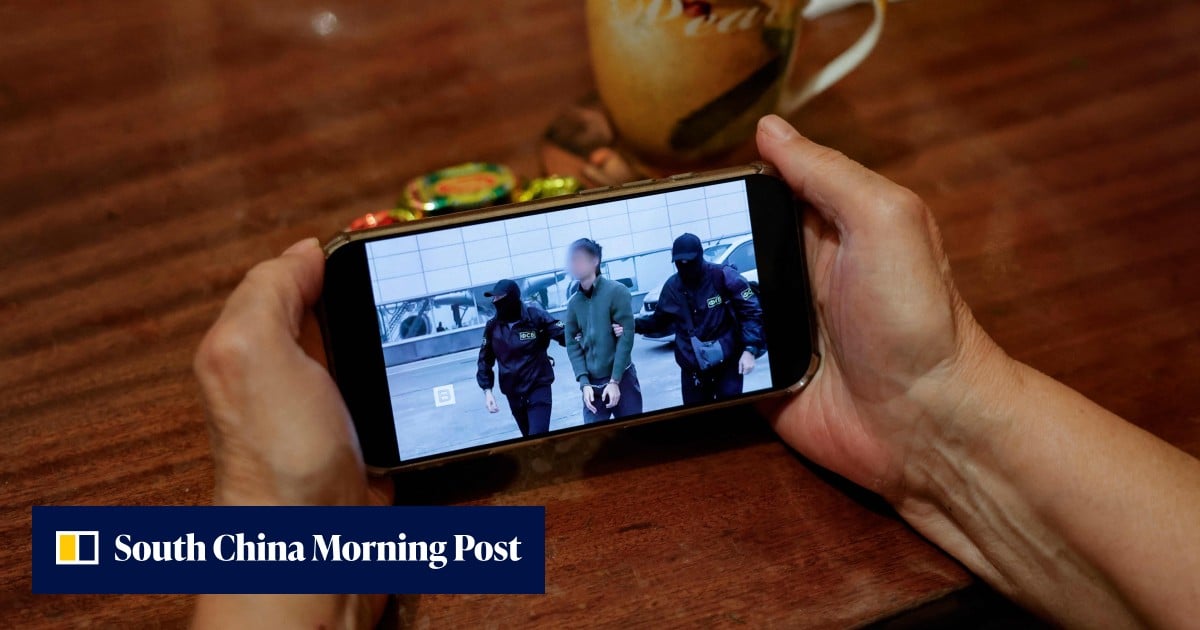
Televised footage of the arrest showed FSB officers barging into his hotel room as he slept. asserted
he → televise → room
The correspondent for the Hokkaido Shimbun newspaper was accused of attempting to obtain information on soldiers in the region, which is near the Kiril islands, a geopolitical sore spot in Russia-Japan relations. asserted
which → accuse → relations
Russian authorities quickly transferred him to Lefortovo Prison in Moscow, where a court ordered him to be held in pretrial detention until at least December 12. asserted
him → transfer → December
If convicted, 34-year-old Imai faces up to 20 years in jail, according to the International Federation of Journalists, which has called for his immediate release. uncertain
which → convict → release
Officials from the Japanese embassy in Moscow have been denied access to Imai. asserted
Officials → deny → Imai
Japanese Prime Minister Sanae Takaichi has condemned the arrest and dismissed the claim that Imai was a spy. uncertain
Imai → condemn → claim
Russian Ambassador Nikolay Nozdrev said Imai had been caught "red-handed," the official TASS news agency reported. asserted
agency → say → ?
Nozdrev has claimed that Japanese intelligence agencies use journalists to collect classified information with the goal of "undermining Russia's security and defense capability." asserted
agencies → claim → capability
Russia accuses journalists of being 'spies' asserted
Russia → accuse → journalists
Yoji Gomi, a veteran journalist and author who has reported from across Asia, told DW that Japanese journalists may occasionally meet with diplomats in the course of their work and "share thoughts and impressions." uncertain
journalists → report → thoughts
However, he rejects the idea that reporters are paid spies. asserted
reporters → reject → spies
"One-party nations often see foreign correspondents as spies because that is exactly what they use their journalists for," he said. asserted
he → see → journalists
"I can completely see how the Russians decided that Imai was a spy, as it is how they operate, plus he was in a sensitive part of Russia where there are lots of North Korean laborers that they want to keep quiet," Gomi added. asserted
Gomi → see → that
Stephen Nagy, a professor of international relations at Tokyo's International Christian University, told DW that Russia might see Imai as a bargaining chip it can use to exchange for nationals detained overseas. uncertain
it → tell → nationals
Nagy doubts that Japan will give in to pressure. asserted
Japan → doubt → pressure
"They are going to resist because it means that Russia, or any other country, can then just seize a Japanese national, put them on trial for espionage and demand the release of one of their people," he said. asserted
he → go → people
"It would set a dangerous precedent," he added. asserted
he → set → precedent
The arrest comes after a member of the Russia-linked hacking group Qilin was arrested in Japan and extradited to Germany to face charges in connection with a 2024 cyberattack on a logistics center. asserted
member → come → center
The last time a journalist was arrested in Russia was in 2019 for "attempting to obtain classified information about Russia's military potential in the Far East," Russia's Interfax news agency reported. asserted
agency → arrest → East
However, in this case, the journalist was quickly released. asserted
journalist → release → case
Imai's case is perhaps the most serious since 2023, when Wall Street Journal reporter Evan Gershkovich was arrested in Russia and sentenced to 16 years in a penal colony before being released in a prisoner exchange with Western countries in 2024. asserted
Gershkovich → arrest → 2024
Strained Japan-Russia ties Imai's arrest is the latest in a series of incidents that have sent bilateral relations into a tailspin. asserted
that → strain → tailspin
Nagy said Imai's seizure was designed to put pressure on Tokyo. asserted
seizure → say → Tokyo
He added this is part of a coordinated approach with China to isolate Japan at a time when the US is preoccupied with domestic issues and the conflict in the Middle East. asserted
US → add → East
"Moscow and Beijing are coordinating to create the image that Japan is not a reformed member of the international community but still the military state of the 1930s and that it poses a threat to stability in the Indo-Pacific region," Nagy said. asserted
Nagy → coordinate → region
"This is all designed to smear Japan's efforts to lead diplomacy in the region at a time when the US is perhaps distracted," he said. asserted
he → design → time
"And it does not even matter much that it is not true; they will just continue to repeat the claim to discredit and weaken Tokyo." Decadeslong row over disputed islands Tadashi Anno, a professor of politics at Tokyo's Sophia University, told DW that he believes Japan had been working hard to maintain a stable relationship with Russia, even after Tokyo joined international condemnation of the invasion of Ukraine. Anno said Russia's timing in turning up the heat on Japan was puzzling. uncertain
timing → matter → Japan
"Japan condemned the invasion of Ukraine in 2022 because it was a fundamental violation of international law, but Russia is only now pushing back hard," he said. At the center of deteriorating ties is a territorial dispute about a chain of islands off the far north of Japan that were seized by Soviet forces after Japan's surrender in World War II. There had been hopes in the past in Tokyo that a concerted diplomatic effort could be sufficient to convince Russia to return the islands — known as the Northern Territories in Japan and the Southern Kurils by Russia — to Japanese sovereignty. That campaign has faltered in the past couple of years, and was further dented when Japan announced in the spring that it would be joining the NATO initiative to provide nonlethal assistance to Kyiv. In August, President Vladimir Putin visited the disputed islands, becoming only the second Russian leader to do so. uncertain
Putin → condemn → islands
Earlier this month, a delegation of Chinese businesspeople was welcomed on one of the islands, and talks are underway on the possibility of economic cooperation. asserted
talks → welcome → cooperation

💬Give feedback
🕘History 🎫Support