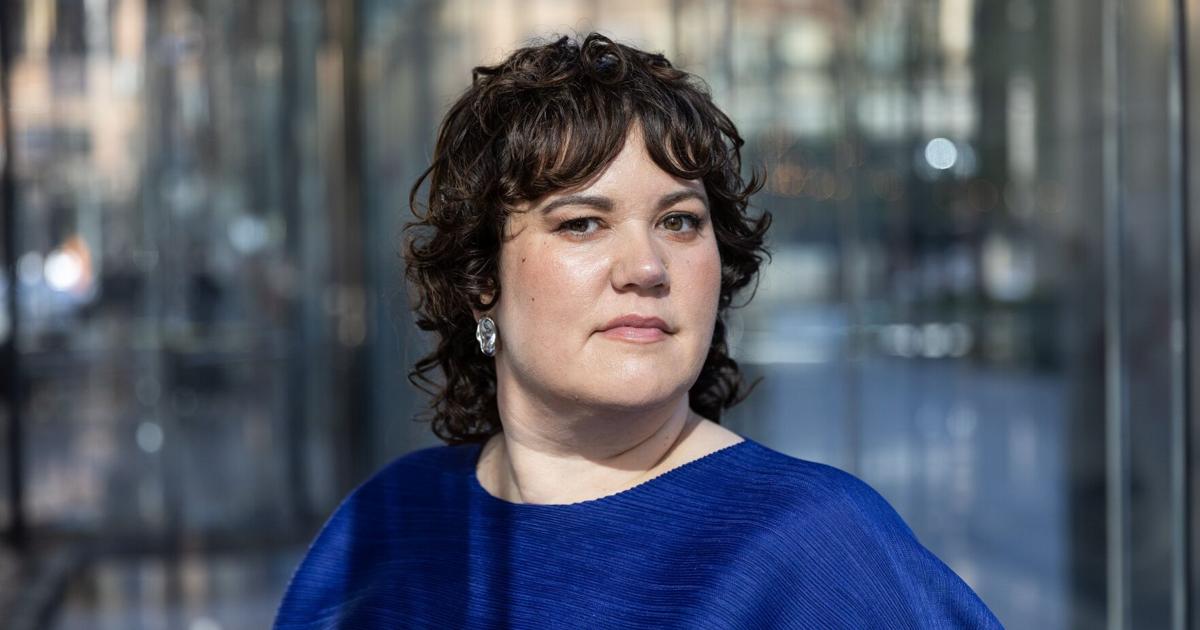
When Rachel Reid published “Heated Rivalry” in 2019, it sold about five thousand copies in its first year.
asserted
it → publish → year
That’s perfectly respectable, especially for your second book.
asserted
That → ’ → book
It just pales in comparison to the numbers she’s racked up since.
asserted
she → pal → numbers
Bestsellers in over 40 countries, her Game Changers series has now sold over 5.2 million copies, with 260,000 physical books sold in Canada alone.
asserted
books → sell → Canada
A new deluxe edition of “Heated Rivalry,” resplendent with gold-sprayed edges and new endpapers illustrating a loved-up Shane and Ilya, is dominating the bestseller charts again.
asserted
edition → illustrate → charts
There’s already talk of midnight release parties at bookstores when her seventh novel, “Unrivalled,” is released on June 1 next year.
asserted
novel → ’ → June
In case you missed it, Reid is the reigning queen of queer sports romance.
asserted
Reid → miss → romance
What began as midnight scribbles on her iPad while her children slept became, via a brief foray into self-publishing, a successful series of novels about male hockey players finding love.
asserted
players → begin → love
Then it exploded.
asserted
it → explode → ?
While the Nova Scotian author’s series has always had a strong following, late last year she experienced a game-changer of her own when “Heated Rivalry” was adapted for television by showrunner Jacob Tierney.
asserted
Rivalry → have → Tierney
The Canadian-made Crave Original series surprised everyone by becoming a global hit, including its stars, Hudson Williams and Connor Storrie, who were suddenly Hollywood’s hottest property.
asserted
who → make → stars
What was happening to me was very separate from what was happening to everyone else in the show,” Reid told the Star at the Toronto offices of her publisher, HarperCollins.
asserted
Reid → happen → publisher
“I didn’t make the show, so I didn’t have the same connection that everybody else had.”
asserted
everybody → make → that
Reid quickly built a team around her: A publicist, a stylist, lawyers.
asserted
Reid → build → publicist
“It’s not a one-person job being me anymore,” she said, laughing wryly.
asserted
she → ’ → ?
“That happened so fast.”
asserted
That → happen → ?
It also changed how she interacts with her readers.
asserted
she → change → readers
She took her email address off her website, since there was just no way she could cope with the volume of fan mail, and stopped doing in-person events that involve interaction, like signings, something she could do even earlier this year.
uncertain
she → take → signings
“There’s an intensity to the fandom that’s new,” she said.
asserted
she → ’ → fandom
“People did always have some strong feelings about these characters, and I always was blown away by it, but it’s maybe too much for me to handle one-on-one these days.
asserted
me → have → one
I do appreciate it, it’s just I need to feel safe.
asserted
I → appreciate → it
Some aspects of the series have been debated and critiqued, and the television show has amplified those conversations exponentially.
asserted
show → debate → conversations
There have been questions around Shane’s speculated neurodivergence — which Reid has publicly addressed, explaining she initially wrote the character without a full understanding of autism — and the books’ limited diversity and representation, which she hasn’t.
asserted
she → speculate → autism
Examining masculinity
Throughout the books, each of which follows a different couple’s journey, Reid touches on complex themes such as homophobia, mental health and familial pressure.
asserted
Reid → examine → homophobia
A key theme is “the way that men are miserable by their own design,” as she explains it.
asserted
she → explain → it
“There’s no reason why any of my characters should feel uncomfortable being who they are, loving who they want to love, or even things like panic attacks being something that they have to keep a secret,” she said.
asserted
she → ’ → that
“I really like to explore how much better off everyone would be if they just allowed themselves to be happy.”
asserted
themselves → like → ?
Of course, there are reasons why they can’t.
asserted
they → be → ?
Through the rose-coloured lens of the romance genre, where happily-ever-afters are guaranteed, Reid wanted to show what it could look like if men were free of the shackles imposed on them by the patriarchy.
uncertain
men → guarantee → patriarchy
“We all have to live in a world where men are at the top, and I think this is a great way to explore some feelings about that,” she said.
asserted
she → have → that
“I’ve always had a real fascination with masculinity, and what we expect of men and the roles they need to conform to.
asserted
they → have → men
’s a big part of why I like writing this.
asserted
I → ’ → this
The series is about gay men navigating relationships, but most of Reid’s readers are heterosexual women, defying long-held ideas that people only want to read about characters like themselves.
asserted
people → navigate → themselves
“I have a lot of lesbian readers as well, and I know a lot of lesbian writers of male-male romance too, which a lot of people would be surprised by,” Reid added.
asserted
Reid → have → people
“For a lot of women, I think it’s nice to read sex scenes that you don’t have to insert yourself into, or feel connected to,” Reid said.
asserted
Reid → think → yourself
“For some women, it enhances the fantasy, makes it easier to just enjoy something without it maybe triggering your own memories or experiences.”
asserted
it → enhance → memories
She said female readers often tell her that this has helped them, particularly in the context of a story that features “emotionally vulnerable men being really sweet and tender with each other.”
asserted
men → say → other
Reid has also heard from plenty of professional athletes.
asserted
Reid → hear → athletes
“Some of them have told me they’re excited about the conversations the popularity of the show has opened up,” she said.
asserted
she → tell → show
“People you didn’t expect would like a show like this do, and it makes you feel safer being yourself around them.”
asserted
you → expect → them
…and 19 more, not listed.
 The Aporia