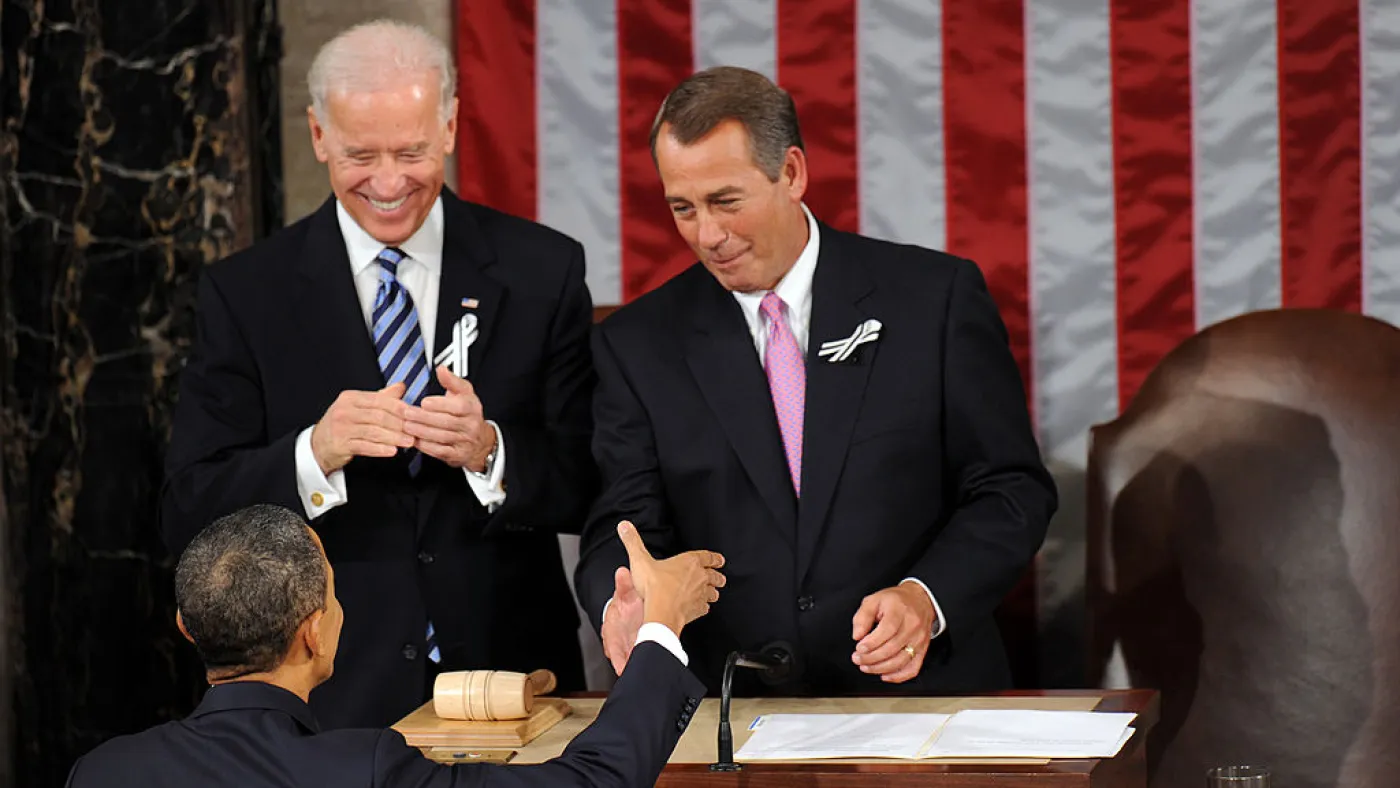
This decade has been missing its big-impact midterm
Given all that's happened in American politics since 2019, it may be hard to believe there's been anything missing.
uncertain
it → miss → 2019
But the decade of the 2020s has yet to see a midterm that mattered much — or that ranked among the impact midterms of past decades.
asserted
that → have → decades
That sets the 2020s apart, as every other decade over the past hundred years has produced at least one midterm that made a big difference in Congress and in national politics more broadly.
asserted
that → set → politics
These big-impact midterms have also shifted power in the statehouses, often signaling changes in state and national political landscapes that have mattered and lasted.
asserted
that → shift → landscapes
Midterms do not attract the same level of voter participation or voter interest as presidential elections.
asserted
Midterms → attract → elections
When the White House is not at stake, "low propensity voters" tend to tune out.
asserted
voters → tend → stake
Overall vote totals slide by about one-third.
asserted
totals → slide → third
But those voters who show up for midterms elect just as many members of Congress and fill just as many state legislative seats as voters in presidential years.
asserted
who → show → years
Moreover, midterm voters determine about two-thirds of the nation's governorships.
asserted
voters → determine → governorships
The big midterms have tended to come in presidents' second terms, when their popularity and political energy may be waning.
uncertain
popularity → tend → terms
And just because a president is not on the ballot does not mean he's irrelevant.
asserted
he → mean → ballot
Historically, each president's detractors have seen midterms as an opportunity, while his supporters have often been complacent — or at least less motivated.
asserted
supporters → see → opportunity
All this contributes to the general expectation that the midterms arriving Nov. 3 will be important, and perhaps momentous.
asserted
midterms → contribute → expectation
One went by in 2022.
asserted
One → go → 2022
Some expected at the time that a "big red wave" would sweep then-President Biden's majorities out of Congress.
asserted
wave → expect → Congress
It did not happen.
asserted
It → happen → ?
Democrats held on in the Senate, and the House shifted from barely Democratic to barely Republican.
asserted
House → hold → Republican
That did bring an end to House Speaker Nancy Pelosi's second (and last) turn with the Big Gavel.
asserted
That → bring → Gavel
But the GOP would spend much of the next two years struggling to unite behind a speaker of their own.
asserted
GOP → spend → own
That's a far cry from the big midterms that have at times rivaled presidential elections for responding to the mood of the times and rearranging the landscape.
asserted
that → rival → landscape
If we take the last hundred years as our sample, we can start with the midterms that followed the Wall Street "Crash of 1929."
asserted
that → take → 1929
That financial panic set off a sequence of events that would be called the Great Depression, and the collateral damage included the closing of an era of Republican dominance in Washington.
asserted
damage → set → Washington
That era ended with the midterms of 1930, which cost the GOP eight Senate seats and 52 seats in the House in November 1930.
asserted
which → end → November
Although the GOP initially retained small majorities in both chambers, they lost it in the House with the results of a few special elections early in 1931.
asserted
they → retain → 1931
The Senate remained nominally Republican but featured a working majority of Democrats and progressive Republicans.
asserted
Senate → remain → Democrats
A page had been turned, and Democrats would take control outright in 1932 and hold that majority through World War II.
asserted
Democrats → turn → II
After that war had ended, the period of Democratic hegemony under President Franklin Roosevelt also ended, and abruptly, with the results of the midterm of 1946.
asserted
period → end → 1946
Pendulum swings both ways
Republican numbers in Congress had fallen so far in the FDR years (below 100 at one point in the 435-seat House) that it seemed impossible for them to return to power.
asserted
them → fall → power
But in 1946 they stormed back to majority control of both House and Senate in a single midterm cycle.
asserted
they → storm → cycle
Midterms have continued to serve as political regulators in the generations since.
asserted
Midterms → continue → generations
Dwight Eisenhower won two landslide elections as president in the 1950s, but he lost the House in 1954 and needed the vice president to break ties in the Senate.
asserted
president → win → Senate
In his second term, the re-elected "Ike" did not control Capitol Hill, and in the 1958 midterms saw his party drop to just 35 seats in the Senate.
asserted
party → re → Senate
The Senate Democrats first elected in 1958 established a critical mass that would later drive the bipartisan super-majorities needed to break the filibuster and pass the Civil Rights Act of 1964 and the Voting Rights Act of 1965.
asserted
that → elect → 1965
In the same era, Democrats in Congress enacted a raft of social programs that would become part of the language, such as Medicare and Medicaid.
asserted
that → enact → Medicare
What goes up …
But by the midterm year of 1966, much of the energy from LBJ's landslide election in 1964 had been expended — and much more had been siphoned off by his escalation of the war in Vietnam.
asserted
more → go → Vietnam
Right on time, the midterm arrived, and while the Democrats only took a haircut in the Senate elections they lost a painful 47 seats to the GOP in the House.
asserted
they → arrive → House
It gave the party a new lease on life and encouraged its new emphasis on winning in the South.
asserted
It → give → South
The redirection would guide the party's 1968 presidential candidate, Richard Nixon, and remain a focus for the onetime "Party of Lincoln" for decades to come.
asserted
redirection → guide → decades
Also in the midterm of 1966, out on the West Coast, a first-time candidate named Ronald Reagan won the governorship of California.
asserted
candidate → name → California
People were starting to use the term "Sunbelt."
asserted
People → start → term
…and 45 more, not listed.
 The Aporia