How Brazil's changing working class is reshaping the presidential race

Read the original at BBC News ↗
Cite

Wells, I. (2026, October 24). How Brazil's changing working class is reshaping the presidential race. BBC News. https://www.bbc.co.uk/news/articles/cw80zx79nkvno?at_medium=RSS&at_campaign=rss

Dated from the outlet's own feed. Check the original for its byline.

BBC News · collected 2026-10-24 · by Ione Wells

Quick Summary

In Osasco, Brazil, a former industrial city that has transformed into an area filled with shopping malls and tech companies, the political landscape is shifting. Voters who previously supported left-wing President Lula da Silva in 2022 are now backing right-wing candidate Flávio Bolsonaro in the upcoming presidential runoff election. This change reflects broader shifts within Brazil's working class, where traditional industrial jobs have diminished, leading to an increase in service sector employment and a desire for political change among many voters who feel frustrated with economic conditions, crime, and corruption.
Written locally by qwen2.5:14b on 2026-10-24, using this article's own text rather than the other coverage of the same event (that is the story summary below).

AI analysis runs on qwen2.5:14b, locally

Story summary

In Brazil's presidential race, Osasco, a former industrial city now dubbed São Paulo's "Silicon Valley," has shifted its political allegiance from left-wing President Luiz Inácio Lula da Silva to right-wing candidate Flávio Bolsonaro. Osasco voted for Lula in 2022 but switched to Bolsonaro in the first round of this year’s election, setting up a runoff on Sunday. Gilberto Almazan, who leads a metalworkers' union in Osasco, expresses concern over the changing profile of the working class, noting that they are no longer predominantly industrial workers but service workers. This shift reflects broader changes across Brazil's working-class neighborhoods, where traditional support for Lula is waning as new economic realities take hold.

Written for “Brazil Presidential Race Reshaped” on 2026-10-24, grounded in this article and the 0 other(s) covering the same event.
Why this leaning score
The model judged this article politically coded and scored it +0.35, but 1 quote(s) could not be found in the article and the other 1 are attributed speech rather than the article's own narration, so the score is not published.
Written under an earlier scoring contract, which gave a paragraph rather than checkable quotes. Re-analysing this article replaces it.
Leaning score withheld for article 103533: no verified evidence · logged 2026-10-24

Story

📰 Brazil Presidential Race Reshaped
Politics · 1 article(s) covering the same event.

Compared with similar articles

This article reads unscored and hedges 5% of its claims. Each row says how that neighbour differs.
Toronto Star
⚖️ leaning not scored 🔴 0% hedged 0 of 4 📰 publisher trust 64
“Article A describes a debate between Lula and Flávio Bolsonaro, while Article B discusses how Brazil's working class is reshaping the presidential race.”
Al Jazeera
⚖️ leaning not scored 🔴 12% hedged 7 of 58 📰 publisher trust 60
“The articles discuss different aspects of the Brazilian presidential race, with Article A focusing on social media influence and Article B on how changes in the working class are affecting voting patterns.”
Semafor
⚖️ Leans left 🔴 0% hedged 0 of 3 📰 publisher trust 60
“While both articles discuss the upcoming runoff election between Lula da Silva and Flávio Bolsonaro, Article A focuses on poll results and international ties, while Article B discusses how changes in Brazil's working class are reshaping the race. They do not describe the same specific incident.”
The Straits Times
⚖️ leaning not scored 🔴 0% hedged 0 of 17 📰 publisher trust 68
“Article A describes a debate between Bolsonaro and Lula, while Article B discusses changes in voter preferences in a Brazilian city.”
Deutsche Welle
⚖️ Leans left 🔴 4% hedged 2 of 45 📰 publisher trust 95
“The articles discuss different aspects of the presidential election; Article A focuses on polling and voter backing projections, while Article B discusses how changes in Brazil's working class are reshaping the race.”
Semafor
⚖️ Leans right 🔴 0% hedged 0 of 4 📰 publisher trust 60
“The articles discuss different aspects of the Brazilian presidential race and do not describe the same specific incident or debate.”
The Hindu
⚖️ Leans left 🔴 10% hedged 4 of 39 📰 publisher trust 77
“The articles discuss different aspects of Brazil's political situation and do not describe the same specific incident or rally.”
The Straits Times
⚖️ Leans left 🔴 21% hedged 5 of 24 📰 publisher trust 68
“The articles discuss different aspects of the presidential race and voter demographics without reporting on a single, specific incident.”
Zeteo
⚖️ leaning not scored 🔴 33% hedged 3 of 9
“The articles discuss different aspects of Brazil's presidential race without focusing on a single, specific incident.”
Toronto Star
⚖️ Leans strongly left 🔴 13% hedged 4 of 31 📰 publisher trust 64
“The articles discuss different aspects of Brazil's political situation and do not describe the same specific incident or occurrence.”
How this article was measured signals, leaning charts, publisher record, byline, topics and claims

Signals How these are calculated →

Claims extracted
62
sentences that state something as happening or true
Uncertain
5%
3 of 62 hedged ("reportedly", "may", "according to")
Leaning
withheld
no quote in the article backed the model's score
Publisher signals
69/100
BBC News's corrections and hedging, across everything collected from it. Not a measure of accuracy.
Outlets on this story
1
Politics
Same framing elsewhere
1
articles that frame the event the way this one does
Analyzed 2026-10-24 · how these are computed

How this is being covered How these are calculated →

Article leaning vs. publisher reliability
Source leaning vs. consistency

Publisher

BBC News · 4177 article(s) · 5 correction(s) detected
Running correction rate · 5 correction(s)

Who wrote this

Ione Wells
5 article(s) here · 1 carrying a prediction
🔮 "A lot of people didn't vote, they thought it wouldn't change anything," says one supporter, Leila.
🔮 On 25 October, Lula will face Bolsonaro's son Flavio in the run-off, with polls suggesting a neck-and-neck race.
🔮 Meyer said he would like to have a conversation with Trump about the reality of the situation, saying that as a "born Afrikaner", he has the "legitimacy" to speak about the subject.
🔮 In the off-the-cuff moment, he said as a "special treat" the Chinese leader and his wife could be the first to enter the ballroom, which is still a year away from completion.
🔮 - Published Warning: This story contains distressing details and discussion of attempted suicide A Massachusetts judge has declared a mistrial in the murder case against Lindsay Clancy after jurors conceded they would not be able to unanimously decide whether she should be held criminally liable for killing her three young children after a week of deliberating.
Also by Ione Wells
Nothing else under this byline is closely related to this article, so these are simply their most recent.

Topics

Brazil Osasco São Paulo's

Subjects

Lula PERSON · 12× Brazil GPE · 9× Bolsonaro PERSON · 5× Osasco GPE · 3× Almazan PERSON · 2× Flávio Bolsonaro PERSON · 2× Uber ORG · 2× Gilberto Almazan PERSON · 1× Luiz Inácio Lula da Silva PERSON · 1× São Paulo's GPE · 1×

Narrative

Afterwards, in his office adorned with a photo of him and the former president Jair Bolsonaro, at whose wedding he officiated, he told the BBC that without the evangelical church in working-class neighbourhoods the country would be "in a state worse than you can imagine".
framing: assertive · carried by 1 article(s) · first seen 2026-10-24
🔮 "A lot of people didn't vote, they thought it wouldn't change anything," says one supporter, Leila.

Claims (62 extracted, 3 hedged)

- Published In the sprawling former industrial city of Osasco, shuttered factories have given way to a shopping malls and delivery app tech companies in what is now dubbed São Paulo's "Silicon Valley." asserted
what → publish → malls
The municipality voted for Brazil's left-wing President Luiz Inácio Lula da Silva in 2022 but switched to the right-wing Flávio Bolsonaro in the first round of Brazil's presidential election this month. asserted
municipality → vote → election
Bolsonaro won that vote - and now the two men face a run-off on Sunday. asserted
men → win → Sunday
Since 1989, every first-round winner has gone on to be elected president. asserted
winner → go → 1989
Like many of President Lula's traditional supporters, Gilberto Almazan, who leads a metalworkers' union here, is visibly worried. asserted
who → lead → union
He cries when he tells Lula's life story: a boy who grew up in hunger in the north-east, who became a metalworker, then a union leader, then a three-time president. asserted
who → cry → east
But he's candid about how things have changed here and how the union movement that was so integral to Lula's support base is stuck in the "Middle Ages", and struggling to keep up. asserted
that → change → Ages
"We had strong deindustrialisation here," Almazan says. asserted
Almazan → have → deindustrialisation
"The profile of the working class changed. asserted
profile → work → class
Metal, chemical, textile factories disappeared. asserted
factories → disappear → ?
And five malls were built." asserted
malls → build → ?
The word "change" comes up repeatedly among Bolsonaro supporters here. asserted
change → come → supporters
Many struggle to name specific Bolsonaro policies they like but know they want to try something different: frustrated by the economy, crime and corruption in politics – even though Flávio has been faced accusations of corruption too, which he denies. asserted
he → struggle → which
"He brings the hope of change, that we can have a different Brazil," says lawyer Gisele Bonfim in Osasco, who decided to vote for Bolsonaro after supporting Lula in 2022. asserted
who → bring → 2022
Lula's re-election campaign has been hampered by voters turning away from him. asserted
campaign → hamper → him
In some cases, their frustration drove abstention, which was higher than average this year, but others like Gisele actively wanted something new. asserted
others → drive → something
One major reason for that is Brazil's working class has transformed seismically in places like Osasco. asserted
class → transform → Osasco
Near one large shopping mall lies an open-air market where this shift is noticeable. asserted
shift → lie → mall
Everyone is touting products, armed with a portable card machine. asserted
Everyone → tout → machine
Tairine, who sells hot dogs, used to abstain from voting, even though - as voting is compulsory in Brazil - not going to the polls incurs a fine. asserted
going → sell → fine
This year, she plans to vote for Bolsonaro. asserted
she → plan → Bolsonaro
She points to high taxes paid on "everything" she buys and says these make it "so difficult for a poor person" dealing with inflation, arguing "nothing has changed" since Lula became president again. asserted
Lula → point → inflation
Flávio Bolsonaro has proposed cutting government spending, government ministries, and some taxes - though he has said he'd maintain some of Lula's flagship welfare programmes. asserted
he → propose → programmes
For his supporters, Lula is a working-class hero credited with advancing workers' rights through organising strikes and lifting millions of people out of poverty with generous social welfare programmes as president. asserted
Lula → credit → president
But across Brazil millions now work in the gig economy, a phenomenon Almazan calls "Uber-isation": driving for Uber, delivering food, or running small businesses from market stalls to providing at-home beauty treatments. asserted
Almazan → work → treatments
"There are a lot of workers who need more freedom, flexibility of days and hours," he says, rather than the welfare and collective action Lula offered. asserted
Lula → be → welfare
Richard Lapper, who has written biographies of both Lula and Jair Bolsonaro – Flavio's father who was president from 2019-2022 - says the rise of individualised work and the decline of manufacturing caused by globalisation are not unique to Brazil. asserted
rise → write → Brazil
But because Brazil industrialised late and deindustrialised early, he argues, the effects have been sharper here. asserted
effects → industrialise → ?
He calls Lula a "victim of his own success." asserted
He → call → success
Unemployment fell to a record low, and Brazil was taken off the United Nation's Hunger Map during Lula's current presidency. asserted
Brazil → fall → presidency
But Lapper describes a crisis of "expectations" where people are now better off but don't feel it because prices have risen and household debt and interest rates are high. asserted
debt → describe → it
Originally from Lula's north-eastern home state of Pernambuco, he grew up supporting him. asserted
he → grow → him
But he describes a country now running deficits and says its citizens are enduring the "worst phase" of its tax burden, which he blames on the Lula government's "mismanagement" of the economy and high public spending. asserted
he → describe → economy
"Now you have to make choices: pay an instalment for your car, or put food on the table," he says. asserted
he → have → table
Lula's comeback strategy In some areas, Lula lost votes compared to 2022, even though Bolsonaro did not gain more than his father did then: 33 million people did not vote in the first round, the highest abstention since 1998. asserted
people → lose → 1998
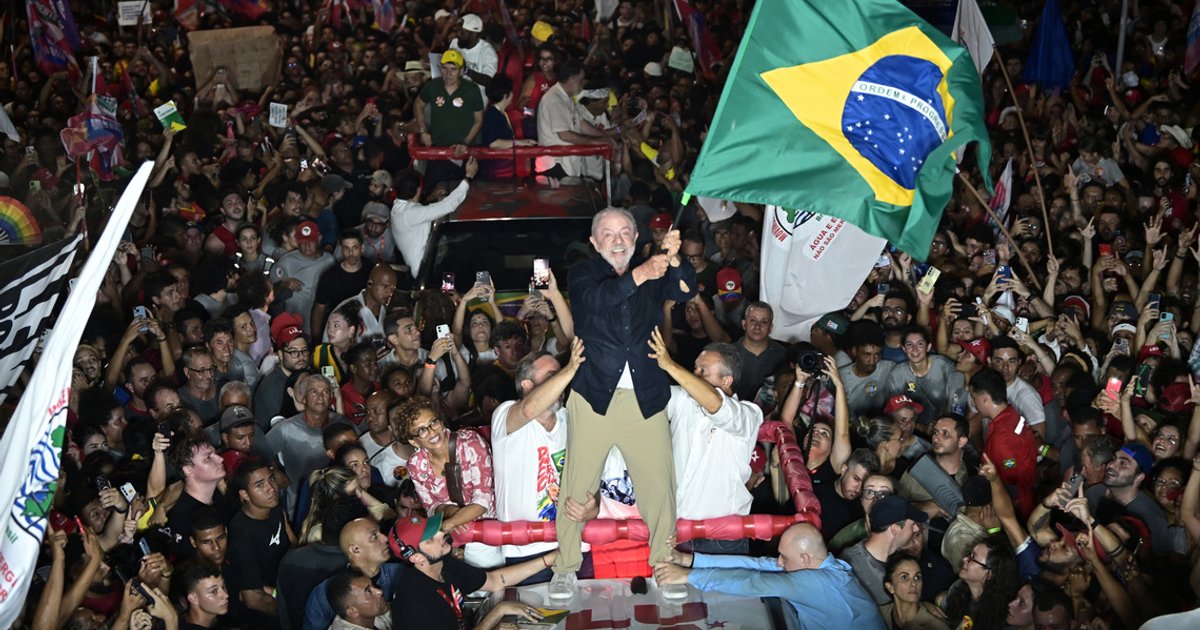
In response, Lula's campaign has focused on mobilising hundreds of thousands of people – particularly students – on to the streets to get the vote out for round two. asserted
campaign → focus → round
It claims one rally in São Paulo attracted about a million people. uncertain
rally → claim → people
"A lot of people didn't vote, they thought it wouldn't change anything," says one supporter, Leila. asserted
supporter → vote → anything
"Our fight is to make those people believe their vote changes things." asserted
vote → make → things
Aerial videos of these huge demonstrations have been plastered across social media. asserted
videos → plaster → media
…and 22 more, not listed.

💬Give feedback
🕘History 🎫Support