Trump Sues to Block Alaska Senate Election Results Because of Potential Voter "Confusion"

Read the original at Reason ↗
Cite

Somin, I. (2026, October 23). Trump Sues to Block Alaska Senate Election Results Because of Potential Voter "Confusion". Reason. https://reason.com/volokh/2026/10/23/trump-sues-to-block-alaska-senate-election-results-because-potential-voter-confusion/

Dated from the outlet's own feed. Check the original for its byline.

Reason · collected 2026-10-23 · by Ilya Somin

Quick Summary

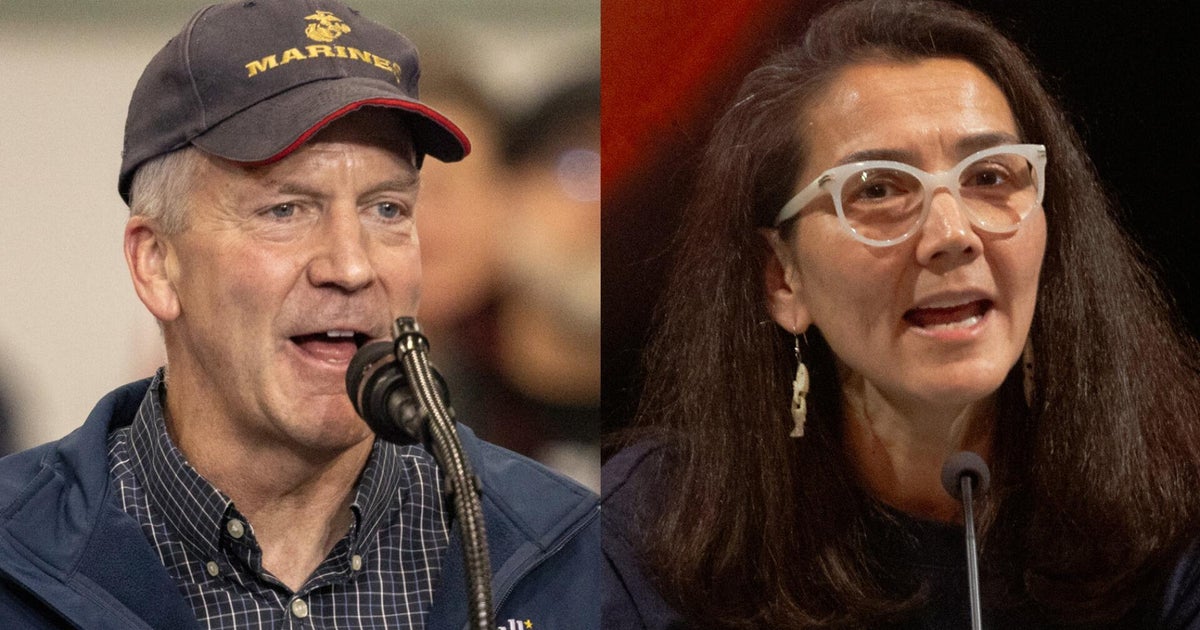
The Trump Justice Department has filed a federal lawsuit in Alaska to block Senate election results due to potential voter "confusion" between Republican Senator Dan S. Sullivan and candidate Dan L. Sullivan, who share similar names. Legal experts argue there is no legal precedent for overturning election results based on such confusion, as the Constitution grants states primary authority over election procedures. The lawsuit draws criticism for undermining democratic principles by attempting to exploit voter ignorance rather than addressing underlying issues of political misinformation.
Written locally by qwen2.5:14b on 2026-10-23, using this article's own text rather than the other coverage of the same event (that is the story summary below).

AI analysis runs on qwen2.5:14b, locally

Story summary

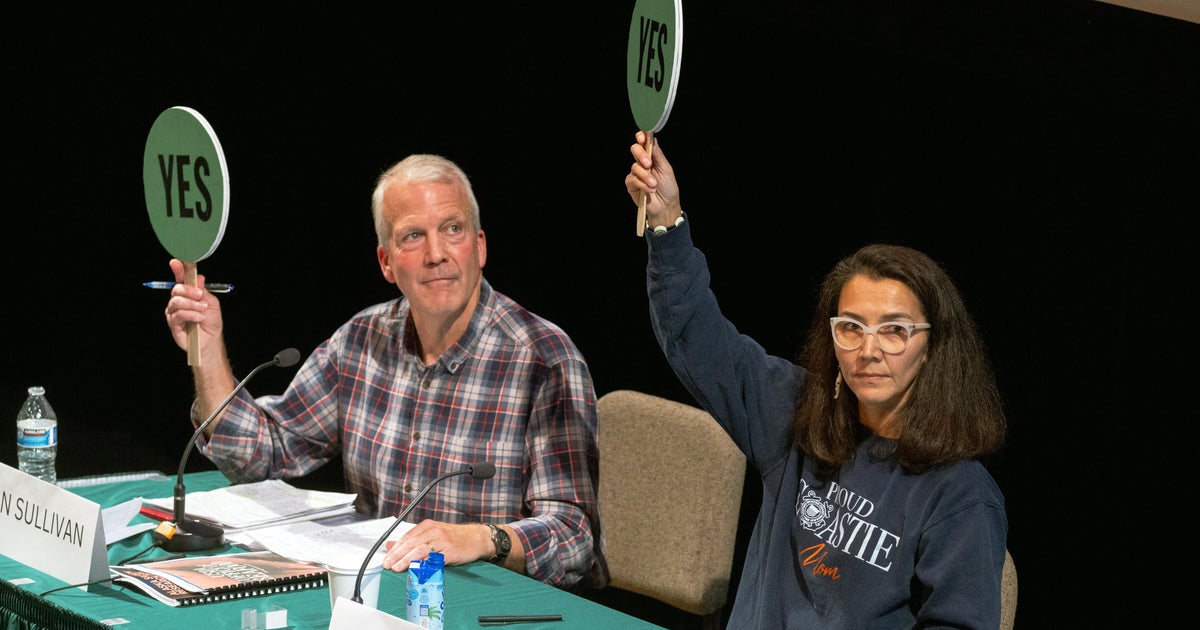
On October 23, 2026, at President Trump's direction, the Justice Department filed a lawsuit against Alaska to block certification of its Senate election results if Republican incumbent Senator Dan S. Sullivan loses to Democratic challenger Mary Peltola or independent candidate Daniel J. Sullivan Jr., who shares a similar name. The suit argues that voters might confuse the two candidates with the same surname and party affiliation, potentially impacting the outcome in favor of Peltola. Trump confirmed he personally ordered the lawsuit during a campaign rally in Florida. Despite denials from Daniel J. Sullivan Jr., the DOJ claims his candidacy is intended to benefit Peltola by reducing votes for Senator Dan S. Sullivan. The case highlights concerns over voter confusion and political manipulation, raising constitutional questions about federal intervention in state elections.

Written for “DOJ Sues Over Alaska Senate Results” on 2026-10-24, grounded in this article and the 4 other(s) covering the same event.

Story

📰 DOJ Sues Over Alaska Senate Results
Politics · 5 article(s) covering the same event. Compare every outlet's account →

Compared with similar articles

This article reads leans left and hedges 13% of its claims. Each row says how that neighbour differs.
Daily Mail · 0.86 cosine similarity
⚖️ leaning not scored 🔴 37% hedged 7 of 19 📰 publisher trust 64
“Both articles describe Trump's Justice Department filing a federal lawsuit to block Alaska Senate election results due to potential voter confusion involving two candidates with similar names.”
Mother Jones
⚖️ Leans right further right than this 🔴 18% hedged 3 of 17 📰 publisher trust 95
“Both articles report on the same federal lawsuit filed by the Trump Justice Department and the DOJ to block or decertify Alaska's Senate election results due to voter confusion between two candidates named Dan Sullivan.”
CBS News
⚖️ Leans right further right than this 🔴 0% hedged 0 of 2 📰 publisher trust 66
“Both articles describe the Justice Department filing a federal lawsuit on October 23, 2026, to block Alaska Senate election results due to potential voter confusion between two candidates with similar names.”
Toronto Star
⚖️ Leans left 🔴 0% hedged 0 of 2 📰 publisher trust 64
“The articles describe different lawsuits filed by or against the Trump administration regarding elections.”
The Independent
⚖️ leaning not scored 🔴 8% hedged 2 of 24 📰 publisher trust 59
“Article A describes Trump accusing Democrats of cheating due to confusion between two candidates named Dan Sullivan, while Article B reports a federal lawsuit filed by the Trump Justice Department to block election results citing voter confusion. These are different actions and events.”
The Independent
⚖️ leaning not scored 🔴 30% hedged 8 of 27 📰 publisher trust 59
“Article A discusses a potential DOJ action against states certifying election results in general terms, while Article B reports on a specific lawsuit filed by the Trump Justice Department to block Alaska Senate election results due to voter confusion.”
CBS News
⚖️ Leans right further right than this 🔴 10% hedged 1 of 10 📰 publisher trust 66
“Both articles describe the Trump administration's lawsuit filed to block certification of Alaska Senate election results due to alleged voter confusion between incumbent Senator Dan Sullivan and another candidate with a similar name.”
ABC News (US)
⚖️ Leans strongly left further left than this 🔴 12% hedged 2 of 17 📰 publisher trust 59
“The articles describe two distinct lawsuits: one by Democrats against the Trump administration over alleged election interference, and another by the Trump Justice Department to block Alaska Senate election results due to voter confusion.”
How this article was measured signals, leaning charts, publisher record, byline, topics and claims

Signals How these are calculated →

Claims extracted
23
sentences that state something as happening or true
Uncertain
13%
3 of 23 hedged ("reportedly", "may", "according to")
Leaning
Leans left
of the writing, not the subject · beta estimate
Publisher signals
67/100
Reason's corrections and hedging, across everything collected from it. Not a measure of accuracy.
Outlets on this story
5
Politics
Same framing elsewhere
1
articles that frame the event the way this one does
Analyzed 2026-10-23 · how these are computed

How this is being covered How these are calculated →

Article leaning vs. publisher reliability
Source leaning vs. consistency

Publisher

Reason · 910 article(s) · 4 correction(s) detected
Running correction rate · 4 correction(s)

Who wrote this

Ilya Somin
21 article(s) here · 1 carrying a prediction
🔮 Today, the Trump Justice Department filed a federal lawsuit seeking to block Alaska Senate election results on the grounds they might be influenced by voter "confusion" between incumbent Republican Senator Dan S. Sullivan and a separate Republican candidate with a very similar name (Dan L. Sullivan).
🔮 And I think he actually agrees with me more than the framing of his post might suggest.
2026-10-17 · assertive framing · Who Should Defend Democracy?
🔮 I would like to thank Matt for his interesting and insightful response.
🔮 [I]t seems to me that those who are fully onboard the expansion-or-bust train should have to do more than simply assert that having four new Democratic appointees on the Court in 2029 would be a self-evidently "good" thing.
🔮 The court ruled that federal law does not preempt these policies, and that if if it did, there would be a violation of the anti-commandeering requirements of the Tenth Amendment: Even were the Court to find that the United States has standing and the challenged provisions are preempted—both answered in the negative above—United States' claims would still fail because the anticommandeering doctrine of the Tenth Amendment to the Constitution of the United States precludes relief.
🔮 But some would like to revive it.
2026-10-15 · assertive framing · Fusionism and its Limits
🔮 I wish there was something I could say to ease the continuing pain of the victims of the attack and their families.
🔮 What would they make of that language?
2026-10-06 · assertive framing · Justice Alito on Originalism
🔮 And, as with tariffs, interpreting these authorities in a way that gives the president a blank check to impose import bans would run afoul of the major questions doctrine and constitutional nondelegation.
🔮 And almost none of us would trade it for any of the alternatives actually on offer.
2026-10-04 · assertive framing · Libertarianism and Democracy
Also by Ilya Somin
Who Should Defend Democracy?
2026-10-17 · Reason
Nothing else under this byline is closely related to this article, so these are simply their most recent.
All 21 articles by Ilya Somin →

Topics

Alaska Senate Congress Republican the First Amendment the Trump Justice Department

Subjects

Congress ORG · 2× Dan Sullivans PERSON · 2× Obama PERSON · 2× Republican NORP · 2× Alaska Senate ORG · 1× Dan L. Sullivan PERSON · 1× Dan S. Sullivan PERSON · 1× Rick Hasen PERSON · 1× The Volokh PERSON · 1× the Trump Justice Department ORG · 1×

Narrative

Because of the combination of "rational ignorance" (lack of incentive to seek out political information) and "rational irrationality" (lack of incentive to engage in unbiased evaluation), most voters know little about government and public policy, and often do a poor job of evaluating the information they do know.
framing: assertive · carried by 1 article(s) · first seen 2026-10-23
🔮 Today, the Trump Justice Department filed a federal lawsuit seeking to block Alaska Senate election results on the grounds they might be influenced by voter "confusion" between incumbent Republican Senator Dan S. Sullivan and a separate Republican candidate with a very similar name (Dan L. Sullivan).

Claims (23 extracted, 3 hedged)

Today, the Trump Justice Department filed a federal lawsuit seeking to block Alaska Senate election results on the grounds they might be influenced by voter "confusion" between incumbent Republican Senator Dan S. Sullivan and a separate Republican candidate with a very similar name (Dan L. Sullivan). uncertain
they → file → name
I previously wrote the issues raised by the two Dan Sullivans here. asserted
I → write → Sullivans
As I pointed out in the earlier post, there is no legal basis for overturning congressional election results based on voter confusion, and any such action would likely violate the First Amendment. asserted
action → point → Amendment
I would add that any such federal action also runs afoul of states' primary authority over election procedures. asserted
action → add → procedures
The Elections Clause of the Constitution gives states primary authority over "The Times, Places and Manner of holding Elections for Senators and Representatives," subject to Congress' power to modify these rules by legislation. asserted
Clause → give → legislation
Congress has not enacted any statute allowing overturning of election results based on possible "voter confusion." asserted
Congress → enact → confusion
If "voter confusion" were a legitimate reason to overturn election results, that would imperil a great many election winners, as voter ignorance - and exploitation thereof by candidates - is a widespread and longstanding problem. asserted
ignorance → overturn → candidates
I covered some of these points in my previous post about the two Dan Sullivans: asserted
I → cover → Sullivans
Donald Trump is a particularly egregious example, going all the way back to his first campaign in 2016, and more recently with his lies about the 2020 election and other issues. asserted
Trump → go → election
But more conventional politicians also often resort to lies and deception, even if not to the same degree. asserted
politicians → resort → degree
President Obama, for example, famously lied when he claimed that, under the Affordable Care Act, "if you like your health care plan, you can keep it." asserted
you → lie → it
That deception won the 2013 Politifact Lie of the Year award. asserted
deception → win → award
But it still helped Obama get reelected in 2012. asserted
Obama → help → 2012
I am not sure exploiting voter confusion about names is any worse than exploiting their ignorance about policy issues like crime, immigration, and health care…. asserted
exploiting → exploit → crime
Ultimately, both exploitation of voter confusion about names and other deceptions used in campaigns seek to exploit widespread voter ignorance. asserted
exploitation → use → ignorance
Because of the combination of "rational ignorance" (lack of incentive to seek out political information) and "rational irrationality" (lack of incentive to engage in unbiased evaluation), most voters know little about government and public policy, and often do a poor job of evaluating the information they do know. asserted
they → seek → information
This makes them vulnerable to deception and manipulation, and incentivizes politicians to lie and otherwise distort the truth. asserted
them → make → truth
But I assess a range of possible options in my 2023 article on "Top-Down and Bottom-Up Solutions to the Problem of Political Ignorance, and in my earlier book Democracy and Political Ignorance. asserted
I → assess → book
I believe the best approach is to make fewer decisions at the ballot box and more by "voting with your feet," where incentives to seek out information and evaluate it wisely are much better. asserted
incentives → believe → it
But I recognize that any effective approach will take time, and there may be no one fix that is sufficient by itself. uncertain
that → recognize → itself
We may need to pursue multiple strategies. uncertain
We → need → strategies
In the meantime, voters are likely to continue to be ignorant and confused about a variety of issues, and politicians and interest groups are likely to keep on exploiting that. asserted
politicians → continue → that
Many of these other voter ignorance problems are far worse than any potential confusion between candidates with similar names, a problem that only comes up relatively rarely. asserted
that → come → names

💬Give feedback
🕘History 🎫Support