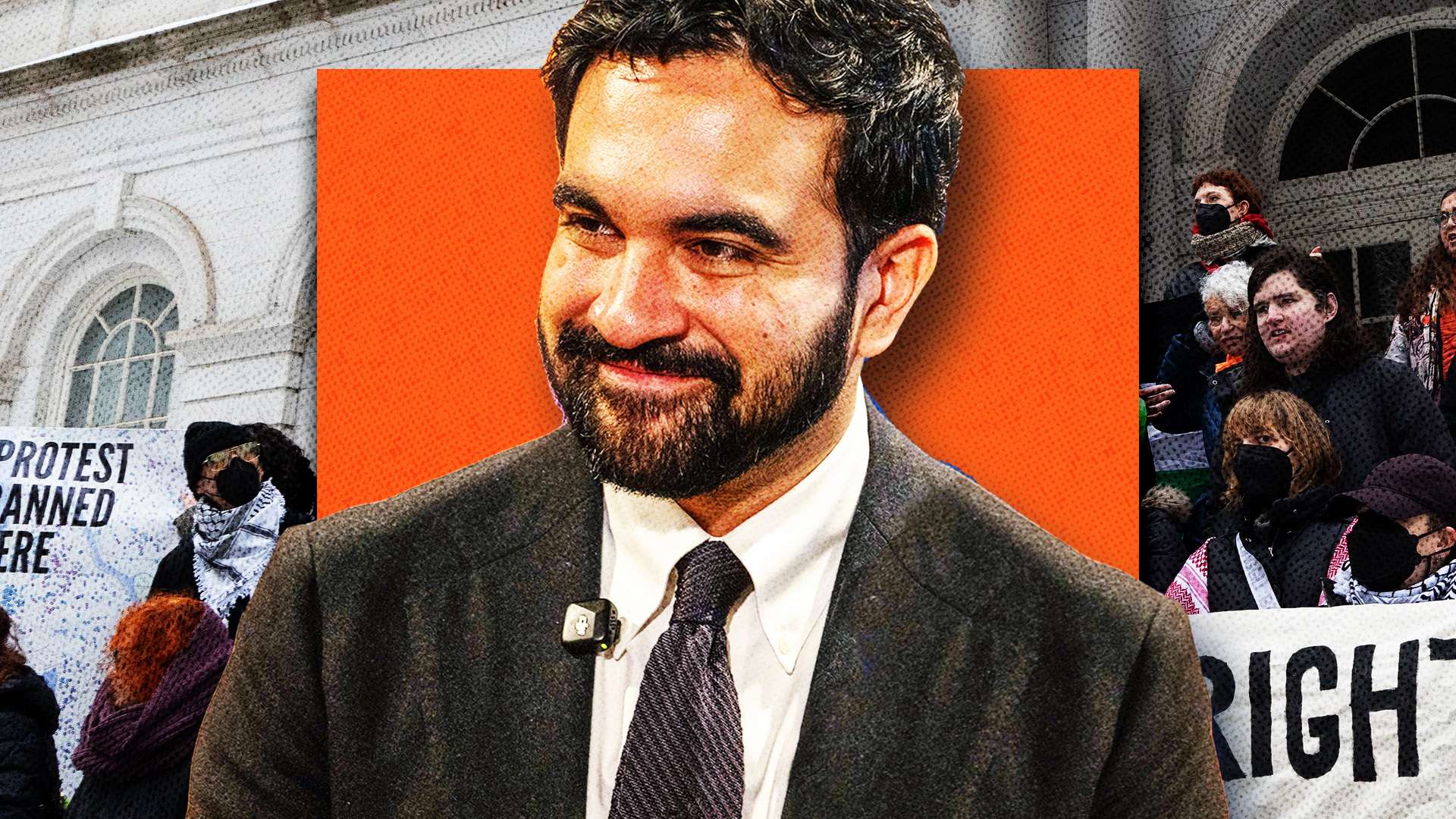
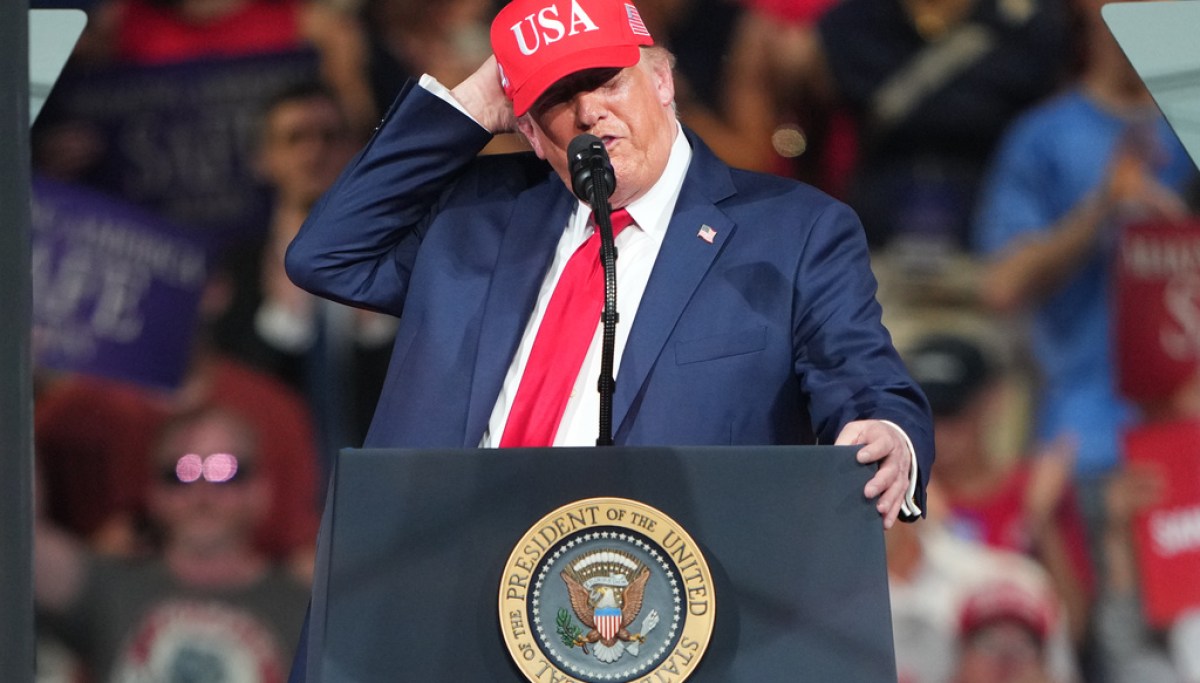
Even Under Mamdani, New York City's Ballot Questions Might Cut Red Tape and Public Review Hearings

Read the original at Reason ↗
Cite

Raus, S. (2026, October 23). Even Under Mamdani, New York City's Ballot Questions Might Cut Red Tape and Public Review Hearings. Reason. https://reason.com/2026/10/23/even-under-mamdani-new-york-citys-ballot-questions-might-cut-red-tape-and-public-review-hearings/

Dated from the outlet's own feed. Check the original for its byline.

Reason · collected 2026-10-23 · by Sam Raus

Quick Summary

Mayor Zohran Mamdani has proposed five ballot initiatives aimed at modernizing city operations and reducing bureaucratic red tape in New York City. These measures, placed by the Commission on Government Efficiency (COGE), would modify processes for using public space, simplifying paperwork for contractors, streamlining street safety project reviews, and easing permitting requirements. The key angle of the article is that these reforms could accelerate infrastructure projects and business activities by minimizing mandatory public hearings, which often become prolonged obstacles despite their democratic intent.
Written locally by qwen2.5:14b on 2026-10-23, using this article's own text rather than the other coverage of the same event (that is the story summary below).

AI analysis runs on qwen2.5:14b, locally

Story summary

New York City voters will decide on five ballot initiatives in November that aim to modernize city operations and streamline bureaucratic processes, particularly those related to new construction and business activity. Mayor Zohran Mamdani established the Commission on Government Efficiency (COGE) to accelerate public infrastructure and permitting procedures. Among these proposals are Questions 1, 2, and 3, which would end or reduce the use of mandatory public hearings in different city review processes. Specifically, Question 1 seeks to simplify the process for using public space by removing mandatory hearings for items like ramps, planters, and cafes, while maintaining community input. This ballot language aims to enhance efficiency without completely eliminating public engagement.

Written for “New York City Ballot Questions” on 2026-10-23, grounded in this article and the 0 other(s) covering the same event.
Why this leaning score
The article's own words the score was based on. Each is quoted verbatim and was checked against the article text before being stored, so you can find it in the original.
Reading Leans strongly right (beta estimate) Confidence high
Leaning: leans strongly right for article 102747 (high confidence, 3 verified quotes) · logged 2026-10-23

Story

📰 New York City Ballot Questions
Politics · 1 article(s) covering the same event.

Compared with similar articles

Nothing to compare against. No article is close enough to this one for the pipeline to have linked or judged the pair.
How this article was measured signals, leaning charts, publisher record, byline, topics and claims

Signals How these are calculated →

Claims extracted
16
sentences that state something as happening or true
Uncertain
12%
2 of 16 hedged ("reportedly", "may", "according to")
Leaning
Leans strongly right
of the writing, not the subject · beta estimate
Publisher signals
67/100
Reason's corrections and hedging, across everything collected from it. Not a measure of accuracy.
Outlets on this story
1
Politics
Same framing elsewhere
1
articles that frame the event the way this one does
Analyzed 2026-10-23 · how these are computed

How this is being covered How these are calculated →

Article leaning vs. publisher reliability
Source leaning vs. consistency

Publisher

Reason · 910 article(s) · 4 correction(s) detected
Running correction rate · 4 correction(s)

Who wrote this

Sam Raus
4 article(s) here · 1 carrying a prediction
🔮 New Yorkers won't be voting on any citywide offices this year, but they do have five ballot initiatives that could shape the city's future more than any politician on this year's ballot.
🔮 Extending the program through 2029 would turn a temporary intervention into a longer-term feature of Medicare.
🔮 Treasury Secretary Scott Bessent promises the checks will be delivered without adding to the national deficit, an economic policy Kabuki Theater, possibly paid for with visa fees.
🔮 Instead, they’re pursuing policies that could undermine patient access to local pharmacies and discourage the development of new treatments in America.
Also by Sam Raus
Nothing else under this byline is closely related to this article, so these are simply their most recent.

Topics

COGE Council Department of Government Efficiency New York New Yorkers

Subjects

COGE ORG · 3× Council ORG · 2× New Yorkers NORP · 2× City ORG · 1× Department of Government Efficiency ORG · 1× New York GPE · 1× Trump PERSON · 1× Zohran Mamdani PERSON · 1× the Commission on Government Efficiency ORG · 1× the] Procurement Policy Board ORG · 1×

Narrative

The plan is for COGE to modernize city operations and accelerate public infrastructure and permitting—in that vein, COGE placed five proposals before voters on the November ballot, largely targeting the bureaucratic processes governing new construction and business activity across the five boroughs.
framing: assertive · carried by 1 article(s) · first seen 2026-10-23
🔮 New Yorkers won't be voting on any citywide offices this year, but they do have five ballot initiatives that could shape the city's future more than any politician on this year's ballot.

Claims (16 extracted, 2 hedged)

New Yorkers won't be voting on any citywide offices this year, but they do have five ballot initiatives that could shape the city's future more than any politician on this year's ballot. uncertain
that → vote → ballot
Mayor Zohran Mamdani created a version of the Trump administration's infamous Department of Government Efficiency in New York called the Commission on Government Efficiency (COGE). asserted
Mamdani → create → Efficiency
The plan is for COGE to modernize city operations and accelerate public infrastructure and permitting—in that vein, COGE placed five proposals before voters on the November ballot, largely targeting the bureaucratic processes governing new construction and business activity across the five boroughs. asserted
COGE → modernize → boroughs
Questions 1, 2, and 3 on the ballot would end or reduce the use of public hearings in different city review processes. asserted
Questions → end → processes
Question 1 would, according to the ballot language, "simplify [the] process to use public space for uses such as ramps, planters and cafes, by removing mandatory hearings and Council disapproval of sidewalk cafes, while maintaining community and Council input." uncertain
Question → accord → input
Question 2 would "reduce paperwork for City contractors by authorizing [the] Procurement Policy Board to simplify [the] contractor questionnaire….[And] remove mandatory hearing for required client services report." asserted
Question → reduce → report
Question 3 would "simplify review of street safety projects to reduce construction timelines," among other changes. asserted
Question → simplify → changes
Question 4 is about simplifying permitting. asserted
Question → simplify → permitting
These policies were not directly introduced by Mamdani, but they reflect a governing philosophy that New York City and other big cities desperately need: a local government that won't allow a small group of organized opponents to obstruct progress for the city at large indefinitely. asserted
group → introduce → city
Nowhere is the bottleneck against much-needed development clearer than at public review hearings. asserted
bottleneck → need → hearings
In theory, a public hearing is democracy at its purest: Every voice is heard. asserted
voice → hear → purest
But in practice, it usually becomes a slow-motion filibuster. asserted
it → become → practice
The most persistent and best-organized opponents get a megaphone, with little to no input from the millions of New Yorkers who would broadly benefit from more housing, better infrastructure, and businesses that can open without getting wrapped in red tape. asserted
that → organize → tape
The 2026 ballot questions, if approved, would take small steps toward addressing these problems. asserted
questions → approve → problems
If they all passed, it wouldn't be a seismic change—a planter here or a parcel of land there. asserted
it → pass → land
But that's kind of the point: Should routine administrative decisions require another round of formal public review hearings to hold up any change, big or small? asserted
decisions → require → change
💬Give feedback
🕘History 🎫Support