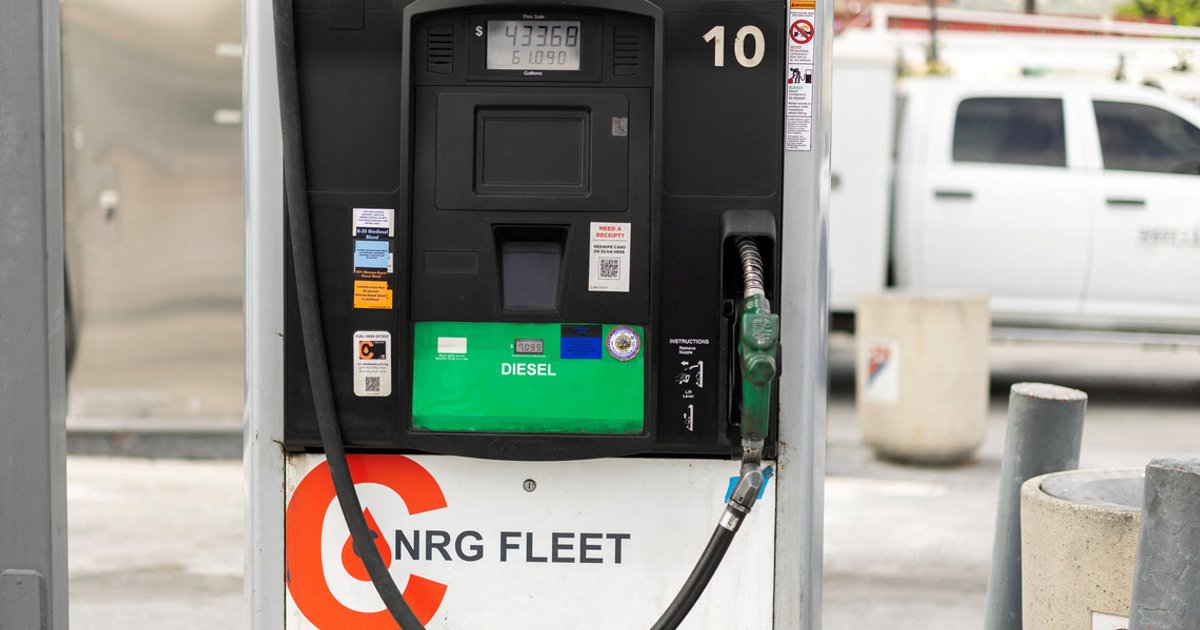
Consumer sentiment in the United States hit a near-record low in the final reading before the consequential midterm elections as cost-of-living issues weigh on US consumers.
asserted
issues → hit → consumers
The University of Michigan’s Surveys of Consumers said its Consumer Sentiment Index dropped on Friday as continuing tensions between the US and Iran drove up prices at the grocery store and the petrol pump.
asserted
tensions → say → store
Recommended Stories
list of 4 items- list 1 of 4US Social Security benefits to rise by 3.6 percent in 2027
- list 2 of 4How
asserted
benefits → rise → 2027
Iran messaging highlights cost of war ahead of US midterm elections
- list 3 of 4Will Russia’s diesel shipment to the US lower prices before midterms?
- list 4 of
asserted
shipment → highlight → midterms
4Rising costs and tight budgets strain Americans ahead of midterm elections
The reading dropped to 48.0 this month from a final reading of 48.1 in September, leading to the second-lowest reading on record.
asserted
reading → 4rise → record
The lowest was only a few months ago in May, when it stood at 44.8 points.
uncertain
it → stand → points
The report measures how consumers feel about their personal finances at present and how they expect it will change over the next 12 months; whether they feel it is a good time to make major household purchases; and their expectations for the US economy over the next 12 months, as well as five years.
asserted
it → measure → months
“Purchasing power continues to dominate consumer views of the economy,” said Joanne Hsu, the director of the Surveys of Consumers.
asserted
Hsu → purchase → Consumers
Crucially, weaker sentiment was fuelled by self-identified political independents.
asserted
sentiment → fuel → independents
The group’s sentiment dropped to 42.4 points, slightly above the all-time low of 40.6 points, which it reached in May.
uncertain
it → drop → May
Since January, the number of independents pointing to inflation pressures hurting their financial situation rose by 27 percent.
asserted
number → point → percent
Republicans referencing the same issue rose by 52 percent, and the figure rose by 15 percent among Democrats.
asserted
figure → reference → Democrats
Households with no or limited exposure to the stock market — which until recently had been soaring on enthusiasm for the artificial intelligence investment boom — have also cited high prices as a drag on their finances more frequently than at the start of the year.
asserted
which → soar → year
Consumers’ expectations for inflation over the next five years rose to 3.5 percent from 3.4 percent in September and 3.2 percent in March.
asserted
expectations → rise → March
“Consumers broadly expect inflation to accelerate, and this year’s increases in inflation expectations are not limited to one part of the political spectrum,” Hsu wrote.
asserted
Hsu → expect → spectrum
“The fact that aggregate consumer spending has been relatively resilient despite negative views of the economy provides another reason for caution.
asserted
spending → provide → caution
If part of consumption currently reflects precautionary spending to avoid future price hikes, disinflation may be even more difficult to achieve.”
uncertain
disinflation → reflect → hikes
The sentiment comes amid heightened prices for consumers.
asserted
sentiment → come → consumers
Inflation rose by 3.7 percent year on year last week, according to the recent consumer price index report, and petrol prices remain high, although lower than a month ago.
uncertain
prices → rise → month
The average price for a gallon of petrol is $4.29 ($1.13 per litre) on Friday, down from $4.47 ($1.18 per litre) this time last month, according to the American Automobile Association (AAA), which tracks daily petrol prices.
uncertain
which → accord → prices
Friday’s report comes in advance of the final monetary policy decision before the midterm elections.
asserted
report → come → elections
On Wednesday, the Federal Reserve is largely expected to maintain rates at 3.75–4.00 percent after raising rates by 25 basis points in September.
asserted
Reserve → expect → September
CME FedWatch, which tracks the likelihood of certain monetary policy decisions, forecasts an 89.5 percent chance that rates will remain unchanged.
asserted
rates → track → chance
 The Aporia