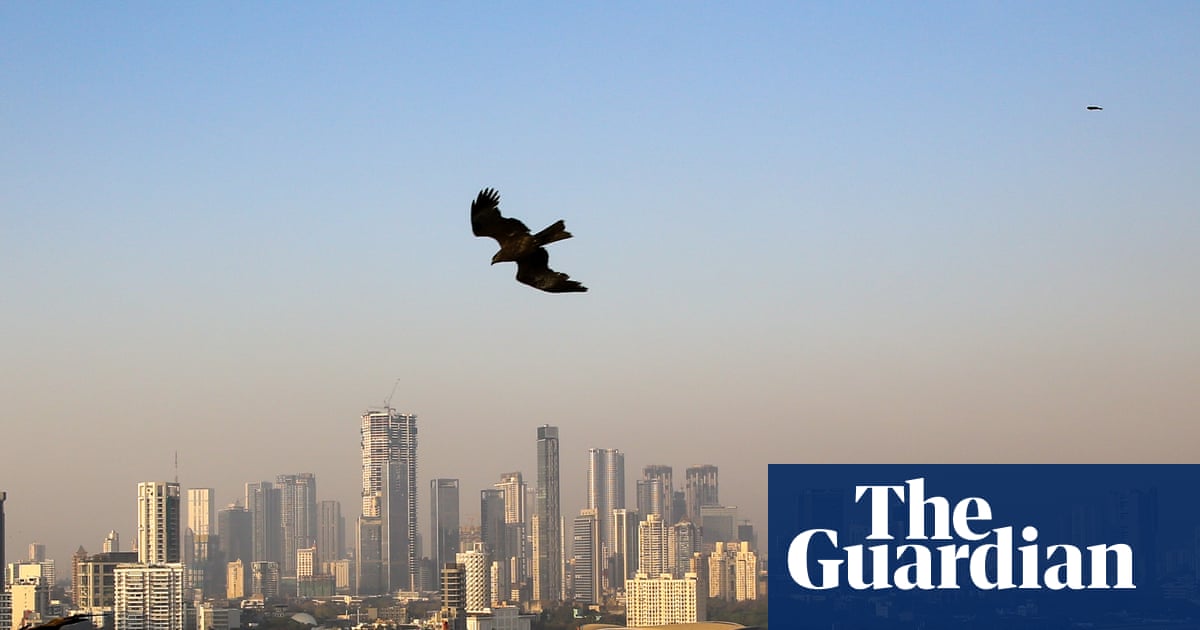
Recently, I may have saved a woman’s life on the road.
uncertain
I → save → road
Somehow, this was something I had expected to happen.
asserted
I → expect → ?
On that day, I saw a truck leave a construction site with a tangled wire trailing behind.
asserted
wire → see → site
I frantically looked to see what the wire was attached to and spotted the scaffolding a few meters ahead.
asserted
wire → look → scaffolding
I shrieked and grabbed the hand of the woman walking in front of me just as the metal pipes came crashing down.
asserted
pipes → shriek → me
We hugged for a brief second, and then walked our separate ways.
asserted
We → hug → ways
Mumbai (pictured top) is a city that is being made every day, and so much of the Bandra-Khar area that I inhabit is never not under construction.
asserted
I → picture → construction
Since I moved here from Seoul earlier this year, I have learned to be hypervigilant every time I walk the streets.
asserted
I → move → streets
I was reminded of that moment last week as news broke about the collapse of a five-storey building in Delhi, which killed seven people.
asserted
which → remind → people
Authorities had flagged safety concerns in the neighbourhood months earlier, the Hindustan Times reported, after 23 people died in a fire at another building.
asserted
people → flag → building
As the world’s most populous country, India can feel like a place where life can be startlingly cheap, and people die every day in tragedies that could have been prevented.
uncertain
that → feel → tragedies
According to analysis of government data by the Times of India, between 2020 and 2004 nearly 33,000 deaths occurred due to building collapses, fires or people falling into pits and maintenance holes.
uncertain
deaths → accord → pits
The collapse in Delhi has prompted questions, once again, about the state of urban infrastructure in India’s biggest cities.
asserted
collapse → prompt → cities
At a time when the country is undertaking a rapid infrastructure boom – new airports, high-speed expressways, luxury residential towers– daily life in cities like Delhi, Mumbai or Bengaluru appears to be deteriorating.
asserted
life → undertake → Delhi
Indian cities are not walkable, they rank among the worst for air quality, construction is poorly regulated, seasonal flooding is common and waste management remains under pressure.
asserted
management → rank → pressure
These challenges are only going to increase; the World Bank expects India’s urban population to double, going up to 951 million, by 2050.
asserted
population → go → 2050
More than half of the urban infrastructure the country will need by then has yet to be built, it said.
asserted
it → need → infrastructure
So, what would it take to make our cities better and safer?
asserted
cities → take → what
The experts I spoke to broadly agreed that Indian cities don’t lack rules as much as the political will and institutional machinery to enforce them.
asserted
cities → speak → them
For infrastructure veteran Vinayak Chatterjee, one solution lies in giving urban local bodies more power.
asserted
solution → lie → power
He points to a constitutional amendment from 1992 that was meant to strengthen municipalities and give them greater responsibility over urban planning.
asserted
that → point → planning
“But it remains largely unimplemented – in spirit and will.
asserted
it → remain → spirit
It is a serious matter that affects the very fabric of our urban existence,” said Chatterjee, founder of the Infravision Foundation.
asserted
Chatterjee → affect → Foundation
Rahul Goel, an expert on transportation safety and a professor at the Indian Institute of Technology, Delhi, believes the problem with India’s roads begins with on-street parking.
asserted
problem → believe → parking
“People are using public space for personal use.
asserted
People → use → use
Everything becomes better when you remove on-street parking,” he said, arguing that freeing up roads would make pedestrians and cyclists safer, reduce traffic jams and make walking easier.
asserted
walking → become → jams
In other cities in the global south, from Bangkok to Manila to Cape Town, one cannot just park their car on the road to run errands, Goel said.
asserted
Goel → park → errands
He described it as a governance failure, saying there is a need to create more parking spaces and perhaps have civil defense personnel or municipal workers enforce fines.
asserted
personnel → describe → fines
“Our streets are self-run,” Goel said.
asserted
Goel → run → ?
“That’s why they are in complete disarray.”
asserted
they → ’ → disarray
He pointed to the Delhi Metro as an example of a space where people follow rules and things are orderly.
asserted
things → point → rules
“When rules are enforced, people follow them.”
asserted
people → enforce → them
India has detailed guidelines for construction approvals, including how traffic must be managed, what signage must be put up, and creating paths for pedestrians.
asserted
signage → detail → pedestrians
But compliance remains a significant problem, says Geetam Tiwari, emeritus professor at Indian Institute of Technology, Delhi.
asserted
Tiwari → remain → Technology
In an audit of construction sites on highways, including bridges, Tiwari and her colleagues found widespread violations.
asserted
Tiwari → include → violations
Contractors had a financial incentive to complete projects quickly with payments being tied to the pace of construction, she said, adding that penalties for violations were low enough that it was cheaper to simply pay the fine than make fixes.
asserted
it → have → fixes
For unsafe buildings and unauthorised renovations, Tiwari said, the solution also requires bringing stakeholders together: resident associations, landlords, lessees and local authorities to conduct audits, raise awareness and penalise contractors who violate safety requirements.
asserted
who → say → requirements
Actions, she said, that should not wait for the next tragedy.
asserted
that → say → tragedy
In the aftermath of the Delhi case, the high court has directed authorities to inspect student accommodations for safety.
asserted
court → direct → safety
Building owners have been arrested and several municipal officials in charge of the area have been suspended.
asserted
officials → arrest → area
…and 45 more, not listed.
 The Aporia