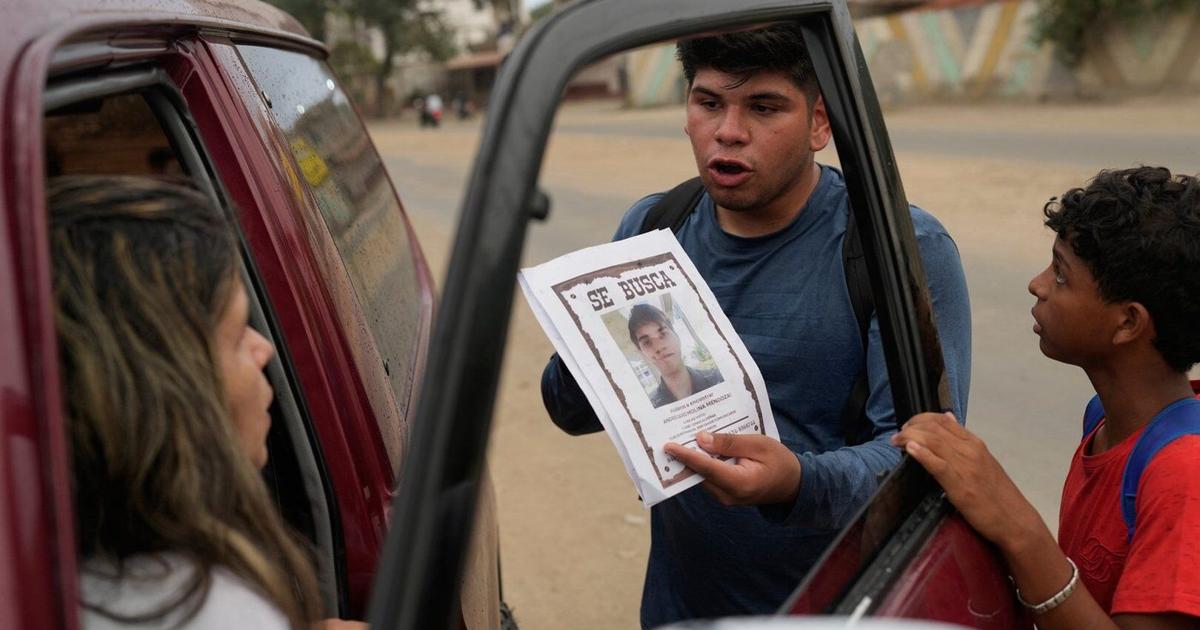
Salvadoran President Nayib Bukele’s plan to release some prisoners detained during his government’s mass crackdown on suspected gang members has frustrated families who say their relatives were unjustly held.
asserted
relatives → release → families
The families say the plan falls short of fully exonerating those wrongfully arrested or convicted and providing compensation for the psychological and financial toll of their imprisonment.
asserted
plan → say → imprisonment
“What we want as family members is that they follow due process as they should have from the beginning, and that they review every case,” said Liliana de Reyes, a member of the Mothers for Freedom collective that advocates for their relatives’ release.
asserted
that → want → release
Her husband, Israel Reyes, was convicted in a mass trial of hundreds of alleged gang members in July that human rights groups say violates due process.
asserted
groups → convict → process
Her son, Merlon Urias, is awaiting trial.
asserted
son → await → trial
Both are accused of “illicit association,” a catch-all term for anyone with alleged gang involvement.
asserted
Both → accuse → involvement
De Reyes insists they are innocent.
asserted
they → insist → ?
Many families have had no contact with their imprisoned relatives
Bukele said at a news conference last week that his government was working on a plan that could lead to the release of up to 50% of the more than 90,000 people arrested under the country’s state of exception, an emergency measure that suspends certain constitutional rights to fight gangs.
uncertain
that → have → gangs
Since the measure took effect in March 2022 as part of a crackdown on the country’s two predominant gangs, MS-13 and Barrio 18, El Salvador’s incarceration rate has soared to the highest in the world, with about 1.5% of its population behind bars.
asserted
% → take → bars
Bukele has defended the mass arrests as necessary to improve public safety, and the crackdown has enjoyed widespread support among Salvadorans.
asserted
crackdown → defend → Salvadorans
Homicides reached a peak of 103 per 100,000 residents in 2015 and were at 53 per 100,000 in 2018, the year before Bukele took office.
asserted
Bukele → reach → office
That number drastically decreased to 1.3 per 100,000 in 2025, though experts say the numbers could be skewed because the government has narrowed its definition of homicide.
uncertain
government → decrease → homicide
The president said the releases would focus on gang “collaborators,” a blanket term for people who help a gang in some way but are not initiated members.
asserted
who → say → way
Days later, Bukele clarified that his government was analyzing more than 10,000 cases involving alleged gang collaborators for potential conditional release.
asserted
government → clarify → release
Half of those could be eligible for a program known as “Cero Ocio,” or “Zero Idleness,” where prisoners perform community service to reduce their sentences, he said.
uncertain
he → know → sentences
Bukele’s office did not respond to a request for comment about criticism of the plan.
asserted
office → respond → plan
Since the crackdown began, human rights groups have documented thousands of cases of arbitrary arrests.
asserted
groups → begin → arrests
The rushed speed of the mass arrests and a quota system for authorities meant that some people who had nothing to do with gangs were wrongfully imprisoned, they say.
asserted
they → mean → gangs
Rights that remain suspended include the right to be informed of the reasons for detention, access to legal counsel and visitation.
asserted
that → suspend → counsel
Many families have had no contact with their relatives, leaving them to wonder if they are alive.
asserted
they → have → them
At least 564 people have died in state custody, according to the Salvadoran human rights group Socorro Jurídico Humanitario, or Humanitarian Legal Aid.
uncertain
people → die → group
Families want innocence recognized and compensation
For relatives fighting for the release of their loved ones, anything less than a full exoneration is unacceptable.
asserted
anything → want → exoneration
“My son doesn’t have to accept any guilt because he doesn’t have any,” said Natalia Funes de Claros, whose son Óscar Orlando Rodríguez Funes, 41, was arrested for alleged illicit association in June 2022 and still awaits trial.
asserted
son → have → trial
Funes de Claros, 62, said she has not heard from her son since his cellphone was taken away after his arrest.
asserted
cellphone → say → arrest
She worries that her son will be pressured into admitting guilt so that he can be released, which could have long-term consequences for him in El Salvador, including limiting his chances of getting a job.
uncertain
which → worry → job
She called on the government to compensate families such as hers for the trauma they’ve endured.
asserted
they → call → trauma
Funes de Claros lives as if her son were dead, she said.
asserted
she → live → ?
Shortly before he was arrested, her son told her he was seeing someone and she was pregnant, but Funes de Claros doesn’t know how to contact her, so she has no idea if she has a grandchild.
asserted
she → arrest → grandchild
As a former farmer whose body can no longer take the arduous work, she has tried to scrape together $100 a month to deliver her son a package of basic food and hygiene products, since the government does not provide enough.
asserted
government → take → enough
“The government needs to pay for what it has done,” Funes de Claros said.
asserted
Claros → need → what
For Arely Martínez, 41, the arrests of her two brothers on allegations of illicit association have impacted the entire family.
asserted
arrests → impact → family
One brother’s daughter was born while he was imprisoned and constantly asks for him.
asserted
he → bear → him
Their father died while David and Neftalí Martínez were imprisoned.
asserted
David → die → ?
They never got to say goodbye.
asserted
They → get → goodbye
Her son tried to join the military but couldn’t pass a background check because of his uncles’ arrests.
asserted
son → try → arrests
Martínez criticized Bukele’s announcement for suggesting that even those potentially eligible for release are guilty.
asserted
those → criticize → release
Her brothers are still awaiting trial.
asserted
brothers → await → trial
“As mothers, sisters and wives, we all feel horrible about this because when he talks about releasing them conditionally, it’s as if he is convicting them and that’s not right,” Martínez said.
asserted
Martínez → feel → them
Still, she hopes her brothers will be released soon.
asserted
brothers → hop → ?
“I have faith,” she said.
asserted
she → have → faith
…and 1 more, not listed.
 The Aporia