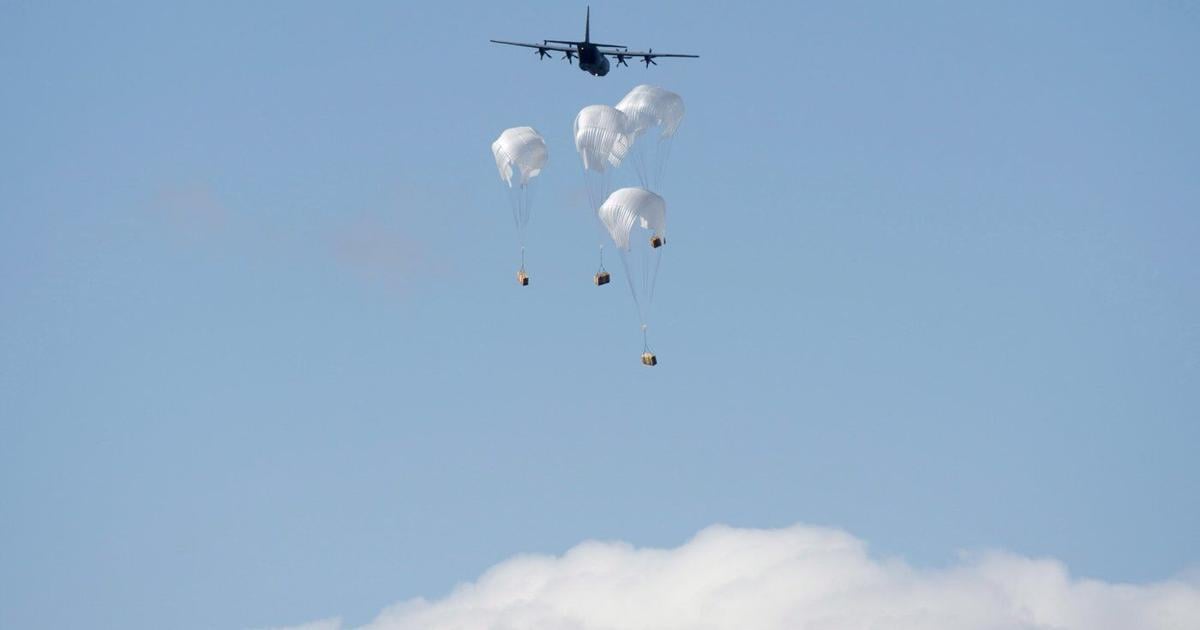
Military could begin Arctic sensor installations next summer

Read the original at Toronto Star ↗
Cite

Duggan, K. (2026, October 23). Military could begin Arctic sensor installations next summer. Toronto Star. https://www.thestar.com/politics/federal/military-could-begin-arctic-sensor-installations-next-summer/article_d26d235b-5b47-59cc-9efa-03d0a6701e98.html

Dated from the outlet's own feed. Check the original for its byline.

Toronto Star · collected 2026-10-23 · by Kyle Duggan

Quick Summary

National Defence plans to install 47 sensor stations across Canada’s Arctic region starting next summer as part of Project Crossbow to enhance surveillance and early warning capabilities for Norad. The installations will use passive sensors housed in large shipping containers transported by Hercules aircraft and Chinook helicopters, covering areas from Yukon near the Alaskan border to Alert, Nunavut. Deployment is set to begin with initial operational capability anticipated in 2029, followed by full completion by 2032, running continuously for another two decades thereafter.
Written locally by qwen2.5:14b on 2026-10-23, using this article's own text rather than the other coverage of the same event (that is the story summary below).

AI analysis runs on qwen2.5:14b, locally

Story summary

National Defence plans to install 47 sensor stations across Canada's Arctic region starting as early as next summer to enhance Norad’s surveillance capabilities. The initiative, called Project Crossbow, will begin in the Yukon near the Alaskan border and extend along the Arctic coast through the Northwest Territories, reaching Alert, Nunavut, the most northern inhabited point on Earth.

These sensor stations are designed to operate autonomously with ruggedized power-generating container systems that can withstand extreme Arctic conditions using solar and wind energy. The installations will be transported by Hercules aircraft and Chinook helicopters and will remain unstaffed except for temporary deployments needed during setup and annual maintenance cycles.

Royal Canadian Air Force spokesperson Lt.-Cmdr. Melanie Aqiqi stated that Crossbow is part of a broader network supporting northern air domain awareness, with initial operating capability expected to come online in 2029.

Written for “Arctic Sensor Installations Planned” on 2026-10-23, grounded in this article and the 0 other(s) covering the same event.
Why this leaning score
This article does not take a side on a contested political question, so it has no leaning score. That is an answer rather than a gap: a match report or a rescue can be warmly or critically written without being left or right, and scoring it anyway is how approval of a subject gets recorded as a political position.
No political leaning scored for article 101299 · logged 2026-10-23

Story

📰 Arctic Sensor Installations Planned
Politics · 1 article(s) covering the same event.

Compared with similar articles

Nothing to compare against. No article is close enough to this one for the pipeline to have linked or judged the pair.
How this article was measured signals, leaning charts, publisher record, byline, topics and claims

Signals How these are calculated →

Claims extracted
17
sentences that state something as happening or true
Uncertain
18%
3 of 17 hedged ("reportedly", "may", "according to")
Leaning
not political
takes no side on a contested political question
Publisher signals
64/100
Toronto Star's corrections and hedging, across everything collected from it. Not a measure of accuracy.
Outlets on this story
1
Politics
Same framing elsewhere
1
articles that frame the event the way this one does
Analyzed 2026-10-23 · how these are computed

How this is being covered How these are calculated →

Article leaning vs. publisher reliability
Source leaning vs. consistency

Publisher

Toronto Star · 9251 article(s) · 25 correction(s) detected
Running correction rate · 25 correction(s)
2026-10-07
Correction
2026-09-24
Correction

Who wrote this

Kyle Duggan
11 article(s) here · 1 carrying a prediction
🔮 The planned installations would start in Yukon near the Alaskan border and follow along the Arctic coast across the Northwest Territories, reaching as far out as Alert, Nunavut, the most northern inhabited point in the world.
🔮 Carney said the federal government will “take into account” those votes.
🔮 Members of the Royal Canadian Air Force Snowbirds aerial aerobatics team are set to perform their final air show Friday in Moose Jaw, Sask., before their decades-old Tutor jets head into retirement.
🔮 Industry Minister Mélanie Joly says Canada would never interfere in U.S. elections.
🔮 Army personnel will be testing those prototypes until roughly next summer or fall.
🔮 OTTAWA - Defence Minister David McGuinty says he’s taking a “cautious” approach to drawing conclusions from available intelligence as European leaders warn Moscow may be preparing new hybrid attacks on NATO members.
🔮 If she had won, Carignan would have become the first woman to be named to the position, and also would have to step down as leader of Canada’s military, a role she has held since 2024.
🔮 A proposed new European security forum would include Canada, Britain and Ukraine as partners — but defence experts here say it’s not clear what the council, or Ottawa’s involvement, ultimately would look like.
🔮 When Prime Minister Mark Carney suspended those talks and summoned LeBlanc back to Canada, Carney accused the American side of making last-minute demands that would undermine Canada’s sovereignty.
Also by Kyle Duggan
Nothing else under this byline is closely related to this article, so these are simply their most recent.
All 11 articles by Kyle Duggan →

Topics

Alert National Defence Norad Nunavut OTTAWA

Subjects

National Defence ORG · 3× Nunavut GPE · 3× Alert GPE · 2× Alaskan NORP · 1× Melanie Aqiqi PERSON · 1× Norad ORG · 1× OTTAWA GPE · 1× Royal Canadian Air Force ORG · 1× Yukon GPE · 1× the Northwest Territories GPE · 1×

Narrative

Aside from some temporary deployments required to set them up and an annual maintenance cycle, the installations will remain unstaffed throughout the year. “This defence capability (surveillance sensors) will operate within self-powered, autonomous, ruggedized power-generating container systems designed for continuous operations in austere environments and extreme Arctic conditions,” one of the documents said.
framing: assertive · carried by 1 article(s) · first seen 2026-10-23
🔮 The planned installations would start in Yukon near the Alaskan border and follow along the Arctic coast across the Northwest Territories, reaching as far out as Alert, Nunavut, the most northern inhabited point in the world.
2026-10-23 · Toronto Star
Military could begin Arctic sensor installations next summer · assertive framing

Claims (17 extracted, 3 hedged)

OTTAWA - National Defence plans to install 47 sensor stations across the North starting as early as next summer to bolster Norad’s surveillance and early warning abilities, according to recently published regulatory filings. uncertain
Defence → plan → filings
The planned installations would start in Yukon near the Alaskan border and follow along the Arctic coast across the Northwest Territories, reaching as far out as Alert, Nunavut, the most northern inhabited point in the world. asserted
installations → plan → world
Called Project Crossbow, the plan involves using Hercules aircraft and Chinook helicopters to airlift passive sensor installations, which resemble large shipping containers that stand on metal legs. asserted
that → call → legs
The initial deployments could begin as soon as next summer with initial operating capability coming online in 2029, said Royal Canadian Air Force spokesperson Lt.-Cmdr. Melanie Aqiqi. uncertain
Aqiqi → begin → 2029
She said in an emailed statement that Crossbow is “part of a broader network of capabilities supporting northern air domain awareness.” asserted
Crossbow → say → awareness
The container stations will run on solar and wind power, according to a series of National Defence documents filed with a Nunavut regulatory board. uncertain
stations → run → board
Aside from some temporary deployments required to set them up and an annual maintenance cycle, the installations will remain unstaffed throughout the year. “This defence capability (surveillance sensors) will operate within self-powered, autonomous, ruggedized power-generating container systems designed for continuous operations in austere environments and extreme Arctic conditions,” one of the documents said. asserted
one → require → documents
The federal government is investing billions of dollars in a broader effort to modernize Norad’s equipment. asserted
government → invest → equipment
The project was announced in 2022 by then-defence minister Anita Anand under the Northern Approaches Surveillance system, which includes the over-the-horizon radar project. asserted
which → announce → project
Anand said at the time the capabilities of the joint Canada-U.S. project are classified but the new network would add “another layer of detection” to Norad. asserted
network → say → Norad
An information package submitted to the Nunavut Planning Commission said the project is of “national significance” and the “proposed sites are required for overall system network operation.” The sites mapped out in some of the filed plans include two in Quttinirpaaq National Park on Ellesmere Island and four within a migratory bird sanctuary on Banks Island. asserted
sites → submit → Island
The documents state the project is expected to have little to no impact on wildlife. asserted
project → state → wildlife
Two sensor systems are already stationed in Alert, Nunavut and Sachs Harbour, Northwest Territories, one of the documents said. asserted
one → station → documents
The sites were chosen so that National Defence can easily airlift the containers in just a few days — although the exact rationale for site selection remains classified. asserted
rationale → choose → selection
The sensor project is expected to be complete by 2032. asserted
project → expect → 2032
Once fully deployed, the project is expected to run another 20 years. asserted
project → deploy → ?
This report by The Canadian Press was first published Oct. 22, 2026. asserted
report → publish → Press

💬Give feedback
🕘History 🎫Support