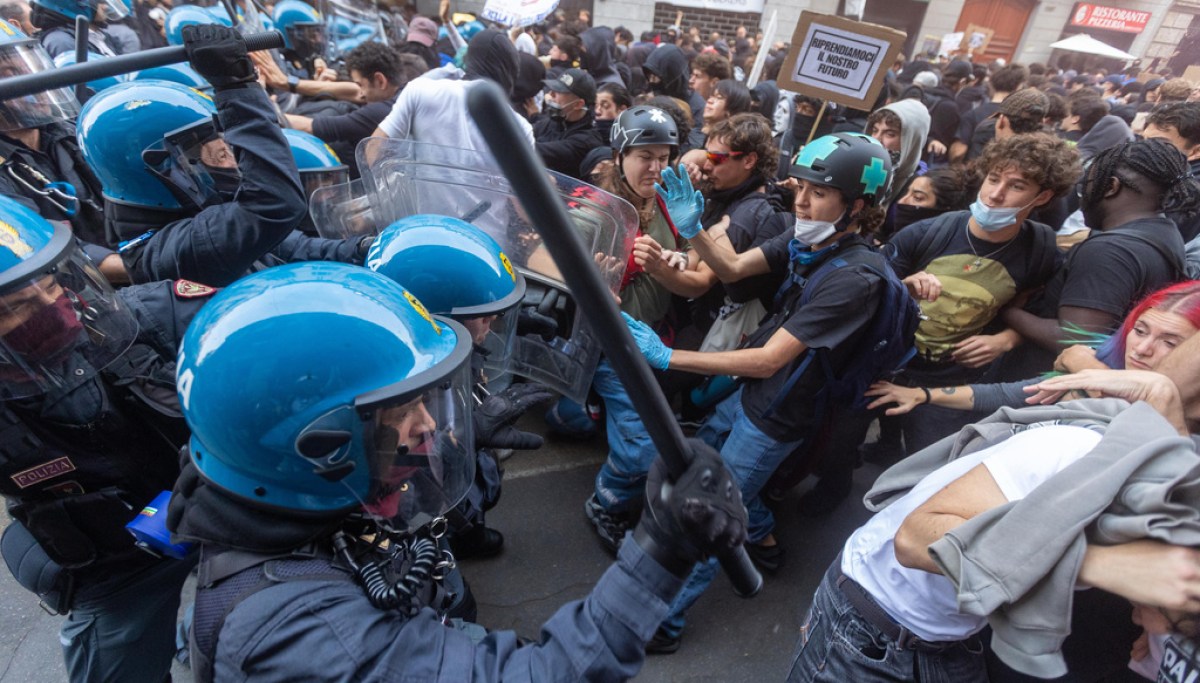
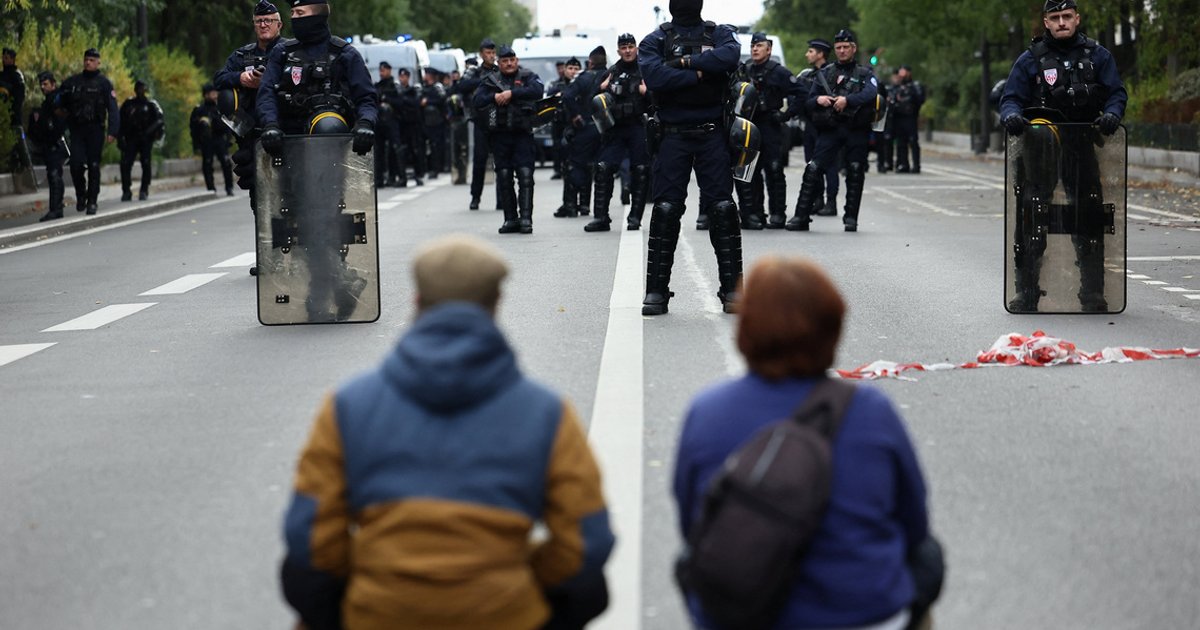
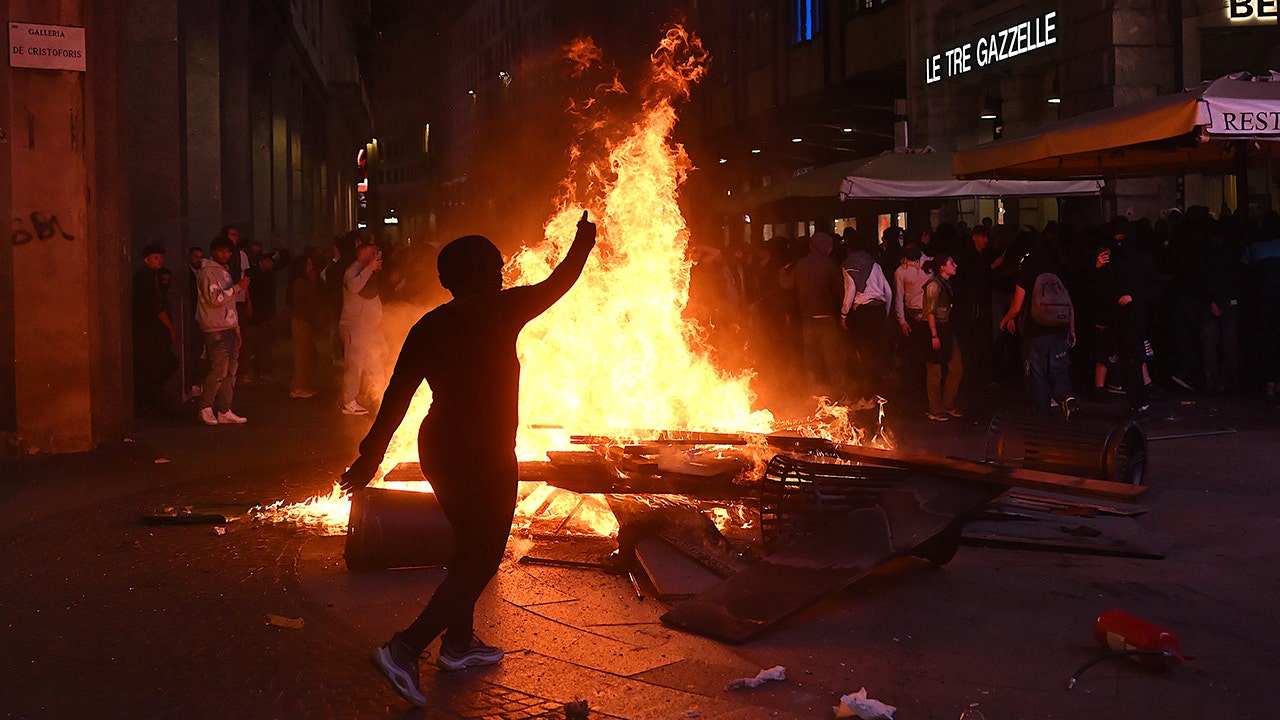
Martina Miccichè was filming riot police kicking and beating a teenager with batons as they dragged him along Piazza del Duomo, the central Milan square hosting its cathedral, when she was struck by a flying object, causing a deep gash and bruising near her right eye.
The journalist had joined hundreds of mostly young people marching through the northern Italian city on Saturday afternoon to protest over soaring living costs and unaffordable housing, echoing the wider wave of economic discontent fuelling protests across Europe.
It wasn’t the first time Italy’s youth have loudly aired their grievances during Giorgia Meloni’s four years as prime minister, despite the risk of falling foul of her ruling coalition’s ever-expanding crackdown on security and public dissent.
asserted
youth → film → security
On Saturday afternoon they plan to protest again in Milan and other major Italian cities.
asserted
they → plan → Milan
Miccichè said the atmosphere last Saturday was peaceful until about 5pm, when police blocked access to Via Broletto, a street about a 10-minute walk away from Piazza del Duomo.
asserted
police → say → Duomo
“People were angry because they were being repressed,” she said, claiming the police turned “suddenly violent” as they pushed the crowd back with their shields.
asserted
they → repress → shields
“The violence escalated.
asserted
violence → escalate → ?
They started to grab people at random, hitting and kicking them.
asserted
They → start → them
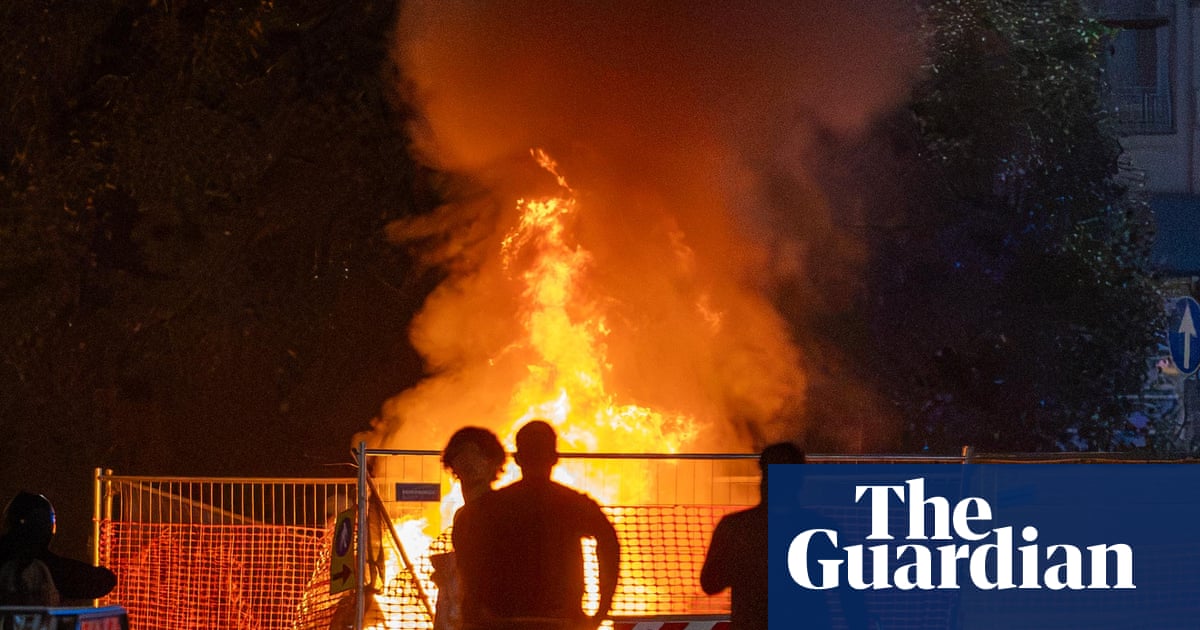
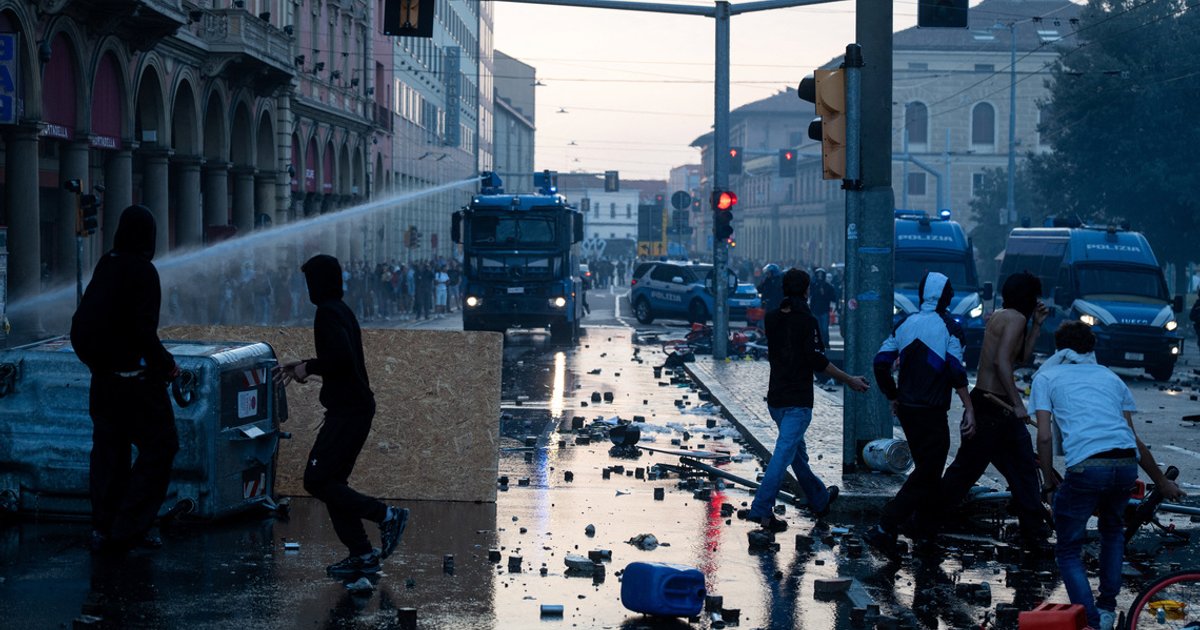
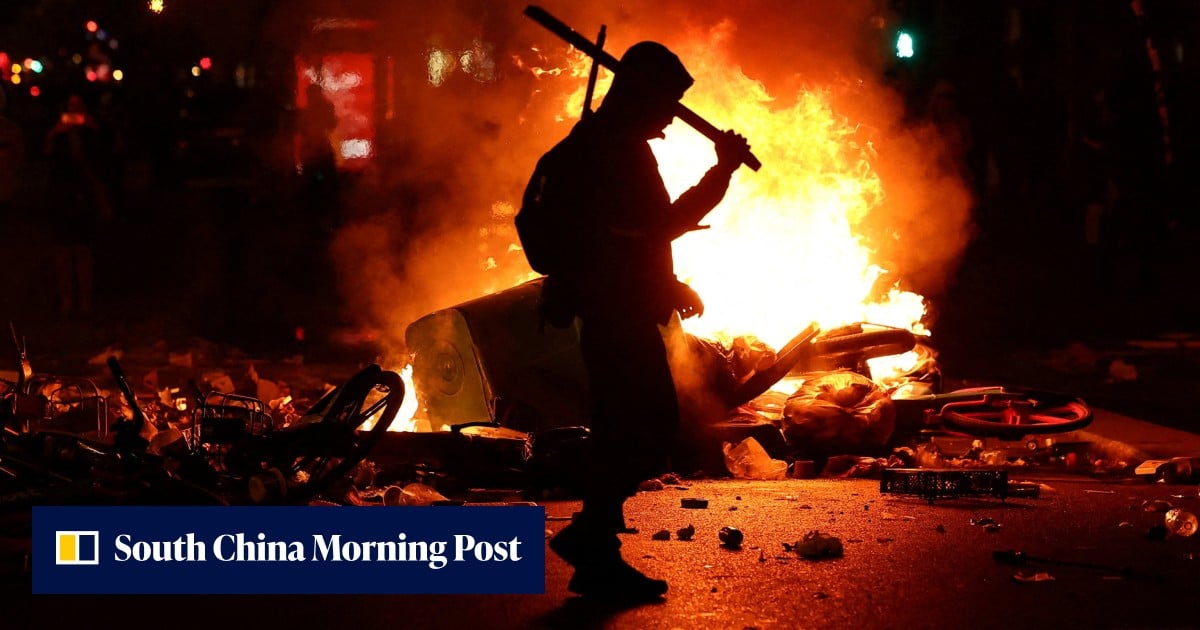
As the clashes continued and police filled the square with teargas while astonished tourists looked on, a group of masked youths on the fringes headed to the surrounding fashion district, tearing down road signs, setting bins alight and smashing shop windows – among them Footlocker and Levi’s – then looting them.
asserted
group → continue → them
The vandalism resumed on Sunday as the gangs – many baited by the promise of luxury goods through a network of social media chats – descended on the city centre again, mostly from marginalised areas on the outskirts.
asserted
gangs → resume → outskirts
During the two days of unrest, police detained more than 271 young people.
asserted
police → detain → people
Of those, 32 were arrested, including 23 minors and 13 foreign nationals.
asserted
32 → arrest → minors
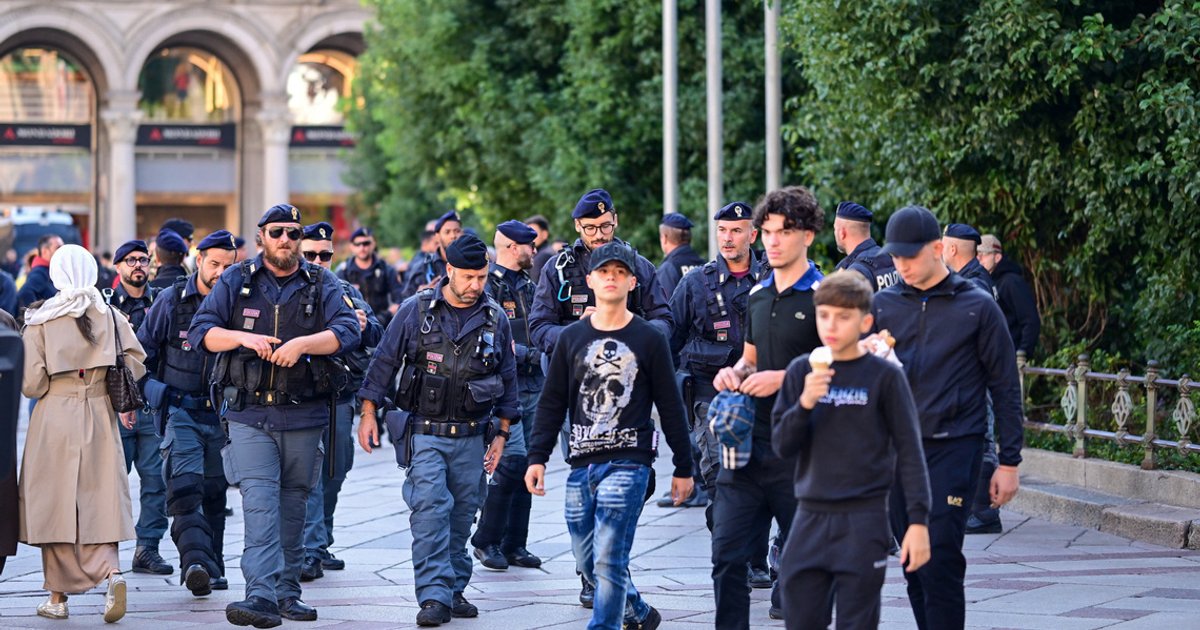
As the Italian media published images of injured police officers, Meloni’s government rapidly enacted more measures targeting minors and further empowering the police – including holding parents financially accountable for their children’s vandalism and looting – while dispatching 500 troops to Milan.
asserted
parents → publish → Milan
The latest legislation also criminalises violent participation in a demonstration and toughens penalties for rioters.
asserted
legislation → criminalise → rioters
Some of the government’s security measures are now being applied in the south of Italy, where lorry drivers have been protesting against high petrol prices for more than a week, blocking roads and disrupting supermarket supplies.
asserted
drivers → apply → supplies
In response, 71 people have been reported to judicial authorities and 242 fined over the blockades – a protest act made illegal in a previous security bill.
asserted
242 → report → bill
A government official also warned the lorry drivers that obstructing public highways could carry jail terms.
uncertain
obstructing → warn → terms
“This government just tries to repress protesters instead of listening to them and addressing the issues,” said Miccichè, who needed stitches for her injury.
asserted
who → try → injury
“It is all connected.
asserted
It → connect → ?
There is anger in the south over fuel prices and young people everywhere are angry – they don’t even have a chance to think about the future because they are so terrified of the present.
asserted
they → be → present
Furthermore, “we are not feeling safe”, the 34-year-old added, “because we can see how much space the police have now and how shielded they are”.
asserted
they → feel → space
Racial profiling had become the norm in Milan, especially in the centre and close to its train stations, she claimed.
asserted
she → become → stations
The weekend’s urban unrest, including protests in Turin and Bologna, has intensified debate over Italy’s “lost generation”.
asserted
unrest → include → generation
Furthermore, the youth protests and subsequent fringe violence have exposed the sharp divide between Italy’s marginalised and immigrant youth and those with greater prospects.
asserted
protests → expose → prospects
Working-class Italians or third- and second-generation immigrants are regularly labelled by rightwing politicians and the press as maranza, a derogatory term used to describe groups of young people who usually congregate in city centres.
asserted
who → label → centres
They come from areas like Barona, a sprawling council estate in the south-west of Milan.
asserted
They → come → Milan
Young people there have been reflecting on the events of last weekend.
asserted
people → reflect → weekend
“There is a lot of discontent – we are all children of this widespread malaise,” said Domenico Ricci, who along with Luca Orlando manages a bar that is part of Barrio’s, a cultural hub where the district’s youth come together.
asserted
youth → be → Barrio
Orlando believes the vandalism and looting were a symptom of anger and years of feeling unheard and invisible.
asserted
vandalism → believe → anger
“So when an opportunity arises, these kids take revenge.
asserted
kids → arise → revenge
They don’t do it simply because they want to steal something.
asserted
they → do → something
All this government does is introduce new crimes – they never listen or engage in dialogue.”
asserted
they → do → dialogue
Orlando, whose parents came from Calabria, is feeling the nationwide discontent.
asserted
parents → come → discontent
“But the protests there [in the south-west] have hardly had any coverage,” he said.
asserted
he → have → coverage
“And we are only talking about Milan because of the violence and not the real issues.”
asserted
we → talk → violence
Thomas, 18, who has grown up in Barona, is training to be a chef and wants to leave Italy “as soon as possible”.
asserted
who → grow → Italy
He said: “I see no future here.”
asserted
I → say → future
His friend Mohamed, an Italian citizen of Moroccan origin, is still at high school and wants to become a lawyer.
asserted
friend → want → school
“If you make a mistake, then you must pay,” he said.
asserted
he → make → mistake
“But this is also a characteristic of protests – the more a government doesn’t listen, the more people get angry.”
asserted
people → listen → protests
Mauro Magatti, a sociologist at Milan’s Catholic University of the Sacred Heart, said socioeconomic discomfort and a sense of abandonment affected “an entire generation” and responding to the anger with excessive repression risked enlarging the protest.
asserted
responding → say → protest
“Violence always needs to be condemned but now we need to lower the tone to overcome this burst of anger and violence and focus on addressing the real problems,” he said.
asserted
he → need → problems
…and 5 more, not listed.
 The Aporia