There’s an absurd gap in our road rules, as I discovered by accident

Read the original at The Sydney Morning Herald ↗
Cite

Knox, M. (2026, October 23). There’s an absurd gap in our road rules, as I discovered by accident. The Sydney Morning Herald. https://www.smh.com.au/technology/there-s-an-absurd-gap-in-our-road-rules-as-i-discovered-by-accident-20261023-p617t8.html?ref=rss&utm_medium=rss&utm_source=rss_feed

Dated from the outlet's own feed. Check the original for its byline.

The Sydney Morning Herald · collected 2026-10-23 · by Malcolm Knox

Quick Summary

The article discusses the rising issue of distracted driving in Australia, highlighting that after years of decline, road fatalities have increased for four consecutive years. According to recent surveys, distractions such as using mobile phones while driving are responsible for up to 16% of accidents, with phone use decreasing reaction times by 18%. The insurer Allianz suggests that distraction may be underreported and could actually cause up to 33% of crashes.
Written locally by qwen2.5:14b on 2026-10-23, using this article's own text rather than the other coverage of the same event (that is the story summary below).

AI analysis runs on qwen2.5:14b, locally

Story summary

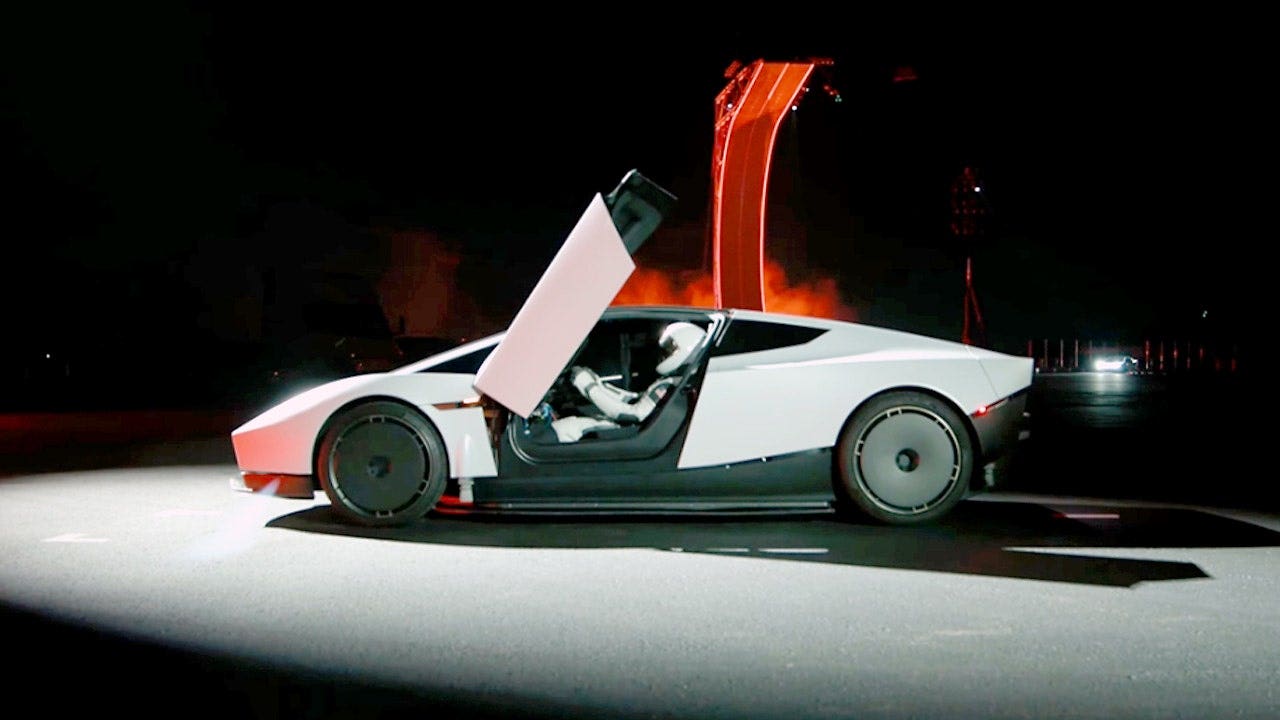
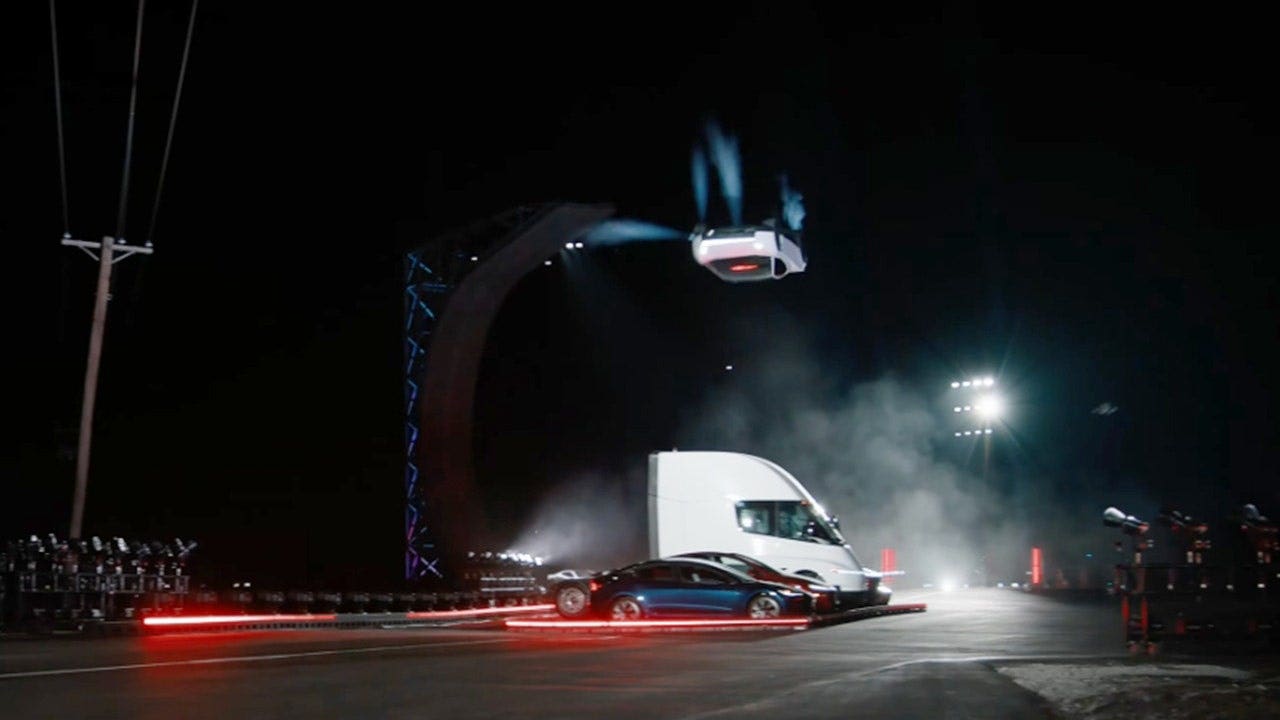
On October 15, 2026, Tesla unveiled its redesigned next-generation Roadster at SpaceX's testing facility in McGregor, Texas. The new model features rocket thrusters and can accelerate from 0 to 60 mph in less than a second. During the demonstration, the two-seater vehicle drove upside down on a ramp using suction and then flipped mid-air before landing safely with its built-in thrusters. Although initially previewed nearly nine years ago, Tesla aims to start production by 2028. Despite its high cost of $200,000 per unit and reservations priced at $50,000, Tesla CEO Elon Musk has downplayed the car's financial impact on the company. However, analysts see it as a symbol showcasing Tesla’s advanced technology.

Written for “Tesla Unveils Flying Roadster” on 2026-10-23, grounded in this article and the 21 other(s) covering the same event.
Why this leaning score
The article's own words the score was based on. Each is quoted verbatim and was checked against the article text before being stored, so you can find it in the original.
Reading Leans left (beta estimate) Confidence high
Leaning: leans left for article 100994 (high confidence, 2 verified quotes) · logged 2026-10-23

Story

📰 Tesla Unveils Flying Roadster
Technology · 22 article(s) covering the same event. Compare every outlet's account →

Compared with similar articles

This article reads leans left and hedges 11% of its claims. Each row says how that neighbour differs.
Fox News
⚖️ leaning not scored 🔴 9% hedged 12 of 128 📰 publisher trust 67
“Both articles describe Elon Musk's unveiling of Tesla's new Roadster with its unique capabilities.”
Fox News
⚖️ Leans right further right than this 🔴 9% hedged 3 of 33 📰 publisher trust 67
“The articles discuss different aspects of Tesla's recent demonstration or unveiling of a flying car-like vehicle; Article A focuses on technological progress and optimism, while Article B critiques safety concerns.”
How this article was measured signals, leaning charts, publisher record, byline, topics and claims

Signals How these are calculated →

Claims extracted
55
sentences that state something as happening or true
Uncertain
11%
6 of 55 hedged ("reportedly", "may", "according to")
Leaning
Leans left
of the writing, not the subject · beta estimate
Publisher signals
61/100
The Sydney Morning Herald's corrections and hedging, across everything collected from it. Not a measure of accuracy.
Outlets on this story
22
Technology
Same framing elsewhere
1
articles that frame the event the way this one does
Analyzed 2026-10-23 · how these are computed

How this is being covered How these are calculated →

Article leaning vs. publisher reliability
Source leaning vs. consistency

Publisher

The Sydney Morning Herald · 4760 article(s) · 11 correction(s) detected
Running correction rate · 11 correction(s)

Who wrote this

Malcolm Knox
9 article(s) here · 1 carrying a prediction
🔮 Musk, who has talked about having Asperger’s syndrome and an attention disorder, probably doesn’t do much driving himself, and might (or might not) know that brain drift and cars are a worsening contemporary combo.
🔮 Steve Smith, at 37, may refine his particular personal routines and conclude his restless search for perfection, but only in the distant future.
🔮 To see him do it in a grand final for the Roosters would have evoked mixed feelings for the Sea Eagles, but seriously? He gave so much to Manly, keeping them competitive year after year and week after week, often single-handedly (and double-footedly with those drop-kicks off his left or right),
🔮 The Roosters are the appropriate villains, and will embrace being cast as the black princes of this fairytale.
🔮 The Roosters have indicated they will contest this.
🔮 Sheeran, who has proudly made mega-bland into a mega-brand, might have been using Macklemore as a proxy, to give his shows a bit of edge while remaining personally apolitical.
🔮 They travel to their contest but don’t know when it will start.
2026-09-25 · assertive framing · The untold price of Mick Fanning’s golden career
🔮 They are the envy of the Tigers, Dragons, Titans and Eels, who remain stuck in the cellar and who, if they’re smart, will study closely everything the Knights have done this year.
🔮 We’ve arrived in rugby league’s painkiller knockouts, when the winner will be decided less by aesthetics than anaesthetics.
Also by Malcolm Knox
Nothing else under this byline is closely related to this article, so these are simply their most recent.
All 9 articles by Malcolm Knox →

Topics

Allianz Australian Griffith University Roadster Tesla

Subjects

Allianz ORG · 2× Australian NORP · 2× Elon Musk PERSON · 1× Griffith University ORG · 1× Magoo PERSON · 1× Musk PERSON · 1× Robinson Crusoes PERSON · 1× Tesla ORG · 1× Victorian NORP · 1× the Australian Automobile Association ORG · 1×

Narrative

Or, as Milford put it, “Flying cars in close proximity to the ground and everything that entails is in some respects the most complex problem because the whole journey is spent in close proximity to squashy, unpredictable people as well as other vehicles.”
framing: assertive · carried by 1 article(s) · first seen 2026-10-23
🔮 Musk, who has talked about having Asperger’s syndrome and an attention disorder, probably doesn’t do much driving himself, and might (or might not) know that brain drift and cars are a worsening contemporary combo.
2026-10-23 · The Sydney Morning Herald
There’s an absurd gap in our road rules, as I discovered by accident · assertive framing

Claims (55 extracted, 6 hedged)

On top of everything else he’s inflicted on the world, Elon Musk has just unveiled the Tesla Roadster, an airborne vehicle that accelerates from standing to 97km/h in less than one second, not a pothole in sight. asserted
that → inflict → sight
With awesome built-in screen options and no self-driving capacity, the Roadster is not, the trillionaire admits, “necessarily a safety-optimised car”. asserted
trillionaire → build → options
As if we’re not already having enough trouble driving safely on terra firma. asserted
we → have → firma
Musk, who has talked about having Asperger’s syndrome and an attention disorder, probably doesn’t do much driving himself, and might (or might not) know that brain drift and cars are a worsening contemporary combo. uncertain
drift → talk → driving
At a time when a motor vehicle is the most dangerous instrument most of us handle or trust others to handle, we are also plunging into a crisis of inattentiveness. asserted
we → handle → inattentiveness
So while we’re still Earthbound, let’s be down to earth about the facts. asserted
’s → ’re → facts
Inattention is becoming public enemy number one on Australian roads. asserted
Inattention → become → roads
After decades of decline, road fatalities have risen in each of the past four years, according to the federal transport department. uncertain
fatalities → rise → department
“Distracted driving”, in a 2024 Griffith University survey commissioned by the Australian Automobile Association, accounted for 16 per cent of accidents, and using a phone while driving was found to decrease reaction time by 18 per cent. asserted
using → commission → cent
According to a 2022 Victorian survey of 2403 drivers, 52 per cent used their handheld mobile phone to interact with an app, make or receive a call, email or text while driving. uncertain
cent → accord → call
Insurer Allianz has presented new research suggesting that inattention has been drastically underestimated as a cause of accidents. asserted
inattention → present → accidents
Researching data going back to the 1990s, it has suggested that distraction is responsible for as many as 33 per cent of accidents, rather than the reported 1.4 per cent. uncertain
distraction → research → cent
Up to two-thirds of drivers involved in crashes said distraction had been a factor. asserted
distraction → involve → crashes
Three-quarters of the 1200 drivers surveyed by Allianz said in-car technology had become more distracting in recent years. asserted
technology → survey → years
Who hasn’t been hit or nearly hit by someone who, while wielding two tonnes of fast-moving metal, is on their phone? asserted
who → hit → phone
I’ve been rear-ended by a driver who was viewing me through their windscreen as the second or third window in a multi-screening exercise. asserted
who → end → exercise
My brother was nearly killed by such a driver. asserted
brother → kill → driver
Our roads are, increasingly, populated by an army of Messrs Magoo with lethal weapons. asserted
roads → populate → weapons
And that’s not counting the brain-fogged pedestrians who wander onto a road while absorbed in their phones, or those who forget even to press a crossing button and may, like Robinson Crusoes, still be stuck on their traffic islands years later, oblivious. uncertain
who → count → islands
Distraction at the wheel can mean death. asserted
Distraction → mean → death
Speed camera warning signs are a good thing because, unlike hidden radars, they target inattention. asserted
they → hide → inattention
If you’re distracted enough to miss three big roadside signs, you may be more of a menace to others than a fully focused driver going 55km/h in a 50km/h zone. uncertain
you → distract → zone
Together, speed and distraction multiply the danger. asserted
speed → multiply → danger
Inattentive driving is increasingly being recognised and punished – if it is defined by handling a phone. asserted
it → recognise → phone
I’ve been fined for holding my phone while driving. asserted
I → fin → phone
Fines for touching your phone, ranging from $410 to $1251 in Australian states, were issued to 330,926 drivers in 2024 (compared with 3.3 million speeding fines and 57,801 positive random breath tests). asserted
Fines → touch → fines
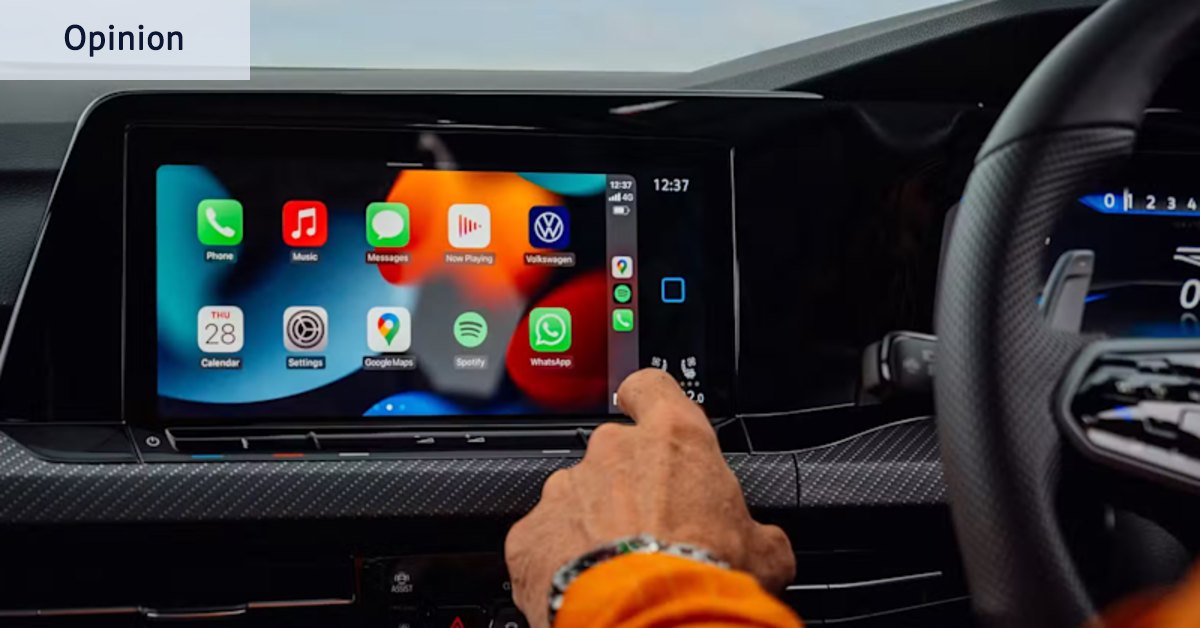
Yet there is an enormous gap in our rules, as I found recently when I hired a rental car with the latest screen technology. asserted
I → be → technology
It wasn’t just that the car’s inbuilt screen was unfamiliar, confusing and hard to understand, let alone operate. asserted
screen → understand → ?
It wasn’t just that the screen responded grudgingly, if at all, to my baby-soft fingers. asserted
screen → respond → fingers
It wasn’t just that the screen had a habit of speaking Chinese. asserted
screen → have → Chinese
It wasn’t just that, when I connected my phone to make things easier, the screen basically became my phone, complete with email, text, music and other apps. asserted
screen → connect → email
The yikes thing was that tapping this screen while driving, faffing about with navigation, phone calls, radio, podcasts and what-all else, is legal. asserted
tapping → tap → navigation
When it comes to attentiveness and screens, our laws trail dangerously behind reality. asserted
laws → come → reality
Under Rule 299 of the NSW Driving Rules, a driver isn’t allowed to see “a television receiver or visual display unit”, but other kinds of screens are OK. asserted
kinds → allow → screens
This rule assumes that watching TV is the only dangerous visual distraction. asserted
watching → assume → TV
Also, the visual display unit becomes legal when it “is an integrated part of the vehicle design”. asserted
it → become → design
So distractions that are hazardous if on your device suddenly become safe if they’re built into the car. asserted
they → become → car
Under Rule 300, meanwhile, you can touch your mobile phone if it’s in a holder. asserted
it → touch → holder
Touching an “integrated part of the vehicle design” is permitted. asserted
Touching → touch → design
This is strange and illogical, assuming as it does that the devil only works through your busy hands, and not your eyes or ears. asserted
devil → assume → hands
…and 15 more, not listed.

💬Give feedback
🕘History 🎫Support