Money talks: Why Australia can afford to have the oldest Test team since the 1920s

Read the original at The Sydney Morning Herald ↗
Cite

Knox, M. (2026, October 16). Money talks: Why Australia can afford to have the oldest Test team since the 1920s. The Sydney Morning Herald. https://www.smh.com.au/sport/cricket/money-talks-why-australia-can-afford-to-have-the-oldest-test-team-since-the-1920s-20261017-p6162h.html?ref=rss&utm_medium=rss&utm_source=rss_feed

Dated from the outlet's own feed. Check the original for its byline.

The Sydney Morning Herald · collected 2026-10-16 · by Malcolm Knox

Quick Summary

The article discusses how Australia's current cricket team is among the oldest in Test cricket history, with an average age of 34.59 years. Despite this, players like Steve Smith (37), Mitchell Starc (36), and Patrick Cummins are performing at high levels without showing signs of decline typical for their age. The piece compares today's situation to historical examples from the 1920s when war interruptions led to older players extending their careers well into their late 30s and early 40s, such as Charlie Macartney (40) and Herbie Collins (38). It argues that the financial stability of long-term career earnings enables modern players to maintain form longer than expected.
Written locally by qwen2.5:14b on 2026-10-16, using this article's own text rather than the other coverage of the same event (that is the story summary below).

AI analysis runs on qwen2.5:14b, locally

Story summary

As of October 2026, the Australian Test cricket team has become the oldest since the 1920s, with an average age of 34.59 years. This is despite expectations that such a veteran lineup would struggle to compete at top levels. Key players like Mitchell Starc (aged 36) and Patrick Cummins (injury-free in Durban) are performing exceptionally well, showing no signs of decline. Steve Smith, at 37, continues his pursuit for perfection with a career potentially extending into the future. Matt Renshaw, though relatively young at 30, has already established himself as a crucial player with a decade-long career ahead. Historical precedents suggest that teams cannot thrive when all players are older than 30 years, yet Australia’s current lineup is proving these norms wrong, drawing comparisons to England's team of the 1920s led by Jack Hobbs, who started his Test career in 1908 and continued scoring centuries well into his forties.

Written for “Australia's Oldest Test Team” on 2026-10-17, grounded in this article and the 0 other(s) covering the same event.

Story

📰 Australia's Oldest Test Team
Sports · 1 article(s) covering the same event.

Compared with similar articles

This article reads unscored and hedges 13% of its claims. Each row says how that neighbour differs.
The Sydney Morning Herald
⚖️ leaning not scored 🔴 11% hedged 4 of 37 📰 publisher trust 61
“The articles discuss different aspects and times during the Test match; one focuses on the selection controversy involving Nic Maddinson and Bailey's unease, while the other discusses player performances and age-related expectations.”
The Sydney Morning Herald
⚖️ leaning not scored 🔴 3% hedged 1 of 33 📰 publisher trust 61
“The articles discuss different aspects and times related to Australian cricket but do not describe the exact same incident or outcome.”
How this article was measured signals, leaning charts, publisher record, byline, topics and claims

Signals How these are calculated →

Claims extracted
47
sentences that state something as happening or true
Uncertain
13%
6 of 47 hedged ("reportedly", "may", "according to")
Leaning
not political
takes no side on a contested political question
Publisher signals
61/100
The Sydney Morning Herald's corrections and hedging, across everything collected from it. Not a measure of accuracy.
Outlets on this story
1
Sports
Same framing elsewhere
1
articles that frame the event the way this one does
Analyzed 2026-10-16 · how these are computed

How this is being covered How these are calculated →

Article leaning vs. publisher reliability
Source leaning vs. consistency

Publisher

The Sydney Morning Herald · 3920 article(s) · 10 correction(s) detected
Running correction rate · 10 correction(s)

Who wrote this

Malcolm Knox
8 article(s) here · 1 carrying a prediction
🔮 Steve Smith, at 37, may refine his particular personal routines and conclude his restless search for perfection, but only in the distant future.
🔮 To see him do it in a grand final for the Roosters would have evoked mixed feelings for the Sea Eagles, but seriously? He gave so much to Manly, keeping them competitive year after year and week after week, often single-handedly (and double-footedly with those drop-kicks off his left or right),
🔮 The Roosters are the appropriate villains, and will embrace being cast as the black princes of this fairytale.
🔮 The Roosters have indicated they will contest this.
🔮 Sheeran, who has proudly made mega-bland into a mega-brand, might have been using Macklemore as a proxy, to give his shows a bit of edge while remaining personally apolitical.
🔮 They travel to their contest but don’t know when it will start.
2026-09-25 · assertive framing · The untold price of Mick Fanning’s golden career
🔮 They are the envy of the Tigers, Dragons, Titans and Eels, who remain stuck in the cellar and who, if they’re smart, will study closely everything the Knights have done this year.
🔮 We’ve arrived in rugby league’s painkiller knockouts, when the winner will be decided less by aesthetics than anaesthetics.
Also by Malcolm Knox
Nothing else under this byline is closely related to this article, so these are simply their most recent.
All 8 articles by Malcolm Knox →

Topics

Australia Durban England WWI the First World War

Subjects

Australia GPE · 6× England GPE · 3× English NORP · 2× Dorian Gray PERSON · 1× Durban GPE · 1× Josh Hazlewood PERSON · 1× Matt Renshaw PERSON · 1× Mitchell Starc’s PERSON · 1× Patrick Cummins PERSON · 1× Steve Smith PERSON · 1×

Narrative

Test cricket’s only older teams were their opponents, the England teams of the 1920s spearheaded by Jack Hobbs, who had played his first Test match in 1908 and scored half of his 199 first-class centuries when he was past 40.
framing: assertive · carried by 1 article(s) · first seen 2026-10-16
🔮 Steve Smith, at 37, may refine his particular personal routines and conclude his restless search for perfection, but only in the distant future.
2026-10-16 · The Sydney Morning Herald
Money talks: Why Australia can afford to have the oldest Test team since the 1920s · assertive framing

Claims (47 extracted, 6 hedged)

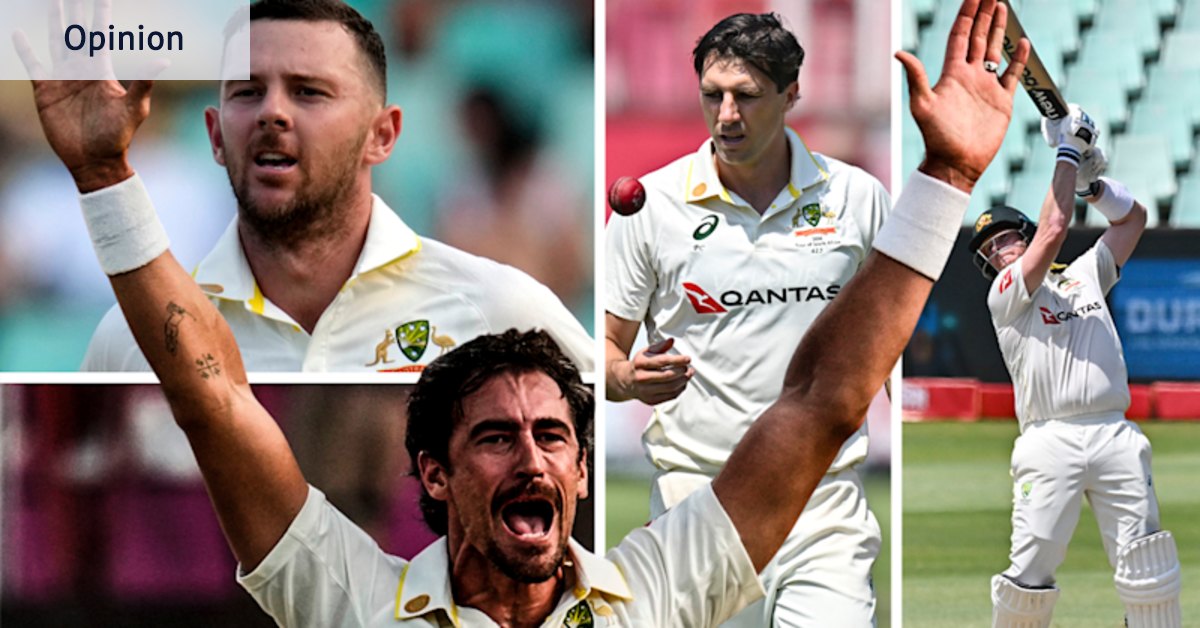
The cricket world keeps expecting Australia’s Test team to act their age, and the players keep saying: “Not yet.” Mitchell Starc’s hairline is the only part of him that looks as old as 36. asserted
that → keep → 36
Patrick Cummins and Josh Hazlewood, injury-free in Durban, bowled with the pace and freshness of men in their early 20s – or better, in their case, given how much of their early 20s they spent rehabbing. asserted
they → bowl → 20s
Steve Smith, at 37, may refine his particular personal routines and conclude his restless search for perfection, but only in the distant future. uncertain
Smith → refine → future
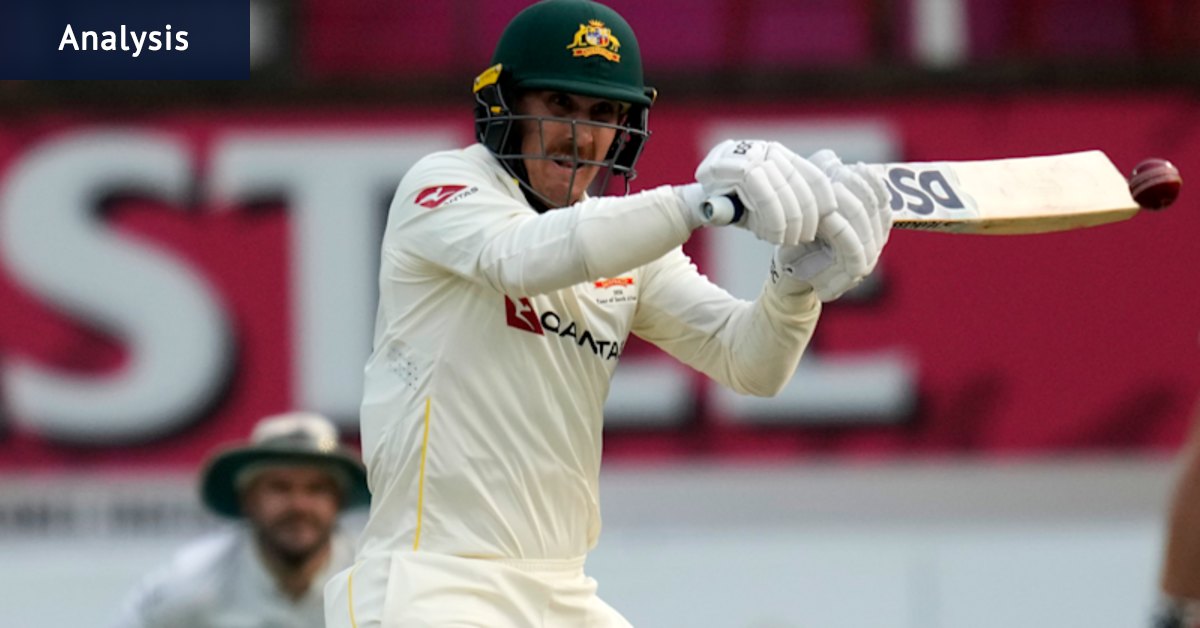
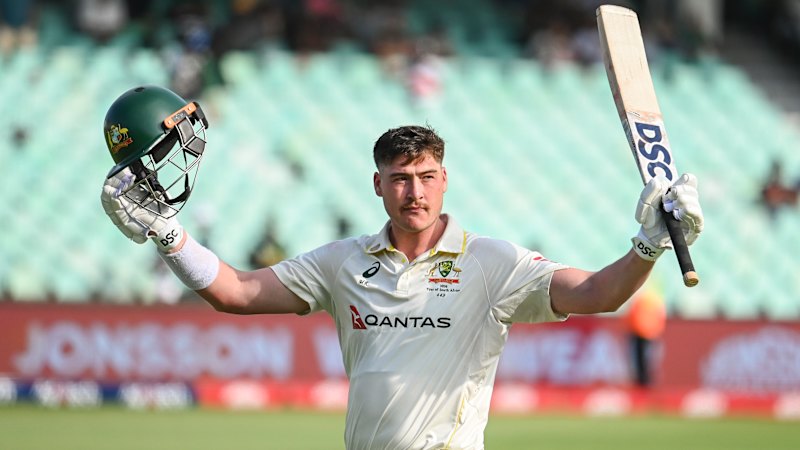
Young Matt Renshaw, a stripling of 30, saved the day at Kingsmead; a potential 10-year career lies ahead. asserted
career → save → Kingsmead
History says a team can’t thrive when none of its personnel is younger than 30 – unprecedented – or when its average age, 34.59, is higher than most of its batting averages. asserted
age → say → averages
The years overhaul all of us; history needs to be the final winner. asserted
history → overhaul → us
But those of us who thought this team would have been timed out by now have been proven wrong. asserted
team → think → us
Or Test cricket’s 150 years might tell a slightly different story about age. uncertain
years → tell → age
Australia’s oldest by average age (35.9) was a group who had lost eight years of Test cricket to the conflict, and were compensated with extended tenures in the 1920s. asserted
who → lose → 1920s
Leg-spinner Arthur Mailey, at 40, would have made Nathan Lyon (38) look young. asserted
Lyon → make → 40
Test cricket’s only older teams were their opponents, the England teams of the 1920s spearheaded by Jack Hobbs, who had played his first Test match in 1908 and scored half of his 199 first-class centuries when he was past 40. asserted
he → spearhead → 40
He still holds the record as the oldest scorer of a Test century: he was 46. asserted
he → hold → century
Smith would have to go for another decade to match him. asserted
Smith → have → him
If we want the common thread between the past and today, we have to look at the reasons for careers ending (or not ending), and here is where we find a basic explanation. asserted
we → want → explanation
Before WWI, it was normal for Test cricketers to play into their late 30s and beyond. asserted
cricketers → play → 30s
W.G. Grace finally stood down as England captain in 1899 when he couldn’t bend down to field. asserted
he → stand → 1899
Syd Gregory captained Australia at 42, Jack Blackham at 40. asserted
Gregory → captain → 40
Fred Spofforth, though he played his last Test match at 33, volunteered to come back for Australia a decade later, when he was representing Derbyshire (Australia politely declined). asserted
Australia → play → Derbyshire
Pre-war English greats Charles Fry and William Gunn played Test cricket past 40. asserted
Fry → play → 40
James Southerton made his debut aged 49, a record that remains. asserted
that → make → 49
There was one good reason cricketers of that era played to such an advanced age. asserted
cricketers → be → age
In real terms, adjusted for general inflation and relevant things like property prices, Test cricketers before the First World War earned more money than any generation, including the present one. asserted
cricketers → adjust → one
The Australian players owned the first tours of England. asserted
players → own → England
They were shareholders in lucrative ventures which netted them enough money to come home and buy two houses each in the eastern suburbs of Sydney or Melbourne. asserted
which → net → Sydney
In real terms, Grace is still cricket’s highest-paid performer, though he was, technically, an “amateur”. asserted
he → pay → terms
Test cricket made some of its participants rich. asserted
some → make → participants
Administrators, jealous of this wealth, brought about a series of bust-ups, breaking player power in Australia in 1912. asserted
Administrators → bring → 1912
From then until the Packer revolution in 1977, Test cricketers’ income rolled downhill. asserted
income → roll → 1977
Not coincidentally, cricketers retired younger. asserted
cricketers → retire → ?
To raise families, they had to chase real jobs. asserted
they → raise → jobs
Only the very cream of the crop, like Don Bradman with sizeable personal endorsements, or superstars like Garry Sobers and Vivian Richards who could play year-round professional cricket for English counties, lasted into their 40s. uncertain
who → play → 40s
For the great majority, Test cricket couldn’t pay the bills. asserted
cricket → pay → bills
The retirement age reflected this. asserted
age → reflect → this
In real terms, Test cricketers before the First World War earned more money than any generation, including the present one. asserted
cricketers → earn → one
After World Series Cricket, professionalism brought an improvement in income, but it wasn’t until the advent of the Indian Premier League in 2008 that cricketers could again approach the earnings of their pre-1914 ancestors. uncertain
cricketers → bring → ancestors
So money, which has flooded back towards individual cricketers since the foundation of the IPL, may not be the root of all evil. uncertain
which → flood → evil
Money has always been the prime driver of how long top cricket careers can last. asserted
careers → last → ?
Combined with modern sports medicine and careful management of workloads (cricketers of bygone eras were worked literally into the ground), money can prolong careers. asserted
money → combine → careers
As cricketers’ incomes continue to rise, we will have to change our ideas on what we think is old. asserted
we → continue → ideas
This Australian team has been given a grace period by the same economic forces that had Grace dominating into his sixth decade. asserted
Grace → give → decade
…and 7 more, not listed.

💬Give feedback
🕘History 🎫Support