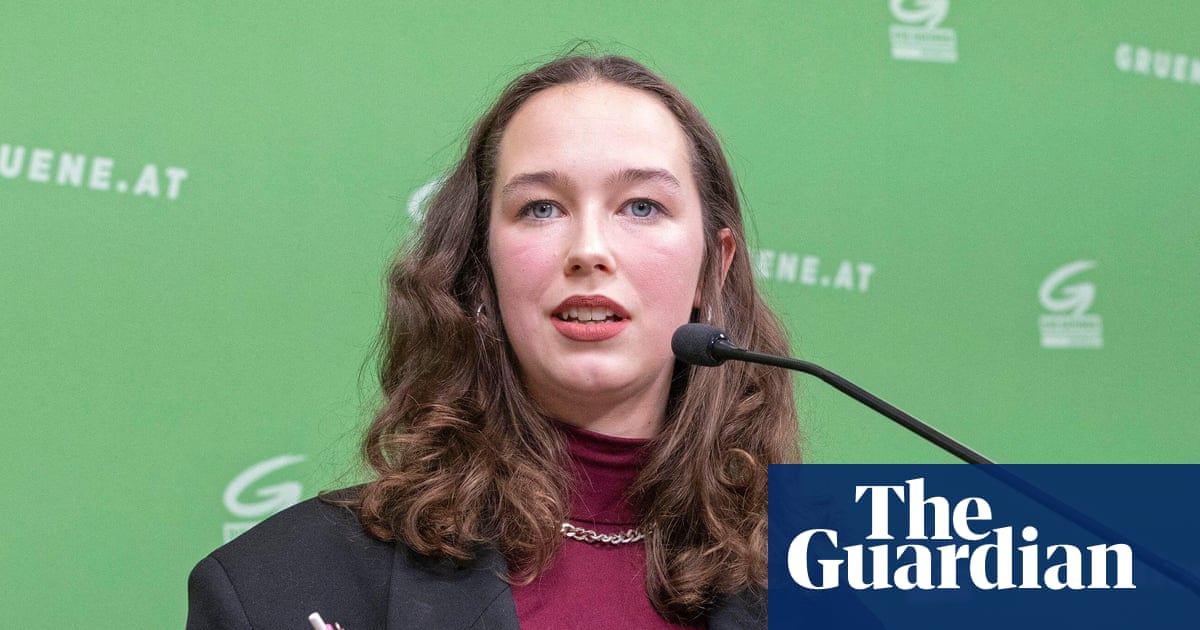
Liechtenstein prince’s ‘surreal’ abortion veto dismays campaigners

Read the original at The Guardian ↗
Cite

correspondent, A. K. E. c. a. (2026, October 23). Liechtenstein prince’s ‘surreal’ abortion veto dismays campaigners. The Guardian. https://www.theguardian.com/world/2026/oct/23/liechtenstein-princes-surreal-abortion-veto-dismays-campaigners

Dated from the outlet's own feed. Check the original for its byline.

The Guardian · collected 2026-10-23 · by Ashifa Kassam European community affairs correspondent

Quick Summary

Liechtenstein’s hereditary prince, Alois, has used his veto power for the first time since taking the throne to block a bill that would have updated the country’s abortion laws. The proposed reforms, supported by nearly a quarter of voters, aimed to align Liechtenstein’s stringent abortion regulations with European norms by allowing terminations up to 12 weeks and covering them under health insurance. Prince Alois justified his decision by stating it was necessary to protect the “fundamental legal value” of unborn life, disappointing campaigners who argue that this move undermines democratic principles in a modern monarchy.
Written locally by qwen2.5:14b on 2026-10-23, using this article's own text rather than the other coverage of the same event (that is the story summary below).

AI analysis runs on qwen2.5:14b, locally

Story summary

The hereditary prince of Liechtenstein has used his veto power for the first time to block a bill that would have aligned the country's abortion laws with much of Europe. The legislation was approved by Liechtenstein’s parliament last month after receiving support from roughly a quarter of the nation’s voters through a citizens’ initiative. Campaigners, including Tatjana As'Ad from the Free List party, are disappointed but not surprised by the decision. They argue that despite the strict laws, abortions still occur and will likely continue to do so abroad. Currently, abortions in Liechtenstein are permitted only under limited circumstances such as when a woman’s life is at risk or if the pregnancy resulted from rape. Since 2015, women have been legally allowed to travel abroad for terminations. The veto highlights the significant influence of the monarchy over the Alpine nation, with the ruling prince able to appoint judges and dismiss government officials.

Written for “Liechtenstein Prince's Abortion Veto” on 2026-10-23, grounded in this article and the 0 other(s) covering the same event.
Why this leaning score
The article's own words the score was based on. Each is quoted verbatim and was checked against the article text before being stored, so you can find it in the original.
Reading Leans strongly left (beta estimate) Confidence high
Leaning: leans strongly left for article 100983 (high confidence, 1 verified quote) · logged 2026-10-23

Story

📰 Liechtenstein Prince's Abortion Veto
Politics · 1 article(s) covering the same event.

Compared with similar articles

Nothing to compare against. No article is close enough to this one for the pipeline to have linked or judged the pair.
How this article was measured signals, leaning charts, publisher record, byline, topics and claims

Signals How these are calculated →

Claims extracted
34
sentences that state something as happening or true
Uncertain
6%
2 of 34 hedged ("reportedly", "may", "according to")
Leaning
Leans strongly left
of the writing, not the subject · beta estimate
Publisher signals
66/100
The Guardian's corrections and hedging, across everything collected from it. Not a measure of accuracy.
Outlets on this story
1
Politics
Same framing elsewhere
1
articles that frame the event the way this one does
Analyzed 2026-10-23 · how these are computed

How this is being covered How these are calculated →

Article leaning vs. publisher reliability
Source leaning vs. consistency

Publisher

The Guardian · 2329 article(s) · 6 correction(s) detected
Running correction rate · 6 correction(s)

Who wrote this

Ashifa Kassam European community affairs correspondent
6 article(s) here · 1 carrying a prediction
🔮 The veto would do little to actually prevent abortions from taking place, she said.
🔮 The protests themselves, however, point to what seems to be a diverse response to a common crisis: the growing perception, particularly among younger generations, that governments are unable, or unwilling, to deliver when it comes to affordable housing, social equality and robust public services.
🔮 Just imagine what would happen to our society if more and more women disappear from public life.”
🔮 Barrot said his government would work to counter these efforts by foreign entities.
🔮 Tusk instead hinted that his government was intent on doing things differently, telling reporters that it would not prosecute those who helped to facilitate abortions.
🔮 Thursday’s decree also sets out that in cases where students show persistent problems with integrating or struggle to learn the language, their parents will be referred to social services and will have to take free literacy and Italian language classes.
Also by Ashifa Kassam European community affairs correspondent
Nothing else under this byline is closely related to this article, so these are simply their most recent.
All 6 articles by Ashifa Kassam European community affairs correspondent →

Topics

Austria Free List Guardian Liechtenstein Switzerland

Subjects

Liechtenstein GPE · 8× Alois PERSON · 4× Alpine NORP · 1× Alvarez-Hummel PERSON · 1× Austria GPE · 1× Free List ORG · 1× Gabriella Alvarez-Hummel PERSON · 1× Guardian ORG · 1× Switzerland GPE · 1× Tatjana As’Ad PERSON · 1×

Narrative

It was a nod to the tremendous power the monarchy holds over the Alpine nation, with the ruling prince able to appoint judges and fire the government or individual ministers, said Gabriella Alvarez-Hummel, a journalist and one of the campaigners behind the citizens’ initiative.
framing: assertive · carried by 1 article(s) · first seen 2026-10-23
🔮 The veto would do little to actually prevent abortions from taking place, she said.
2026-10-23 · The Guardian
Liechtenstein prince’s ‘surreal’ abortion veto dismays campaigners · assertive framing

Claims (34 extracted, 2 hedged)

The hereditary prince of Liechtenstein has used his veto for the first time in his reign to quash a bill aimed at bringing abortion laws in line with much of Europe. asserted
prince → use → Europe
The legislation was approved by Liechtenstein’s parliament last month after the presentation of a citizens’ initiative signed by roughly a quarter of the nation’s voters. asserted
legislation → approve → voters
The news left campaigners in the principality, home to some of the strictest abortion laws in Europe, reeling. asserted
news → leave → Europe
“We’re not really surprised, but still disappointed,” said Tatjana As’Ad, who led the initiative to overhaul the law and who works for the small leftwing party, Free List. asserted
who → say → party
“It’s surreal what’s happening right now in 2026 in a state in the middle of Europe.” asserted
what → ’ → Europe
The veto would do little to actually prevent abortions from taking place, she said. asserted
she → do → place
“Liechtenstein will continue to have a situation where abortions are banned, but we know they’re happening. asserted
they → continue → situation
The veto just means they will continue to take place abroad.” asserted
they → mean → place
Abortions in the principality are allowed only in limited circumstances such as when a woman’s life is at risk or a pregnancy is the result of rape. asserted
pregnancy → allow → rape
Since 2015, women have been legally permitted to travel abroad to terminate a pregnancy to skirt around the restrictions. asserted
women → permit → restrictions
After campaigners launched the citizen’s initiative in February, more than 4,970 people – far more than the 1,000 signatures needed to send it to parliament – backed the call to decriminalise abortion up to 12 weeks. asserted
people → launch → abortion
The initiative also called for the procedure to be covered by health insurance and for a repeal of a nationwide ban on sharing information about abortion access. asserted
procedure → call → access
The hope was to do away with the many barriers that women face by being forced to travel abroad, often to neighbouring Austria or Switzerland, which include the cost, the need to arrange childcare and the lack of a vehicle. asserted
which → do → vehicle
As the initiative gained steam, Liechtenstein’s hereditary prince, Alois, said he would use his veto to counter any overhaul of the laws. asserted
he → gain → laws
The promise loomed over the initiative, even as parliamentarians voted narrowly to back it and an August poll suggested that 62% of voters were in favour of reforming the law. uncertain
% → loom → law
This week the royal house confirmed Alois’s decision to “withhold his sanction from the bill” in a statement. asserted
house → confirm → statement
It said: “Following careful consideration, he remains convinced that the proposed reform is not compatible with ensuring adequate protection of unborn life as a fundamental legal value.” asserted
reform → say → value
The royal house did not respond to a further request for comment from the Guardian. asserted
house → respond → Guardian
Campaigners, who said they had met Alois hours before he announced his decision, described it as a blow to Liechtenstein’s identity as a monarchy underpinned by democratic principles. asserted
he → say → principles
“A single individual is overriding a decision initiated by almost a quarter of eligible voters and passed by the parliament,” the committee behind the citizens’ initiative said in a statement. asserted
committee → override → statement
“Hereditary Prince Alois has only threatened to veto legislation twice in his reign, and both times it concerned the legalisation of abortion,” the statement added, referring to a 2011 pronouncement by the regent. asserted
statement → threaten → regent
“This is the first time he has actually exercised this veto. asserted
he → exercise → veto
The conclusion is clear: when it comes to abortion, there is only one decision-maker. asserted
it → come → abortion
It was a nod to the tremendous power the monarchy holds over the Alpine nation, with the ruling prince able to appoint judges and fire the government or individual ministers, said Gabriella Alvarez-Hummel, a journalist and one of the campaigners behind the citizens’ initiative. asserted
Hummel → hold → initiative
“He has a veto over everything, really,” she said. asserted
she → have → everything
In 2012, voters cast their ballots overwhelmingly to uphold his veto powers, in a referendum that was described at the time as a proxy debate over whether or not Liechtenstein should have a monarchy. asserted
Liechtenstein → cast → monarchy
Alvarez-Hummel described this week’s decision as “very troubling”, given that Liechtenstein was the last in Europe to grant women the right to vote in national elections in 1984. asserted
Liechtenstein → describe → 1984
“Liechtenstein has a history of being the last when it comes to women’s rights,” she said. asserted
she → have → rights
“I had hoped that we wouldn’t be the last in abortion rights as well, but it doesn’t look good at the moment.” asserted
it → hop → moment
The campaign had managed to chalk up a few successes, she said, pointing to how it had chipped away at the decades-long taboo in talking about the topic in the nation. asserted
it → manage → nation
In his statement this week, Alois also said he was open to lifting the nationwide ban on information about abortion, suggesting that women might one day be able to consult their healthcare provider on where to access the procedure abroad and receive support afterwards. uncertain
women → say → support
Even so, Alvarez-Hummel worried that the estimated 40 women a year who are forced to carry out the procedure abroad would now face greater stigma and more deeply entrenched taboos. asserted
who → worry → stigma
“You live in a country where it is forbidden, where the prince who lives in a castle made sure it stayed forbidden,” she said. asserted
she → live → castle
“The one time he used his veto was against this – I can only imagine how difficult it must be for them to know this.” asserted
them → use → this

💬Give feedback
🕘History 🎫Support