Photo via Silver Bulletin

Fake polls are a real problem

Read the original at Silver Bulletin ↗
Cite

Silver, N. (2026, October 22). Fake polls are a real problem. Silver Bulletin. https://www.natesilver.net/p/fake-polls-are-a-real-problem

Dated from the outlet's own feed. Check the original for its byline.

Silver Bulletin · collected 2026-10-22 · by Nate Silver commentary

Quick Summary

The article discusses recent developments involving fake polls in the 2026 campaign, focusing on a scandal with a firm called Wedgewood Polls which admitted to fabricating data. The author also reflects on past instances of fake polling firms like Strategic Vision and Research 2000, highlighting patterns indicative of data forgery that were uncovered through statistical analysis. This piece is an opinion-based commentary rather than straight reporting, emphasizing the significance of these issues within the political polling industry.
Written by AI on 2026-10-22, from this article's own text only (the story summary below draws on all the coverage).
See how they differ ↓

AI analysis

Story summary

A sham polling firm called Wedgewood Polls publicly admitted to fabricating data after being exposed by election analysts at FiftyPlusOne. The fake polls had a significant impact on Michigan’s Senate race, where Mallory McMorrow dropped out of the race following a fabricated poll showing her support plummeting into single digits. This revelation comes months after another polling firm, Median Strategies, was caught fabricating surveys in other elections. Wedgewood claimed their experiment aimed to highlight the ease with which fake polls can gain credibility and influence public perception. The scandal has raised concerns about the vetting process for polling data and its impact on election outcomes, especially as fast-evolving AI tools may facilitate easier fabrication of results.

Written for “Fake Polls In Elections” on 2026-11-20, grounded in this article and the 2 other(s) covering the same event.

How they differ

3 outlets covered “Fake Polls In Elections”.

What each outlet says

One AI summary per outlet of its latest article on this story, written from that article alone and checked against it. Open the article for the outlet's own words.

Silver BulletinThis outlet22 Oct

The article discusses recent developments involving fake polls in the 2026 campaign, focusing on a scandal with a firm called Wedgewood Polls which admitted to fabricating data. The author also reflects on past instances of fake polling firms like Strategic Vision and Research 2000, highlighting patterns indicative of data forgery that were uncovered through statistical analysis. This piece is an opinion-based…

Fake polls are a real problem (this article)
New York Post21 Oct

Wedgewood Polls admitted to creating false data in a social experiment aimed at exposing weaknesses in how polling is verified and reported. The firm’s fake poll of Michigan state Sen. Mallory McMorrow was cited as contributing to her decision to drop out of the US Senate race, though the Democratic super PAC Senate Majority PAC denied relying on this data for its strategy. Wedgewood Polls stated their intention was…

Sick trolls fess up to making fake polls that helped Abdul El-Sayed  in Michigan: ‘Far too easy’ →
National Post23 Oct

A U.S. polling firm called Wedgewood Polls admitted to fabricating most of its data, causing significant controversy ahead of the midterm elections. The fake polls affected political campaigns, media coverage, and public perception; for instance, Michigan Senate candidate Mallory McMorrow experienced a drop in donations and morale following misleading poll results attributed to Wedgewood. Major polling aggregators…

Fake pollsters and bogus polls becoming a real issue in U.S. midterms →

Where they agree and split

The full story: what happened, how it changed, and all 3 articles →

Compared with similar articles

This article reads leans left and hedges 6% of its claims. Each row says how that neighbour differs.
CBS News
Hedges 0 of 1 claims Outlet record 67/100
“The articles discuss different topics within the realm of election coverage; one focuses on a panel discussing election trends, while the other addresses fake polls and related news.”
National Post
Hedges 3 of 20 claims Outlet record 60/100
CBS News
Hedges 0 of 1 claims Outlet record 67/100
“The articles discuss different aspects of the election and do not describe the same specific incident.”
New York Post
Hedges 1 of 30 claims Outlet record 66/100
“Article A reports on a public confession by Wedgewood Polls about releasing fake polls, while Article B mentions the scandal but focuses more on Still Counting Episode content and does not detail the specific event of the confession.”
Washington Examiner
Centre further right than this Hedges 0 of 2 claims Outlet record 67/100
“Article A focuses on the details of who was behind Wedgewood Polls, while Article B mentions it briefly as part of a larger discussion about polling-related news.”
The Bulwark
Leans strongly left further left than this Hedges 0 of 9 claims
“Article A discusses a general issue of fake polls and mentions Wedgewood Polls as an example, while Article B focuses on Mallory McMorrow's experience with a fabricated poll affecting her Senate campaign.”

Story

Fake Polls In Elections
Politics · 3 article(s) covering the same event. Compare every outlet's account →
How this article was measured signals, leaning charts, publisher record, byline, topics and claims

Signals How these are calculated →

Claims extracted
121
sentences that state something as happening or true
Uncertain
6%
7 of 121 hedged ("reportedly", "may", "according to")
Leaning
Leans left
expected in commentary, which argues a position · beta estimate
Publisher signals
not measured
these signals count newsroom corrections; Commentary has none to count
Outlets on this story
3
Politics
Same framing elsewhere
1
articles that frame the event the way this one does
Analyzed 2026-10-22 · how these are computed

How this is being covered How these are calculated →

Article leaning vs. publisher reliability
Source leaning vs. consistency

Publisher

Silver Bulletin · 72 article(s) · 0 correction(s) detected
No corrections detected for this publisher. That may mean careful reporting, or simply that nothing has been checked.

Who wrote this

Nate Silver
49 article(s) here · 1 carrying a prediction
And I don’t think it should be, although maybe I’d feel differently if I were stranded on the tarmac at LaGuardia at the time.
2026-11-19 · assertive framing · The White House needs a ground stop
We would consider a full-time and/or more experienced hire for an exceptional candidate who can persuade us of the value they’d bring to the site.
2026-11-17 · assertive framing · Silver Bulletin is hiring an editor and a developer
As you may know, I’m fond of finding different ways to classify Democrats.
2026-11-15 · assertive framing · Fighters vs. uniters and the big blue future
The timing might lead one to downplay the magnitude of the Nvidia story.
2026-11-13 · assertive framing · The NVIDIA story is a BFD
After considering how the extraordinary midterm landslide might affect Democrats’ 2028 plans, we turned to Republicans this time.
2026-11-12 · assertive framing · JD Vance and the VP curse
Since it’s a mostly progressive audience, we figure we’ll spend most of our time talking about how Democrats might respond in the wake of their extraordinary night.
We also may be doing some hiring.
2026-11-04 · assertive framing · After an extraordinary wave, what comes next?
Since we’ve recently published some very detailed analysis of basically every race that might matter, I’m not going to go through them state-by-state.
2026-11-03 · assertive framing · It's Judgment Day for Trump (and for pollsters)
One more newsletter for you before we publish our final FLIPR forecast shortly after midnight.
2026-11-03 · assertive framing · How to judge an election model
Our election-night page will go live at silverbulletin.com before coverage begins.
2026-11-02 · assertive framing · Election Night Live with Silver Bulletin and guests
Also by Nate Silver
The White House needs a ground stop
2026-11-19 · Silver Bulletin
Fighters vs. uniters and the big blue future
2026-11-15 · Silver Bulletin
The NVIDIA story is a BFD
2026-11-13 · Silver Bulletin
Nothing else under this byline is closely related to this article, so these are simply their most recent.
All 49 articles by Nate Silver →

Topics

New York Times Research 2000 Strategic Vision Wedgewood Wedgewood Polls

Subjects

Strategic Vision ORG · 6× Wedgewood ORG · 4× Research 2000 ORG · 3× Democrats NORP · 2× FiftyPlusOne ORG · 2× Wedgewood Polls ORG · 2× FiveThirtyEight ORG · 1× New York Times ORG · 1× Strategic Vision’s ORG · 1× The American Association for Public Opinion Research ORG · 1×

Narrative

We’re not planning on building an Election Night model — it would be hard to do better than the NYT “Needle” anyway — but we should have a deeply knowledgeable set of panelists to cover both granular details and big-picture takeaways. Full disclosure: we need to test-drive the tech setup to figure out exactly what will be possible and what won’t.
framing: assertive · carried by 1 article(s) · first seen 2026-10-22
Strategic Vision “polls” exhibited statistical patterns — namely, being far more likely to contain some trailing digits (such as 5, 7, 8 and 9) than others, including on obscure questions they probably thought would never be scrutinized — that were canonical signs of forged election results in authoritarian regimes.
2026-10-22 · Silver Bulletin
Fake polls are a real problem · assertive framing

Claims (121 extracted, 7 hedged)

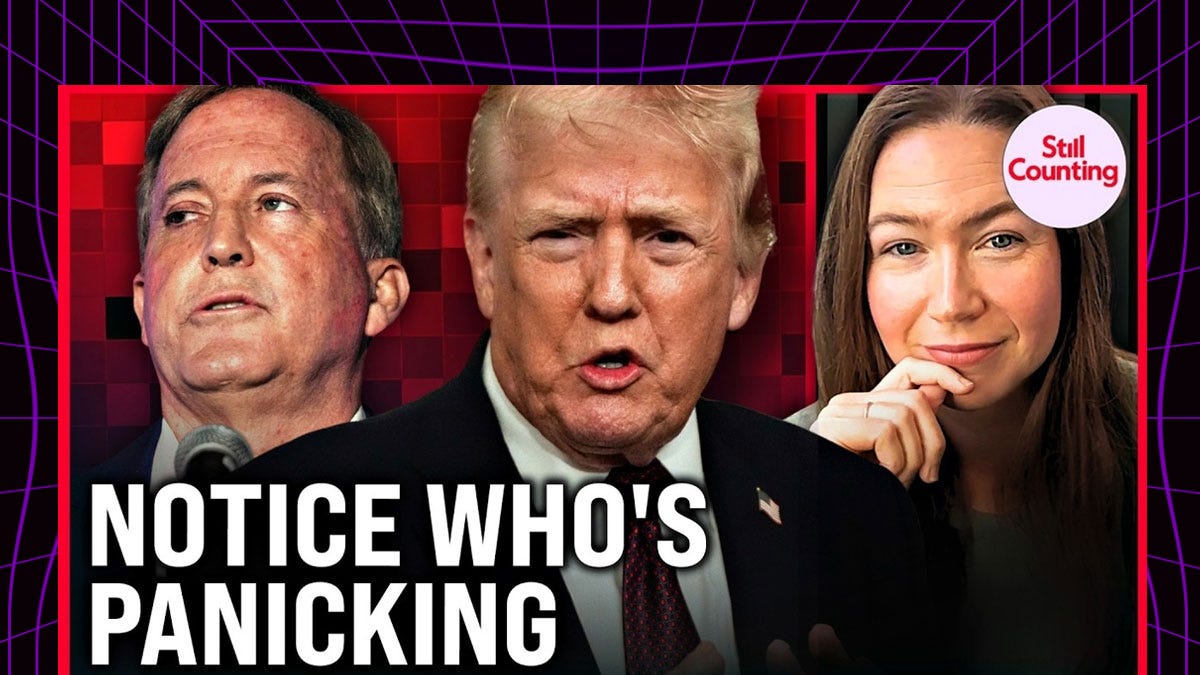
The original plan was to tell the story of the 2026 campaign through the ubiquitous ads that you’re undoubtedly seeing if you’re in a swing state. asserted
you → tell → state
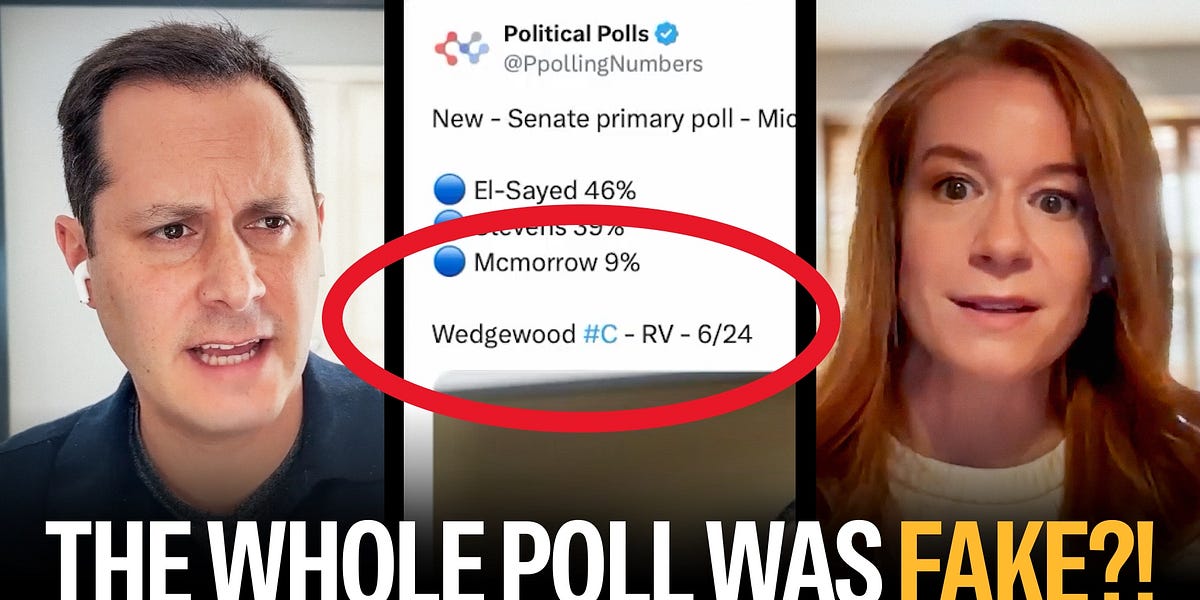
But then a bunch of polling-related news broke shortly before taping, such as a New York Times/Siena University poll showing strong numbers for Democrats on the generic ballot, and a scandal involving a fake “polling” firm called Wedgewood Polls. asserted
bunch → relate → firm
I’ll have some extensive commentary about Wedgewood later in this post. asserted
I → have → post
But first, here’s the Still Counting video… asserted
video → ’ → ?
And here’s the audio. asserted
audio → ’ → ?
Once again, we’re very grateful for your reviews, comments, likes and subscribes. asserted
we → ’re → reviews
In 2009, I published a story at FiveThirtyEight suggesting that the prolific polling firm Strategic Vision was probably faking its data. asserted
firm → publish → data
I never vetted the story with a lawyer, though I had asked Strategic Vision for comment, and their cagey responses reinforced my view that something weird was going on. asserted
something → vet → view
I thought the case was highly convincing, however. asserted
case → think → ?
(I guess back then, I applied more of a “big forgiveness rather than ask permission” mindset.) asserted
I → guess → mindset
Strategic Vision “polls” exhibited statistical patterns — namely, being far more likely to contain some trailing digits (such as 5, 7, 8 and 9) than others, including on obscure questions they probably thought would never be scrutinized — that were canonical signs of forged election results in authoritarian regimes. asserted
that → exhibit → regimes
(Human beings are pretty bad at picking truly random numbers.) asserted
beings → pick → numbers
It was extremely unlikely these results had emerged by chance alone. asserted
results → emerge → chance
My “spidey sense” also told me something was a little off about Strategic Vision’s results — though I forget exactly which details led me to that hypothesis. asserted
details → tell → hypothesis
But I was right — or at least I think that’s a reasonably safe assumption based on their subsequent behavior. asserted
that → think → behavior
The American Association for Public Opinion Research censured Strategic Vision for failing to disclose methodological information, and Strategic Vision never really attempted to provide any convincing refutation. asserted
Vision → censure → refutation
They packed up their tent and left the industry. asserted
They → pack → industry
The next year, in 2010, “polls” from another prolific firm, Research 2000, were discovered to contain similar anomalies. asserted
polls → discover → anomalies
Research 2000 fought back a little harder, sending me a cease-and-desist letter, but Daily Kos, whom they were “polling” for at the time, sued them before they, too, disappeared. asserted
they → fight → them
Research 2000 had frequently conducted “polls” for local newspapers and news outlets, presumably for a healthy amount of compensation. asserted
Research → conduct → compensation
Earlier this week, Wedgewood Polls admitted it had fabricated data. asserted
it → admit → data
It claimed its “polls” were an “experimental project to demonstrate the vulnerabilities, lack of oversight, and overall low barrier to entry in the modern political polling industry. asserted
polls → claim → industry
My opinion is that Wedgewood’s explanation is bullshit, a pathetic attempt to get ahead of the story after FiftyPlusOne was set to publish a story exposing the fraud. asserted
FiftyPlusOne → get → fraud
Whether some sort of crime was committed was unclear — Wedgewood allegedly collected crowdfunded money for a poll that may or may not have ever been conducted.1 uncertain
that → commit → poll
reports that Wedgewood identified Jack Sims and Andrew Prater as the people behind the firm. asserted
Wedgewood → report → firm
Whoever was responsible for fabricating the data probably shouldn't be trusted with anything election- or poll-related again. asserted
was → fabricate → anything
These “polls” had made their way into FLIPR, although they weren’t having much influence on the model. asserted
they → make → model
When we removed them from our database yesterday, FLIPR’s various averages and forecasts were basically unchanged. asserted
averages → remove → database
That’s a bit confounded because a lot of polls are coming out these days, including a strong series of generic ballot polls for Democrats published before yesterday’s update. asserted
lot → ’ → update
Still, FLIPR includes precautions against being overly influenced by any one poll, and new/unknown pollsters start with fairly low ratings by default. asserted
pollsters → include → default
For what it’s worth, here were the Wedgewood “polls” that had entered our database, as compared to the Silver Bulletin averages at the time. asserted
that → ’ → time
There’s a slight D-leaning “house effect” here, though it’s pretty mild and not particularly consistent. asserted
it → ’ → ?
In races where Silver Bulletin was publishing polling averages (there are a couple of caveats here: see the footnote2), their “polls” were about 0.6 points more favorable to the Democratic candidate on average. asserted
polls → publish → candidate
Wedgewood showed progressive candidates “polling” especially strongly One thing that’s a bit unusual is that Wedgewood “polled” several races where there was little or no publicly-available polling at the time. asserted
Wedgewood → show → time
At Silver Bulletin, we turn on the average for a race once there are three distinct polls from at least two distinct polling firms. asserted
we → turn → firms
Four races where Wedgewood issued a “poll” did not meet that distinction. asserted
Wedgewood → issue → distinction
As far as I can tell, in fact, Wedgewood was the first firm of any kind to “poll” Troy Jackson’s race against Susan Collins in Maine as Graham Platner was preparing to drop out; they had Jackson ahead by 5 points. asserted
Jackson → tell → points
In Michigan, meanwhile, Wedgewood was relatively early to “poll” Abdul El-Sayed’s race against Mike Rogers, showing him ahead by 5 points, better than the average3 which had AES ahead by 0.4 points instead. asserted
AES → poll → points
A Democratic candidate who dropped out, Mallory McMorrow, has alleged that Wedgewood’s “polls” hurt donor and voter confidence in her campaign. asserted
polls → drop → campaign
In the table, I’ve only listed polls that included the eventual general election nominees because I’m not sure how comprehensive our data is on candidates who lost their primaries. asserted
who → list → primaries
…and 81 more, not listed.
Give feedback · no sign-in needed

No sign-in needed for now. Your note is sent without a name, so it cannot be answered.

History Support