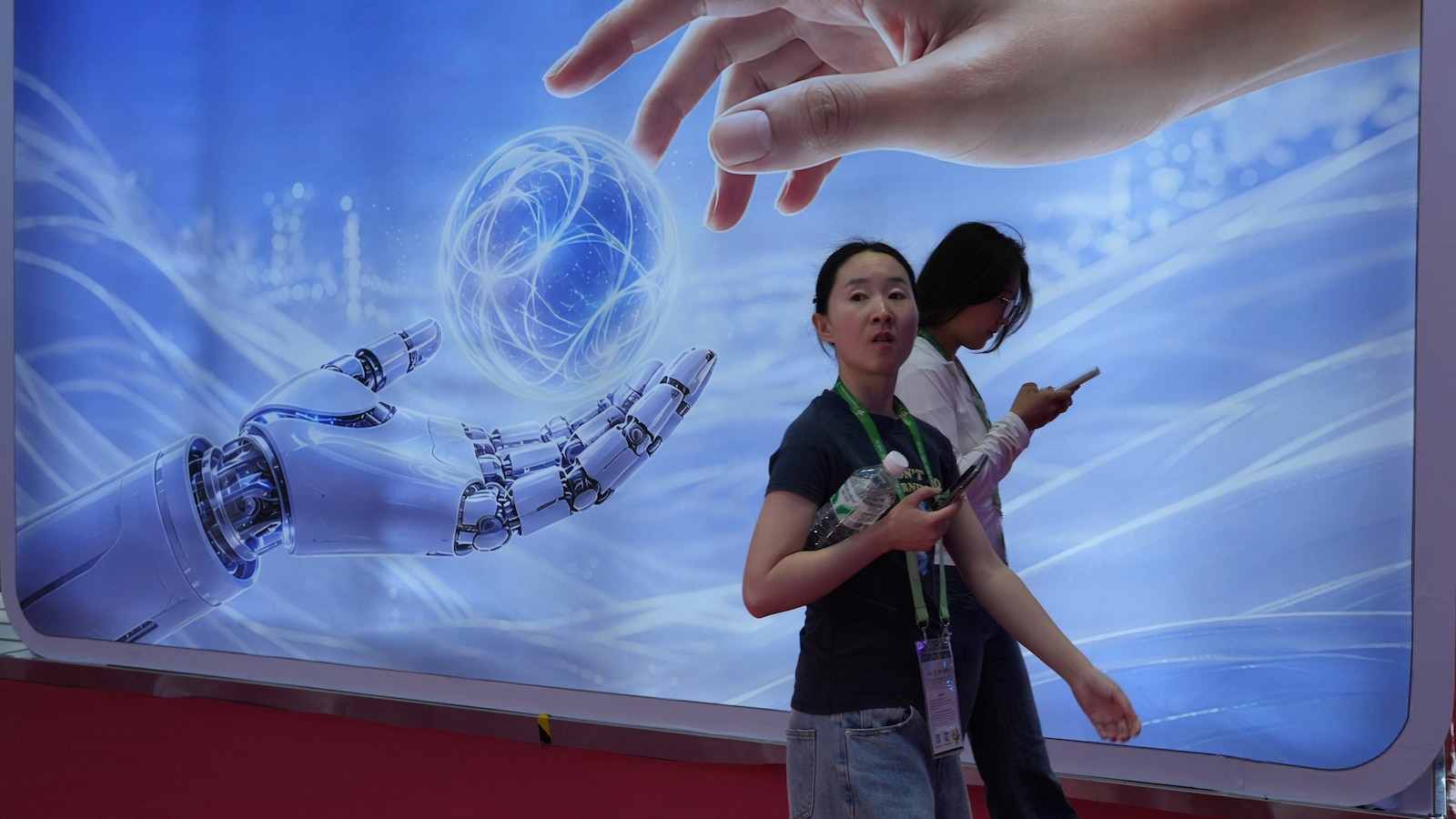
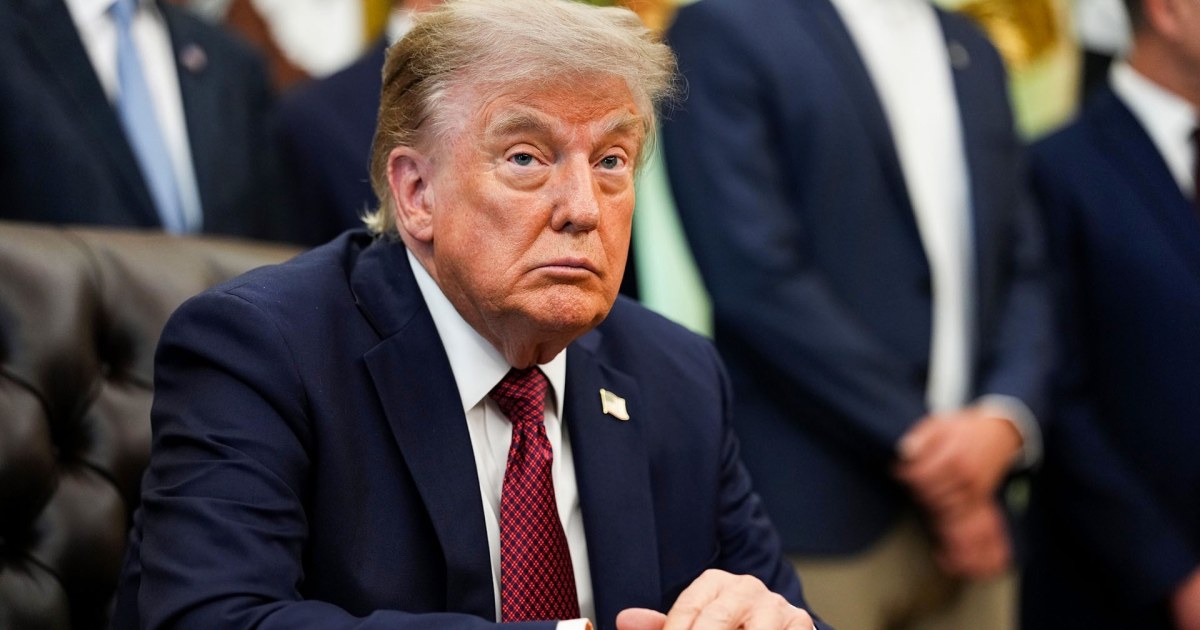
Photo via NPR

Beijing hits back at Anthropic CEO's call to curb China's AI development

Read the original at NPR ↗
Cite

The Associated Press. (2026, September 14). Beijing hits back at Anthropic CEO's call to curb China's AI development. NPR. https://www.npr.org/2026/09/14/nx-s1-5968456/china-hits-back-ai-development

Dated when The Aporia collected the article, usually within hours of publication. Check the original for its exact date and byline.

NPR · collected 2026-09-14 · by The Associated Press

Quick Summary

China’s Ministry of Foreign Affairs criticized Anthropic CEO Dario Amodei's recent essay calling for U.S. restrictions on sales to China of advanced AI technology. On Monday, spokesperson Guo Jiakun said that Amodei's warnings about Chinese technological leadership were counterproductive and urged cooperation instead of confrontation. The article also notes similar concerns from Chinese officials regarding foreign entities leveraging AI advantages against them, with some viewing Amodei’s stance as part of a containment strategy towards China.
Written by AI on 2026-09-14, from this article's own text only (the story summary below draws on all the coverage).
See how they differ ↓

AI analysis

Story summary

Minister Chen Yixin, head of China’s State Security, warned that artificial intelligence (AI) poses significant national security threats to China, including risks to political and ideological stability. Published on September 13, 2026, Chen accused foreign entities of using generative AI technologies to spread harmful information against China. He also noted that AI is now the main battleground for global technological competition between major powers.

Chinese officials are dismissing calls from U.S. tech leaders like Dario Amodei (CEO of Anthropic) and Sam Altman (CEO of OpenAI) to slow down AI development due to safety concerns, describing these as "fearmongering" and part of a Cold War playbook aimed at containing China. Chinese leader Xi Jinping is scheduled to meet with U.S. President Donald Trump in Washington later that month, where AI governance and safety will be key topics for discussion.

The Global Times, a state-backed newspaper, criticized Amodei's call for slowing AI development as an attempt to hinder China’s progress. Meanwhile, the Ministry of Foreign Affairs urged international cooperation on AI rather than engaging in confrontation or malicious competition.

Written for “China AI Rivalry Usa” on 2026-11-20, grounded in this article and the 9 other(s) covering the same event.

How they differ

9 outlets covered “China AI Rivalry Usa”.

What each outlet says

One AI summary per outlet of its latest article on this story, written from that article alone and checked against it. Open the article for the outlet's own words.

NPRThis outlet14 Sep

China’s Ministry of Foreign Affairs criticized Anthropic CEO Dario Amodei's recent essay calling for U.S. restrictions on sales to China of advanced AI technology. On Monday, spokesperson Guo Jiakun said that Amodei's warnings about Chinese technological leadership were counterproductive and urged cooperation instead of confrontation. The article also notes similar concerns from Chinese officials regarding foreign…

Beijing hits back at Anthropic CEO's call to curb China's AI development (this article)
Al Jazeera14 Sep

Anthropic CEO Dario Amodei has called for slowing down the development of powerful AI systems due to potential risks and proposed restricting China's access to advanced technology. This move prompted a response from China, which accused the US of using AI safety concerns as a guise to maintain technological dominance over China. The dispute highlights the growing competition between the US and China in artificial…

‘Silent Cold War’: Why calls to slow AI have sparked new US–China frontier →2 articles from Al Jazeera on this story
BBC14 Sep

China’s foreign ministry spokesperson criticized narratives of threat and competition in artificial intelligence (AI) development, particularly responding to calls for slowing down AI advancement that could disadvantage China. This comes after warnings from US industry insiders about potential dangers posed by rapid AI progress and amid tensions between the United States and China over who will lead in this…

China criticises idea it is in 'malicious competition' over AI →
ABC News (US)14 Sep

China's Ministry of Foreign Affairs responded critically to Anthropic CEO Dario Amodei’s call for the U.S. to curb China’s artificial intelligence (AI) development, arguing that fearmongering and competition are harmful to global AI governance. The ministry stressed cooperation over confrontation, while dismissing Amodei’s essay as a veiled attempt to contain China. President Donald Trump, meanwhile, downplayed…

Beijing hits back at Anthropic CEO’s call to curb China's AI development →
Semafor14 Sep

China’s minister of state security warned about six principal risks posed by AI, including threats to political stability and national defense. Despite these concerns, Beijing rejected US calls to slow AI development, with a state-backed outlet calling for such measures “out of the Cold War playbook.” Some Chinese analysts advocate for international cooperation to maintain influence over global AI regulations and…

Beijing issues AI warnings but rejects US calls to slow development →
NBC News14 Sep

China has dismissed warnings from U.S. tech leaders to slow down artificial intelligence development, calling their concerns "fearmongering" and part of a Cold War strategy aimed at hindering China’s technological advancement. On Monday, Chinese Foreign Ministry spokesperson Guo Jiakun told reporters that such interventions disrupt global AI governance efforts and serve no one's interests. Meanwhile, U.S. President…

China dismisses AI slowdown calls and blasts ‘fearmongering’ from U.S. tech leaders →
Show 3 more outlets
The Hindu14 Sep

China’s Minister of State Security, Chen Yixin, warned on September 13, 2026, that artificial intelligence poses significant national security risks to the country. He cited concerns over foreign entities using AI to spread misinformation and conduct cyber espionage against China. Chen also highlighted the potential military applications of AI demonstrated in the U.S.-Iran conflict, emphasizing the need for China to…

China’s spy chief warns of national security risks from AI →
Daily Mail15 Sep

China's spy chief, Minister of State Security Chen Yixin, has warned that artificial intelligence poses significant risks to national security and could threaten the rule of the Communist Party. In an article published in the state-run magazine China Cyberspace, Chen cited concerns over foreign intelligence agencies using advanced AI technologies like web crawlers and data mining to collect sensitive information. He…

China's spy chief warns AI could bring an end to Communist party rule →
ABC News (AU)16 Sep

US tech leaders warn that China's lead in artificial intelligence could pose significant dangers to the United States and the world, advocating for restrictions on technology sales to Beijing. In response, Chinese officials through state media accuse these US executives of "fearmongering" and criticize the calls for a slowdown as counterproductive to global AI governance. However, behind this rhetoric, China’s own…

Behind China's 'fearmongering' claim is a fundamental fear about AI →

Where they agree and split

Framing

How the first headlines put it

Stated as fact7
The headlines (7)

China criticises idea it is in 'malicious competition' over AI BBC · stated as fact

Beijing hits back at Anthropic CEO's call to curb China's AI development NPR · stated as fact

Beijing hits back at Anthropic CEO’s call to curb China's AI development ABC News · stated as fact

Beijing issues AI warnings but rejects US calls to slow development Semafor · stated as fact

China dismisses AI slowdown calls and blasts ‘fearmongering’ from U.S. tech leaders NBC News · stated as fact

China rejects AI ‘threat narratives’, urges global cooperation Al Jazeera · stated as fact

China’s spy chief warns of national security risks from AI The Hindu · stated as fact

Words to watch (1)

China dismisses AI slowdown calls and blasts ‘fearmongering’ from U.S. tech leaders NBC News

The full story: what happened, how it changed, and all 10 articles →

Compared with similar articles

This article reads unscored and hedges 23% of its claims. Each row says how that neighbour differs.
ABC News (US)
Hedges 3 of 23 claims Outlet record 67/100
NBC News
Outlet record 78/100
“The articles discuss different reactions to AI concerns and do not describe the same specific incident.”
The Hindu
Hedges 0 of 4 claims Outlet record 60/100
“The articles describe different events: one is a response by China to an Anthropic CEO's call, and the other is about U.S. Treasury Secretary Scott Bessent being open to discussing AI risks with China.”
BBC News
Hedges 2 of 29 claims Outlet record 65/100
Al Jazeera
Leans left Hedges 8 of 55 claims Outlet record 60/100
NBC News
Leans right Hedges 6 of 37 claims Outlet record 78/100
Semafor
Leans right Hedges 0 of 4 claims Outlet record 64/100
BBC News
Hedges 9 of 29 claims Outlet record 65/100
“The articles describe different events: one about Anthropic disrupting attempts to misuse its AI, and the other about Beijing's response to Anthropic CEO's call for curbing China's AI development.”
NBC News
Outlet record 78/100
“Article A discusses a general warning from AI researchers about AI's threat, while Article B specifically addresses Beijing's response to Anthropic CEO's call to curb China's AI development.”
The Hindu
Hedges 1 of 17 claims Outlet record 60/100
“The articles discuss different topics: one is about President Xi's speech at the BRICS Summit on economic cooperation, while the other is about Beijing responding to an Anthropic CEO's call to limit China's AI development.”

Story

China AI Rivalry Usa
Politics · 10 article(s) covering the same event. Compare every outlet's account →
How this article was measured signals, leaning charts, publisher record, byline, topics and claims

Signals How these are calculated →

Claims extracted
26
sentences that state something as happening or true
Uncertain
23%
6 of 26 hedged ("reportedly", "may", "according to")
Leaning
withheld
no quote in the article backed the model's score
Publisher signals
60/100
NPR's corrections and hedging, across everything collected from it. Not a measure of accuracy.
Outlets on this story
10
Politics
Same framing elsewhere
1
articles that frame the event the way this one does
Analyzed 2026-09-14 · source text last changed 2026-09-14 · how these are computed

How this is being covered How these are calculated →

Article leaning vs. publisher reliability
Source leaning vs. consistency

Publisher

NPR · 1357 article(s) · 4 correction(s) detected
Running correction rate · 4 correction(s)

Who wrote this

The Associated Press
2189 article(s) here · 1 carrying a prediction
Hernandez also suggested that Dennes may have been exaggerating the pain, saying he began complaining before the drugs began to flow and also of pain in places where there was no IV.
It would need the backing not just of British voters, but the unanimous support of a mistrustful EU.
2026-11-20 · assertive framing · The U.K. and EU hold a rare summit to strengthen ties
The post said no sensitive information had been revealed with regard to how struggling United would line up at fourth-place Liverpool in the Premier League on Sunday.
The pardon comes after Manfred issued a sweeping decision last May that opened a pathway for Rose to be considered for baseball's Hall of Fame.
Before the trip, Trump's aides had told reporters that the war in Ukraine would not be on the agenda.
The head of Myanmar’s military-backed government on Wednesday said his government will review its future relationship with the Association of Southeast Asian Nations and slammed the regional bloc for what he called unfair treatment.
"What I would say to the White House is: transparency is key," Leavitt said on Fox News.
HOBART, Australia (AP) — Cricket Australia said Wednesday it will establish an independent forum in a bid to clear up some of the conflicting reports of the Australian test team’s Sandpapergate ball-tampering scandal at Cape Town, South Africa, in 2018.
The Nov. 29 game has been moved to NBC’s “Sunday Night Football” and will kick off at 8:20 p.m. EST.
Wire or desk byline, not an individual reporter.
Also by The Associated Press
Nothing else under this byline is closely related to this article, so these are simply their most recent.
All 2189 articles by The Associated Press →

Topics

Amodei Beijing China Chinese U.S.

Subjects

China GPE · 17× U.S. GPE · 10× Amodei PERSON · 7× Chinese NORP · 5× Beijing GPE · 4× Ministry of Foreign Affairs ORG · 2× Trump PERSON · 2× Dario Amodei PERSON · 1× Guo Jiakun PERSON · 1× the United States GPE · 1×

Narrative

Xi has called for the setting up of a global AI governance framework among the Global South, while pitching China as a pioneer in establishing an open-source AI community. Beijing accuses U.S. of trying to hold it back In an editorial published Sunday, China's state-run Global Times newspaper dismissed Amodei's essay as a veiled call to "contain" China.
framing: mixed · carried by 1 article(s) · first seen 2026-09-14
In a lengthy essay published Saturday, Dario Amodei warned that a "Chinese lead in AI would pose grave danger for the United States and the world."

Claims (26 extracted, 6 hedged)

Beijing hits back at Anthropic CEO's call to curb China's AI development asserted
Beijing → hit → development
China's Ministry of Foreign Affairs on Monday bristled at the Anthropic CEO's call for the U.S. to curb China's artificial intelligence capabilities as part of a wider argument for a global slowdown on AI development. asserted
U.S. → bristle → development
In a lengthy essay published Saturday, Dario Amodei warned that a "Chinese lead in AI would pose grave danger for the United States and the world." asserted
lead → publish → States
To enable the U.S. to keep its technological edge, Amodei called for maintaining restrictions on sales to China of the most advanced AI chips and chipmaking equipment. asserted
Amodei → enable → chips
A spokesperson for China's Ministry of Foreign Affairs said Amodei's dire warnings about China were counterproductive and that all parties should work together on AI. asserted
parties → say → AI
"Fearmongering, confrontation and vicious competition will only disrupt the process of global AI governance -- which serves no one's interest," spokesperson Guo Jiakun said at a press conference in response to a question about Amodei's essay. asserted
Jiakun → disrupt → essay
For their part, Chinese leaders have also sounded the alarm about AI, warning of the risks posed by foreign entities with advanced capabilities. asserted
leaders → sound → capabilities
A top security official in China's government published an essay on Sunday in which he accused "certain nations" — a reference to the U.S. — of leveraging AI advantages to hinder other countries' innovation. asserted
he → publish → innovation
On Monday, President Donald Trump pushed back against calls for his administration to step in to slow down AI development, saying such efforts were part of a "SICK conspiracy" which could allow China to eclipse the U.S. on AI. uncertain
China → push → AI
Trump and Xi could discuss AI governance at summit Trump and Chinese leader Xi Jinping are expected to discuss AI governance, among other topics, at a meeting planned on Sept. 24. uncertain
Trump → discuss → Sept.
Chinese companies have developed powerful AI models that are often cheaper to use than advanced models from U.S.-based companies; by some measures, they are just as capable. asserted
they → develop → measures
Among the concerns outlined in his essay, Amodei predicted that a swarm of AI "agents" could be able to take over the internet in six to 12 months unless researchers agree to slow down. uncertain
researchers → outline → months
He said that "global pacing will require cooperation with China, the autocratic country with by far the most advanced AI capabilities." asserted
pacing → say → capabilities
Xi has called for the setting up of a global AI governance framework among the Global South, while pitching China as a pioneer in establishing an open-source AI community. Beijing accuses U.S. of trying to hold it back In an editorial published Sunday, China's state-run Global Times newspaper dismissed Amodei's essay as a veiled call to "contain" China. asserted
newspaper → call → China
It said that Amodei's essay may appear on the surface to be focused on global AI security, but, that it is "packed with containment provisions targeting China and is, in essence, a 'Cold War playbook' for the AI sector." uncertain
it → say → sector
Amodei's essay was published a few days after the FBI, National Security Agency and Cybersecurity and Infrastructure Security Agency issued a joint cybersecurity advisory last week. asserted
FBI → publish → advisory
That advisory said Chinese AI developers had engaged in "aggressive, malicious" efforts in extracting, or "distilling," capabilities from some of the most advanced AI models in the U.S. like Anthropic's Claude and OpenAI's GPT. asserted
developers → say → Claude
China's Commerce Ministry dismissed the U.S. claims as groundless and said "distillation" has been commonly used by many AI companies. uncertain
distillation → dismiss → companies
It also said that the U.S. was pursuing a "monopoly of the AI industry. asserted
U.S. → say → industry
Both China and the U.S. want "to make sure the other side cannot establish a tech chokepoint over them," said Lizzi C. Lee, a fellow at the Asia Society Policy Institute's Center for China Analysis. asserted
Lee → want → Analysis
"So from Beijing's perspective, there is an obvious question: if the U.S. wants China to cooperate on frontier safety while also restricting its access to frontier compute, what exactly does that cooperation look like?" Lee said. asserted
Lee → be → what
China has worries about AI in the hands of "hostile forces" asserted
China → have → forces
In an essay posted Sunday on social media, Chen Yixin, head of China's Ministry of State Security, warned that, in the hands of "hostile forces and individuals with ulterior motives," this technology could pose a direct threat to "our political, institutional, and ideological security." uncertain
technology → post → security
Citing the capabilities of powerful technologies from U.S. companies like Anthropic and OpenAI, Chen warned that "certain nations and organizations" now have the capabilities to "rapidly discover vulnerabilities at scale ... and execute complex hacking tasks." asserted
nations → cite → tasks
That, he wrote, poses "serious risks to my country's critical information infrastructure. asserted
he → write → infrastructure
Foreign spying agencies are turning to AI to "aggressively harvest sensitive data, including critical national data, trade secrets, and citizens' personal privacy information," Chen wrote. asserted
Chen → spy → data
Give feedback · no sign-in needed

No sign-in needed for now. Your note is sent without a name, so it cannot be answered.

History Support