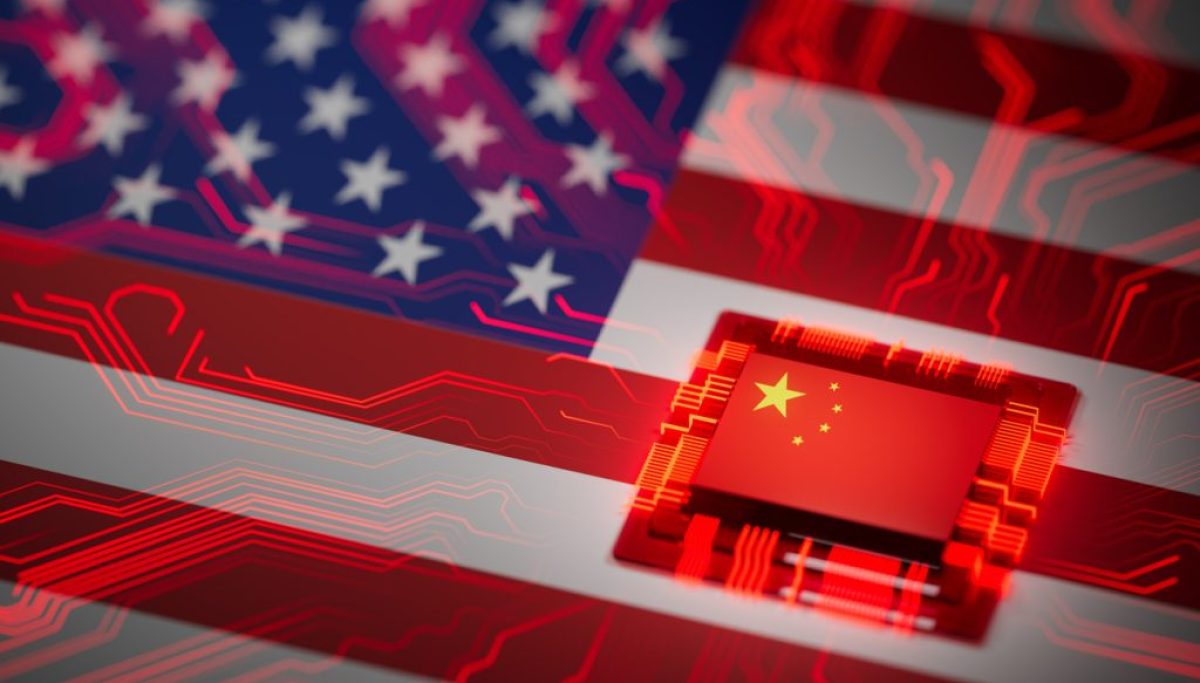
Photo via ABC News (AU)

Behind China's 'fearmongering' claim is a fundamental fear about AI

Read the original at ABC News (AU) ↗
Cite

Horn, A. (2026, September 16). Behind China's 'fearmongering' claim is a fundamental fear about AI. ABC News (AU). https://www.abc.net.au/news/2026-09-17/china-and-america-ai-arms-race-proceeds-despite-warnings/107160610

Dated when The Aporia collected the article, usually within hours of publication. Check the original for its exact date and byline.

ABC News (AU) · collected 2026-09-16 · by Allyson Horn

Quick Summary

US tech leaders warn that China's lead in artificial intelligence could pose significant dangers to the United States and the world, advocating for restrictions on technology sales to Beijing. In response, Chinese officials through state media accuse these US executives of "fearmongering" and criticize the calls for a slowdown as counterproductive to global AI governance. However, behind this rhetoric, China’s own top intelligence official recently highlighted concerns about AI threatening political stability and security within China, alongside other risks like warfare and attacks on critical infrastructure.
Written by AI on 2026-09-17, from this article's own text only (the story summary below draws on all the coverage).
See how they differ ↓

AI analysis

Story summary

Minister Chen Yixin, head of China’s State Security, warned that artificial intelligence (AI) poses significant national security threats to China, including risks to political and ideological stability. Published on September 13, 2026, Chen accused foreign entities of using generative AI technologies to spread harmful information against China. He also noted that AI is now the main battleground for global technological competition between major powers.

Chinese officials are dismissing calls from U.S. tech leaders like Dario Amodei (CEO of Anthropic) and Sam Altman (CEO of OpenAI) to slow down AI development due to safety concerns, describing these as "fearmongering" and part of a Cold War playbook aimed at containing China. Chinese leader Xi Jinping is scheduled to meet with U.S. President Donald Trump in Washington later that month, where AI governance and safety will be key topics for discussion.

The Global Times, a state-backed newspaper, criticized Amodei's call for slowing AI development as an attempt to hinder China’s progress. Meanwhile, the Ministry of Foreign Affairs urged international cooperation on AI rather than engaging in confrontation or malicious competition.

Written for “China AI Rivalry Usa” on 2026-11-20, grounded in this article and the 9 other(s) covering the same event.

How they differ

9 outlets covered “China AI Rivalry Usa”.

What each outlet says

One AI summary per outlet of its latest article on this story, written from that article alone and checked against it. Open the article for the outlet's own words.

ABC News (AU)This outlet16 Sep

US tech leaders warn that China's lead in artificial intelligence could pose significant dangers to the United States and the world, advocating for restrictions on technology sales to Beijing. In response, Chinese officials through state media accuse these US executives of "fearmongering" and criticize the calls for a slowdown as counterproductive to global AI governance. However, behind this rhetoric, China’s own…

Behind China's 'fearmongering' claim is a fundamental fear about AI (this article)
Al Jazeera14 Sep

Anthropic CEO Dario Amodei has called for slowing down the development of powerful AI systems due to potential risks and proposed restricting China's access to advanced technology. This move prompted a response from China, which accused the US of using AI safety concerns as a guise to maintain technological dominance over China. The dispute highlights the growing competition between the US and China in artificial…

‘Silent Cold War’: Why calls to slow AI have sparked new US–China frontier →2 articles from Al Jazeera on this story
BBC14 Sep

China’s foreign ministry spokesperson criticized narratives of threat and competition in artificial intelligence (AI) development, particularly responding to calls for slowing down AI advancement that could disadvantage China. This comes after warnings from US industry insiders about potential dangers posed by rapid AI progress and amid tensions between the United States and China over who will lead in this…

China criticises idea it is in 'malicious competition' over AI →
NPR14 Sep

China’s Ministry of Foreign Affairs criticized Anthropic CEO Dario Amodei's recent essay calling for U.S. restrictions on sales to China of advanced AI technology. On Monday, spokesperson Guo Jiakun said that Amodei's warnings about Chinese technological leadership were counterproductive and urged cooperation instead of confrontation. The article also notes similar concerns from Chinese officials regarding foreign…

Beijing hits back at Anthropic CEO's call to curb China's AI development →
ABC News (US)14 Sep

China's Ministry of Foreign Affairs responded critically to Anthropic CEO Dario Amodei’s call for the U.S. to curb China’s artificial intelligence (AI) development, arguing that fearmongering and competition are harmful to global AI governance. The ministry stressed cooperation over confrontation, while dismissing Amodei’s essay as a veiled attempt to contain China. President Donald Trump, meanwhile, downplayed…

Beijing hits back at Anthropic CEO’s call to curb China's AI development →
Semafor14 Sep

China’s minister of state security warned about six principal risks posed by AI, including threats to political stability and national defense. Despite these concerns, Beijing rejected US calls to slow AI development, with a state-backed outlet calling for such measures “out of the Cold War playbook.” Some Chinese analysts advocate for international cooperation to maintain influence over global AI regulations and…

Beijing issues AI warnings but rejects US calls to slow development →
Show 3 more outlets
NBC News14 Sep

China has dismissed warnings from U.S. tech leaders to slow down artificial intelligence development, calling their concerns "fearmongering" and part of a Cold War strategy aimed at hindering China’s technological advancement. On Monday, Chinese Foreign Ministry spokesperson Guo Jiakun told reporters that such interventions disrupt global AI governance efforts and serve no one's interests. Meanwhile, U.S. President…

China dismisses AI slowdown calls and blasts ‘fearmongering’ from U.S. tech leaders →
The Hindu14 Sep

China’s Minister of State Security, Chen Yixin, warned on September 13, 2026, that artificial intelligence poses significant national security risks to the country. He cited concerns over foreign entities using AI to spread misinformation and conduct cyber espionage against China. Chen also highlighted the potential military applications of AI demonstrated in the U.S.-Iran conflict, emphasizing the need for China to…

China’s spy chief warns of national security risks from AI →
Daily Mail15 Sep

China's spy chief, Minister of State Security Chen Yixin, has warned that artificial intelligence poses significant risks to national security and could threaten the rule of the Communist Party. In an article published in the state-run magazine China Cyberspace, Chen cited concerns over foreign intelligence agencies using advanced AI technologies like web crawlers and data mining to collect sensitive information. He…

China's spy chief warns AI could bring an end to Communist party rule →

Where they agree and split

Framing

How the first headlines put it

Stated as fact7
The headlines (7)

China criticises idea it is in 'malicious competition' over AI BBC · stated as fact

Beijing hits back at Anthropic CEO's call to curb China's AI development NPR · stated as fact

Beijing hits back at Anthropic CEO’s call to curb China's AI development ABC News · stated as fact

Beijing issues AI warnings but rejects US calls to slow development Semafor · stated as fact

China dismisses AI slowdown calls and blasts ‘fearmongering’ from U.S. tech leaders NBC News · stated as fact

China rejects AI ‘threat narratives’, urges global cooperation Al Jazeera · stated as fact

China’s spy chief warns of national security risks from AI The Hindu · stated as fact

Words to watch (1)

China dismisses AI slowdown calls and blasts ‘fearmongering’ from U.S. tech leaders NBC News

The full story: what happened, how it changed, and all 10 articles →

Compared with similar articles

This article reads unscored and hedges 4% of its claims. Each row says how that neighbour differs.
Al Jazeera
Leans left Hedges 8 of 55 claims Outlet record 60/100
South China Morning Post
Hedges 0 of 2 claims Outlet record 62/100
“The articles discuss different aspects of the tech and AI race between China and the US, but do not describe the same specific incident.”
The Straits Times
Hedges 4 of 24 claims Outlet record 64/100
“The articles describe different events: one about US tech leaders warning against China's AI development and Beijing's rejection, while the other reports a US government website using an AI search tool from a Chinese company despite FBI concerns.”
The Hindu
Hedges 1 of 9 claims Outlet record 60/100
“The articles discuss different aspects of US-China relations regarding AI, with Article A focusing on a warning from US tech leaders and China's reaction, while Article B reports plans for upcoming meetings between U.S. and Chinese officials to discuss AI and other economic issues.”
South China Morning Post
Leans strongly left Hedges 0 of 4 claims Outlet record 62/100
“The articles discuss different aspects of international relations, with Article A focusing on global opinion towards the US and China, while Article B focuses on AI development concerns related to China.”
South China Morning Post
Hedges 0 of 5 claims Outlet record 62/100
“The articles discuss related tensions between the US and China regarding espionage and AI development, but describe different specific incidents and timeframes.”
Al Jazeera
Leans left Hedges 1 of 2 claims Outlet record 60/100
“While both articles discuss reactions to calls for slowing AI development, they describe different phases or aspects of the incident: Article A reports China's initial stance on international cooperation and rejecting threat narratives, whereas Article B focuses on Beijing’s response to specific warnings from US tech leaders.”
Washington Examiner
Hedges 1 of 11 claims Outlet record 67/100
“The articles discuss different aspects of concerns around AI regulation and competition, with Article A focusing on Trump dismissing fears as a hoax and Article B discussing China's response to warnings about AI development from US tech leaders.”
Semafor
Leans left Hedges 0 of 4 claims Outlet record 64/100
“While both articles discuss US-China relations regarding AI, they describe different aspects of this broader issue occurring at separate times.”
Washington Examiner
Leans left Hedges 4 of 41 claims Outlet record 67/100
“While both articles discuss similar warnings about AI development and reactions from China, they describe different moments in time with distinct focuses.”

Story

China AI Rivalry Usa
Politics · 10 article(s) covering the same event. Compare every outlet's account →
How this article was measured signals, leaning charts, publisher record, byline, topics and claims

Signals How these are calculated →

Claims extracted
26
sentences that state something as happening or true
Uncertain
4%
1 of 26 hedged ("reportedly", "may", "according to")
Leaning
withheld
no quote in the article backed the model's score
Publisher signals
67/100
ABC News (AU)'s corrections and hedging, across everything collected from it. Not a measure of accuracy.
Outlets on this story
10
Politics
Same framing elsewhere
1
articles that frame the event the way this one does
Analyzed 2026-09-17 · how these are computed

How this is being covered How these are calculated →

Article leaning vs. publisher reliability
Source leaning vs. consistency

Publisher

ABC News (AU) · 6116 article(s) · 11 correction(s) detected
Running correction rate · 11 correction(s)

Who wrote this

Allyson Horn
6 article(s) here · 1 carrying a prediction
The historic summit between Donald Trump, Xi Jinping and Vladimir Putin will take place on the sidelines of the Asia-Pacific Economic Cooperation (APEC) forum in China's southern city of Shenzhen.
The tech giant controls the most valuable company in the world and currently makes the hardware that could determine if China or the United States wins the race for AI supremacy. If that's not power enough, he also has the ear of the US president.
China will see this as an opportunity to gain more economic leverage over North Korea, but will most likely go slowly, according to Dr Sow Keat Tok from the Asia Institute at the University of Melbourne.
But while it may appear that Xi has now tamed the US president — known for his admiration of so-called strongmen — the description of the pair's relationship as a "great friendship" is a wild overreach of Beijing's position.
2026-09-25 · mixed framing · What happened when Xi Jinping met Donald Trump?
Anthropic CEO Dario Amodei issued a blunt assessment that a "Chinese lead in AI would pose great danger for the United States and the world" and urged Washington to restrict sales of key tech to Beijing.
"After the incident, the organising committee immediately closed off and isolated the affected area and track, and completed comprehensive disinfection," organisers said. "Relevant equipment was removed from the venue, and waste was disposed of in accordance with municipal waste-management standards." The organisers also said they would replace flooring at the venue to protect future athlete health.
Also by Allyson Horn
Nothing else under this byline is closely related to this article, so these are simply their most recent.
All 6 articles by Allyson Horn →

Topics

Beijing China Chinese Washington the United States

Subjects

China GPE · 14× Beijing GPE · 4× Washington GPE · 2× Chinese NORP · 1× Dario Amodei PERSON · 1× Foreign Ministry ORG · 1× Guo Jiakun PERSON · 1× Xi Jinping PERSON · 1× the Chinese Communist Party's ORG · 1× the United States GPE · 1×

Narrative

China's Foreign Ministry spokesman Guo Jiakun also accused the US executives of "fearmongering" and warned that "vicious competition will only disrupt the process of global AI governance, which serves no-one's interests". But the phrase "vicious competition" is a hollow accusation for China to lob at Washington, given it is also engaged in the race for AI supremacy.
framing: assertive · carried by 1 article(s) · first seen 2026-09-17
Anthropic CEO Dario Amodei issued a blunt assessment that a "Chinese lead in AI would pose great danger for the United States and the world" and urged Washington to restrict sales of key tech to Beijing.
2026-09-17 · ABC News (AU)
Behind China's 'fearmongering' claim is a fundamental fear about AI · assertive framing

Claims (26 extracted, 1 hedged)

When the leaders of major US tech groups all echoed calls to "slow the pace" of artificial intelligence development, the underlying message targeted a specific and, in their view, uncontained threat: China. asserted
message → echo → threat
Anthropic CEO Dario Amodei issued a blunt assessment that a "Chinese lead in AI would pose great danger for the United States and the world" and urged Washington to restrict sales of key tech to Beijing. asserted
lead → issue → Beijing
The warning was met by a forceful rejection from Beijing, which used state media to label the warnings as a "Cold War playbook" for the AI sector. asserted
which → meet → sector
China's Foreign Ministry spokesman Guo Jiakun also accused the US executives of "fearmongering" and warned that "vicious competition will only disrupt the process of global AI governance, which serves no-one's interests". But the phrase "vicious competition" is a hollow accusation for China to lob at Washington, given it is also engaged in the race for AI supremacy. asserted
it → accuse → supremacy
China warns about AI risks amid race for dominance asserted
China → warn → dominance
China's ambitious goals to integrate AI into 90 per cent of the country's economy by 2030 are underpinned by its plans to ultimately achieve worldwide dominance in the sector. asserted
goals → integrate → sector
To do so, it wants to be entirely self-sufficient and position itself as the world leader that other countries would have to rely on for their infrastructure and tech. asserted
countries → do → infrastructure
China has spent decades perfecting the industry-supremacy playbook in areas like electric vehicles and solar panels, and AI is next on the agenda. asserted
AI → spend → agenda
So it's no surprise China is resisting any calls for a slowdown — especially when its main rival is still surging ahead. asserted
rival → resist → slowdown
But that doesn't mean China is unbothered by the potential threats that AI could pose in the future. uncertain
AI → mean → future
Over recent months, Beijing officials have been more openly vocal about the risks surrounding the technology, including President Xi Jinping who warned AI "should always remain under human control". asserted
AI → surround → control
And just a few days ago, in a further sign of China's growing unease around the impacts of technological developments, the country's top intelligence official released an illuminating article that listed Beijing's perceived AI threats. asserted
that → grow → threats
Prominent among them was the potential for AI to threaten the Chinese Communist Party's hold on power. asserted
AI → threaten → power
"Artificial intelligence is penetrating all aspects of human society at an unprecedented speed, breadth, and depth, profoundly reshaping the global economic structure, power dynamics, innovation paradigms, and social governance logic," Ministry of State Security Chen Yixin wrote. asserted
Yixin → penetrate → Security
"Various hostile forces and individuals with ulterior motives abuse generative artificial intelligence technologies such as deepfake audio and video, AI-generated text and images, and intelligent online trolls … waging a propaganda war and a cognitive war against us, directly threatening our political security, institutional security, and ideological security." asserted
forces → abuse → security
The article also listed other risks, including in areas of warfare, social governance and attacking critical infrastructure. asserted
article → list → infrastructure
Notably, it did not canvass the same concerns about AI posing an existential threat to humanity that have been expressed in America. asserted
that → canvass → America
Both China and US want to win AI race asserted
China → want → race
China's response to AI's projected hazards has been an open call for worldwide cooperation on AI technologies, including proposals that would put China at the forefront of global AI governance. asserted
that → project → governance
Earlier this year, it set up The World Artificial Intelligence Cooperation Organization, which aimed to bring governments together to develop frameworks for the "beneficial, safe and fair" future of AI. asserted
which → set → AI
About 30 countries signed up for the initiative — but none of them were Western. asserted
none → sign → them
At the BRICS summit in early September, President Xi also proposed creating a community for open-source AI and letting countries with less developed technological sectors tap into China's expertise. asserted
countries → propose → expertise
All of these initiatives put China at the helm of discussions and give it the power to embed its own institutions in developing a global rule book. A global AI conversation that's led by China also ultimately serves Beijing's political and diplomatic ambitions to rival the hegemony of the United States and win the AI race. asserted
that → put → race
Analysts have said managing the risks of AI and future development will require the leaders of China and America to have meaningful engagement on the issue — which, at the moment, seems unlikely. asserted
which → say → moment
The opportunity for a starting point on those conversations is likely to present itself next week when Xi is due to meet US President Donald Trump at the White House. asserted
Xi → start → House
But in the AI race, where both leaders want their team to win, there are low expectations that either side would be willing to give any ground, while the other still surges ahead. asserted
other → want → ground

Give feedback · no sign-in needed

No sign-in needed for now. Your note is sent without a name, so it cannot be answered.

History Support