Photo via Semafor

Chipmaker says data centers should report energy waste

Read the original at Semafor ↗
Cite

Capelouto, J. (2026, September 12). Chipmaker says data centers should report energy waste. Semafor. https://www.semafor.com/article/09/11/2026/chipmaker-onsemi-says-data-centers-should-report-energy-waste

Dated when The Aporia collected the article, usually within hours of publication. Check the original for its exact date and byline.

Semafor · collected 2026-09-12 · by J.D. Capelouto

Quick Summary

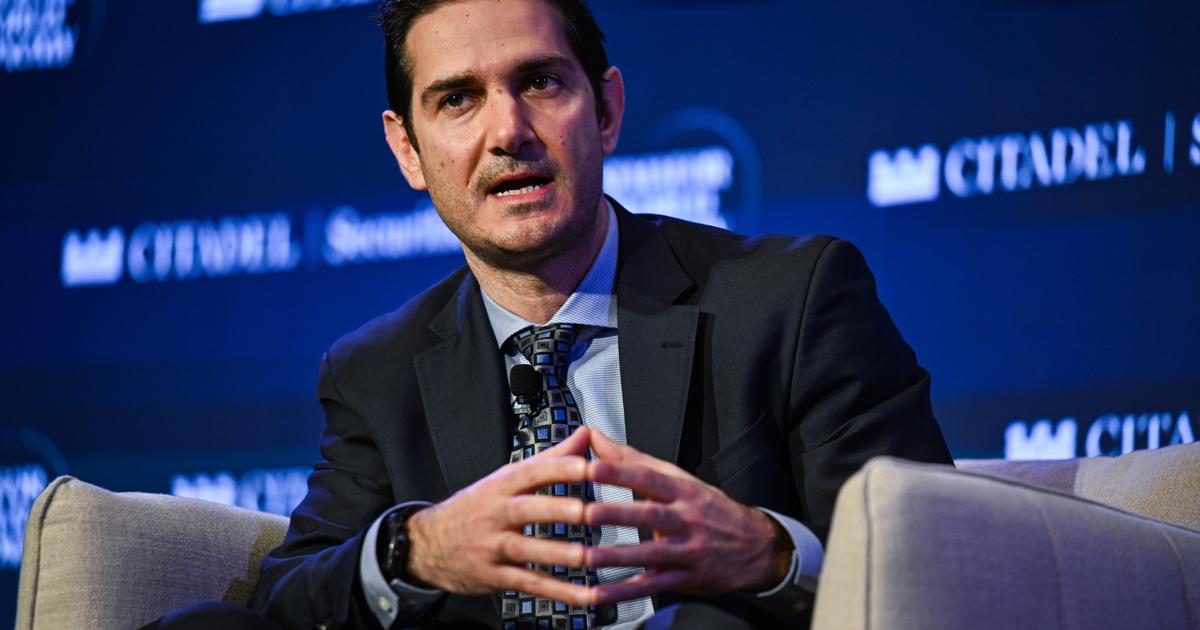
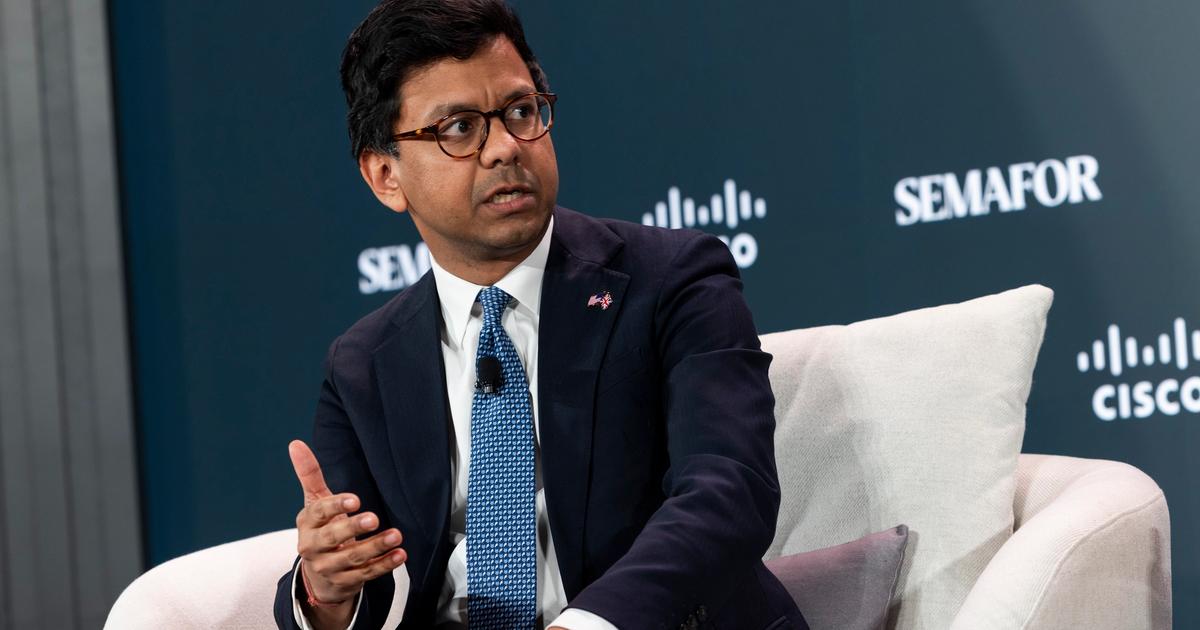
Onsemi’s CEO Hassane El-Khoury argues that instead of banning AI data centers, communities should require providers to disclose how much energy these facilities waste. During a tour in East Fishkill, New York, El-Khoury criticized moratoriums like the one in place in his state and suggested policymakers focus on specific issues rather than outright bans. He proposes transparency standards for reporting raw energy consumption and efficiency metrics, noting that Onsemi’s fastest-growing business is AI data centers, with revenue expected to more than double this year despite opposition.
Written by AI on 2026-09-12, from this article's own text only (the story summary below draws on all the coverage).

AI analysis

Story summary

The CEO of chipmaker Onsemi, Hassane El-Khoury, argues that AI data center providers should report their energy waste rather than face blanket bans. During a tour at Onsemi’s facility in East Fishkill, New York, El-Khoury criticized New York's moratorium on new data centers, calling it short-sighted and a result of insufficient awareness about the issue. He advocates for addressing specific problems instead of outright rejection of AI infrastructure. Onsemi specializes in power chips that convert electricity more efficiently, reducing heat loss which otherwise necessitates additional water usage for cooling servers. El-Khoury believes that better reporting would help mitigate concerns over local grid strain and increased residential electricity costs.

Written for “Data Center Energy Waste” on 2026-11-20, grounded in this article and the 0 other(s) covering the same event.

Compared with similar articles

This article reads unscored and hedges 0% of its claims. Each row says how that neighbour differs.
Washington Examiner
Leans strongly right Hedges 0 of 42 claims Outlet record 67/100
“The articles discuss different aspects of data center issues without clearly referring to the same specific incident.”
TIME
Hedges 6 of 31 claims Outlet record 60/100
“Article A discusses a chipmaker CEO's opinion on data center energy waste, while Article B reports on a poll about Americans' growing concern over AI's environmental impact. These are different events covering distinct aspects of the topic.”
Washington Examiner
Hedges 0 of 24 claims Outlet record 67/100
“The articles describe different legislative actions regarding data centers: one calls for reporting energy waste and the other passes a bill to shield households from data center energy costs.”
Toronto Star
Leans left Hedges 0 of 3 claims Outlet record 64/100
“The articles discuss different aspects of data center regulation and energy use, with Article A focusing on a CEO's opinion about reporting waste and opposing moratoriums, while Article B reports on the passage of a bill requiring utilities to charge full costs for power needed by data centers.”
The Straits Times
Hedges 4 of 14 claims Outlet record 64/100
“Article A discusses a CEO's opinion on data center regulations and energy reporting, while Article B reports on an analysis by Moody’s regarding the power plant needs for the AI boom.”
The Straits Times
Hedges 1 of 36 claims Outlet record 64/100
“The articles discuss similar themes but describe different occurrences: one focuses on a chipmaker's CEO advocating for reporting energy waste in data centers, while the other reports on Silicon Valley figures questioning calls for an AI slowdown.”

Story

Data Center Energy Waste
Technology · 1 article(s) covering the same event.
How this article was measured signals, leaning charts, publisher record, byline, topics and claims

Signals How these are calculated →

Claims extracted
18
sentences that state something as happening or true
Uncertain
0%
0 of 18 hedged ("reportedly", "may", "according to")
Leaning
withheld
no quote in the article backed the model's score
Publisher signals
64/100
Semafor's corrections and hedging, across everything collected from it. Not a measure of accuracy.
Outlets on this story
1
Technology
Same framing elsewhere
1
articles that frame the event the way this one does
Analyzed 2026-09-12 · how these are computed

How this is being covered How these are calculated →

Article leaning vs. publisher reliability
Source leaning vs. consistency

Publisher

Semafor · 1913 article(s) · 7 correction(s) detected
Running correction rate · 7 correction(s)

Who wrote this

J.D. Capelouto
40 article(s) here · 1 carrying a prediction
Some global tech leaders at Semafor’s Silicon Valley & The World suggested that backlash to data centers or a potential financing bubble might provide the necessary brakes that the industry needs.
Amazon CEO Andy Jassy said Tuesday it would be a “historic mistake” for the US to pull back on its AI infrastructure buildout following the data center backlash during the midterm elections.
Asked whether “winter is coming” — a nod to fears that the AI boom could face a correction — Al Mubarak said it was, but that “winter doesn’t mean minus 30 degrees.
Speaking alongside Huffington on the panel, Willett Advisors CEO Steven Rattner said the idea of bringing Huang back as CEO is “ridiculous.”
Billionaire hedge fund manager Bill Ackman said Monday it was “unlikely” that he would get directly involved in an effort to reinstate former Nvidia CEO Jensen Huang.
Indians see AI as less of a threat than people in the US because fewer workers hold the “cognitive and office-oriented jobs” that the technology could replace, one of the country’s top tech officials said.
Those ties went beyond business: Hou referenced a New York Times article in which Huang’s longtime hairstylist admitted he was too upset to sleep, drank a bottle of red wine, and prayed for the former chip CEO after his resignation.
They see the model as particularly useful in sales and executive hiring, where a search firm could prompt it to evaluate an interview transcript to gauge how a candidate will behave under pressure.
2026-11-12 · assertive framing · A new AI model wants to read between the lines
“If we leave a market altogether, there’s no question somebody else would step in,” he told Michael Milken in May 2025.
2026-11-11 · assertive framing · Tracking how Jensen Huang changed his stance on China
The votes were hyperlocal and often emotional in nature, but they could carry financial consequences, because some of the projects at stake were already in motion.
Also by J.D. Capelouto
Nothing else under this byline is closely related to this article, so these are simply their most recent.
All 40 articles by J.D. Capelouto →

Topics

Communities New York News Onsemi Semafor

Subjects

Onsemi ORG · 5× El-Khoury PERSON · 3× New York GPE · 3× Arizona GPE · 1× Communities ORG · 1× East Fishkill GPE · 1× Hassane El-Khoury PERSON · 1× Jasmine Sun PERSON · 1× News ORG · 1× Semafor ORG · 1×

Narrative

The need for power chips is “masked” by the ongoing shortages facing memory and compute chips, but once the industry clears those bottlenecks, he warned, people will “wake up” to the fact that challenges surrounding power are “really going to end up hitting the wall…
framing: assertive · carried by 1 article(s) · first seen 2026-09-12
More efficient power conversion reduces the amount of electricity that data centers would otherwise lose as heat, which requires more water to cool servers.
2026-09-12 · Semafor
Chipmaker says data centers should report energy waste · assertive framing

Claims (18 extracted, 0 hedged)

The News Communities and governments should demand AI data center providers report how much energy they are wasting, rather than put blanket bans on the facilities, the CEO of chipmaker Onsemi told Semafor. asserted
CEO → demand → Semafor
Data center moratoriums like the one enacted in New York are “short-sighted,” Hassane El-Khoury said during a tour of the company’s manufacturing facility in East Fishkill, New York. asserted
Khoury → enact → Fishkill
Instead, he said, policymakers and critics should identify specific problems they want to address, rather than shun the AI infrastructure buildout as a whole. asserted
they → say → whole
“A lot of the pushback is coming from a lack of awareness of what the subject matter is and the problem at stake,” El-Khoury said. asserted
Khoury → come → stake
Onsemi makes power chips, which convert energy surging through data centers, cars, and factories. asserted
which → make → centers
They essentially act as hyper-fast electrical switches that shrink grid-level power down to the tiny voltage that chips run on. asserted
chips → act → that
More efficient power conversion reduces the amount of electricity that data centers would otherwise lose as heat, which requires more water to cool servers. asserted
which → reduce → servers
Pushback against data centers has swelled in part because of concerns that they will strain local grids and raise residents’ electricity bills, and drain local water supplies. asserted
they → swell → supplies
El-Khoury said the company is talking to federal and state lawmakers — starting in Arizona, where Onsemi is based — to discuss energy transparency standards for reporting how much raw energy a data center is consuming and how efficiently it’s using that power. asserted
it → say → power
For example, if a hyperscaler announces a 1-gigawatt facility, that number typically refers only to how much electricity the facility is designed to consume. asserted
facility → announce → electricity
A more useful standard, Onsemi argues, would measure how much AI compute it can generate, compared with the amount of power it draws from the grid. asserted
it → argue → grid
He said public opposition — including the moratorium in New York, where Onsemi’s most advanced facility is located — isn’t slowing down demand for data centers. asserted
facility → say → centers
“On an earnings call last month, the company, which has a nearly $28 billion market cap, said AI data centers are its fastest-growing business, with revenue expected to more than double this year. asserted
revenue → have → cap
“I’m not saying you should accept the AI data center right in your backyard,” he said, but “I think any community needs to take a step back and say, ‘Why are we pushing back?’” asserted
we → say → step
The world is also facing a shortage of power chips, but it doesn’t fully realize it yet, El-Khoury said. asserted
Khoury → face → it
The need for power chips is “masked” by the ongoing shortages facing memory and compute chips, but once the industry clears those bottlenecks, he warned, people will “wake up” to the fact that challenges surrounding power are “really going to end up hitting the wall… asserted
challenges → mask → wall
Everything needs more and more power.” asserted
Everything → need → power
Notable - Much of the community-level pushback to data centers stems not only from energy concerns, but from mistrust of large corporations and a fear that small towns will get a bad deal, journalist Jasmine Sun wrote last month. asserted
Sun → stem → deal

Give feedback · no sign-in needed

No sign-in needed for now. Your note is sent without a name, so it cannot be answered.

History Support