Photo via NPR

The U.S.-Canada trade war is creating a headache for auto-parts makers

Read the original at NPR ↗
Cite

Rubin, W. (2026, September 11). The U.S.-Canada trade war is creating a headache for auto-parts makers. NPR. https://www.npr.org/2026/09/11/nx-s1-5961530/canada-trade-war-auto-parts-supply-chain

Dated when The Aporia collected the article, usually within hours of publication. Check the original for its exact date and byline.

NPR · collected 2026-09-11 · by Willa Rubin

Quick Summary

The US-Canada trade war is causing headaches for auto-parts makers due to tariffs on aluminum and steel, which have been enacted by both countries since August and January respectively. Canada has imposed retaliatory tariffs on various US goods, including steel and aluminum, adding to the uncertainty faced by major carmakers. According to analysts, the smaller businesses that supply big companies with thousands of parts are particularly vulnerable to the new tariffs, which could be damaging to their industry and finances. This is just the latest in a series of challenges faced by the auto industry, following years of disruptions from Covid supply chain shortages and shifting electric vehicle production.
Written by AI on 2026-09-11, from this article's own text only (the story summary below draws on all the coverage).
See how they differ ↓

AI analysis

Story summary

As of September 4, 2026, a tentative trade deal between Canada and the U.S., aimed at avoiding damaging tit-for-tat tariffs, collapsed just hours before its deadline. This breakdown triggered President Donald Trump to impose new 50% tariffs on $28 billion worth of Canadian exports. Prime Minister Mark Carney responded by announcing Canada's intention to match these tariffs dollar for dollar to protect domestic workers and businesses. The escalating trade tensions have led to the U.S. Justice Department ordering a freeze on all antitrust work with Canada, exacerbating the economic conflict between the neighboring countries.

The dispute has also spurred a "Buy Canadian" movement among consumers who are actively seeking out locally made products over American alternatives as part of their show of solidarity amid the ongoing trade war. Additionally, retaliatory tariffs have been imposed on various goods including dairy, motorcycles, and alcoholic beverages, further complicating economic relations between the two nations. This conflict comes amidst broader political tensions highlighted by President Trump's repeated rhetoric about annexing Canada. Despite historic close ties, both countries face significant challenges in resolving their trade disputes amicably.

Written for “U.S.-Canada Trade War Escalates” on 2026-11-21, grounded in this article and the 53 other(s) covering the same event.

How they differ

20 outlets covered “U.S.-Canada Trade War Escalates”.

What each outlet says

One AI summary per outlet of its latest article on this story, written from that article alone and checked against it. Open the article for the outlet's own words.

NPRThis outlet11 Sep

The US-Canada trade war is causing headaches for auto-parts makers due to tariffs on aluminum and steel, which have been enacted by both countries since August and January respectively. Canada has imposed retaliatory tariffs on various US goods, including steel and aluminum, adding to the uncertainty faced by major carmakers. According to analysts, the smaller businesses that supply big companies with thousands of…

The U.S.-Canada trade war is creating a headache for auto-parts makers (this article)
National Post9 Sep

Finance Minister Bill Morneau's successor, Chrystia Freeland's replacement, and current Finance Minister is being referred to here but not directly quoted or named in the article as making any statements about Carney. The key numbers mentioned are 25% (tariff rate before change) and 35% (new tariff rate after Trump's executive order). This article takes an opinionated tone, with author Terry Newman arguing that…

Terry Newman: Carney’s ‘war’ is good for political incumbents, but bad for Canadians →13 articles from National Post on this story
CBC11 Sep

The article reports on the election promises of major parties in Quebec's 2026 election, specifically focusing on child care and family benefits. Coalition Avenir Québec is promising a back-to-school supplement of up to $250 per child, a tax credit for up to 75% of school-day child-care fees, and conversion of 10,000 private child-care spots into subsidized ones. The party estimates that over half a million children…

See what Quebec's major party leaders are promising during the election campaign →7 articles from CBC on this story
The Globe and Mail9 Sep

U.S. President Donald Trump has issued an executive order banning imports of Canadian alcohol, motorcycles, and some dairy products in response to Canada's countertariffs. The ban affects a broad range of alcoholic beverages, including beer sold in cans and bottles, rye whisky, and various types of wine. A recent poll by Nanos Research found that 80% of Canadians support or somewhat support dollar-for-dollar…

Morning Update: Adversity ahead →7 articles from The Globe and Mail on this story
Time11 Sep

Lynn Henderson, a 47-year-old Canadian consumer from British Columbia, is one of many Canadians boycotting American products due to the ongoing trade dispute between the two countries. According to a Build Canada poll, 69% of respondents reported choosing Canadian products despite higher prices and 55% said they had stopped buying specific American brands. The "Buy Canadian" movement has been revived amid a…

'Buy Canadian': Meet the Consumers Boycotting American Products as Trade Rift Widens →3 articles from Time on this story
Toronto Star6 Sep

Prime Minister Mark Carney announced that Canada's counter-tariffs will take effect on Tuesday on $28 billion worth of U.S. products, a response to the United States imposing tariffs on Canadian goods. Financial conference Scotiabank's global banking and markets financial summit starts on Wednesday, amid growing concerns about the Canadian economy due to the trade war with the US. Transat A.T. Inc., an airline…

Five things to watch for in the Canadian business world in the coming week →3 articles from Toronto Star on this story
Show 12 more outlets
Global News9 Sep

The escalating US-Canada trade dispute has taken center stage in Quebec's provincial election campaign, with major parties offering competing visions on how to protect jobs and businesses from tariffs. The CAQ leader, Christine Fréchette, unveiled measures aimed at shielding Quebec's economy, including prioritizing Quebec-made goods and changing the public procurement process to favor Canadian firms over US…

Trade war takes centre stage in Quebec election campaign →3 articles from Global News on this story
The Guardian8 Sep

Canada has imposed retaliatory tariffs on $20bn worth of US imports, effective at 12:01am on Tuesday, in response to US President Donald Trump's decision to impose a 50% tariff on Canadian goods. The targeted sectors include steel, dairy, appliances, and electronics, with tariffs ranging from 15% to 50%. Tensions between the two countries have intensified, with Trump criticizing Canada's trade practices and making…

Canada’s retaliatory US tariffs take effect as trade dispute grows →2 articles from The Guardian on this story
The Independent6 Sep

American tourism organizations are trying to woo back Canadian visitors who boycotted the US due to President Trump's comments about making Canada the 51st state and the ongoing trade war, which has resulted in import taxes of up to 50% on Canadian products. According to Statistics Canada, Canadian residents made 25 percent fewer return border crossings and spent $2.4 billion less on travel to the US last year…

The US wants to win Canadian visitors back, but tourists say ‘it’s a wasted effort’ →2 articles from The Independent on this story
Reason11 Sep

Canada has imposed a 50% tariff on aluminum ferrules used in pencil manufacturing as part of its retaliatory measures against US tariffs. This specific product was swept into the conflict because it is made of aluminum, which is subject to the same tariff under US Section 338 of the Tariff Act of 1930. The Canadian countermeasures match US tariffs dollar for dollar and rate for rate, resulting in a de facto 50% tax…

A 50% Tariff on Pencil Parts? Welcome to the U.S.-Canada Trade War. →2 articles from Reason on this story
Fox News5 Sep

The US Justice Department's antitrust division has been ordered by its chief, Lynda Marshall, to pause all work with the Canadian government amid intensifying trade tensions between the two countries. According to a report, officials were instructed to halt cooperation on cases and policy issues starting from Wednesday, but the DOJ disputes this claim, saying only that a meeting was delayed for preparation. The…

DOJ ordered to freeze antitrust work with Canada as trade tensions intensify →
ABC News (AU)6 Sep

Canadian Prime Minister Mark Carney ended comprehensive trade negotiations with the US two weeks ago, and Canadians are now bracing for potential economic consequences. Canada is already facing tariffs on key exports such as steel, lumber, and automobiles. According to a recent poll, three-quarters of Canadians approved of Carney's decision to walk away from trade talks. Trade consultant Kelly Ann Shaw notes that…

The US-Canada 'divorce' and the $1.2 trillion fallout →
The Free Press8 Sep

A columnist for This Week in Canada argues that Americans are unaware that Canada views them as enemies, citing recent surveys showing a significant shift in Canadian attitudes towards the US. According to a Leger survey, 41% of Canadians now see the US as an "enemy country", up from 26% since June 2025. A Politico poll found that nearly half of Canadians consider the US a bigger threat to world peace than Russia…

This Week in Canada: America Is Our Enemy and Doesn’t Even Know It →
BBC8 Sep

Canada has imposed retaliatory tariffs on US goods worth nearly C$28bn ($20bn; £15bn) as of Tuesday, in response to the ongoing trade tensions between the two countries. The counter-tariffs, which range from 15% to 50%, affect hundreds of American products, including steel, furniture, and clothing. Despite both sides expressing a desire for a deal, US Trade Representative Jamieson Greer suggests that Canada is…

Canada braces for prolonged trade war as counter-tariffs on US take effect →
ABC News (US)9 Sep

President Donald Trump has issued proclamations to ban certain Canadian goods, including alcohol and dairy products, from entering the US starting September 29. The banned items include sparkling grape wine, whey protein, and non-alcoholic beer, among others. A total of 50% tariff will also be imposed on additional goods, such as golf carts and bamboo furniture. Trump's move comes in response to Canada's retaliatory…

Trump ratchets up trade war, moves to ban many Canadian goods from entering US →
Semafor9 Sep

A senior Trump administration official said that despite escalating tensions, the countries will try to negotiate an offramp from their trade dispute. The US has imposed new tariffs on Canadian goods after Canada retaliated with its own tariffs, further escalating the trade war between the two nations. A key North American trade pact, the USMCA, is now likely to be renewed, as it faces opposition due to the ongoing…

US-Canada trade war escalates amid tit-for-tat tariffs →
Al Jazeera9 Sep

Al Jazeera's Yasmeen ElTahan reports on the ongoing US-Canada trade war from an explanatory angle. The article doesn't provide specific numbers or a concrete timeline, but it appears to be ongoing. The trade war is affecting various products, including toilet paper, which has become unexpectedly entangled in the dispute.

The losers of the US-Canada trade war →
Los Angeles Times9 Sep

A trade war between the US and Canada has escalated as Ottawa's retaliatory tariffs on American goods took effect, imposing duties of up to 50% on over $20 billion in U.S. imports. President Trump had previously imposed tariffs on Canadian exports, prompting a breakdown in trade talks between the two countries. In response to the new tariffs, Trump threatened to remove access for Canadian businesses to key American…

Canada's tariffs go into effect, spotlighting soured relations with U.S. →

Compared with similar articles

This article reads unscored and hedges 13% of its claims. Each row says how that neighbour differs.
BBC News
Hedges 2 of 31 claims Outlet record 65/100
Los Angeles Times
Hedges 3 of 45 claims Outlet record 95/100
TIME
Hedges 6 of 41 claims Outlet record 60/100
CBC News
Leans right Hedges 3 of 28 claims Outlet record 72/100
“Article A discusses general challenges facing Prime Minister Carney, while Article B focuses specifically on the impact of the US-Canada trade war on auto-parts makers”
CBC News
Hedges 23 of 48 claims Outlet record 72/100
“The articles discuss different time periods and aspects of the U.S.-Canada trade tensions, not a single specific incident.”
CBC News
Leans left Hedges 6 of 32 claims Outlet record 72/100
“Article A is focused on semi-trailers and counter-tariffs, while Article B discusses auto-parts makers and a trade war between the US and Canada”
The Globe and Mail
Leans left Hedges 3 of 34 claims Outlet record 51/100
“Article B discusses the impact of the trade war on auto-parts makers, mentioning a failure to reach a new trade deal in August, but Article A focuses specifically on retaliatory tariffs set for Tuesday and their effects”
National Post
Hedges 4 of 42 claims Outlet record 60/100
“Article A mentions Trump's social media post about Bombardier on a Monday in September, while Article B does not mention Bombardier at all and talks about a broader trade war between the US and Canada”
The Free Press
Leans strongly left Hedges 1 of 10 claims Outlet record 96/100
“Article A discusses a general sentiment of Canadians towards Americans, while Article B focuses on the impact of a trade war on auto-parts makers, mentioning a recent escalation in August but not directly referencing an event from both articles”
CBC News
Hedges 0 of 1 claims Outlet record 72/100
“Article A mentions Jean Chrétien's opinion on counter-tariffs, while Article B discusses the impact of the trade war on auto-parts makers”

Story

U.S.-Canada Trade War Escalates
Economy/Business · 54 article(s) covering the same event. See how they differ ↑
How this article was measured signals, leaning charts, publisher record, byline, topics and claims

Signals How these are calculated →

Claims extracted
54
sentences that state something as happening or true
Uncertain
13%
7 of 54 hedged ("reportedly", "may", "according to")
Leaning
withheld
no quote in the article backed the model's score
Publisher signals
60/100
NPR's corrections and hedging, across everything collected from it. Not a measure of accuracy.
Outlets on this story
54
Economy/Business
Same framing elsewhere
1
articles that frame the event the way this one does
Analyzed 2026-09-11 · how these are computed

How this is being covered How these are calculated →

Article leaning vs. publisher reliability
Source leaning vs. consistency

Publisher

NPR · 1384 article(s) · 5 correction(s) detected
Running correction rate · 5 correction(s)

Who wrote this

Willa Rubin
11 article(s) here · 1 carrying a prediction
"Many will assume the election had something to do with it, but that's a myth," Patrick De Haan, head of petroleum analysis at GasBuddy, wrote in his industry newsletter.
2026-11-11 · mixed framing · Why is gasoline suddenly under $4 a gallon?
So now that the midterm results are in, could drivers see lower gasoline and diesel prices anytime soon?
Since it's hard to predict how long those will last, he continued, "You put the money in the bank and watch to see what happens as we move into 2027."
2026-10-31 · assertive framing · Oil company earnings skyrocket — again
Tariffs, diesel and computer chips are driving up costs for automakers American automakers are reporting their third quarter earnings, and they're saying revenues are up, but they're also facing some serious headwinds. Or as Mike Wall, an analyst at the automotive data company Mobility Global, put it: If this year was a book about the auto industry, "It would be a mix of suspense and thrills and maybe a little bit of comedy and a little bit of horror."
How the oil industry is preparing for Hurricane Isaias Hurricane Isaias, the first Atlantic hurricane of the season, is expected to make landfall on Friday evening near the Alabama Gulf Coast and Florida panhandle.
2026-10-09 · assertive framing · How the oil industry is preparing for Hurricane Isaias
Could this lower the cost of diesel?
This trajectory is " clearly nothing like what it was previously, but it has not fallen off of a cliff, which is what some people's predictions would've been," said Ivan Drury, director of insights at Edmunds.
The revised rules, which were finalized today, will now require carmakers to make their new passenger car and truck fleets up to 1% more fuel efficient each year, aiming for an average of 34.9 miles to the gallon in model year 2031.
eBay declined an interview with NPR, but pointed to an online statement saying the decision was made "following a comprehensive review of the risks these products may pose to eBay users."
But the latest tariff flareup between the two countries may complicate that.
Also by Willa Rubin
Nothing else under this byline is closely related to this article, so these are simply their most recent.
All 11 articles by Willa Rubin →

Topics

Canada Canadian North American U.S. U.S.-Canada

Subjects

U.S. GPE · 12× Canada GPE · 7× Canadian NORP · 4× Jarrell PERSON · 4× Mexico GPE · 3× Linamar Corporation ORG · 2× North American NORP · 2× American NORP · 1× Trump PERSON · 1× U.S.-Canada GPE · 1×

Narrative

The Motor & Equipment Manufacturers Association trade group also wrote in an emailed statement that it's "concerned by the continued escalation of trade actions between the United States and Canada." "The vehicle supplier industry has built deeply interconnected North American supply chains over decades, and policies that increase costs or create barriers ultimately weaken the competitiveness of the entire region as we face challenging global competition," the statement continued.
framing: assertive · carried by 1 article(s) · first seen 2026-09-11
But the latest tariff flareup between the two countries may complicate that.

Claims (54 extracted, 7 hedged)

The U.S.-Canada trade war is creating a headache for auto-parts makers asserted
war → create → makers
The U.S. and Canadian auto industries have been tightly woven together for decades. asserted
industries → weave → decades
But the latest tariff flareup between the two countries may complicate that. uncertain
flareup → complicate → that
Think of that sticker on the windows of new cars breaking down how much of the vehicle's content comes from the U.S. and Canada. asserted
much → think → U.S.
From a manufacturing point of view, content from both places has long been considered deeply intertwined. asserted
content → consider → places
But the U.S. and Canada failed to reach a new trade deal this summer, and the trade war between them has escalated quickly. asserted
war → fail → them
In August, the U.S. enacted new tariffs on aluminum and steel, and President Trump has also threatened 50% tariffs on Canadian vehicles, auto parts and steel effective on Jan. 1. asserted
Trump → enact → Jan.
On Tuesday, Canada enacted retaliatory tariffs on a variety of U.S. goods — including on American steel and aluminum. asserted
Canada → enact → steel
All of this puts the auto manufacturing industry in a jam. asserted
All → put → jam
For major U.S. carmakers, analysts say, the tariffs introduce uncertainty as companies determine whether to adjust their supply chains in the long run, or to absorb new costs in the short term. asserted
companies → say → term
But for the smaller businesses that supply those big companies with thousands of parts — think bolts, or the steel rods for steering wheels — the tariffs could spell bigger, more expensive trouble. " uncertain
tariffs → supply → trouble
It makes planning for things very difficult," says Dan Hearsch, global co-leader of automotive and industrial at the consulting firm AlixPartners. asserted
leader → make → firm
For these companies, he says, the new tariffs follow years of chaos — the aftermath of Covid supply chain shortages, the start-and-stop ramp up to making more electric vehicles, the need to grapple with pre-existing tariffs. asserted
tariffs → say → tariffs
"It's one more thing, on top of the one more thing, that was on top of the one more thing, that was on top of the one more thing," Hearsch says. asserted
Hearsch → say → thing
The U.S. and Canada started weaving their auto supply chains together in 1965, when they signed a pact with a goal of consolidating their auto industries and expanding their combined market. asserted
they → weave → market
The pact removed duties on auto products or equipment crossing the border when they are made of at least 50% of U.S. or Canadian content. asserted
they → remove → content
Their trade relationship deepened with the 1994 North American Free Trade Agreement, which included Mexico and removed many duties between the three countries, as long as they contained a certain proportion of North American parts. asserted
they → deepen → parts
The 2020 United States Mexico Canada Agreement, which revised that deal, included a requirement that auto content be 75% North American to be able to pass borders without any tariff. asserted
content → revise → tariff
For the auto industry, the free flow of many goods meant that components could be assembled in plants in each country, and ultimately combined in another. uncertain
components → mean → another
The auto supply chain grew into a single ecosystem. asserted
chain → grow → ecosystem
"I've often described it like an omelet" with ingredients from all three countries, says Jim Jarrell, president and CEO of Linamar Corporation, a Canadian manufacturing company that handles both auto and agricultural products. asserted
that → describe → products
"Think about a casting that starts in Mexico and that gets sent into the U.S. to get processed. asserted
that → think → U.S.
That part then jumps over to Canada to get further processed," says Jarrell, referring to a molded piece of metal. asserted
Jarrell → jump → metal
"Then we ship it back into the U.S. sub-assembly, to get it finished and assembled," Jarrell says. asserted
Jarrell → ship → assembly
"And that story is, quite frankly, not unusual," he continues. asserted
he → continue → ?
"That is actually how the industry works." asserted
industry → work → ?
Linamar Corporation has a roughly equal number of plants in the U.S. and in Canada, but they also have plants in Mexico and in Asia, Jarrell says. asserted
Jarrell → have → Asia
And each of them make slightly different things, Jarrell says, making it potentially difficult to alter those supply chains in response to new tariffs — or the threat of additional tariffs in January. asserted
it → make → January
To alter where or how parts are made would mean re-evaluating entire supply chains, Jarrell says. asserted
Jarrell → alter → chains
Aisin Corporation, one of the world's largest transmission makers and suppliers, is based in Japan, but does about 20% of its business in North America, and often moves materials back and forth as their supply chain warrants it. asserted
chain → base → it
" We've always looked at North America as totally North America, not Canada-specific or U.S.- specific," says Chuck Sanders, the executive vice president for the company's North American division. asserted
Sanders → look → division
" When there's rapid changes or new tariffs that are introduced suddenly," he continues, "that kind of creates chaos on the business." asserted
that → ' → business
Shifting production means moving jobs around. asserted
Shifting → shift → jobs
That's a problem both the company and its workers would like to avoid. asserted
company → like → ?
"We want to continue the business so they have a long-term future with us," Sanders says. asserted
Sanders → want → us
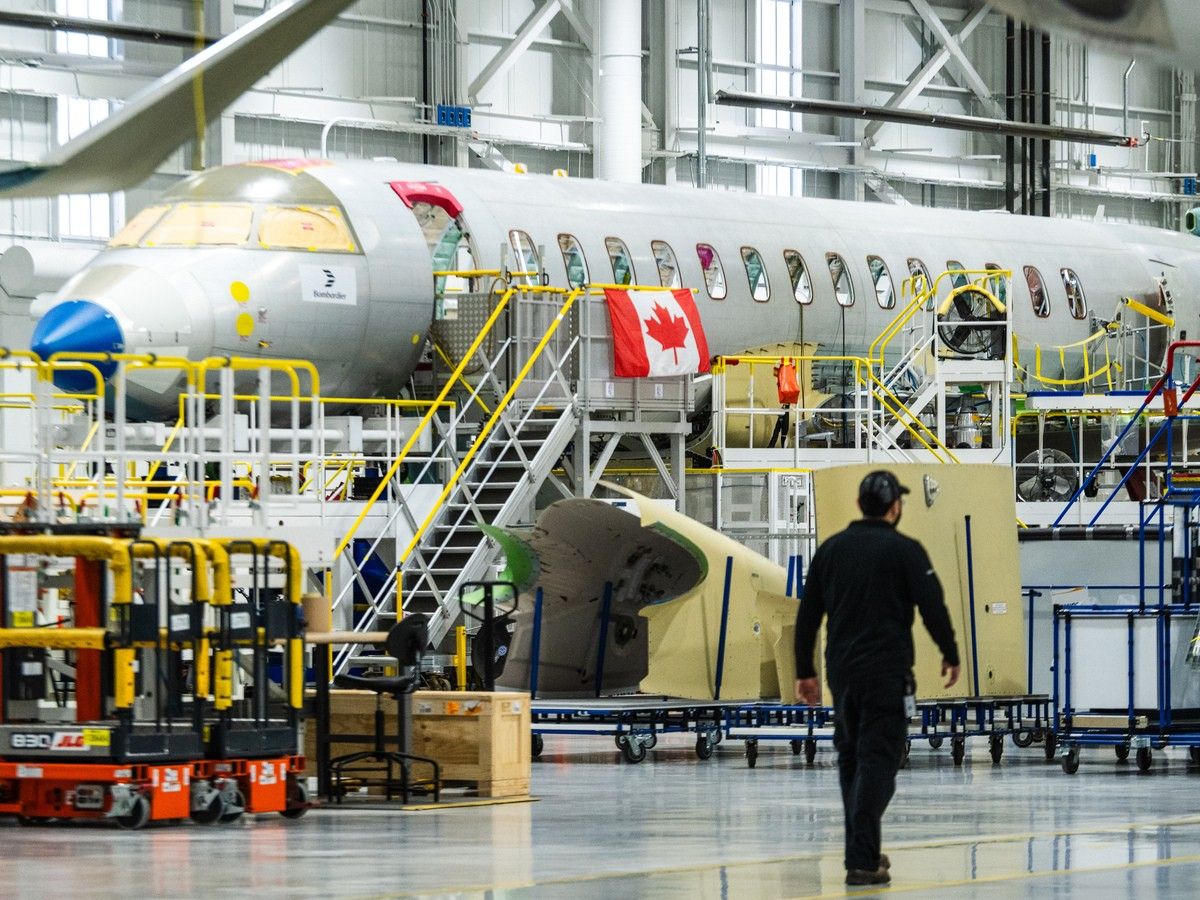
The effect on the auto-part supply chain Cars are made with tons — literal tons — of steel and aluminum, and with thousands of parts. asserted
Cars → make → parts
It depends on when you stop counting. asserted
you → depend → ?
Then there are sensors, an airbag, an instrument cluster with "lots of dials and things that move," Hearsch from AlixPartners says. asserted
Hearsch → be → AlixPartners
In that steering wheel system, he says, "There's probably 50 to 100 different parts coming from all over the world. asserted
he → say → world
Manufacturers occupy different tiers within the automotive supply chain. asserted
Manufacturers → occupy → chain
…and 14 more, not listed.
Give feedback · no sign-in needed

No sign-in needed for now. Your note is sent without a name, so it cannot be answered.

History Support