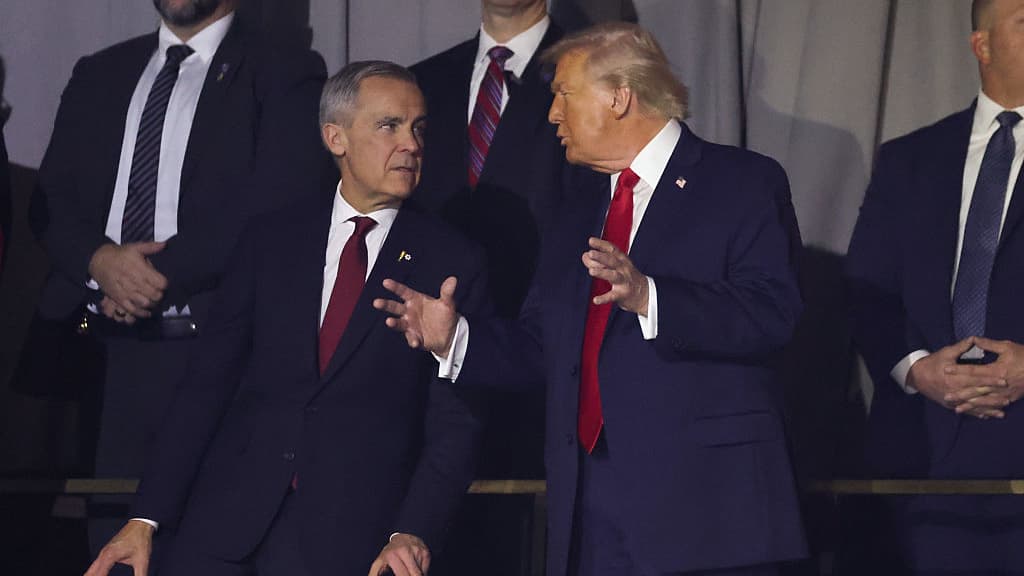
Photo via TIME

What the U.S. and Canada’s Trade War Could Mean for Prices

Read the original at TIME ↗
Cite

Lee, C. (2026, September 10). What the U.S. and Canada’s Trade War Could Mean for Prices. TIME. https://time.com/article/2026/09/09/us-canada-trade-war-tariffs-prices/

Dated when The Aporia collected the article, usually within hours of publication. Check the original for its exact date and byline.

TIME · collected 2026-09-10 · by Chantelle Lee

Quick Summary

The US and Canada are in a trade war with each other, imposing tariffs on about $20 billion worth of goods from one another's countries. The US has imposed 50% tariffs on certain Canadian imports, including dairy products, motorcycles, and alcoholic drinks, while Canada has retaliated with its own tariffs matching the US rates. Experts say that these tariffs will have a significant impact on consumers who import or export affected products, but only make up a small portion of the overall trade between the two countries. The tariffs are set to escalate further on September 29 when the US bars certain Canadian imports.
Written by AI on 2026-09-10, from this article's own text only (the story summary below draws on all the coverage).
See how they differ ↓

AI analysis

Story summary

As of September 4, 2026, a tentative trade deal between Canada and the U.S., aimed at avoiding damaging tit-for-tat tariffs, collapsed just hours before its deadline. This breakdown triggered President Donald Trump to impose new 50% tariffs on $28 billion worth of Canadian exports. Prime Minister Mark Carney responded by announcing Canada's intention to match these tariffs dollar for dollar to protect domestic workers and businesses. The escalating trade tensions have led to the U.S. Justice Department ordering a freeze on all antitrust work with Canada, exacerbating the economic conflict between the neighboring countries.

The dispute has also spurred a "Buy Canadian" movement among consumers who are actively seeking out locally made products over American alternatives as part of their show of solidarity amid the ongoing trade war. Additionally, retaliatory tariffs have been imposed on various goods including dairy, motorcycles, and alcoholic beverages, further complicating economic relations between the two nations. This conflict comes amidst broader political tensions highlighted by President Trump's repeated rhetoric about annexing Canada. Despite historic close ties, both countries face significant challenges in resolving their trade disputes amicably.

Written for “U.S.-Canada Trade War Escalates” on 2026-11-20, grounded in this article and the 53 other(s) covering the same event.

How they differ

20 outlets covered “U.S.-Canada Trade War Escalates”.

What each outlet says

One AI summary per outlet of its latest article on this story, written from that article alone and checked against it. Open the article for the outlet's own words.

TimeThis outlet10 Sep

The US and Canada are in a trade war with each other, imposing tariffs on about $20 billion worth of goods from one another's countries. The US has imposed 50% tariffs on certain Canadian imports, including dairy products, motorcycles, and alcoholic drinks, while Canada has retaliated with its own tariffs matching the US rates. Experts say that these tariffs will have a significant impact on consumers who import or…

What the U.S. and Canada’s Trade War Could Mean for Prices (this article)3 articles from Time on this story
National Post9 Sep

Finance Minister Bill Morneau's successor, Chrystia Freeland's replacement, and current Finance Minister is being referred to here but not directly quoted or named in the article as making any statements about Carney. The key numbers mentioned are 25% (tariff rate before change) and 35% (new tariff rate after Trump's executive order). This article takes an opinionated tone, with author Terry Newman arguing that…

Terry Newman: Carney’s ‘war’ is good for political incumbents, but bad for Canadians →13 articles from National Post on this story
CBC11 Sep

The article reports on the election promises of major parties in Quebec's 2026 election, specifically focusing on child care and family benefits. Coalition Avenir Québec is promising a back-to-school supplement of up to $250 per child, a tax credit for up to 75% of school-day child-care fees, and conversion of 10,000 private child-care spots into subsidized ones. The party estimates that over half a million children…

See what Quebec's major party leaders are promising during the election campaign →7 articles from CBC on this story
The Globe and Mail9 Sep

U.S. President Donald Trump has issued an executive order banning imports of Canadian alcohol, motorcycles, and some dairy products in response to Canada's countertariffs. The ban affects a broad range of alcoholic beverages, including beer sold in cans and bottles, rye whisky, and various types of wine. A recent poll by Nanos Research found that 80% of Canadians support or somewhat support dollar-for-dollar…

Morning Update: Adversity ahead →7 articles from The Globe and Mail on this story
Toronto Star6 Sep

Prime Minister Mark Carney announced that Canada's counter-tariffs will take effect on Tuesday on $28 billion worth of U.S. products, a response to the United States imposing tariffs on Canadian goods. Financial conference Scotiabank's global banking and markets financial summit starts on Wednesday, amid growing concerns about the Canadian economy due to the trade war with the US. Transat A.T. Inc., an airline…

Five things to watch for in the Canadian business world in the coming week →3 articles from Toronto Star on this story
Global News9 Sep

The escalating US-Canada trade dispute has taken center stage in Quebec's provincial election campaign, with major parties offering competing visions on how to protect jobs and businesses from tariffs. The CAQ leader, Christine Fréchette, unveiled measures aimed at shielding Quebec's economy, including prioritizing Quebec-made goods and changing the public procurement process to favor Canadian firms over US…

Trade war takes centre stage in Quebec election campaign →3 articles from Global News on this story
Show 12 more outlets
The Guardian8 Sep

Canada has imposed retaliatory tariffs on $20bn worth of US imports, effective at 12:01am on Tuesday, in response to US President Donald Trump's decision to impose a 50% tariff on Canadian goods. The targeted sectors include steel, dairy, appliances, and electronics, with tariffs ranging from 15% to 50%. Tensions between the two countries have intensified, with Trump criticizing Canada's trade practices and making…

Canada’s retaliatory US tariffs take effect as trade dispute grows →2 articles from The Guardian on this story
The Independent6 Sep

American tourism organizations are trying to woo back Canadian visitors who boycotted the US due to President Trump's comments about making Canada the 51st state and the ongoing trade war, which has resulted in import taxes of up to 50% on Canadian products. According to Statistics Canada, Canadian residents made 25 percent fewer return border crossings and spent $2.4 billion less on travel to the US last year…

The US wants to win Canadian visitors back, but tourists say ‘it’s a wasted effort’ →2 articles from The Independent on this story
Reason11 Sep

Canada has imposed a 50% tariff on aluminum ferrules used in pencil manufacturing as part of its retaliatory measures against US tariffs. This specific product was swept into the conflict because it is made of aluminum, which is subject to the same tariff under US Section 338 of the Tariff Act of 1930. The Canadian countermeasures match US tariffs dollar for dollar and rate for rate, resulting in a de facto 50% tax…

A 50% Tariff on Pencil Parts? Welcome to the U.S.-Canada Trade War. →2 articles from Reason on this story
Fox News5 Sep

The US Justice Department's antitrust division has been ordered by its chief, Lynda Marshall, to pause all work with the Canadian government amid intensifying trade tensions between the two countries. According to a report, officials were instructed to halt cooperation on cases and policy issues starting from Wednesday, but the DOJ disputes this claim, saying only that a meeting was delayed for preparation. The…

DOJ ordered to freeze antitrust work with Canada as trade tensions intensify →
ABC News (AU)6 Sep

Canadian Prime Minister Mark Carney ended comprehensive trade negotiations with the US two weeks ago, and Canadians are now bracing for potential economic consequences. Canada is already facing tariffs on key exports such as steel, lumber, and automobiles. According to a recent poll, three-quarters of Canadians approved of Carney's decision to walk away from trade talks. Trade consultant Kelly Ann Shaw notes that…

The US-Canada 'divorce' and the $1.2 trillion fallout →
The Free Press8 Sep

A columnist for This Week in Canada argues that Americans are unaware that Canada views them as enemies, citing recent surveys showing a significant shift in Canadian attitudes towards the US. According to a Leger survey, 41% of Canadians now see the US as an "enemy country", up from 26% since June 2025. A Politico poll found that nearly half of Canadians consider the US a bigger threat to world peace than Russia…

This Week in Canada: America Is Our Enemy and Doesn’t Even Know It →
BBC8 Sep

Canada has imposed retaliatory tariffs on US goods worth nearly C$28bn ($20bn; £15bn) as of Tuesday, in response to the ongoing trade tensions between the two countries. The counter-tariffs, which range from 15% to 50%, affect hundreds of American products, including steel, furniture, and clothing. Despite both sides expressing a desire for a deal, US Trade Representative Jamieson Greer suggests that Canada is…

Canada braces for prolonged trade war as counter-tariffs on US take effect →
ABC News (US)9 Sep

President Donald Trump has issued proclamations to ban certain Canadian goods, including alcohol and dairy products, from entering the US starting September 29. The banned items include sparkling grape wine, whey protein, and non-alcoholic beer, among others. A total of 50% tariff will also be imposed on additional goods, such as golf carts and bamboo furniture. Trump's move comes in response to Canada's retaliatory…

Trump ratchets up trade war, moves to ban many Canadian goods from entering US →
Semafor9 Sep

A senior Trump administration official said that despite escalating tensions, the countries will try to negotiate an offramp from their trade dispute. The US has imposed new tariffs on Canadian goods after Canada retaliated with its own tariffs, further escalating the trade war between the two nations. A key North American trade pact, the USMCA, is now likely to be renewed, as it faces opposition due to the ongoing…

US-Canada trade war escalates amid tit-for-tat tariffs →
Al Jazeera9 Sep

Al Jazeera's Yasmeen ElTahan reports on the ongoing US-Canada trade war from an explanatory angle. The article doesn't provide specific numbers or a concrete timeline, but it appears to be ongoing. The trade war is affecting various products, including toilet paper, which has become unexpectedly entangled in the dispute.

The losers of the US-Canada trade war →
Los Angeles Times9 Sep

A trade war between the US and Canada has escalated as Ottawa's retaliatory tariffs on American goods took effect, imposing duties of up to 50% on over $20 billion in U.S. imports. President Trump had previously imposed tariffs on Canadian exports, prompting a breakdown in trade talks between the two countries. In response to the new tariffs, Trump threatened to remove access for Canadian businesses to key American…

Canada's tariffs go into effect, spotlighting soured relations with U.S. →
NPR11 Sep

The US-Canada trade war is causing headaches for auto-parts makers due to tariffs on aluminum and steel, which have been enacted by both countries since August and January respectively. Canada has imposed retaliatory tariffs on various US goods, including steel and aluminum, adding to the uncertainty faced by major carmakers. According to analysts, the smaller businesses that supply big companies with thousands of…

The U.S.-Canada trade war is creating a headache for auto-parts makers →

Compared with similar articles

This article reads unscored and hedges 15% of its claims. Each row says how that neighbour differs.
The Globe and Mail
Leans strongly right Hedges 3 of 28 claims Outlet record 51/100
Toronto Star
Hedges 0 of 11 claims Outlet record 64/100
The Globe and Mail
Leans left Hedges 3 of 34 claims Outlet record 51/100
National Post
Hedges 8 of 25 claims Outlet record 60/100
Global News
Hedges 2 of 19 claims Outlet record 63/100
Retaliation Same event
Reason
Hedges 3 of 43 claims Outlet record 67/100
The Guardian
Hedges 1 of 52 claims Outlet record 64/100
BBC News
Hedges 2 of 31 claims Outlet record 65/100
The Guardian
Hedges 1 of 19 claims Outlet record 64/100
Semafor
Leans right Hedges 0 of 4 claims Outlet record 64/100

Story

U.S.-Canada Trade War Escalates
Economy/Business · 54 article(s) covering the same event. See how they differ ↑
How this article was measured signals, leaning charts, publisher record, byline, topics and claims

Signals How these are calculated →

Claims extracted
41
sentences that state something as happening or true
Uncertain
15%
6 of 41 hedged ("reportedly", "may", "according to")
Leaning
withheld
no quote in the article backed the model's score
Publisher signals
60/100
TIME's corrections and hedging, across everything collected from it. Not a measure of accuracy.
Outlets on this story
54
Economy/Business
Same framing elsewhere
1
articles that frame the event the way this one does
Analyzed 2026-09-10 · how these are computed

How this is being covered How these are calculated →

Article leaning vs. publisher reliability
Source leaning vs. consistency

Publisher

TIME · 1067 article(s) · 2 correction(s) detected
Running correction rate · 2 correction(s)

Who wrote this

Chantelle Lee
38 article(s) here · 1 carrying a prediction
Last week, Leonard shared a video on his social media account, in which he claimed that senior members of the party told him his life would become a “living hell” if he didn’t back Jeffries.
Nearly 6 million people are expected to fly within the U.S. over the Thanksgiving holiday, just a little more than a week after a telecommunications issue prompted the Federal Aviation Administration (FAA) to order a nationwide ground stop that continued to disrupt flights around the country even days after it ended.
The ongoing delays and cancellations come ahead of an anticipated Thanksgiving travel rush next week, when AAA has projected that nearly 6 million people will travel by air in the U.S.
Democrats’ sweeping wins in the midterm elections have dealt a devastating blow to President Donald Trump, and could spell trouble for the speculated presidential ambitions of his second-in-command, Vice President J.D. Vance, as the contest to succeed Trump on the Republican ticket and in the Oval Office looms.
New York City Mayor Zohran Mamdani said in a statement on social media Thursday morning that at least 17 other people were injured, including three firefighters.
Former President Joe Biden said in a recent interview that he wasn’t aware that he had cancer when he was in the White House—but that if he had known, he would have stepped down.
“There’s a Forbes’ story that said that your net worth—maybe it’s changed with the stock market recently—but your net worth went up by $3 billion since you—” “60 Minutes” correspondent Ross Douthat asked Trump during the interview.
Now, all three will be sending Democrats to the upper chamber, shattering decades of Republican dominance in the deep-red states.
Democratic socialists will soon be running three major U.S. cities, now that progressive Nithya Raman has defeated Los Angeles’ incumbent mayor.
It’s a stunning nail-biter of a race that, in the weeks leading up to Election Day, polls had suggested would likely be won by the Republican incumbent by a narrow margin.
2026-11-05 · assertive framing · How the Mississippi Senate Race Became a Nail-Biter
Also by Chantelle Lee
Nothing else under this byline is closely related to this article, so these are simply their most recent.
All 38 articles by Chantelle Lee →

Topics

American Canada Canadian U.S. the Trump Administration

Subjects

U.S. GPE · 13× Canadian NORP · 9× Canada GPE · 7× American NORP · 4× Canadians NORP · 4× Carney PERSON · 3× the Trump Administration ORG · 3× Donald Trump PERSON · 1× Mark Carney PERSON · 1× Trump PERSON · 1×

Narrative

A poll by the Canadian nonprofit Angus Reid Institute found that nearly 70% of Canadians felt that Carney showed “strength” by rejecting a “bad” trade deal with the U.S. “My concern,” Morrow says, “is that people will go down this path of what they perceive as demonstrating strength, when in fact people are lowering their own living standards in what is an affordability crisis in both countries.”
framing: assertive · carried by 1 article(s) · first seen 2026-09-10
Retaliatory Canadian tariffs on about $20 billion worth of American products, which Prime Minister Mark Carney said his government would enact after trade talks between the two countries broke down last month, went into effect on Tuesday.
2026-09-10 · TIME
What the U.S. and Canada’s Trade War Could Mean for Prices · assertive framing

Claims (41 extracted, 6 hedged)

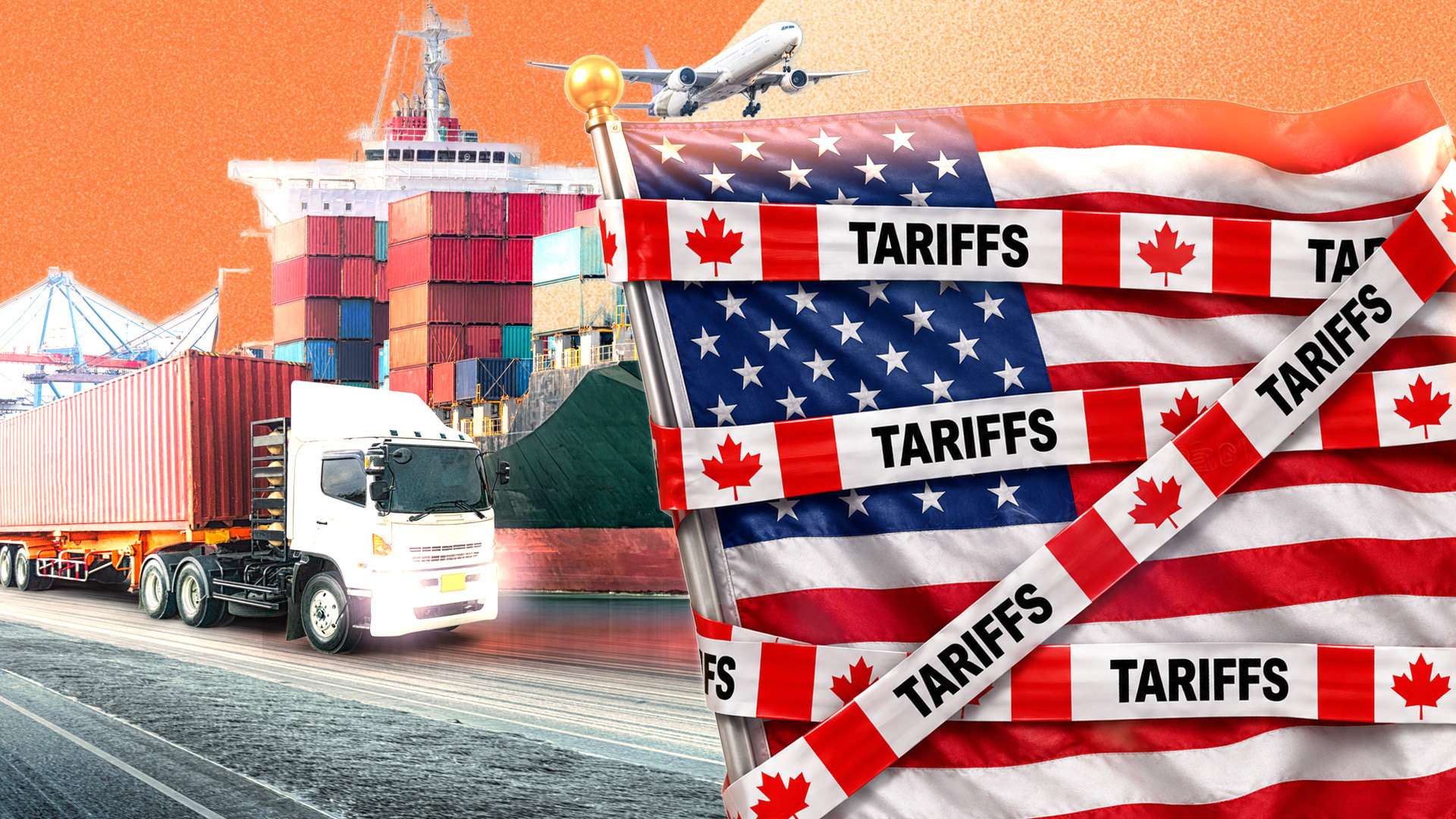
A slew of goods moving between the U.S. and Canada are being hit by sweeping tariffs as the trade war between the allied nations intensifies, threatening to raise prices for consumers on both sides of the border. asserted
war → move → border
Retaliatory Canadian tariffs on about $20 billion worth of American products, which Prime Minister Mark Carney said his government would enact after trade talks between the two countries broke down last month, went into effect on Tuesday. asserted
talks → say → Tuesday
The new tariffs are intended to match “dollar for dollar, rate for rate” the ones that U.S. President Donald Trump’s Administration has levied on Canadian imports. asserted
Administration → intend → imports
The U.S. imposed 50% tariffs on roughly $20 billion worth of Canadian goods that went into effect the day after negotiations collapsed in August. asserted
negotiations → impose → August
The trade war is set to further escalate later this month: the Trump Administration said on Tuesday that it will bar the import of certain dairy products, motorcycles, and alcoholic drinks from Canada, starting on Sept. 29. asserted
it → set → Sept.
The announcement comes after several Canadian provinces prohibited American alcoholic beverages from being sold last year. asserted
provinces → come → beverages
There is no clear resolution to the conflict on the horizon, and both Trump and Carney are standing their ground. asserted
Trump → be → ground
Here’s how the tariffs—on both sides—could affect consumers amid the ongoing rift. uncertain
tariffs → affect → rift
What products will be impacted by the U.S. and Canadian tariffs? asserted
products → impact → tariffs
The Trump Administration has levied tariffs on a wide range of Canadian products imported into the U.S., including from the dairy and alcohol industries. asserted
Administration → levy → industries
In response, Canada fired back with counter tariffs impacting products such as dairy and steel. asserted
Canada → fire → dairy
Experts point out, though, that the goods being affected by the tit-for-tat tariffs make up a small portion of the overall trade between the two countries. asserted
goods → point → countries
The U.S. tariffs, for instance, are impacting about 5% of the nearly $382 billion worth of goods that Canada exported to the U.S. last year, while the Canada tariffs are affecting about 6% of the more than $330 billion worth of goods that the U.S. exported to its northern neighbor in 2025. asserted
U.S. → impact → 2025
“The current amount of trade isn’t all that large,” says Kimberly Clausing, the Eric M. Zolt Chair in Tax Law and Policy at the University of California, Los Angeles School of Law and former lead economist in the Biden Administration’s Office of Tax Policy. asserted
Clausing → say → Policy
“The impact will be significant, certainly to those who are trying to sell products, but it won’t be as enormous as if this gets more out of hand. asserted
this → try → hand
” How will the tariffs impact American and Canadian consumers? asserted
tariffs → impact → consumers
Tariffs are a tax on imported goods that is paid for by the importer. asserted
that → import → importer
But that cost can ultimately get passed on to the consumer through higher prices. asserted
cost → pass → prices
For instance, if the U.S. levies tariffs on milk imported from Canada, then American consumers could see the price of Canadian milk go up on grocery store shelves—and vice versa for Canada’s tariffs on milk imported from the U.S. “We’re actually kind of taxing ourselves when we put on the tariffs, and the Canadians are taxing themselves in response,” Clausing says. uncertain
Clausing → levy → response
“So it’s the actions of the Trump Administration that are raising costs for U.S. consumers. asserted
that → ’ → consumers
The actions of the Carney administration are not; they’re hurting Canadian consumers.” Despite that, there is strong support among Canadians for the retaliatory tariffs levied on U.S. goods. asserted
they → hurt → goods
A recent Ipsos poll conducted for Global News found that more than 70% of Canadians said they backed the Carney government’s move to enact counter tariffs on U.S. imports, and more than 60% said they agreed with the decision to walk away from the negotiation table “even if it meant higher costs and job losses.” asserted
it → conduct → costs
By contrast, a majority of Americans—nearly 60%—said they opposed the U.S. implementing additional tariffs on Canada, according to the findings of an Ipsos poll. uncertain
U.S. → oppose → poll
Peter Morrow, a professor in the economics department at the University of Toronto, says one explanation for the support amongst Canadians for the tariffs could be that politicians often portray the levy as a “signal of strength,” rather than focusing on the economic impact that tariffs can have on consumers. uncertain
tariffs → say → consumers
A poll by the Canadian nonprofit Angus Reid Institute found that nearly 70% of Canadians felt that Carney showed “strength” by rejecting a “bad” trade deal with the U.S. “My concern,” Morrow says, “is that people will go down this path of what they perceive as demonstrating strength, when in fact people are lowering their own living standards in what is an affordability crisis in both countries.” asserted
what → find → countries
Clausing contends that Carney is “immensely popular” with his constituents because he’s pushed back against recent comments Trump has made threatening Canadian sovereignty, which have angered many Canadians. asserted
which → contend → Canadians
While Trump’s approval rating has remained low in the weeks since the trade war with Canada began, Carney’s has increased, with 53% of Canadians holding a positive view of their Prime Minister, according to data shared by the polling firm Abacus Data. uncertain
% → remain → firm
“Even though the retaliatory tariffs will ultimately hurt them, I think the Canadians are willing to withstand a fair amount of pain, in part because they view the stakes as very large,” Clausing says. asserted
Clausing → hurt → stakes
“In contrast, I don’t think Americans have a beef with Canada … so I don’t think the American consumers are going to be as willing to endure pain.” asserted
consumers → think → pain
Tensions continue to rise between the U.S. and Canada Tensions between the U.S. and Canada have continued to escalate in recent weeks. asserted
Tensions → continue → weeks
On Aug. 27, Trump signed an Executive Order that instructed his Interior Secretary to rename Lake Ontario to “Lake America”—an action that infuriated Canadians and that many politicians in both countries rejected. asserted
politicians → sign → countries
Over the weekend, Trump shared an illustration on Truth Social of himself and Carney wearing hockey gear, in which Carney is on the ground and Trump is depicted as saying, “Get up, governor.” asserted
Trump → share → ground
Trump has referred to Carney as the “governor of Canada” in the past—rhetoric that seemingly undermines Canadian sovereignty, similar to the times when Trump has called Canada the “51st state.” asserted
Trump → refer → Canada
Clausing says she worries that the tension between the two countries will continue to damage their economic relationship, and could lead to the conflict spiraling and impacting even more industries. uncertain
conflict → say → industries
“I think one feature of the U.S.-Canada trade war so far has been that the rhetoric has been larger than the impact,” Clausing says. asserted
Clausing → think → impact
“So far, the damage has been limited, but it’s still real. asserted
it → limit → ?
I think even the rhetoric around this trade war has really diminished Canadian interest in doing business with the United States.” asserted
rhetoric → think → States
“It’s difficult to overstate how upset Canadian people and businesses are by this situation and by these threats to their sovereignty,” she continues. asserted
she → ’ → sovereignty
Morrow says he’s concerned that the rising tensions between the two countries make it seem likely that they are “inching towards a scenario of escalation.” asserted
they → say → escalation
“At some point, there’s going to have to be an offer—there’s going to have to be an off-ramp,” Morrow says. asserted
Morrow → go → point
…and 1 more, not listed.
Give feedback · no sign-in needed

No sign-in needed for now. Your note is sent without a name, so it cannot be answered.

History Support