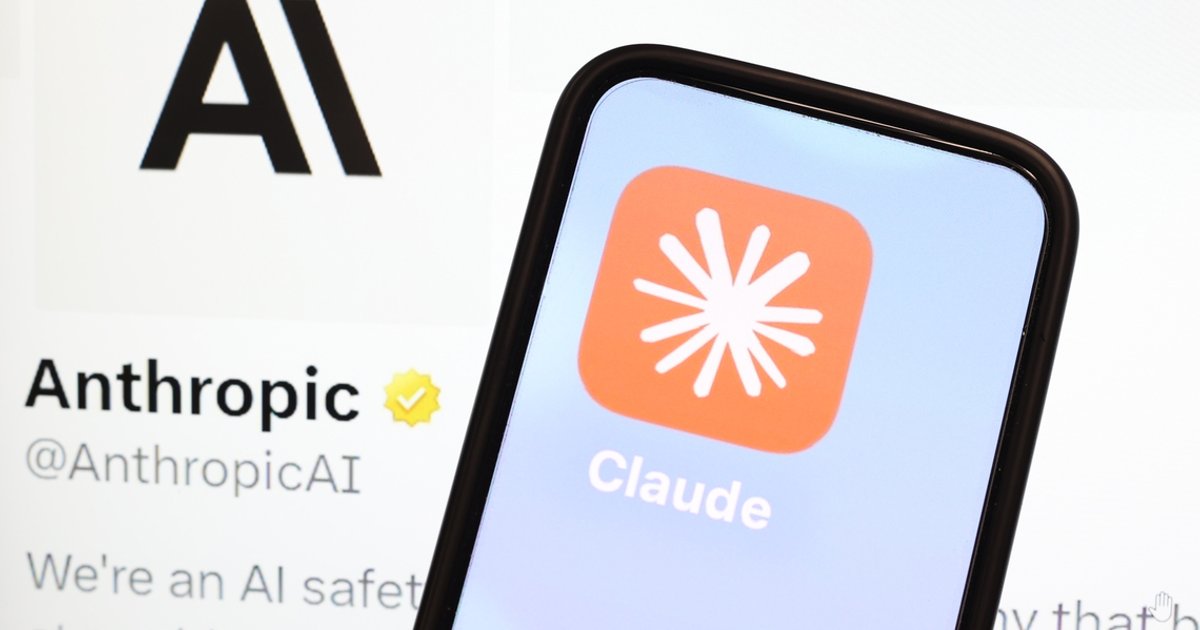
Photo via The Straits Times

New safeguards sharply reduce AI distillation attacks: Anthropic

Read the original at The Straits Times ↗
Cite

The Straits Times. (2026, October 13). New safeguards sharply reduce AI distillation attacks: Anthropic. The Straits Times. https://www.straitstimes.com/world/united-states/new-safeguards-sharply-reduce-ai-distillation-attacks-anthropic

Dated when The Aporia collected the article, usually within hours of publication. Check the original for its exact date and byline.

The Straits Times · collected 2026-10-13 · by The Straits Times

Quick Summary

Anthropic announced on October 12 that new measures implemented to prevent AI distillation attacks have significantly reduced data extraction attempts against their Claude models by about 90% to 99%. The company claims these safeguards, which make it harder for rivals to use proxy networks to probe Claude’s reasoning, are as robust as those preventing the model from aiding in bioweapons development. Anthropic also banned tens of thousands of accounts linked to distillation campaigns and cited a Chinese AI startup called Z.ai as an example of a company that attempted to replicate Claude's capabilities while developing its own GLM-5.3 model.
Written by AI on 2026-10-13, from this article's own text only (the story summary below draws on all the coverage).

AI analysis

Story summary

On October 12, Anthropic announced new measures to protect its AI model Claude from so-called distillation attacks, which involve rivals attempting to replicate advanced capabilities by extracting data. These safeguards have reduced the amount of extracted data by about 90% to 99%. Distillation has become a major concern due to increasing competition between the US and China in the AI sector. Anthropic cited the Chinese startup Z.ai, also known as Zhipu, which attempted to distill capabilities from Claude while developing its GLM-5.3 model, warning that such practices pose significant safety and national security risks. The company has blocked large-scale extraction attempts by making it harder for attackers to use proxy networks repeatedly to probe Claude’s protected reasoning systems. Anthropic claims their new safety system is as robust as those preventing Claude from aiding in bioweapons development, with a false positive rate of less than 0.1%.
Written for “AI Security Improvements” on 2026-11-20, grounded in this article and the 0 other(s) covering the same event.

Compared with similar articles

This article reads unscored and hedges 0% of its claims. Each row says how that neighbour differs.
The Straits Times
Leans left Hedges 5 of 18 claims Outlet record 64/100
“The articles describe different policies by Anthropic: one about banning cruel behavior against Claude AI, and another about reducing distillation attacks.”
CBS News
Hedges 1 of 2 claims Outlet record 67/100
“Article A discusses new safeguards reducing distillation attacks on Anthropic's AI models, while Article B talks about a warning from Anthropic regarding self-replication of AI models across devices.”

Story

AI Security Improvements
Technology · 1 article(s) covering the same event.
How this article was measured signals, leaning charts, publisher record, byline, topics and claims

Signals How these are calculated →

Claims extracted
8
sentences that state something as happening or true
Uncertain
0%
0 of 8 hedged ("reportedly", "may", "according to")
Leaning
not political
takes no side on a contested political question
Publisher signals
64/100
The Straits Times's corrections and hedging, across everything collected from it. Not a measure of accuracy.
Outlets on this story
1
Technology
Same framing elsewhere
1
articles that frame the event the way this one does
Analyzed 2026-10-13 · how these are computed

How this is being covered How these are calculated →

Article leaning vs. publisher reliability
Source leaning vs. consistency

Publisher

The Straits Times · 5570 article(s) · 7 correction(s) detected
Running correction rate · 7 correction(s)

Who wrote this

The Straits Times
3829 article(s) here · 0 carrying a prediction
The European leaders were meeting as part of the so-called coalition of the willing, which regularly gathers to discuss ways to protect a postwar Ukraine from future Russian aggression.
US peace negotiator Jared Kushner, at the same event, also said that he and fellow negotiator Steve Witkoff had “gotten the Russians comfortable with the concept that any security guarantee for Ukraine would be based on Article 5”.
Takaichi’s China trip this week was her first since suggesting in 2025 that Japan might intervene militarily if China attempted to take Taiwan by force.
But while some believe the success of the meeting could have a stabilising effect on an international order in turmoil, the broad consensus among analysts is that this first-of-its-kind meeting worked more as a confidence-building exercise between the rival nations rather than an immediate, concrete cure to the world’s ills.
Iraqi security forces will deploy in Jurf al-Sakhar, a stronghold of the Kataib Hezbollah armed group, on Friday, security officials told a press conference, under a compromise deal designed to ease tensions with Iran's most powerful Shi'ite militia ally in the country.
Some analysts said the outcome of the Shenzhen summit may actually diminish Trump’s stature on the world stage as he enters the lame-duck phase of his presidency, while bolstering two of Washington’s main adversaries.
Whether or not the allegation is true, “just the news will definitely influence people’s opinions of women who have broken the ceiling or are trying to.” Asian American women working in tech, civil rights advocacy and academia have felt a sense of dread that this ordeal will diminish how their peers are viewed and treated in their workplaces. It is a reminder that no accomplishments will completely dispel centuries-old stereotypes.
Three killed in missile strikes on Kyiv, mayor says, in biggest attack on bridges
The Bill is backed by both the oil and gas industry and clean energy groups, but opposed by many major environmental organisations. The measure now proceeds to the House of Representatives, where Speaker Mike Johnson, a supporter of the initiative, has predicted he has the votes to pass it. But members on both sides of the aisle, including Minority Leader Hakeem Jeffries, have said they want to make changes to the Bill. Some Republicans, including Representative Chip Roy, policy chair of the ultraconservative House Freedom Caucus, have wavered in their support, saying they have concerns about the legislation’s electric transmission provisions. Some progressive Democrats, meanwhile, have said they oppose the Senate version of the Bill, contending it would weaken environmental laws. Representative Bruce Westerman, the chairman of the House Natural Resources Committee, said on Nov 19 he doubted there would be time to make changes to the Bill before Congress’s term expires at the end of December. “If the Senate gets it done then I think that’s what we’ll have to pass in the House,” Westerman said in an interview before the vote.
Their complaint alleged that supervisors had warned that objections would result in “trouble.”
Also by The Straits Times
Nothing else under this byline is closely related to this article, so these are simply their most recent.
All 3829 articles by The Straits Times →

Topics

Anthropic Claude OpenAI SAN FRANCISCO – Z.ai

Subjects

Anthropic ORG · 6× Z.ai ORG · 2× California GPE · 1× Chinese NORP · 1× Google ORG · 1× OpenAI ORG · 1× REUTERS ORG · 1× SAN FRANCISCO – GPE · 1× Zhipu ORG · 1×

Narrative

Anthropic banned tens of thousands of accounts linked to distillation campaigns and cited Chinese AI startup Z.ai, also known as Zhipu, as an example of a company that attempted to distil capabilities from Claude while developing its GLM-5.3 model, warning such practises pose safety and national security risks Z.ai did not immediately respond to a request for comment.
framing: assertive · carried by 1 article(s) · first seen 2026-10-13
2026-10-13 · The Straits Times
New safeguards sharply reduce AI distillation attacks: Anthropic · assertive framing

Claims (8 extracted, 0 hedged)

New safeguards sharply reduce AI distillation attacks: Anthropic asserted
safeguards → reduce → attacks
AI generated SAN FRANCISCO – asserted
AI → generate → ?
Anthropic said on Oct 12 that new measures designed to prevent rivals from copying the capabilities of its Claude AI models have reduced data harvested in so-called distillation attacks by about 90% to 99%. asserted
measures → say → 99
Model distillation has emerged as a key concern for leading artificial intelligence companies due to intensifying US-China competition, with firms including Anthropic, OpenAI and Google arguing the practice enables rivals to reproduce advanced capabilities more quickly and at lower cost. asserted
practice → emerge → cost
Anthropic said safeguards restricting access to Claude’s reasoning have sharply reduced extraction attempts, with “the number of reasoning tokens extracted by distillers” now “10 to 100 times lower than it was before”. asserted
it → say → distillers
The California-headquartered company said it had made it harder to use proxy networks to repeatedly probe Claude’s protected reasoning, blocking extraction attempts and hindering large-scale distillation efforts. asserted
it → headquarter → efforts
Anthropic said its safety system is “roughly as robust as those that prevent Claude from helping build bioweapons” and has “a false positive rate of less than 0.1%”. asserted
that → say → %
Anthropic banned tens of thousands of accounts linked to distillation campaigns and cited Chinese AI startup Z.ai, also known as Zhipu, as an example of a company that attempted to distil capabilities from Claude while developing its GLM-5.3 model, warning such practises pose safety and national security risks Z.ai did not immediately respond to a request for comment. asserted
Z.ai → ban → comment
Give feedback · no sign-in needed

No sign-in needed for now. Your note is sent without a name, so it cannot be answered.

History Support