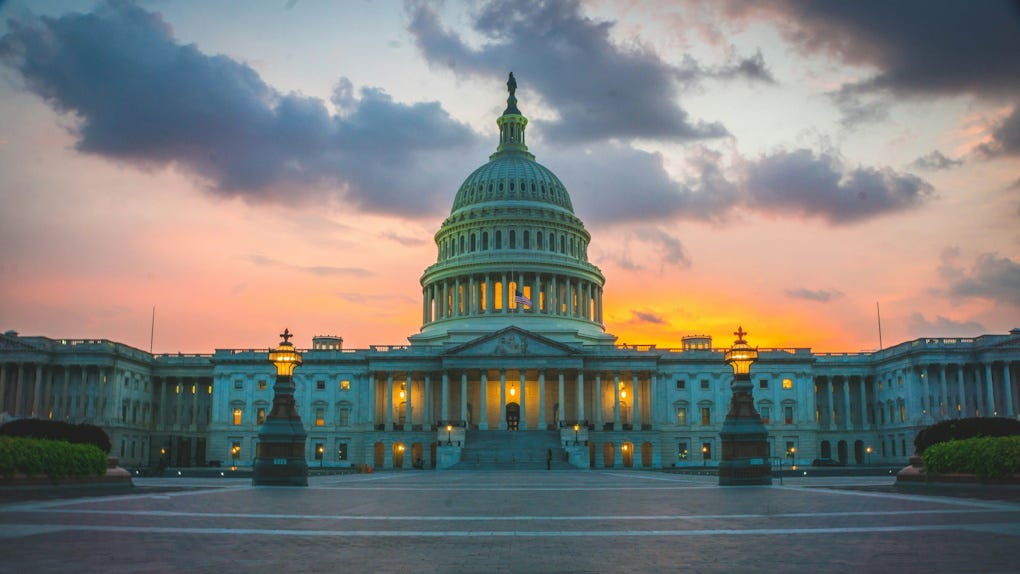
Photo via Noahpinion

A Nobel for New Keynesian macro, at last!

Read the original at Noahpinion ↗
Cite

Smith, N. (2026, October 13). A Nobel for New Keynesian macro, at last! Noahpinion. https://www.noahpinion.blog/p/a-nobel-for-new-keynesian-macro-at

Dated when The Aporia collected the article, usually within hours of publication. Check the original for its exact date and byline.

Noahpinion · collected 2026-10-13 · by Noah Smith commentary

Quick Summary

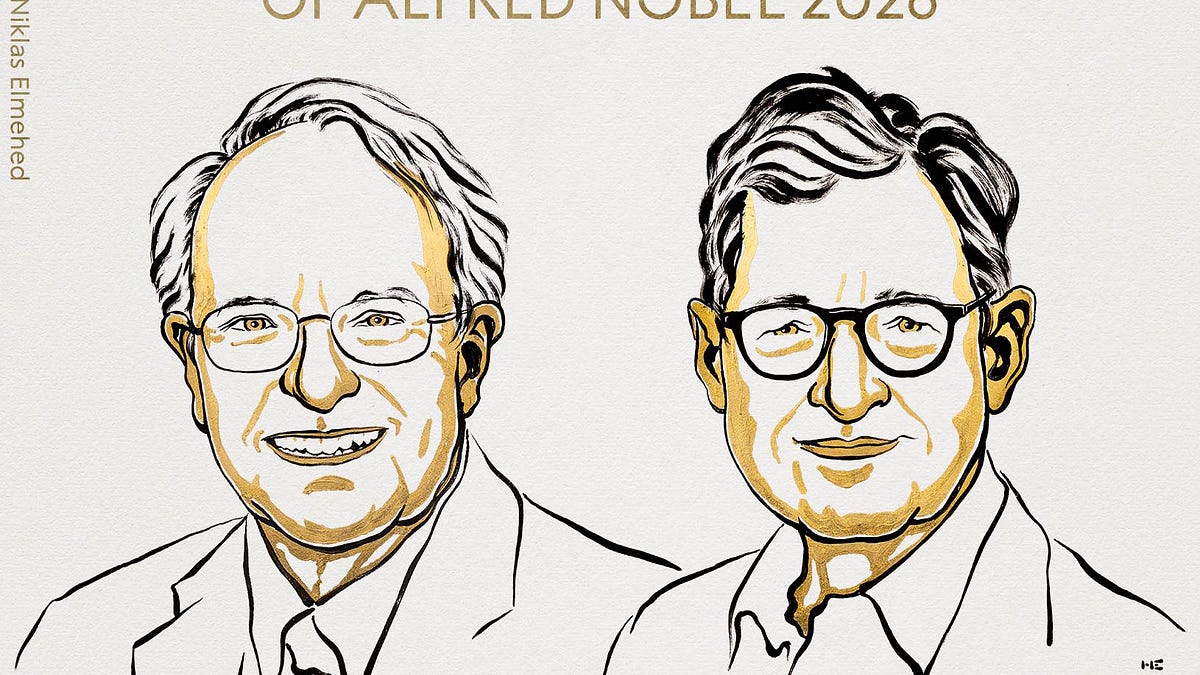
The article discusses the awarding of the Nobel Prize in Economics to Bob Hall and Michael Woodford for their contributions to New Keynesian macroeconomics, a field that explains how economic policies affect inflation and employment through microeconomic foundations. The author notes this recognition was long overdue and provides context on the historical development of modern macroeconomics, highlighting the shift from aggregate relationships between economic indicators to models based on individual behavior and expectations.
Written by AI on 2026-10-13, from this article's own text only (the story summary below draws on all the coverage).
See how they differ ↓

AI analysis

Story summary

Robert Hall from Stanford University and Michael Woodford from Columbia University have been awarded the 2026 Nobel Prize in Economics "for microeconomic foundations of macroeconomic stabilisation," announced by the Royal Swedish Academy of Sciences on October 12, 2026. The prize recognizes their work on developing new models that improve policymakers' ability to manage economic shocks and reduce peaks and troughs in economies. Each laureate received $1.2 million (12 million Swedish crowns), making it the final Nobel Prize for this year. Hall’s affiliation with Stanford University, California, and Woodford's connection to Columbia University, New York, underscores their contributions to economic theory and practice globally. The award highlights the advancement of stabilisation policies over traditional models that struggled during historical crises like the 1970s oil shock.

Written for “Nobel Economics Prize 2026” on 2026-11-20, grounded in this article and the 10 other(s) covering the same event.

How they differ

10 outlets covered “Nobel Economics Prize 2026”.

What each outlet says

One AI summary per outlet of its latest article on this story, written from that article alone and checked against it. Open the article for the outlet's own words.

NoahpinionThis outlet13 Oct

The article discusses the awarding of the Nobel Prize in Economics to Bob Hall and Michael Woodford for their contributions to New Keynesian macroeconomics, a field that explains how economic policies affect inflation and employment through microeconomic foundations. The author notes this recognition was long overdue and provides context on the historical development of modern macroeconomics, highlighting the shift…

A Nobel for New Keynesian macro, at last! (this article)
Toronto Star12 Oct

This year’s Nobel Prize winners were announced across various categories including medicine, physics, chemistry, literature, and peace. In medicine, three scientists received recognition for their work on optogenetics. The physics prize went to Francis Halzen for his contributions to detecting neutrinos in Antarctica. Chemists Henri B. Kagan and Kenso Soai won for their research on molecular mirror images. Anne…

A list of this year’s Nobel Prize winners →2 articles from Toronto Star on this story
South China Morning Post12 Oct

Robert Hall and Michael Woodford have been awarded the 2026 Nobel Prize in Economics for their work on "microeconomic foundations of macroeconomic stabilisation." Both economists are affiliated with US universities: Hall with Stanford University in California, and Woodford with Columbia University in New York. The award announcement was made by the Royal Swedish Academy of Sciences in Stockholm, Sweden.

⁠Robert ⁠Hall, Michael Woodford win 2026 Nobel Prize in economics →
The Hindu12 Oct

Robert E. Hall and Michael Woodford were awarded the Economics Nobel on October 12, 2026, for their work on microeconomic foundations of macroeconomic stabilization. The Royal Swedish Academy highlighted their development of new models that enhance the effectiveness of fiscal and monetary policy measures. Each laureate receives a prize worth approximately $1.2 million.

Americans Robert E. Hall, Michael Woodford win Economics Nobel 2026 →
The Straits Times12 Oct

Robert Hall and Michael Woodford from the United States received the 2026 Nobel economics prize for their contributions to macroeconomic stabilization through microeconomic foundations. They developed models that enhance fiscal and monetary policy effectiveness in mitigating economic fluctuations. The award, valued at 12 million Swedish crowns ($1.2 million), recognizes the practical applications of their theories…

Americans Hall and Woodford win Nobel economics prize for work on stabilisation →
Show 4 more outlets
CBS News12 Oct

American economists Robert E. Hall and Michael Woodford received the Nobel memorial prize in economics on Monday for their work developing models that aid governments and central banks in managing economic shocks. The Royal Swedish Academy of Sciences awarded them for providing a theoretical foundation for stabilization measures during economic crises. Each laureate will receive 12 million Swedish kronor, equivalent…

Nobel prize in economics goes to 2 Americans →
The Independent12 Oct

Robert E. Hall and Michael Woodford were awarded the Nobel memorial prize in economics for developing models that help governments and central banks manage economic shocks such as energy crises and inflation. The Royal Swedish Academy of Sciences announced their win, citing their work's significant impact on economic policies during recent global crises. Both economists are associated with prestigious U.S…

Meet Robert E. Hall and Michael Woodford: The Nobel Prize-winning economists →
Al Jazeera12 Oct

Robert Hall and Michael Woodford received the 2026 Nobel Prize in Economic Sciences for their work on macroeconomic models that help stabilize economic fluctuations through effective fiscal and monetary policies. Announced by the Royal Swedish Academy of Sciences, their research provides a theoretical foundation for central banks and governments to better manage shocks like energy crises or sudden changes in…

Nobel economics prize awarded to Robert Hall and Michael ⁠Woodford →
The Guardian12 Oct

Robert Hall and Michael Woodford have been awarded the 2026 Nobel Prize in economics for their work on New Keynesian models, which help central bankers manage economic crises more effectively. The prize recognizes their development of microeconomic foundations that improve upon traditional macroeconomic stabilization methods, providing tools to better predict and mitigate recessions and inflation. Awarded by the…

Nobel Prize for economics awarded to Hall and Woodford for work on ‘smoothing’ crises →

Where they agree and split

Framing

How the first headlines put it

  • Headlines vary in focus, with some emphasizing the winners' names and others highlighting their work on economic stabilisation.2347
Stated as fact9
The headlines (9)

Nobel memorial prize in economics to be awarded in Stockholm Toronto Star · stated as fact

⁠Robert ⁠Hall, Michael Woodford win 2026 Nobel Prize in economics South China Morning Post · stated as fact

Americans Robert E. Hall, Michael Woodford win Economics Nobel 2026 The Hindu · stated as fact

Two Americans win Nobel Prize in Economics for work on boom-bust cycles NPR · stated as fact

Americans Hall and Woodford win Nobel economics prize for work on stabilisation The Straits Times · stated as fact

Nobel prize in economics goes to 2 Americans CBS News · stated as fact

Meet Robert E. Hall and Michael Woodford: The Nobel Prize-winning economists The Independent · stated as fact

Nobel economics prize awarded to Robert Hall and Michael ⁠Woodford Al Jazeera · stated as fact

Nobel Prize for economics awarded to Hall and Woodford for work on ‘smoothing’ crises The Guardian · stated as fact

The full story: what happened, how it changed, and all 11 articles →

Compared with similar articles

This article reads unscored and hedges 9% of its claims. Each row says how that neighbour differs.
The Hindu
Hedges 0 of 15 claims Outlet record 78/100
The Guardian
Hedges 1 of 22 claims Outlet record 64/100
NPR
Hedges 0 of 2 claims Outlet record 60/100
The Hindu
Leans left Hedges 5 of 58 claims Outlet record 78/100
“While both articles discuss Bob Hall and Mike Woodford receiving the Nobel Prize in Economics, Article A focuses on the award announcement as a milestone for New Keynesian macroeconomics, while Article B provides a broader context of the significance within economic theory over time.”

Story

Nobel Economics Prize 2026
Economy/Business · 11 article(s) covering the same event. Compare every outlet's account →
How this article was measured signals, leaning charts, publisher record, byline, topics and claims

Signals How these are calculated →

Claims extracted
133
sentences that state something as happening or true
Uncertain
9%
12 of 133 hedged ("reportedly", "may", "according to")
Leaning
not political
takes no side on a contested political question
Publisher signals
not measured
these signals count newsroom corrections; Commentary has none to count
Outlets on this story
11
Economy/Business
Same framing elsewhere
1
articles that frame the event the way this one does
Analyzed 2026-10-13 · how these are computed

How this is being covered How these are calculated →

Article leaning vs. publisher reliability
Source leaning vs. consistency

Publisher

Noahpinion · 60 article(s) · 0 correction(s) detected
No corrections detected for this publisher. That may mean careful reporting, or simply that nothing has been checked.

Who wrote this

Noah Smith
47 article(s) here · 1 carrying a prediction
The Singularity, which he famously predicted would happen somewhere between 2005 and 2030, features heavily in most of his stories.
But that victory might prove ephemeral; inflation is creeping back up.
2026-11-18 · assertive framing · Roundup #91: Rocketing into the technofuture
Sasha’s and Diogo’s roundabout, seemingly improbable route to stunning success is actually more common in the tech world than you might think.
2026-11-16 · assertive framing · Bumbition
Foreigners from countries where politics is less contentious, like Japan, will never know this joy.
2026-11-14 · assertive framing · I’m feeling more optimistic about American politics
I was busy with rabbit stuff today, so my next post will be delayed until tomorrow!
I’ve always been a China bull — I’ve always believed that China’s economic growth would be robust, that they would master advanced technologies, and that their geopolitical influence would grow.
2026-11-08 · assertive framing · Why I’m becoming a China bear
It was the best possible outcome — Donald Trump has made so many mistakes, engaged in such flagrant corruption, and committed such egregious acts that for his party not to have been punished at the polls would have boded poorly for America’s future.
2026-11-06 · assertive framing · For the Democrats, now comes the hard part
At an estimated $1.5 to $2 trillion, it will be one of the biggest IPOs of all time, rivaling SpaceX, and possibly the biggest.
2026-11-02 · mixed framing · Anthropic’s moat is Claude
The original “Kirk and Spock” series, which aired in the 1960s, was more of a technological vision — the idea that one day we would zip around the cosmos getting into adventures, as easily as we’d zip around the world in a boat today.
2026-10-31 · assertive framing · Farewell, my Captain
It’s far too early to tell how much AI will eventually speed up the growth of total factor productivity.
2026-10-29 · assertive framing · A golden age of science is coming
Also by Noah Smith
Bumbition
2026-11-16 · Noahpinion
Nothing else under this byline is closely related to this article, so these are simply their most recent.
All 47 articles by Noah Smith →

Topics

New Keynesian

Subjects

Bob Hall PERSON · 3× Hall ORG · 3× New Keynesian NORP · 2× Alex Tabarrok PERSON · 1× Michael Woodford PERSON · 1× Mike Woodford PERSON · 1× Miles Kimball PERSON · 1× Tyler Cowen PERSON · 1× Woodford GPE · 1×

Narrative

As for Michael Woodford, everyone I know assumed that if New Keynesian macro ever did get the prize, Woodford would be included, as he literally wrote the book on it.1 But anyway, let’s talk about New Keynesian economics — what it is, how it came about, why it’s important, and why it didn’t get a Nobel until now.
framing: assertive · carried by 1 article(s) · first seen 2026-10-13
Somehow I never got around to writing that post, and now I never will.
2026-10-13 · Noahpinion
A Nobel for New Keynesian macro, at last! · assertive framing

Claims (133 extracted, 12 hedged)

I have a Google Doc with a long list of posts I’ve been meaning to write. asserted
I → have → posts
Far down the list was a line that read “New Keynesian macroeconomics deserves a Nobel”. asserted
macroeconomics → read → Nobel
Somehow I never got around to writing that post, and now I never will. asserted
I → get → post
Because today, it happened! asserted
it → happen → ?
This year’s Econ Nobel went to Bob Hall and Mike Woodford, two of the theory’s most important creators. asserted
Nobel → go → creators
First, let me say that this prize is long overdue. asserted
prize → let → ?
In 2009, I asked my PhD advisor, Miles Kimball, who was the greatest living macroeconomist. asserted
who → ask → advisor
Without hesitation, he answered “Bob Hall”, and said he would be very surprised if Hall didn’t win the Nobel at some point. asserted
Hall → answer → point
Hall’s work is breathtakingly broad; if you want good summaries, I recommend Alex Tabarrok and Tyler Cowen (as usual). asserted
I → want → Tabarrok
As for Michael Woodford, everyone I know assumed that if New Keynesian macro ever did get the prize, Woodford would be included, as he literally wrote the book on it.1 But anyway, let’s talk about New Keynesian economics — what it is, how it came about, why it’s important, and why it didn’t get a Nobel until now. asserted
it → know → Nobel
Let’s start with a brief history of modern macroeconomics. asserted
’s → let → macroeconomics
Back in the 1960s and early 1970s, most economists tried to understand the macroeconomy by looking at relationships between macroeconomic aggregates. asserted
economists → try → aggregates
For example, “If income goes up by 10%, how much will spending go up?”. asserted
spending → go → %
Or “If inflation goes up by 3 percentage points, how much will unemployment go down?”. asserted
unemployment → go → points
Suppose you see that when inflation rises, unemployment goes down. asserted
unemployment → suppose → ?
That correlation is called a Phillips Curve. asserted
correlation → call → ?
So you think “OK, if we raise inflation, more people will get jobs”. asserted
people → think → jobs
But you try that, and it doesn’t work — you push inflation up (by printing more money), but unemployment stays high. asserted
unemployment → try → money
The correlation you saw before has now broken down. asserted
you → see → ?
Now you’ve got two problems instead of one! asserted
you → get → problems
This is a very simplified version of what a lot of economists think happened in the 1970s. asserted
lot → think → 1970s
Whether that’s what really happened is a story for another day. asserted
what → ’ → day
But the stagflation of the 1970s prompted the econ profession as a whole to rethink how it modeled the macroeconomy. asserted
it → prompt → macroeconomy
A lot of researchers asked: What parts of the macroeconomy are invariant to policy? asserted
parts → ask → policy
What are the solid foundations we can stand on, so that when we try to make some sort of change, we don’t cause our own theories to crumble? asserted
theories → stand → change
The answer most economists settled on was called “microfoundations”. asserted
economists → settle → ?
They reasoned that the basic drivers of individual and corporate economic behavior shouldn’t change when macro policies like interest rates and government spending change. asserted
policies → reason → rates
Most importantly, those drivers include: Technology Consumer preferences The process by which people and businesses form expectations of the future Do all three of these really stay the same when economic policy changes? asserted
policy → include → these
But it gave macroeconomists a place to start. asserted
it → give → place
So in the late 1970s and early 1980s, economists started to build macro models based on theories of individual and corporate behavior. asserted
economists → start → behavior
These were called “microfounded” macro models. asserted
These → call → ?
The last of those three “microfoundations” — expectations — was particularly thorny to think about. asserted
last → think → microfoundations
Almost any sort of expectation-formation process that you write down allows policymakers to trick people over and over, by surprising them systematically. asserted
policymakers → write → them
Economists thought that eventually, people should wise up to the government’s tricks. asserted
people → think → tricks
So they came up with the idea that consumers and businesses should, on average, be as smart as the economists making the models. asserted
consumers → come → models
If economists write down a model of how the world works, that model should be the average person’s mental model in the model. asserted
model → write → model
Basically, people generally know how the economy works, and they plan accordingly. asserted
they → know → ?
This idea is called “rational expectations”. asserted
idea → call → ?
In 1978, Bob Hall wrote a very influential paper that convinced a lot of economists that this was the right track. asserted
this → write → economists
Hall wanted to test a simple idea, originally developed by Milton Friedman: If people plan out their consumption in advance, then changes in the level of consumption should be completely random.3 asserted
changes → want → consumption
…and 93 more, not listed.
Give feedback · no sign-in needed

No sign-in needed for now. Your note is sent without a name, so it cannot be answered.

History Support