Photo via Deutsche Welle

Ratko Mladic’s funeral casts shadow over Bosnia and Herzegovina vote

Read the original at Deutsche Welle ↗
Cite

Maksimovic, D. (2026, September 9). Ratko Mladic’s funeral casts shadow over Bosnia and Herzegovina vote. Deutsche Welle. https://www.dw.com/en/ratko-mladic-s-funeral-casts-shadow-over-bosnia-and-herzegovina-vote/a-79189319?maca=en-rss-en-world-4025-rdf

Dated when The Aporia collected the article, usually within hours of publication. Check the original for its exact date and byline.

Deutsche Welle · collected 2026-09-09 · by Dragan Maksimovic

Quick Summary

Ratko Mladic's funeral was held in Belgrade, where it was accompanied by Serbia's justice minister and unfolded with military honors, sparking controversy over glorification of a war criminal convicted of genocide. Republika Srpska, the Serb-majority entity in Bosnia and Herzegovina, sent officials to the funeral, while Sarajevo condemned the event as a threat to stability. Bosnia's Foreign Minister Elmedin Konakovic announced measures to cool diplomatic ties with Serbia, including withdrawing embassy staff, after describing Belgrade's response as a "conscious choice". The funeral is seen as a sensitive issue ahead of general elections in both countries on October 4 and shortly thereafter.
Written by AI on 2026-09-09, from this article's own text only (the story summary below draws on all the coverage).
See how they differ ↓

AI analysis

Story summary

Ratko Mladic, a former Bosnian Serb army commander and convicted war criminal, has died at 84 while serving a life sentence for genocide and other atrocities committed during the 1992-95 Bosnian War. His body was flown back to Serbia on a government plane and met with a guard of honor in Belgrade. Mladic is considered a hero by many Serbs, but his death has sparked international condemnation from the European Union, which accused Serbia of "glorifying" him. The EU's Enlargement Commissioner Marta Kos canceled her visit to Serbia in response, saying that the glorification surrounding Mladic's death was incompatible with the values on which the EU path is built. Thousands are expected to attend Mladic's burial in Belgrade on Monday, despite international condemnation. Mladic was convicted of orchestrating the massacre of more than 8,000 Muslim men and boys in Srebrenica in 1995, as well as other war crimes including setting up concentration camps for detained non-Serb civilians and enemy soldiers.

Written for “Ratko Mladic Funeral Controversy” on 2026-11-21, grounded in this article and the 12 other(s) covering the same event.

How they differ

8 outlets covered “Ratko Mladic Funeral Controversy”.

What each outlet says

One AI summary per outlet of its latest article on this story, written from that article alone and checked against it. Open the article for the outlet's own words.

Deutsche WelleThis outlet9 Sep

Ratko Mladic's funeral was held in Belgrade, where it was accompanied by Serbia's justice minister and unfolded with military honors, sparking controversy over glorification of a war criminal convicted of genocide. Republika Srpska, the Serb-majority entity in Bosnia and Herzegovina, sent officials to the funeral, while Sarajevo condemned the event as a threat to stability. Bosnia's Foreign Minister Elmedin…

Ratko Mladic’s funeral casts shadow over Bosnia and Herzegovina vote (this article)4 articles from Deutsche Welle on this story
Al Jazeera7 Sep

The funeral for Ratko Mladic, convicted war criminal and former Bosnian Serb commander, took place with state honors in Belgrade, Serbia's capital, attended by thousands of people. According to available information, there are no specific numbers mentioned regarding the attendance or the number of people who gathered for the ceremony. The funeral comes after Mladic died while serving a life sentence at the…

Serbia holds funeral for convicted war criminal Ratko Mladic →3 articles from Al Jazeera on this story
Toronto Star3 Sep

Bosnian Serb war criminal Ratko Mladic's body will be flown to Serbia on Thursday at the request of President Aleksandar Vucic. No specific details about arrangements for his burial are mentioned, and it is noted that the U.N. court in The Hague has released the body after his death. Mladic was serving a life sentence for genocide and other atrocities committed during the war in Bosnia.

Body of convicted war criminal Ratko Mladic to be flown to Serbia, president says →
The Straits Times4 Sep

EU Commissioner Marta Kos cancelled her trip to Serbia after learning that the country's government planned to hold a large funeral for Ratko Mladic, a former army commander convicted of war crimes, genocide, and crimes against humanity during Bosnia's 1992-95 war. The EU values confrontation with the past, reconciliation, and respect for victims of war crimes, which are incompatible with the planned tribute to…

EU Commissioner Kos cancels trip to Serbia after planned tribute to Mladic →
NBC News5 Sep

Marta Kos, the European Union's Enlargement Commissioner, has canceled her upcoming visit to Serbia due to the "glorification" of convicted war criminal Ratko Mladić following his death. Mladić was convicted of genocide by a U.N. court in 2017 for orchestrating the massacre of over 8,000 Muslims in Srebrenica in 1995. The Serbian government has welcomed Mladić's remains with full honors and thousands are expected to…

Serbia accused of ‘glorifying’ convicted war criminal Ratko Mladić ahead of funeral →
South China Morning Post5 Sep

A commemoration ceremony was held on Saturday in Belgrade for Ratko Mladic, a war criminal who died last week while serving a life sentence in The Hague. Around 300 people attended the event at a military facility, which was organized by an association of Serbian army generals. Mladic's body is expected to be buried on Monday in a ceremony that could draw thousands, despite international condemnation. He will be…

Commemoration held for late Serb war criminal Ratko Mladic →
Show 2 more outlets
Euronews5 Sep

A commemoration for Ratko Mladić, a former Bosnian Serb army commander and convicted war criminal, opened in Belgrade on Saturday at the House of the Serbian Army. Thousands are expected to attend his burial on Monday, but it will be without state or military honours, despite initial promises from Serbia's Justice Minister that he would receive full military and state recognition. Mladić was convicted by the…

Bosnian Serb war criminal Mladić commemorated in Belgrade, but no state honours →
The Independent8 Sep

European Union leaders, including Ursula von der Leyen and Antonio Costa, expressed outrage over Serbia's decision to give a hero's funeral to Ratko Mladic, the Bosnian Serb general convicted of war crimes, including orchestrating the continent's first genocide since World War II. The funeral in Belgrade was attended by several Serbian government ministers and dignitaries, including the Russian ambassador, and was…

Serbia faces EU backlash after war criminal Ratko Mladic gets hero’s funeral →

Where they agree and split

Agreed

Reported by outlets on both sides of the middle

Known as the “Butcher of Bosnia”, Mladic died at the age of 84 on August 27 while serving a life sentence in The Hague for genocide, crimes against humanity and war crimes committed during the Bosnian War.

4 outlets
The full story: what happened, how it changed, and all 13 articles →

Compared with similar articles

This article reads unscored and hedges 0% of its claims. Each row says how that neighbour differs.
The Straits Times
Leans strongly left Hedges 0 of 11 claims Outlet record 64/100
Al Jazeera
Hedges 0 of 14 claims Outlet record 60/100
Euronews
Hedges 3 of 45 claims Outlet record 60/100
The Independent
Hedges 0 of 26 claims Outlet record 59/100
Deutsche Welle
Hedges 8 of 44 claims Outlet record 95/100
South China Morning Post
Hedges 1 of 7 claims Outlet record 62/100
“Article A reports on a commemoration held two days before Mladic's burial, while Article B mentions his funeral which took place three days after the commemoration in Article A.”
Al Jazeera
Centre Hedges 0 of 3 claims Outlet record 60/100
“Article A describes a funeral for Ratko Mladic, while Article B discusses the implications of the funeral on Bosnia and Herzegovina's vote”
Deutsche Welle
Leans strongly right Hedges 3 of 40 claims Outlet record 95/100
“Article A describes Ratko Mladic's funeral service and burial, while Article B discusses the impact of his funeral on Bosnia and Herzegovina's vote, indicating they are separate but related events”

Story

Ratko Mladic Funeral Controversy
Crime & Law · 13 article(s) covering the same event. Compare every outlet's account →
How this article was measured signals, leaning charts, publisher record, byline, topics and claims

Signals How these are calculated →

Claims extracted
29
sentences that state something as happening or true
Uncertain
0%
0 of 29 hedged ("reportedly", "may", "according to")
Leaning
withheld
no quote in the article backed the model's score
Publisher signals
95/100
Deutsche Welle's corrections and hedging, across everything collected from it. Not a measure of accuracy.
Outlets on this story
13
Crime & Law
Same framing elsewhere
1
articles that frame the event the way this one does
Analyzed 2026-09-09 · how these are computed

How this is being covered How these are calculated →

Article leaning vs. publisher reliability
Source leaning vs. consistency

Publisher

Deutsche Welle · 744 article(s) · 0 correction(s) detected
No corrections detected for this publisher. That may mean careful reporting, or simply that nothing has been checked.

Who wrote this

Dragan Maksimovic
2 article(s) here · 1 carrying a prediction
The dead may have been struck from the voter rolls, but political trends have not shifted.
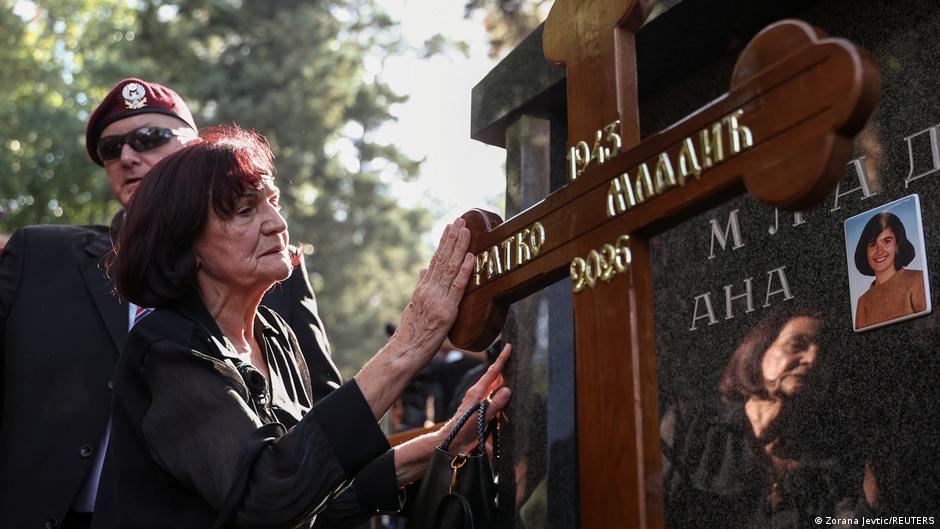
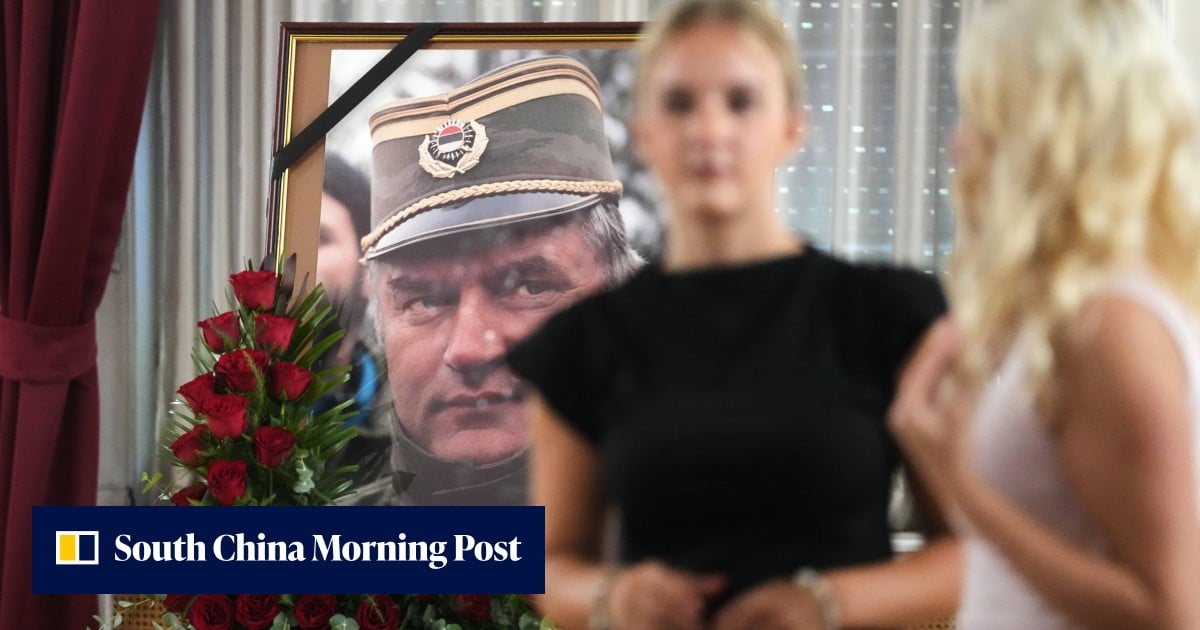
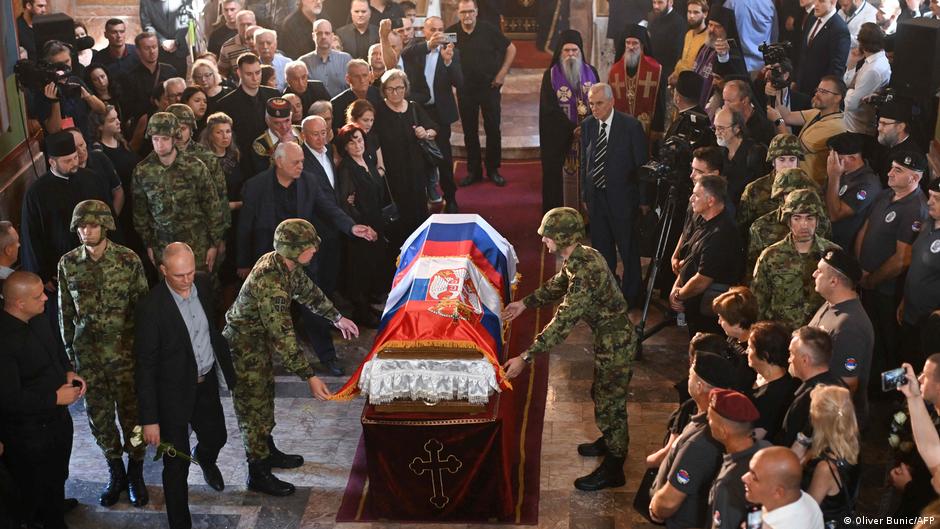
Public discourse there was dominated by narratives of "defending the people" and "the injustice of international courts." "Without Ratko Mladic, there would be no Republika Srpska," was the refrain among thousands of mourners at the funeral in Belgrade.
Also by Dragan Maksimovic
Nothing else under this byline is closely related to this article, so these are simply their most recent.

Topics

Belgrade Bosnia Bosnia and Herzegovina Bosnian Serb Serbia

Subjects

Serbia GPE · 5× Belgrade GPE · 4× Bosnia and Herzegovina GPE · 4× Mladic PERSON · 4× Bosnia GPE · 3× Ratko Mladic PERSON · 2× Republika Srpska PERSON · 2× Sarajevo GPE · 2× Bosnian Serb NORP · 1× Srebrenica PERSON · 1×

Narrative

A divided society and frozen relations After Mladic's funeral, the Office of the High Representative (OHR) in Bosnia, which was created after the war to oversee the implementation of the US-brokered Dayton Peace Agreement, stressed that Bosnia's future cannot be built on glorifying those responsible for the worst crimes of the past.
framing: assertive · carried by 1 article(s) · first seen 2026-09-09
Public discourse there was dominated by narratives of "defending the people" and "the injustice of international courts." "Without Ratko Mladic, there would be no Republika Srpska," was the refrain among thousands of mourners at the funeral in Belgrade.
2026-09-09 · Deutsche Welle
Ratko Mladic’s funeral casts shadow over Bosnia and Herzegovina vote · assertive framing

Claims (29 extracted, 0 hedged)

Belgrade has made a point of insisting that it did not organize a state funeral for former Bosnian Serb army commander Ratko Mladic, who was convicted of genocide in Srebrenica and crimes against humanity in 2017. asserted
who → make → 2017
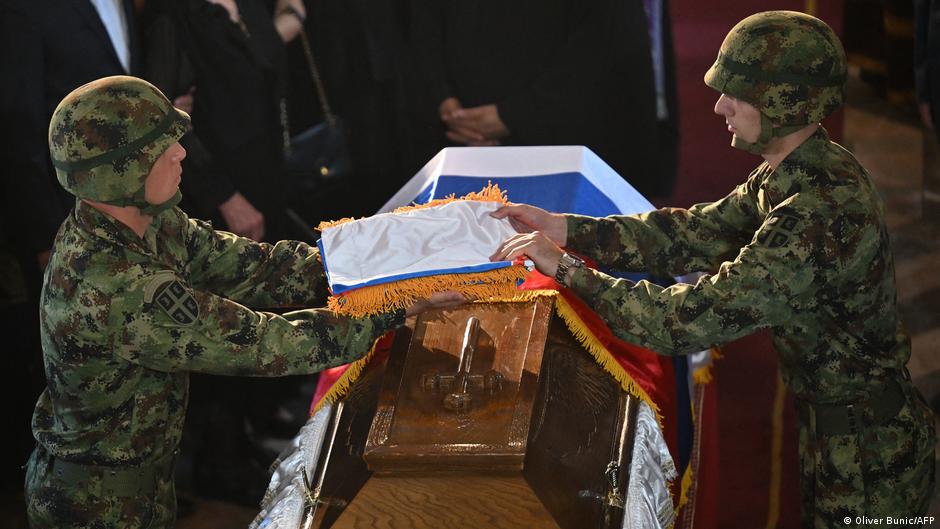
But when the body of a war criminal is flown home accompanied by the country's justice minister, when ceremonies unfold with military honors in state-controlled venues in the presence of senior political leaders and when clear condemnation of glorification of the deceased is absent, the message is unambiguous. asserted
message → fly → deceased
The impact of this message is being felt beyond Serbia's borders. asserted
impact → feel → borders
In Bosnia and Herzegovina — the state created by the 1995 Dayton Peace Agreement, which comprises two entities linked by a weak central government — reactions were as deeply divided as the country itself. asserted
reactions → create → country
Bosnia and Herzegovina: Two entities, two narratives Republika Srpska, the Serb-majority entity covering about 49% of the country's territory, sent its officials to the funeral. asserted
Srpska → cover → funeral
Public discourse there was dominated by narratives of "defending the people" and "the injustice of international courts." "Without Ratko Mladic, there would be no Republika Srpska," was the refrain among thousands of mourners at the funeral in Belgrade. asserted
refrain → dominate → Belgrade
Sarajevo, the seat of the central government of Bosnia and Herzegovina, sees this approach as a continued policy of relativizing war crimes and a threat to stability. asserted
Sarajevo → see → stability
Bosnia and Herzegovina cools diplomatic ties with Serbia In the Federation of Bosnia and Herzegovina, the entity where Bosniaks and Croats form the majority, the response was very different and the tone sharp. asserted
tone → cool → majority
Foreign Minister Elmedin Konakovic described Serbia's official response as a conscious choice by Belgrade, not something imposed on it. asserted
Konakovic → describe → it
He announced measures to cool diplomatic ties with Serbia, withdrawing almost all staff from the country's embassy in Belgrade, leaving only the ambassador, explaining that he lacks the authority to close the embassy but can reduce its presence to a minimum. asserted
he → announce → minimum
The move effectively froze day-to-day diplomatic communication on the ground. asserted
move → freeze → ground
"We will pull out everyone we can; consular services will be relocated to Zagreb and Podgorica," he said. asserted
he → pull → Zagreb
Denis Becirovic, chair of the Presidency of Bosnia and Herzegovina, called the funeral with military honors an "anti-civilizational act" and warned of far-reaching consequences for the entire region. asserted
Becirovic → call → region
For representatives of Mladic's victims, any public glorification of the former general is a direct insult to the families of those killed. asserted
glorification → kill → those
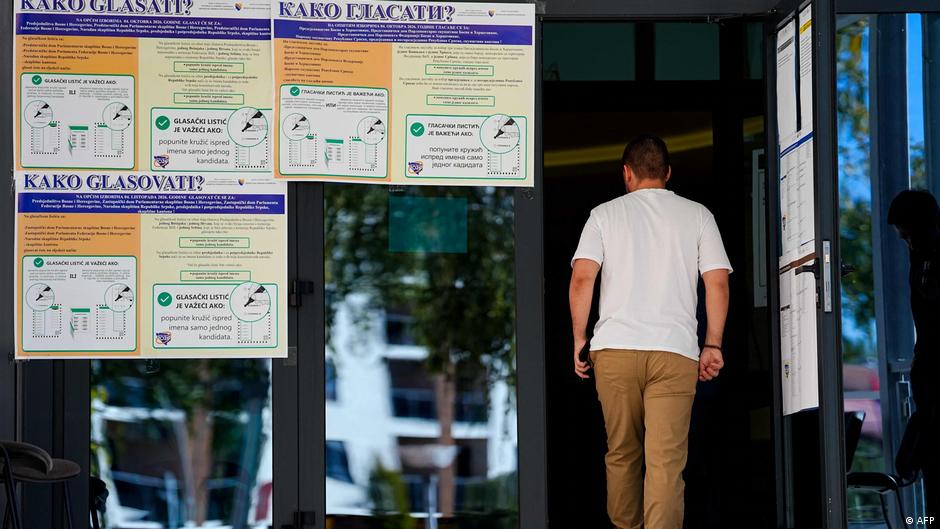
At a time when both Serbia and Bosnia and Herzegovina are facing general elections — Bosnia on October 4 and Serbia likely just a few weeks later — emotions become a resource. asserted
emotions → face → October
In both countries, parts of the electorate still see Mladic as a symbol of resistance, which means that every gesture in support of him scores political points with these voters. asserted
gesture → see → voters
As the general election in Bosnia and Herzegovina approaches, sharp condemnations from Sarajevo are seen as evidence that the central government is "defending the state" and "the dignity of victims." asserted
government → approach → victims
This, too, is being turned into political capital. asserted
This → turn → capital
In Republika Srpska, the presence of officials at the funeral and the narrative of "injustice" strengthen the position of those building their identity in opposition to international rulings. asserted
presence → strengthen → rulings
The more political points anyone scores on this issue, the worse relations become and the further accession to the EU recedes into the distance — for both countries. asserted
accession → score → countries
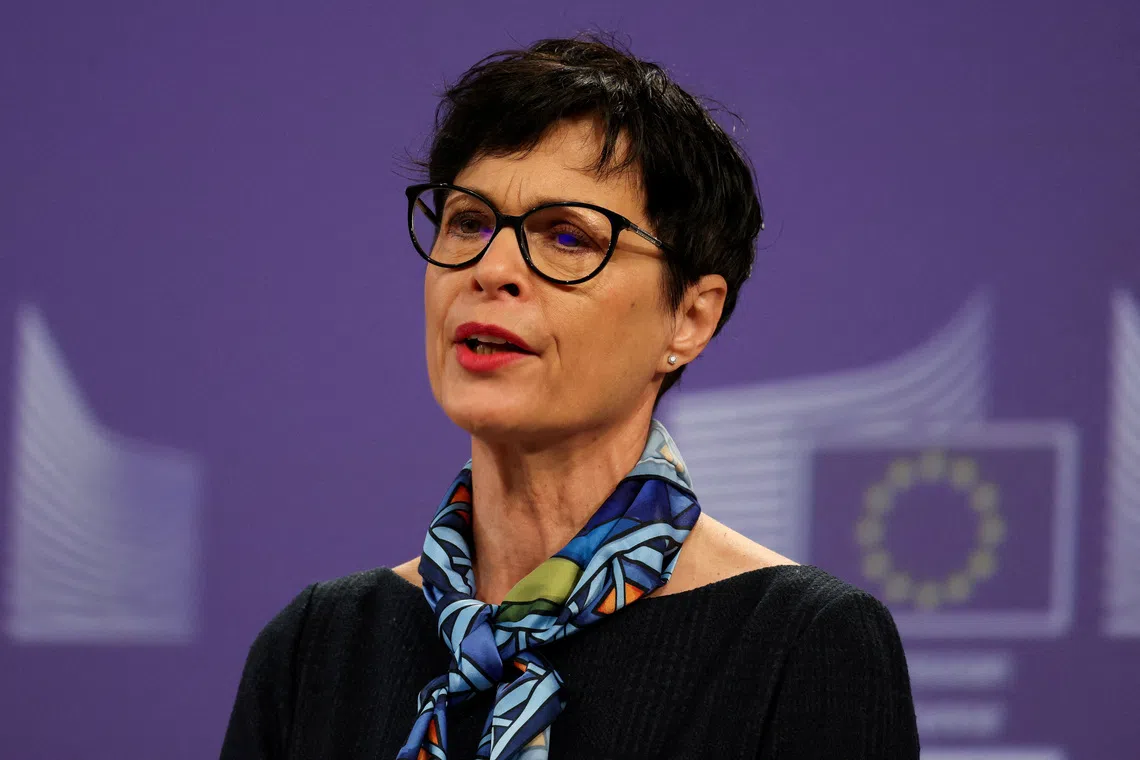
Tanja Topic, a political analyst from Banja Luka, is clear about who is responsible for these political narratives: "The main culprits are the political elites, because in 30 years we have not moved forward. asserted
we → move → years
There has been no critical confrontation with the dark side of history," she says. asserted
she → say → history
Topic went on to say that Mladic's funeral "is a welcome gift to the protagonists of ethno-nationalist policies" and noted that these people still hold power in Bosnia and Herzegovina. asserted
people → go → Bosnia
"Such an institutional stance towards crimes provokes a reaction on the other side, and then everyone exploits the situation, trapping us in a vicious circle where each tries to extract political profit," Topic says. asserted
Topic → provoke → profit
A divided society and frozen relations After Mladic's funeral, the Office of the High Representative (OHR) in Bosnia, which was created after the war to oversee the implementation of the US-brokered Dayton Peace Agreement, stressed that Bosnia's future cannot be built on glorifying those responsible for the worst crimes of the past. asserted
future → create → past
"Glorifying convicted war criminals, as well as denying genocide and other war crimes, creates divisions, inflicts additional pain on victims and their families, and undermines the reconciliation process," said the OHR. asserted
OHR → glorify → process
Bosnia remains a deeply divided society that has not moved forward in the 31 years since the war ended. asserted
war → remain → years
The fact that the ideology that helped spark that war still lives on, means that Mladic's funeral did not close a chapter in the region's history, it tore open a new one, measuring the Balkans' willingness to step out of the shadow of the 1990s. asserted
it → spark → 1990s
While politicians seek to score political points, citizens pay the price of frozen relations. asserted
citizens → seek → relations
Give feedback · no sign-in needed

No sign-in needed for now. Your note is sent without a name, so it cannot be answered.

History Support