Photo via Deutsche Welle

Bosnia election: New steps to prevent electoral fraud, but nationalist parties remain on top

Read the original at Deutsche Welle ↗
Cite

Maksimovic, D. (2026, October 5). Bosnia election: New steps to prevent electoral fraud, but nationalist parties remain on top. Deutsche Welle. https://www.dw.com/en/bosnia-election-new-steps-to-prevent-electoral-fraud-but-nationalist-parties-remain-on-top/a-79544717?maca=en-rss-en-world-4025-rdf

Dated when The Aporia collected the article, usually within hours of publication. Check the original for its exact date and byline.

Deutsche Welle · collected 2026-10-05 · by Dragan Maksimovic

Quick Summary

On October 4, Bosnia and Herzegovina held elections using new biometric technology aimed at preventing electoral fraud involving deceased voters and multiple ballots. Despite this reform, voter turnout was only about 40%, the lowest since the end of the Bosnian War in 1995. Nationalist parties maintained their dominance: the SNSD among Serbs, the SDA among Bosniaks, and the HDZ BiH among Croats. Milorad Dodik's party, the SNSD, emerged victorious in Republika Srpska despite his recent legal troubles and sanctions, reinforcing the region’s political status quo.
Written by AI on 2026-10-05, from this article's own text only (the story summary below draws on all the coverage).
See how they differ ↓

AI analysis

Story summary

On October 4, Bosnia and Herzegovina held national elections, a complex vote involving around 3.4 million voters, who chose members of the tripartite presidency, lawmakers for the national Parliament, and heads of institutions for the country’s two entities: the Federation of Bosnia and Herzegovina and Republika Srpska. The election was significant due to ongoing tensions between ethnic groups—Bosniaks, Serbs, and Croats—and concerns about Russia's influence in the region through politicians like pro-Russian Milorad Dodik, who has been banned from public office but continues to wield considerable influence despite not appearing on the ballot. Voters expressed frustration over economic issues, slow progress towards joining the European Union, and persistent political gridlock. The election results could impact Bosnia’s EU bid and the balance of power between local ethnic parties and multi-ethnic opposition coalitions.

Written for “Bosnia General Election 2026” on 2026-11-20, grounded in this article and the 19 other(s) covering the same event.

How they differ

8 outlets covered “Bosnia General Election 2026”.

What each outlet says

One AI summary per outlet of its latest article on this story, written from that article alone and checked against it. Open the article for the outlet's own words.

Deutsche WelleThis outlet5 Oct

On October 4, Bosnia and Herzegovina held elections using new biometric technology aimed at preventing electoral fraud involving deceased voters and multiple ballots. Despite this reform, voter turnout was only about 40%, the lowest since the end of the Bosnian War in 1995. Nationalist parties maintained their dominance: the SNSD among Serbs, the SDA among Bosniaks, and the HDZ BiH among Croats. Milorad Dodik's…

Bosnia election: New steps to prevent electoral fraud, but nationalist parties remain on top (this article)4 articles from Deutsche Welle on this story
Al Jazeera8 Oct

The recent general elections in Bosnia and Herzegovania held on October 4 saw parties organized along ethnic lines triumphing once again. This outcome reinforces concerns that the country's political future mirrors its troubled past, with analysts suggesting a regression of three decades. The election results highlight ongoing divisions and nationalist sentiments, complicating efforts towards EU integration and NATO…

Bosnia’s political future looks increasingly like its past →9 articles from Al Jazeera on this story
The Straits Times4 Oct

On Sunday, Bosnians voted in elections that may influence their European Union membership prospects and involve geopolitical interests of the United States and Russia. Voters cast ballots for the central tripartite presidency and national parliament, as well as regional legislatures. The election is seen as crucial due to growing voter frustration over economic issues, slow EU accession progress, and ongoing…

Bosnia votes Sunday in election that could affect EU bid →2 articles from The Straits Times on this story
Toronto Star4 Oct

Bosnia holds a general election on Sunday where around 3.4 million voters will select leadership positions at various levels of government. The race is dominated by Milorad Dodik, a pro-Russian politician who was banned from office due to his defiance of the peace agreement that ended the Bosnian War but remains influential through his party, the Alliance of Independent Social Democrats. Despite not appearing on the…

Bosnia votes as pro-Russian politician looms large over the race and ethnic tensions simmer →
Euronews4 Oct

Voters in Bosnia are participating in a general election to choose members of the multi-ethnic presidency, national lawmakers, and leaders for its two entities: the Federation of Bosnia and Herzegovina and Republika Srpska. With around 3.4 million voters, the election involves new digital voting technology aimed at addressing previous issues with vote tampering. However, the campaign has been dominated by Milorad…

Bosnia votes as pro-Russian politician looms large over race and a stalled EU bid dominate election →
South China Morning Post4 Oct

Bosnian Serb nationalist politician Milorad Dodik has declared victory for his party in Bosnia and Herzegovina's recent election, citing support from US President Donald Trump and Russian President Vladimir Putin. With nearly 90% of votes counted, his ally Zeljka Cvijanovic won more than 55% of the vote to secure one of three seats in the country’s tripartite presidency. The election was marked by economic…

Serb separatist Dodik declares victory in Bosnia vote as ethnic tensions, EU hopes collide →
Show 2 more outlets
The Guardian4 Oct

Milorad Dodik, a Bosnian Serb nationalist politician banned from public office due to convictions of defying post-war peace agreements, has declared victory for his party in the recent Bosnia election. With nearly 90% of votes counted, his ally Željka Cvijanović secured more than 55% of the votes for one of the three seats in the country’s tripartite presidency, leading her opponent by about 30 percentage points…

Bosnian Serb nationalist Dodik declares party victory in Bosnia election →
CBC4 Oct

Bosnian Serb nationalist Milorad Dodik declared victory for his party in a recent election despite being barred from office due to a conviction for defying international peace agreements. With nearly 90% of votes counted, Dodik's ally Zeljka Cvijanovic secured over 55% of the vote for one of Bosnia’s three presidential seats. Dodik credited U.S. President Donald Trump and Russian President Vladimir Putin for his…

Serb nationalist credits Trump, Putin after declaring his party's victory in Bosnian election →

Where they agree and split

Agreed

Reported by outlets on both sides of the middle

The Balkan nation remains one of Europe's poorest countries, still recovering from a war that began after it declared independence from Serb-led Yugoslavia and ethnic Serbs took up arms to carve out their own state.

4 outlets
Show 3 more

Polls have opened in Bosnia and Herzegovina for a general election to choose new leaders at the national and regional levels, in a vote that could affect the country’s European Union membership bid.

4 outlets

The campaign has been dominated by Milorad Dodik, the pro-Russian, separatist former president of Republika Srpska.

4 outlets

Serb separatist Dodik declares victory in Bosnia vote as ethnic tensions, EU hopes collide

4 outlets
The full story: what happened, how it changed, and all 20 articles →

Compared with similar articles

This article reads leans right and hedges 6% of its claims. Each row says how that neighbour differs.
The Straits Times
Leans left further left than this Hedges 4 of 20 claims Outlet record 64/100
Al Jazeera
Leans left further left than this Hedges 1 of 12 claims Outlet record 60/100
Deutsche Welle
Hedges 0 of 27 claims Outlet record 95/100
Al Jazeera
Hedges 1 of 7 claims Outlet record 60/100
South China Morning Post
Leans right Hedges 0 of 5 claims Outlet record 62/100
Deutsche Welle
Leans left further left than this Hedges 1 of 28 claims Outlet record 95/100
Al Jazeera
Leans strongly left further left than this Hedges 1 of 32 claims Outlet record 60/100
The Straits Times
Leans left further left than this Hedges 4 of 29 claims Outlet record 64/100
“The articles refer to different dates for the election: Article A mentions an upcoming vote on October 1, while Article B discusses results from an actual election held on October 4.”
Al Jazeera
Hedges 3 of 51 claims Outlet record 60/100
Euronews
Leans left further left than this Hedges 0 of 30 claims Outlet record 60/100

Story

Bosnia General Election 2026
Politics · 20 article(s) covering the same event. Compare every outlet's account →
How this article was measured signals, leaning charts, publisher record, byline, topics and claims

Signals How these are calculated →

Claims extracted
62
sentences that state something as happening or true
Uncertain
6%
4 of 62 hedged ("reportedly", "may", "according to")
Leaning
Leans right
of the writing, not the subject · beta estimate
Publisher signals
95/100
Deutsche Welle's corrections and hedging, across everything collected from it. Not a measure of accuracy.
Outlets on this story
20
Politics
Same framing elsewhere
1
articles that frame the event the way this one does
Analyzed 2026-10-05 · how these are computed

How this is being covered How these are calculated →

Article leaning vs. publisher reliability
Source leaning vs. consistency

Publisher

Deutsche Welle · 728 article(s) · 0 correction(s) detected
No corrections detected for this publisher. That may mean careful reporting, or simply that nothing has been checked.

Who wrote this

Dragan Maksimovic
2 article(s) here · 1 carrying a prediction
The dead may have been struck from the voter rolls, but political trends have not shifted.
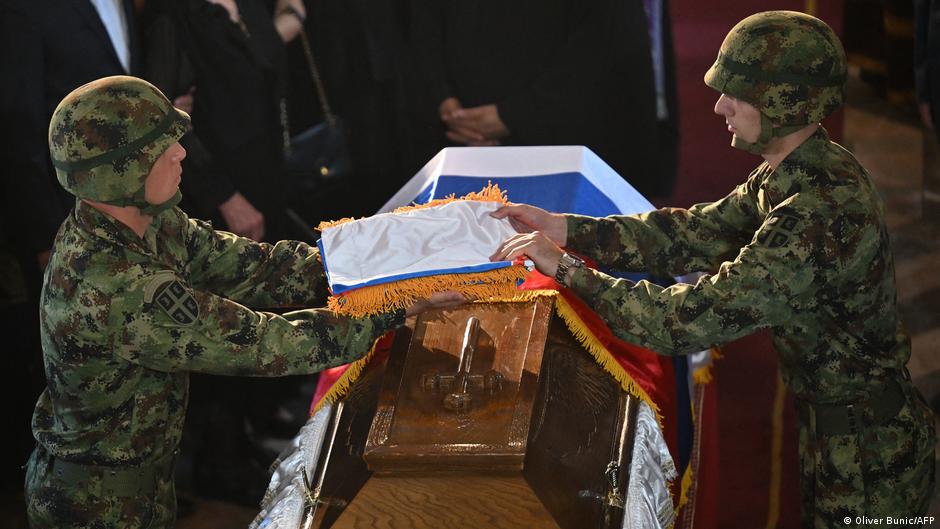
Public discourse there was dominated by narratives of "defending the people" and "the injustice of international courts." "Without Ratko Mladic, there would be no Republika Srpska," was the refrain among thousands of mourners at the funeral in Belgrade.
Also by Dragan Maksimovic
Nothing else under this byline is closely related to this article, so these are simply their most recent.

Topics

Bosnia Herzegovina Republika Srpska SNSD Serb

Subjects

Dodik PERSON · 8× Republika Srpska PERSON · 6× Bosnia GPE · 4× SNSD ORG · 4× Serb NORP · 3× Croats NORP · 2× HDZ BiH ORG · 2× Serbs NORP · 2× Herzegovina GPE · 1× SDA ORG · 1×

Narrative

For readers who know Bosnia only vaguely, a little background helps: The 1995 Dayton Peace Agreement ended the war, but it also split the country into two entities: Republika Srpska, which has a Serb majority, and the Federation of Bosnia and Herzegovina, which has a Bosniak-Croat majority.
framing: assertive · carried by 1 article(s) · first seen 2026-10-05
The dead may have been struck from the voter rolls, but political trends have not shifted.

Claims (62 extracted, 4 hedged)

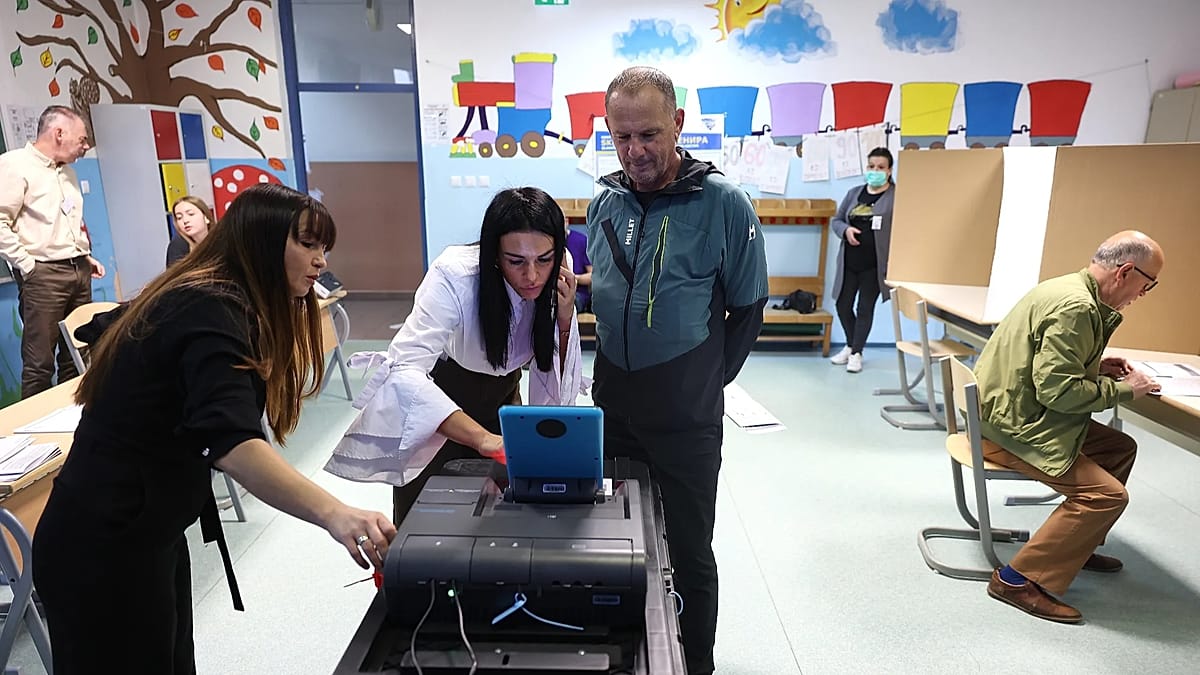
Bosnia and Herzegovina went to the polls on October 4 with new technology that was meant to end years of vote-rigging. asserted
that → go → rigging
Chief among the abuses was the casting of ballots in the name of deceased voters who had lingered for years on outdated voter rolls. asserted
who → linger → rolls
At just over 40%, turnout was the lowest since the Bosnian War ended in 1995, in part because the old tricks no longer worked. In earlier elections, allegations kept surfacing that votes were being cast in the name of people who had died or long since moved abroad. asserted
who → end → people
Others said voters cast their ballot multiple times or that blank ballots were added after polls closed to make the turnout look higher. asserted
turnout → say → ballot
The voter registry, packed with names of people who had passed away or left the country, was the perfect tool for all of this. New technology, same old politics This time, however, every polling station used biometric fingerprint checks. asserted
station → pack → checks
This represented a clear step forward in making voter identification far harder to manipulate. asserted
identification → represent → step
Three nationalist parties won, each within its own community: the SNSD among Serbs, the SDA among Bosniaks and the HDZ BiH among Croats. asserted
parties → win → Croats
The dead may have been struck from the voter rolls, but political trends have not shifted. uncertain
trends → strike → rolls
For readers who know Bosnia only vaguely, a little background helps: The 1995 Dayton Peace Agreement ended the war, but it also split the country into two entities: Republika Srpska, which has a Serb majority, and the Federation of Bosnia and Herzegovina, which has a Bosniak-Croat majority. asserted
which → know → majority
A three-member presidency runs the state, and each of the three peoples elects its own member. asserted
each → run → member
That is why elections here are rarely about wages and prices and are instead almost always about who is perceived to be a threat. asserted
who → perceive → wages
In 2025, Dodik was barred from holding public office for six years after being convicted of defying the high representative, the top international envoy overseeing the 1995 peace process. asserted
Dodik → bar → process
He was sanctioned by the US in 2022, although those sanctions were lifted late last year. asserted
sanctions → sanction → 2022
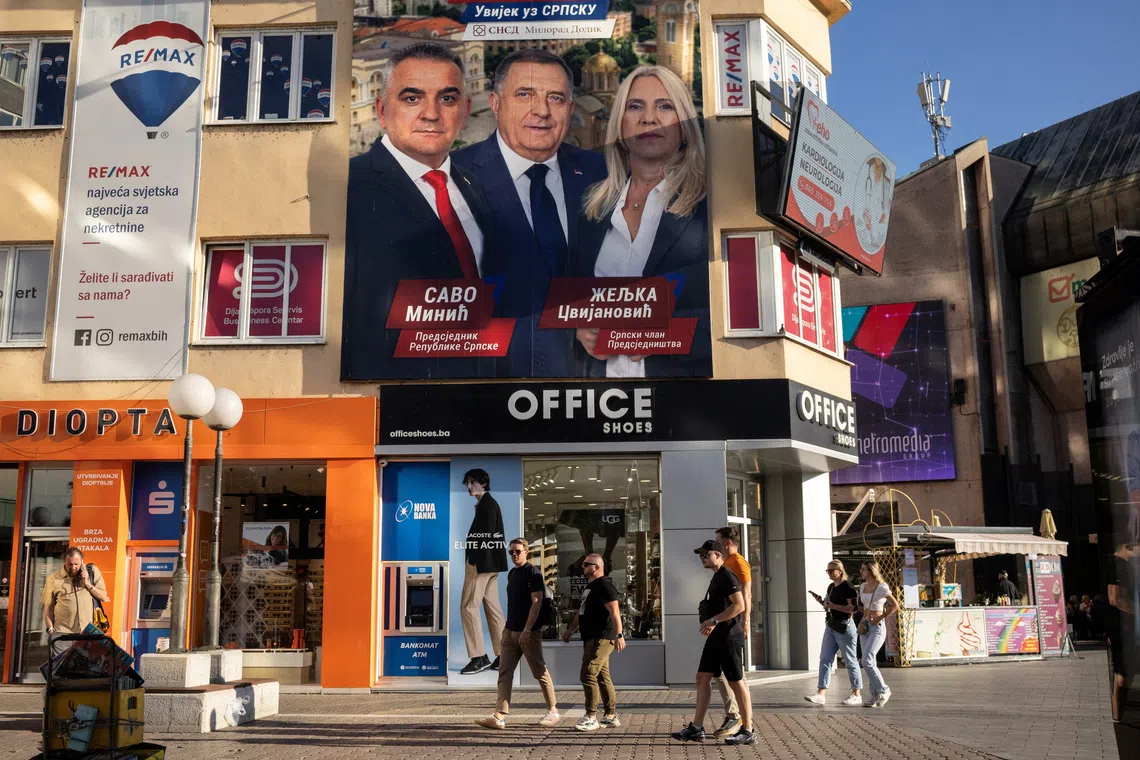
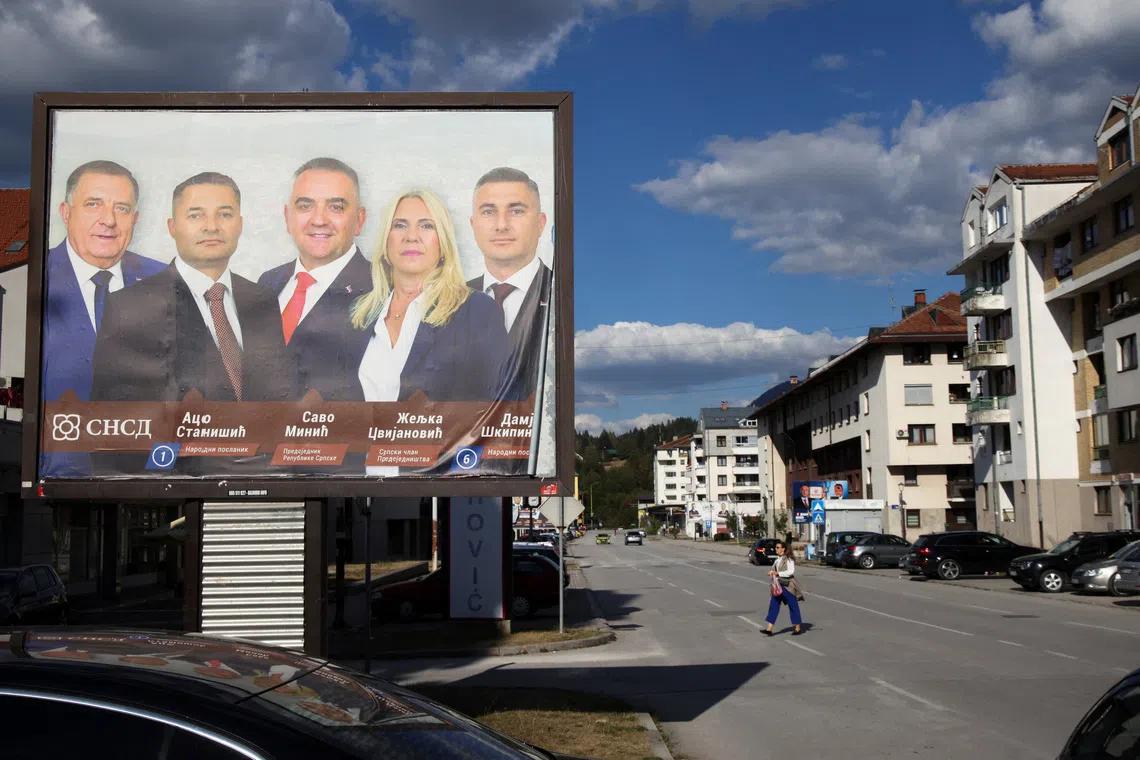
Even so, his party, the SNSD, virtually swept the board in Republika Srpska. asserted
party → sweep → Srpska
Savo Minic became president of Republika Srpska, and Zeljka Cvijanovic kept the Serb seat in the presidency. asserted
Cvijanovic → become → presidency
The party also did very well in the entity's parliament. asserted
party → do → parliament
Neither the sanctions nor Dodik's conviction and the loss of his mandate hurt the party. asserted
sanctions → hurt → party
Voters were not choosing an individual. asserted
Voters → choose → individual
They were choosing their "side." asserted
They → choose → side
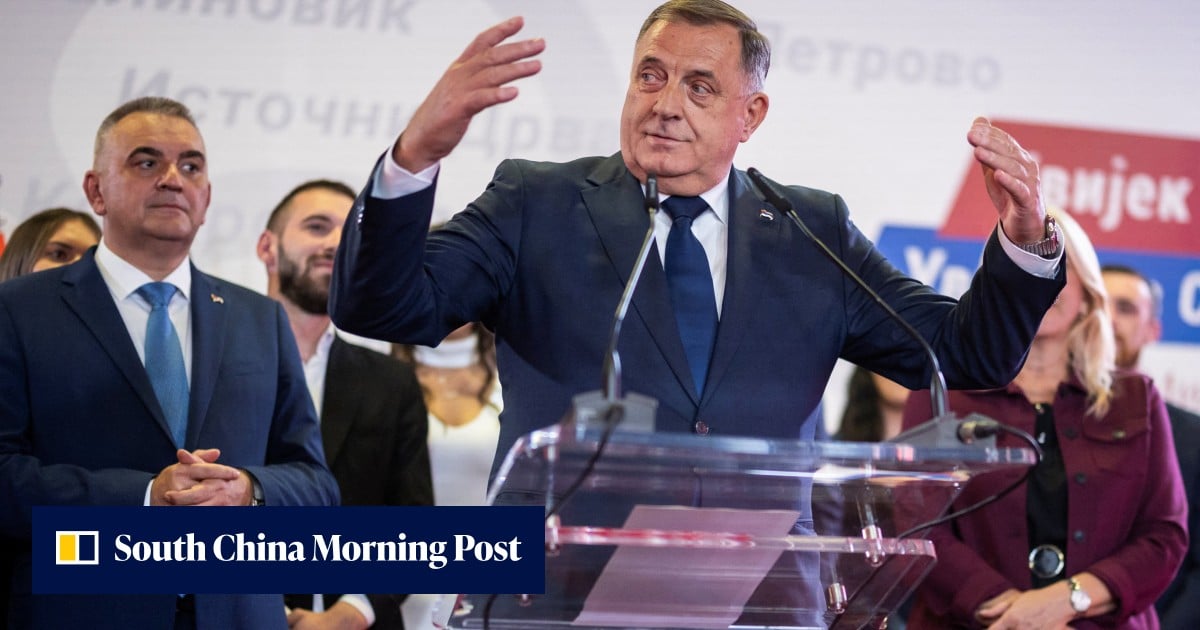
Dodik lost no time in declaring what comes next. asserted
what → lose → time
He announced a return to what he refers to as the "original Dayton." asserted
he → announce → Dayton
In practice, that means undoing the powers the state has gained since 1995 — from the judiciary to the army. asserted
state → mean → army
To an outside observer, that sounds like a technical phrase. asserted
that → sound → phrase
In reality, it is a program for dismantling the state step by step. asserted
it → dismantle → step
"That means we are returning the army to Republika Srpska, the border police, the intelligence service and everything that the high representatives once took away," said Dodik. asserted
Dodik → mean → that
The opposition offered no serious resistance. asserted
opposition → offer → resistance
It was divided and had no convincing message. asserted
It → divide → message
Voters who did not want Dodik had nowhere to turn, so most stayed home. asserted
most → want → Dodik
Low turnout favored the side with the most disciplined party machine. asserted
turnout → favor → machine
That raises a question that will shape what happens in Bosnia in the coming year. asserted
what → raise → year
Dodik's conviction kept him out of the direct race in these elections. asserted
conviction → keep → elections
If representatives of the SNSD and the HDZ BiH enter the presidency, they could pardon him — whatever the third member decides. uncertain
member → enter → whatever
Bosnian media have reported that this was a pre-election deal between Dodik and the HDZ BiH leader, Dragan Covic. asserted
this → report → Dodik
Dodik could then return as prime minister of Republika Srpska, a post he has held before. uncertain
he → return → Srpska
Federation of Bosnia and Herzegovina: Troika defeated asserted
Troika → defeat → Bosnia
The parties of the so-called "Troika," a multi-ethnic liberal political alliance, suffered a defeat. asserted
parties → call → defeat
They came to power at this level after the international high representative, a foreigner with the authority to impose laws, changed the election law. asserted
representative → come → law
Voters saw no benefit from that experiment. asserted
Voters → see → experiment
The SDA, the largest Bosniak nationalist party, won the most seats and did well. asserted
SDA → win → seats
The paradox is that SDA president Bakir Izetbegovic lost the race for the presidency. asserted
Izetbegovic → lose → presidency
…and 22 more, not listed.
Give feedback · no sign-in needed

No sign-in needed for now. Your note is sent without a name, so it cannot be answered.

History Support