Photo via CBC News

Ukraine has been trying to bring the war to Russia. More Russians are beginning to feel it

Read the original at CBC News ↗
Cite

Stewart, B. (2026, September 9). Ukraine has been trying to bring the war to Russia. More Russians are beginning to feel it. CBC News. https://www.cbc.ca/news/world/ukraine-russia-war-9.7335447?cmp=rss

Dated when The Aporia collected the article, usually within hours of publication. Check the original for its exact date and byline.

CBC News · collected 2026-09-09 · by Briar Stewart

Quick Summary

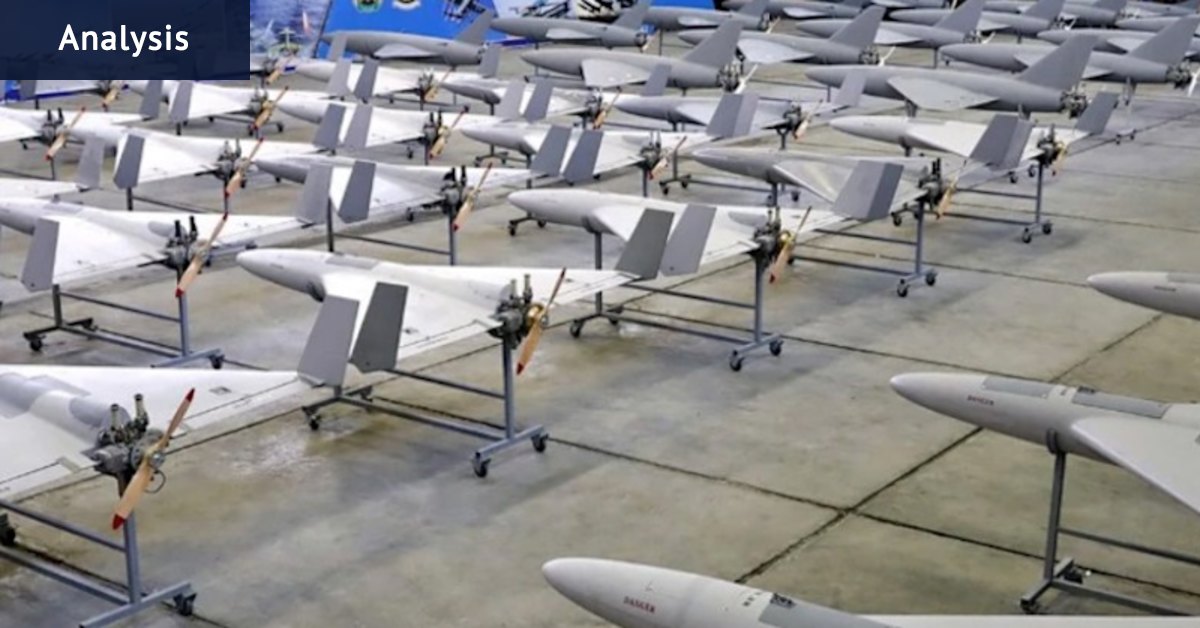
The Ukrainian government has been launching drone attacks on Russian territory, causing widespread disruptions and increasing anxiety among ordinary Russians. According to reports, more than 380 Ukrainian drones have been intercepted by Russia's air defenses, but two civilians were killed in overnight strikes. The attacks have led to fuel shortages and long lines at gas stations in Russia, with some videos showing fights breaking out over available fuel. This marks a significant escalation of the war into Russian territory, as Ukraine tries to bring the conflict closer to home for Moscow.
Written by AI on 2026-09-09, from this article's own text only (the story summary below draws on all the coverage).
See how they differ ↓

AI analysis

Story summary

Drones are dramatically altering military strategies, particularly in the ongoing conflict between Ukraine and Russia, where cheap drones overwhelm traditional defense systems. For instance, Kyiv plans to launch up to 1,000 drones nightly against Russia's infrastructure. This shift is causing significant disruptions: Russian airports experienced an average of 32 closures per day in August 2022 alone, surpassing the full-year total for 2025 by a factor of six. Moreover, this technological shift challenges traditional defense manufacturing, favoring smaller, more agile companies over established primes. As Russia's economy struggles and civilian infrastructure faces constant threats from Ukrainian drone attacks, both sides face escalating costs and risks, with no clear path to victory.

Written for “War in Ukraine” on 2026-11-20, grounded in this article and the 7 other(s) covering the same event.

How they differ

7 outlets covered “War in Ukraine”.

What each outlet says

One AI summary per outlet of its latest article on this story, written from that article alone and checked against it. Open the article for the outlet's own words.

CBCThis outlet9 Sep

The Ukrainian government has been launching drone attacks on Russian territory, causing widespread disruptions and increasing anxiety among ordinary Russians. According to reports, more than 380 Ukrainian drones have been intercepted by Russia's air defenses, but two civilians were killed in overnight strikes. The attacks have led to fuel shortages and long lines at gas stations in Russia, with some videos showing…

Ukraine has been trying to bring the war to Russia. More Russians are beginning to feel it (this article)2 articles from CBC on this story
Sydney Morning Herald5 Sep

The defense industry is being disrupted by cheap drones that are pushing down financial costs and forcing a rethink from militaries and governments. According to analyst Lesia Bidochko, some countries are practicing "drone Keynesianism" by building stocks of drones to meet government-directed goals. The US is looking to emulate this model through its "Drone Dominance" program, which incentivizes small suppliers to…

How cheap drones are upending the big business of defence →
The Guardian6 Sep

Serhii Beskrestnov, defense technology adviser to Volodymyr Zelenskyy, warns of mutual destruction if the war with Russia continues. According to Beskrestnov, neither side can prevail in the escalating conflict, which has become a "war of cities" and is increasingly targeting civilians. Ukraine plans to launch 1,000 drones per night against Russian economic and military targets, while Russia threatens to knock out…

‘Nobody will win’: Zelenskyy adviser warns of mutual destruction if war with Russia continues →
The Independent6 Sep

Ukrainian local newspapers are struggling to stay alive amidst the ongoing war with Russia. Since February 2022, over 300 publications have closed and around 28% of Ukrainian outlets have shut down due to safety concerns and economic difficulties. According to Oksana Brovko, CEO of the Association of Independent Regional Press Publishers of Ukraine, local journalists have taken on the role of war correspondents…

‘Overnight we all became war correspondents’: Ukraine’s local newspapers face battle to stay alive →
The Straits Times6 Sep

Russia has been launching near-constant drone attacks on Kyiv, disrupting daily life for its 3 million residents. The attacks have caused power and water outages, and in recent days, civilians have been injured or killed by the strikes. For residents like Vitaliia Poliakova, who was injured in a drone strike last Thursday, the situation is becoming increasingly difficult to cope with, especially as winter…

How escalating attacks are upending daily life in Kyiv →
CBS News8 Sep

Lithuania is preparing for a potential Russian invasion by training its civilian population in military-style survival skills and defense tactics, including the use of drones. The country's Minister of Defense Robertas Kaunas expressed confidence in Lithuania's ability to defend itself despite being close to Russia ally Belarus. At least 2 people were reported killed in Kyiv, Ukraine, which has been under attack…

Lithuania training civilians to defend against a Russian invasion →
Show 1 more outlets
Euronews10 Sep

Ukrainian drone operations forced 32 Russian airports to close an average of 32 times a day in August, with summer totals already exceeding all of 2025, according to industry data from Osprey Flight Solutions. The closures, which have been the most disruptive month for Russian civil aviation since its invasion of Ukraine began in early 2022, were due to the activation of Russia's "Kover" air defence protocol…

'The days of safety are over': Russian airports face record closures →

Where they agree and split

Framing

How the first headlines put it

Stated as fact2
The headlines (2)

How cheap drones are upending the big business of defence Sydney Morning Herald · stated as fact

‘Nobody will win’: Zelenskyy adviser warns of mutual destruction if war with Russia continues The Guardian · stated as fact

The full story: what happened, how it changed, and all 8 articles →

Compared with similar articles

This article reads unscored and hedges 6% of its claims. Each row says how that neighbour differs.
BBC News
Leans left Hedges 4 of 68 claims Outlet record 65/100
“Article A mentions sabotage at military and defense sector sites in Europe, while Article B describes Ukraine's drone attacks on Russian targets and Ukrainian facilities in Russia being targeted by Russian air defenses”
BBC News
Hedges 1 of 26 claims Outlet record 65/100
“Article A describes a single drone attack on a specific building in Kyiv, while Article B mentions multiple incidents of drone attacks and strikes across different locations”
TIME
Leans right Hedges 1 of 30 claims Outlet record 60/100
“Article A describes a temporary pause in strikes on Kyiv ordered by Putin, while Article B discusses ongoing drone attacks and strikes by Ukraine against Russia”
The Sydney Morning Herald
Leans left Hedges 5 of 59 claims Outlet record 61/100
“Article A mentions drone warfare and its effects in the Ukraine-Russia conflict, while Article B describes a specific incident of drone attacks on Russian military facilities and air defences intercepting Ukrainian drones”
NPR
Hedges 5 of 24 claims Outlet record 60/100
“The articles cover different aspects of the conflict between Ukraine and Russia, with one describing a meeting in Kyiv and the other discussing drone attacks on Russian military facilities.”
South China Morning Post
Hedges 1 of 7 claims Outlet record 62/100
“Article A reports on talks between Zelensky and US envoys, while Article B describes ongoing war efforts in Ukraine and Russia, indicating different timeframes and events”
The Guardian
Hedges 7 of 36 claims Outlet record 64/100
ABC News (AU)
Leans right Hedges 1 of 24 claims Outlet record 67/100
“Article A describes a drone incident at Leipzig Airport in Germany, while Article B mentions drone attacks on warehouses and military facilities in Ukraine, without specifying the location of these incidents as Leipzig”
Al Jazeera
Hedges 3 of 35 claims Outlet record 60/100
“Article A mentions a meeting between US envoys and Zelenskyy, while Article B discusses Ukraine's efforts to bring the war to Russia through drone attacks”
The Straits Times
Hedges 2 of 37 claims Outlet record 64/100
“Article A describes diplomatic talks between Ukraine and US envoys, while Article B discusses Ukraine's military operations against Russia”

Story

War in Ukraine
World · 8 article(s) covering the same event. Compare every outlet's account →
How this article was measured signals, leaning charts, publisher record, byline, topics and claims

Signals How these are calculated →

Claims extracted
49
sentences that state something as happening or true
Uncertain
6%
3 of 49 hedged ("reportedly", "may", "according to")
Leaning
withheld
no quote in the article backed the model's score
Publisher signals
60/100
CBC News's corrections and hedging, across everything collected from it. Not a measure of accuracy.
Outlets on this story
8
World
Same framing elsewhere
1
articles that frame the event the way this one does
Analyzed 2026-09-09 · how these are computed

How this is being covered How these are calculated →

Article leaning vs. publisher reliability
Source leaning vs. consistency

Publisher

CBC News · 966 article(s) · 2 correction(s) detected
Running correction rate · 2 correction(s)

Who wrote this

Briar Stewart
10 article(s) here · 1 carrying a prediction
But it was Russia’s autocrat who came out the biggest winner At the end of 90-minute meeting, leaders called for UN to be reformed and ICC not to abuse its jurisdiction Before Vladimir Putin sat down across from Xi Jinping and Donald Trump at a high-end resort on the outskirts of Shenzhen, China, a Kremlin aide proclaimed to a reporter that the Russian president was in a brilliant mood. Ukraine may have attacked Russia’s prized Kerch Bridge to Crimea for the third time this week just a few hours earlier, but Putin was surely elated by the choreographed events at the APEC summit.
"What we are pushing for is a more sustainable and, I will also say, a more orderly asylum and migration system."
Ukraine awarded first lady with state honour for what it called her humanitarian support When Melania Trump convenes representatives from Ukraine and Russia at the White House on Thursday, the talk will focus on the success of a humanitarian mission that led to the evacuation of hundreds of residents from the Russian-occupied city of Oleshky.
They shone their flashlights, thinking rescuers might have already responded to their distress call.
For the merchant fleet, I would say there’s almost no chance to stay safe in our waters.”
"This [aid] will give people the opportunity to live there for up to a month," Oleksandr Tolokonnikov, deputy head of the Kherson Regional Military Administration, said in an interview with CBC News.
Those strikes followed what Moscow's mayor called Ukraine's largest drone attack yet on the capital.
"What would we do without the railway?" he said.
The Russian economy is expected to grow by just 0.4 per cent this year, while many non-military sectors are stagnating or shrinking.
Also by Briar Stewart
Nothing else under this byline is closely related to this article, so these are simply their most recent.
All 10 articles by Briar Stewart →

Topics

Moscow Russia Russians Ukraine Ukrainian

Subjects

Russia GPE · 11× Moscow GPE · 6× Ukraine GPE · 5× Russian NORP · 4× Ukrainian NORP · 4× CBC News ORG · 2× Russians NORP · 2× Tatiana PERSON · 2× Kremlin ORG · 1× Kyiv ORG · 1×

Narrative

Measuring the mood Denis Volkov, director of the Moscow-based research and polling organization Levada Center, said as the fuel crisis intensified earlier in the summer, surveys showed rising anxiety and a decline in approval of the Russian government. But he said the mood has softened somewhat as fuel supplies have improved.
framing: assertive · carried by 1 article(s) · first seen 2026-09-09
The Russian economy is expected to grow by just 0.4 per cent this year, while many non-military sectors are stagnating or shrinking.

Claims (49 extracted, 3 hedged)

Ukraine has been trying to bring the war to Russia. asserted
Ukraine → try → Russia
More Russians are beginning to feel it Summer was marked by fuel shortages and drone attacks on warehouses As Kyiv reeled Tuesday from another night of deadly strikes by ballistic missiles and jet-powered drones, Russia's state-controlled media didn't report on the damaged highrise buildings or the cars that were set ablaze. asserted
that → begin → buildings
Instead, Russian broadcasters reported that several military facilities in Ukraine had been successfully targeted, while at home, the country's air defences had intercepted more than 380 Ukrainian drones. asserted
defences → report → drones
But Russia's own vulnerability has become harder to conceal. asserted
vulnerability → become → ?
Local officials reported that two civilians were killed in Russia during the overnight strikes. asserted
civilians → report → strikes
And there are reports in the country's media that Moscow plans to allow postal workers to arm themselves with anti-drone weapons. asserted
workers → be → weapons
The measures are another sign of how Ukraine's expanding drone campaign is bringing the war deeper into Russian territory — and increasingly into the lives of ordinary Russians. asserted
campaign → expand → Russians
A summer of strikes For nearly five years, the Kremlin has tried to shield much of the population from the realities of its full-scale war against Ukraine, as well as its economic consequences. asserted
Kremlin → try → Ukraine
"After the active drone raids on Russia — on Moscow and the Moscow region in particular — anxiety has increased greatly," said Tatiana, 66, who wanted to be identified only by her first name. asserted
who → increase → name
"We were driving to the dacha with the children and saw a huge column of smoke. asserted
We → drive → smoke
Naturally, that also causes fear." asserted
that → cause → fear
Russia reports large-scale Ukrainian drone attack across 12 regions Ukraine hits Moscow oil refinery again, part of massive drone wave inside Russia Tatiana, like others CBC News spoke with for this story, communicated through voice memos sent on a messaging app. asserted
News → report → app
No one wanted to give their last names for fear of being punished for speaking to foreign media about the war. asserted
one → want → war
She said she sometimes lies to her grandchildren when they wake up at night because of the noise, telling them it is construction work because she does not want them to be afraid. asserted
them → say → them
At her dacha, a country home, she said people talk about the fear caused by the buzzing of drones overhead. asserted
people → say → drones
Ukrainian attacks on refineries and energy facilities have contributed to a fuel shortage in Russia, leading to long lines at gas stations, fuel rationing and public frustration. asserted
attacks → contribute → stations
Videos posted on social media showed fights and arguments breaking out at some stations. asserted
fights → post → stations
The government has taken steps to stabilize supplies, including importing fuel from countries such as India. asserted
government → take → India
It's a significant move given that Russia is one of the world's largest oil exporters. asserted
Russia → give → exporters
The shortage has also helped fuel the popularity of GdeBENZ (Where is the Benzine), an app that directs motorists to gas stations with available fuel. asserted
that → help → fuel
Measuring the mood Denis Volkov, director of the Moscow-based research and polling organization Levada Center, said as the fuel crisis intensified earlier in the summer, surveys showed rising anxiety and a decline in approval of the Russian government. But he said the mood has softened somewhat as fuel supplies have improved. asserted
supplies → measure → government
Levada’s August survey, published on Thursday, was conducted through video calls with 1,600 people across Russia. asserted
survey → publish → Russia
About one-quarter said they were experiencing tension and fear, while nearly 60 per cent described themselves as being in a normal mood. asserted
cent → say → mood
About two-thirds said they had experienced problems with mobile internet access, messaging apps or fuel. asserted
they → say → access
One-third said the fuel shortage had seriously affected their lives. asserted
shortage → say → lives
"The main concerns are, of course, economic, but also the overall continuation of hostilities," Volkov said in a phone interview with CBC News from Moscow. asserted
Volkov → say → Moscow
Ksenia, 41, a single mother who works in the civil service in the Russian capital, said the drones do not frighten her terribly. asserted
drones → work → her
But she is struggling with rising prices. asserted
she → struggle → prices
"It feels as though no salary or freelance work is enough to cover expenses anymore," she said in a message to CBC News. asserted
she → feel → News
Who knows. asserted
Who → know → ?
The Russian economy is expected to grow by just 0.4 per cent this year, while many non-military sectors are stagnating or shrinking. asserted
sectors → expect → cent
If Ukraine continues striking Russian targets, including its oil and grain export infrastructure, the country's economic growth could be pushed down further. uncertain
growth → continue → infrastructure
Last month, Andrei Klepach, chief economist at Russia’s state development bank, lost his job after giving a public speech about the economic problems created by the war. asserted
Klepach → lose → war
Last week, the Kremlin envoy for international development, Boris Titov, was quoted as saying the Russian economy could go "berserk" if the country continues on a steadfast war footing. uncertain
country → quote → footing
In August, Russian President Vladimir Putin signed a decree allowing the government to take control of infrastructure deemed critical if it is considered inadequately protected from drone attacks. asserted
it → sign → attacks
Sanctioned but standing: Russians see their prices rise as Trump and Putin head to Alaska Wildberries is the Amazon of Russia. asserted
Wildberries → sanction → Russia
Ukraine is trying to destroy it " asserted
Ukraine → try → it
The country is spiralling into a terrifying abyss. asserted
country → spiral → abyss
Especially when you look at the economic results of the last five years, it makes you want to cry," said Vitaliy, 40, a businessman from Noginsk, about 40 kilometres east of Moscow. asserted
Vitaliy → look → Moscow
Vitaliy runs a business supplying spare parts to chemical plants. asserted
Vitaliy → run → plants
…and 9 more, not listed.
Give feedback · no sign-in needed

No sign-in needed for now. Your note is sent without a name, so it cannot be answered.

History Support