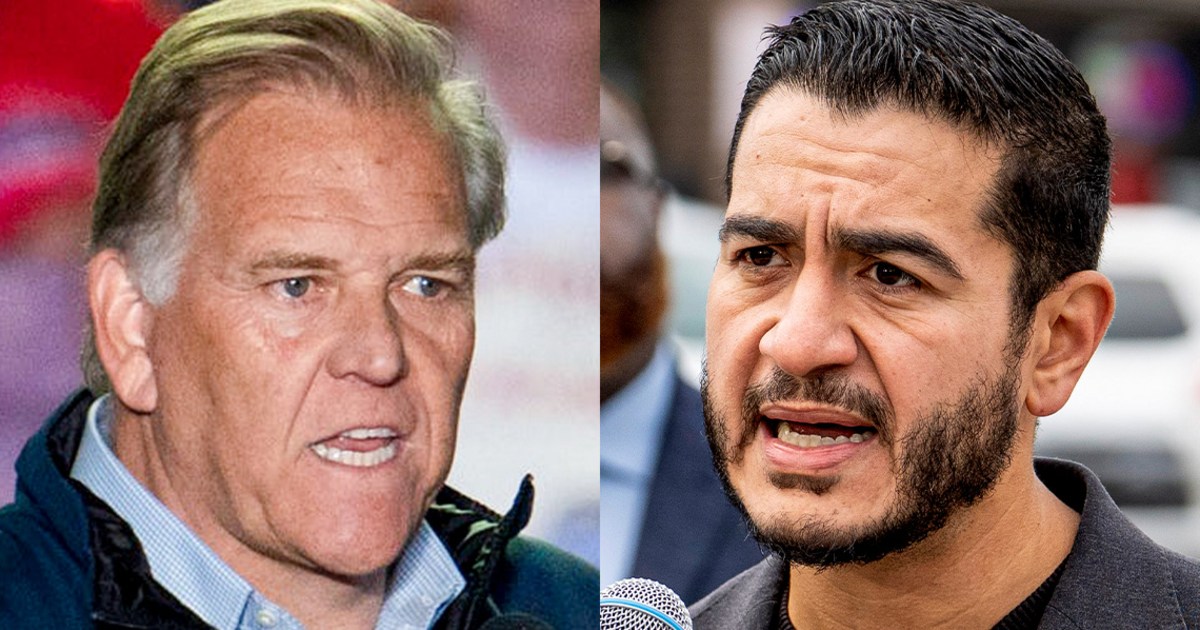
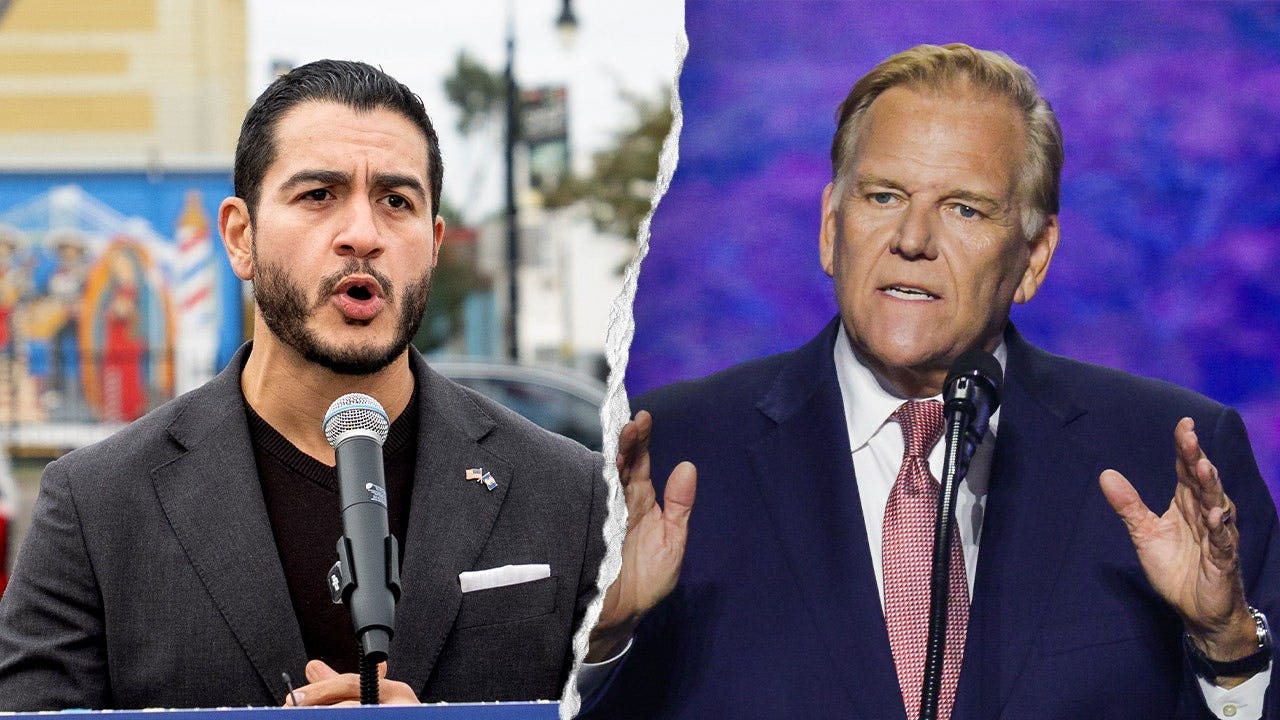
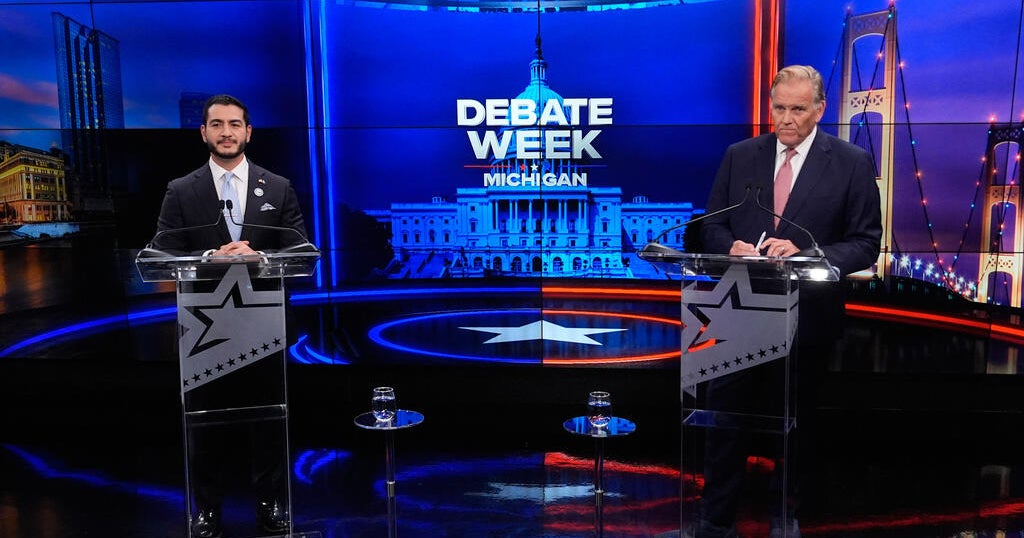
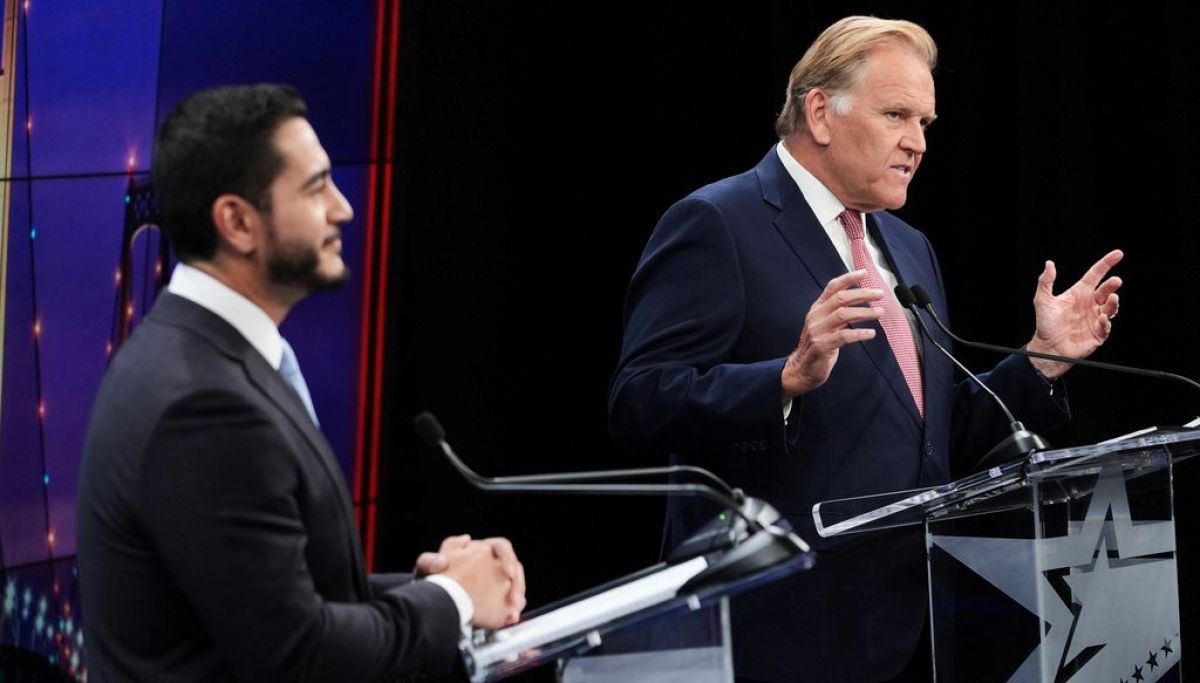
Photo via Washington Examiner

No knockout blow: Strategists say Michigan Senate debate unlikely to shift race

Read the original at Washington Examiner ↗
Cite

Chakraborty, B. (2026, October 9). No knockout blow: Strategists say Michigan Senate debate unlikely to shift race. Washington Examiner. https://www.washingtonexaminer.com/news/senate/4761529/no-knockout-blow-strategists-say-michigan-senate-debate-unlikely-to-shift-race/

Dated when The Aporia collected the article, usually within hours of publication. Check the original for its exact date and byline.

Washington Examiner · collected 2026-10-09 · by Barnini Chakraborty

Quick Summary

In Michigan's Senate debate, neither candidate Mike Rogers nor Abdul el Sayed delivered a decisive blow that would shift the race. The exchange highlighted political challenges for both candidates, including Rogers’s association with President Trump and el Sayed’s struggle to appeal beyond his progressive base. Strategists from both parties agreed that the debate reinforced existing voter perceptions rather than changing them significantly. The debate focused on economic issues and policy differences without offering new solutions or convincing voters of a clear path forward.
Written by AI on 2026-10-09, from this article's own text only (the story summary below draws on all the coverage).
See how they differ ↓

AI analysis

Story summary

On October 8, Abdul El-Sayed and Mike Rogers faced off in a heated Senate debate in Grand Rapids, Michigan, for the state's open seat. The Democrat, El-Sayed, dodged questions about whether Iran or Israel poses a greater threat to the US by focusing on domestic issues like education and healthcare. Republican Rogers accused El-Sayed of being a "con man" without a medical license and called him a "sock puppet" for President Trump. The debate also touched on Iran, tariffs, and immigration, with both candidates engaging in personal attacks rather than substantive policy discussions. This race is crucial as Michigan's Senate seat could influence the balance of power in the chamber.

Written for “Michigan Senate Debates” on 2026-11-20, grounded in this article and the 23 other(s) covering the same event.

How they differ

11 outlets covered “Michigan Senate Debates”.

What each outlet says

One AI summary per outlet of its latest article on this story, written from that article alone and checked against it. Open the article for the outlet's own words.

Washington ExaminerThis outlet9 Oct

In Michigan's Senate debate, neither candidate Mike Rogers nor Abdul el Sayed delivered a decisive blow that would shift the race. The exchange highlighted political challenges for both candidates, including Rogers’s association with President Trump and el Sayed’s struggle to appeal beyond his progressive base. Strategists from both parties agreed that the debate reinforced existing voter perceptions rather than…

No knockout blow: Strategists say Michigan Senate debate unlikely to shift race (this article)5 articles from Washington Examiner on this story
CBS News9 Oct

CBS News reporters Skyler Henry and Aaron Navarro discuss the recent heated Senate debates that took place in Georgia and Michigan on Thursday evening. The article recaps the significant moments and arguments from these debates, providing insights into the candidates' stances without personal commentary.

Recapping fiery Senate debates in Georgia and Michigan →7 articles from CBS News on this story
New York Post9 Oct

Abdul El-Sayed, a Democratic Senate nominee in Michigan, faced backlash during a televised debate when he refused to label Israel as a U.S. ally if it leads the country into unnecessary wars. This stance has raised concerns among Jewish Democrats who are questioning their support for him. During the debate with Republican rival Mike Rogers, El-Sayed declined to directly compare the threats posed by Iran and Israel…

Abdul El-Sayed under fire from Jewish Dems after refusing to call Israel a US ally →3 articles from New York Post on this story
Fox News9 Oct

President Donald Trump claimed in a Truth Social post that Republican candidate Mike Rogers "completely obliterated" Democratic opponent Abdul El-Sayed during a debate on Thursday night in Michigan. Trump called El-Sayed a “Jihadist lunatic” who hates the country and Black people, while praising Rogers as an American patriot and a strong contender for the Senate seat. The article includes El-Sayed's response…

Trump says Rogers 'completely obliterated' El-Sayed in debate →2 articles from Fox News on this story
Daily Mail9 Oct

Democratic Senate candidate Abdul El-Sayed and Republican Mike Rogers engaged in a heated debate Thursday night in Michigan, trading personal insults as they campaigned for the seat left open by outgoing Senator Gary Peters. Rogers called El-Sayed a "glitchy AI chatbot" and accused him of being bought off by Hamas, while El-Sayed labeled Rogers as weak and a "sock puppet" for President Trump on Iran policy. The…

'Con man' vs 'sock puppet': Michigan Senate rivals trade savage insults as 'glitchy AI chatbot' jab lights up debate →
NBC News9 Oct

In a Michigan Senate debate, Democrat Abdul El-Sayed and Republican Mike Rogers clashed over issues like Iran’s war, gas prices, and tariffs. The debate, hosted by WOOD TV in Grand Rapids, saw each candidate attacking the other's credibility and positions, with Rogers calling El-Sayed a "con man" and El-Sayed accusing Rogers of changing stances to appease President Trump. The exchange included personal jabs about…

Sparks fly as Abdul El-Sayed and Mike Rogers face off in first Michigan Senate debate →
Show 5 more outlets
Toronto Star9 Oct

During a heated Michigan Senate debate, Republican candidate Mike Rogers faced criticism over President Donald Trump’s tariffs on Canada. The discussion arose early in the debate when Rogers was questioned about an advertisement where he stated "Canada is not our enemy," despite his history of supporting Trump's trade policies. Voters may see this as significant in the upcoming midterm election given both…

Michigan Republican faces pressure during heated debate on Trump's Canada tariffs →
CBC9 Oct

Mike Rogers, a Republican candidate for U.S. Senate in Michigan, faced criticism during a debate about President Donald Trump’s trade war with Canada. The debate highlighted how Rogers’ previous advertisement stating "Canada is not our enemy" conflicts with his support for tariffs. When asked to clarify, Rogers expressed desire to see the trade deal resolved and claimed higher U.S. tariffs on Canadian goods are too…

Michigan Senate hopeful Mike Rogers faces pressure over Trump's trade war →
Al Jazeera9 Oct

In Michigan's contentious Senate race ahead of the U.S. midterm elections, Democratic nominee Abdul El-Sayed and Republican candidate Mike Rogers engaged in a heated debate filled with personal attacks and accusations related to El-Sayed's Muslim identity. Rogers accused El-Sayed of being soft on terrorism and having ties to individuals listed on terrorist watchlists, while El-Sayed defended himself against these…

Key takeaways from US Senate debate in Michigan between El-Sayed, Rogers →
The Guardian9 Oct

The article reports on key takeaways from Senate debates held in Michigan, Georgia, and Maine during the US midterm election season. Affordability emerged as a central theme across all three debates, with candidates addressing issues such as gas prices, groceries, housing, and healthcare costs. In Georgia, Democrat Jon Ossoff accused Republican candidate Mike Collins of supporting policies that benefit data center…

US midterms: key takeaways from Senate debates in Michigan, Georgia and Maine →

Where they agree and split

Agreed

AI · cited, from two or more outlets

  • The Senate candidates debated on Thursday night, with both engaging in personal attacks against each other.23

Disputed

Picked by our model, which is sometimes wrong

  • El-Sayed refused to answer whether Iran or Israel is a bigger threat, while Rogers accused El-Sayed of having foreign sympathies and being soft on terrorism.53

Framing

How the first headlines put it

  • CBS News framed the event as high-stakes Senate debates in multiple states, while Daily Mail highlighted personal insults exchanged between candidates.12
  • New York Post focused on El-Sayed's refusal to answer a question about Iran and Israel, whereas other outlets emphasized the overall tone of the debate.67
Attributed to a source1
Stated as fact10
The headlines (11)

El-Sayed refuses to say whether Iran is more of a threat than Israel in stunning Michigan Senate debate moment New York Post · attributed to a source

Michigan, Georgia holding high-stakes Senate debates CBS News · stated as fact

'Con man' vs 'sock puppet': Michigan Senate rivals trade savage insults as 'glitchy AI chatbot' jab lights up debate Daily Mail · stated as fact

Sparks fly as Abdul El-Sayed and Mike Rogers face off in first Michigan Senate debate NBC News · stated as fact

El Sayed dodges question on whether Israel or Iran poses greater threat to US: ‘Both of them have proven dangerous in their own way’ Washington Examiner · stated as fact

Michigan Republican faces pressure during heated debate on Trump's Canada tariffs Toronto Star · stated as fact

Michigan Senate hopeful Mike Rogers faces pressure over Trump's trade war CBC · stated as fact

Michigan Senate debate erupts into personal attacks as Rogers, El-Sayed clash over Israel, Iran and more Fox News · stated as fact

Key takeaways from US Senate debate in Michigan between El-Sayed, Rogers Al Jazeera · stated as fact

US midterms: key takeaways from Senate debates in Michigan, Georgia and Maine The Guardian · stated as fact

WATCH: Biggest moments after candidates face off in high-stakes debates in race to midterms ABC News · stated as fact

Words to watch (2)

Guy Benson slams el Sayed’s debate answer on Israel-Iran conflict: ‘Shouldn’t be difficult at all to answer’ Washington Examiner

El-Sayed refuses to say whether Iran is more of a threat than Israel in stunning Michigan Senate debate moment New York Post

The full story: what happened, how it changed, and all 24 articles →

Compared with similar articles

This article reads unscored and hedges 15% of its claims. Each row says how that neighbour differs.
NBC News
Hedges 3 of 60 claims Outlet record 78/100
Toronto Star
Hedges 1 of 3 claims Outlet record 64/100
CBS News
Hedges 2 of 33 claims Outlet record 67/100
Al Jazeera
Leans right Hedges 5 of 69 claims Outlet record 60/100
Washington Examiner
Leans left Hedges 4 of 40 claims Outlet record 67/100
ABC News (US)
Hedges 0 of 2 claims Outlet record 67/100
NBC News
Leans left Hedges 0 of 33 claims Outlet record 78/100
“Article A describes a debate in Michigan's governor's race, while Article B discusses a Senate debate involving different candidates.”
CBS News
Hedges 0 of 2 claims Outlet record 67/100

Story

Michigan Senate Debates
Politics · 24 article(s) covering the same event. Compare every outlet's account →
How this article was measured signals, leaning charts, publisher record, byline, topics and claims

Signals How these are calculated →

Claims extracted
48
sentences that state something as happening or true
Uncertain
15%
7 of 48 hedged ("reportedly", "may", "according to")
Leaning
withheld
no quote in the article backed the model's score
Publisher signals
67/100
Washington Examiner's corrections and hedging, across everything collected from it. Not a measure of accuracy.
Outlets on this story
24
Politics
Same framing elsewhere
1
articles that frame the event the way this one does
Analyzed 2026-10-09 · how these are computed

How this is being covered How these are calculated →

Article leaning vs. publisher reliability
Source leaning vs. consistency

Publisher

Washington Examiner · 5185 article(s) · 11 correction(s) detected
Running correction rate · 11 correction(s)

Who wrote this

Barnini Chakraborty
42 article(s) here · 1 carrying a prediction
Gov. Gavin Newsom (D-CA) could announce a 2028 presidential bid as early as January, hoping to establish himself as the Democratic front-runner.
Gov. Gavin Newsom (D-CA) said he will decide in early January 2027 whether to seek the Democratic presidential nomination in 2028, putting a timetable on a decision that has fueled speculation about his political future for more than a year.
Despite repeated warnings and visits from social workers, Gabriel endured months of abuse before his death on May 22, 2013, becoming the victim of one of the state’s most notorious child abuse cases.
Sen.-elect Abdul el Sayed (D-MI) is betting President Donald Trump’s appetite for political credit could create an opening for one of Democrats’ most ambitious healthcare proposals — or leave Republicans defending their opposition to expanded coverage.
Gov. Gavin Newsom (D-CA) spent much of the past year trying to establish himself as the Democrat most willing to take the fight directly to President Donald Trump.
2026-11-11 · assertive framing · Did the blue wave leave Gavin Newsom behind?
Los Angeles City Councilwoman Nithya Raman defeated Mayor Karen Bass on Tuesday, unseating the incumbent after a bruising campaign centered on the city’s response to the devastating Palisades wildfire, homelessness, and frustration with basic city services.
Sen.-elect Abdul el Sayed’s (D-MI) victory in Michigan will test whether Democrats can accommodate a progressive insurgent who has repeatedly challenged the party establishment or whether his combative style will make him a headache for current Senate Minority Leader Chuck Schumer (D-NY).
Rogers argued that el Sayed’s single-payer proposal would cost trillions of dollars and limit patients’ choices.
Recommended Stories Luria, a Navy veteran who served in Congress from 2019 to 2023, will return to Washington after making her work on the House committee investigating the Jan. 6, 2021, attack on the Capitol a defining part of her political profile.
Recommended Stories Becerra, 68, will succeed Gov. Gavin Newsom (D-CA), who was barred by term limits from running again and is widely considered a front-runner for the 2028 Democratic presidential nomination.
Also by Barnini Chakraborty
Nothing else under this byline is closely related to this article, so these are simply their most recent.
All 42 articles by Barnini Chakraborty →

Topics

Democratic Grand Rapids Michigan Senate the Washington Examiner

Subjects

Rogers PERSON · 10× Trump PERSON · 5× the Washington Examiner ORG · 4× El Sayed PERSON · 3× Michigan GPE · 3× Iran GPE · 2× Satterfield PERSON · 2× Shroff PERSON · 2× Wright PERSON · 2× Senate ORG · 1×

Narrative

“Each candidate is in a similar mode where they want to tap into a broader political base or movement without owning some of the main figures and ideas from those movements, el Sayed with the far left and Rogers with MAGA,” he told the Washington Examiner.
framing: assertive · carried by 1 article(s) · first seen 2026-10-09
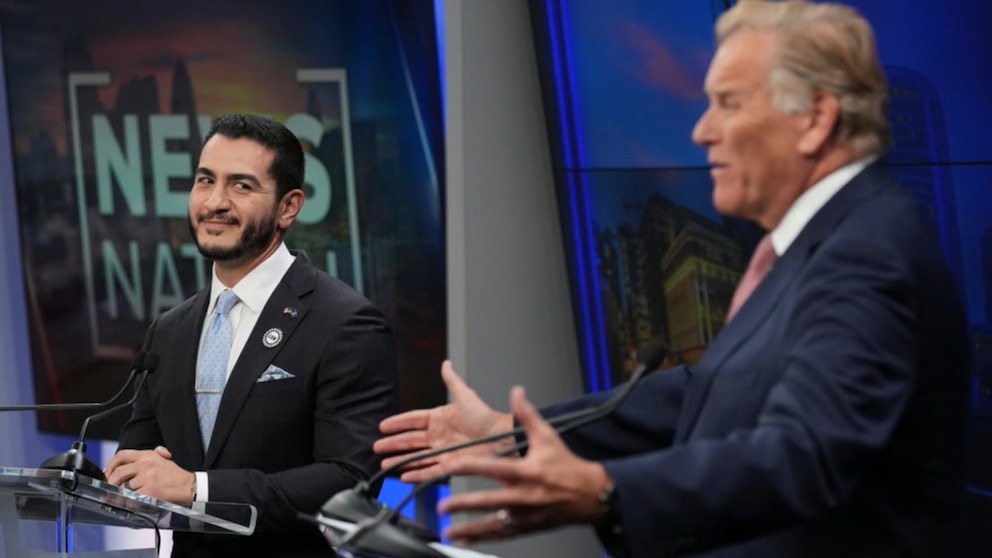
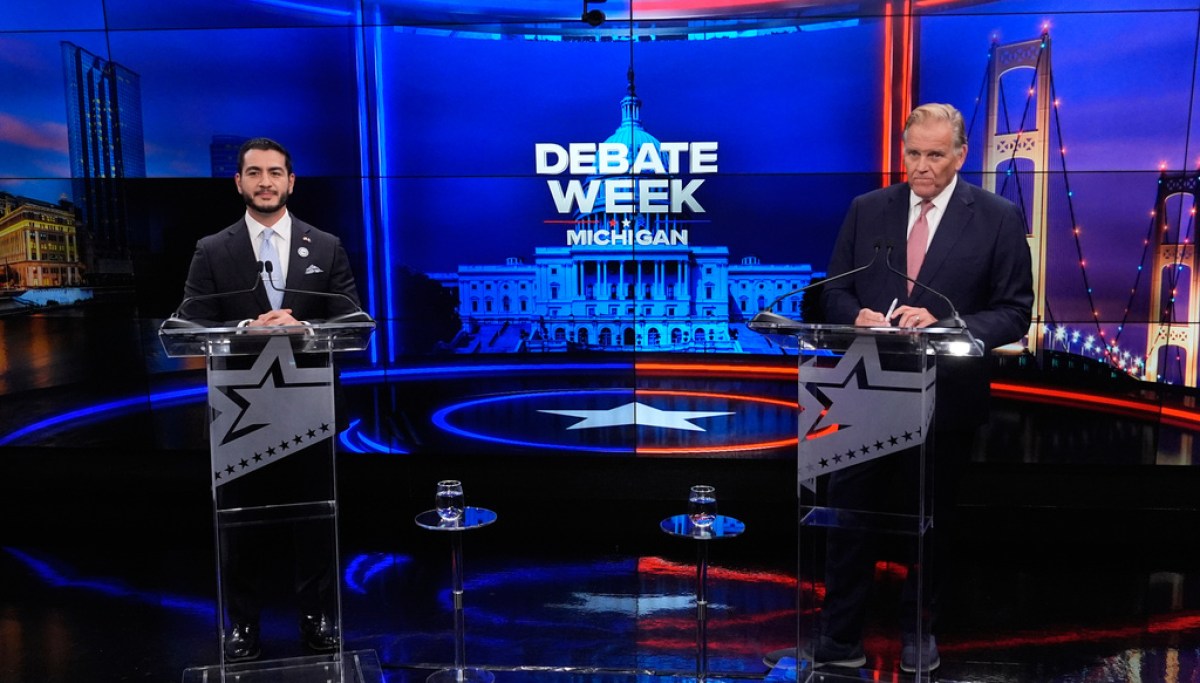
Neither candidate landed a decisive blow in Michigan’s first Senate debate, but the exchange exposed the political liabilities both must overcome in a race that could determine control of the chamber: Mike Rogers’s ties to President Donald Trump and Abdul el Sayed’s challenge in winning over voters beyond his progressive base.
2026-10-09 · Washington Examiner
No knockout blow: Strategists say Michigan Senate debate unlikely to shift race · assertive framing

Claims (48 extracted, 7 hedged)

Neither candidate landed a decisive blow in Michigan’s first Senate debate, but the exchange exposed the political liabilities both must overcome in a race that could determine control of the chamber: Mike Rogers’s ties to President Donald Trump and Abdul el Sayed’s challenge in winning over voters beyond his progressive base. uncertain
that → land → base
Despite the personal attacks and sharp disagreements during Thursday’s debate in Grand Rapids, strategists from both parties said neither candidate delivered a moment likely to change the race, with both largely reinforcing voters’ existing impressions. asserted
both → say → impressions
“I don’t think last night’s debate fundamentally changed the race, but it certainly highlighted the differences between these two candidates,” Jay Satterfield, a Democratic strategist and principal at North Shore Strategies, told the Washington Examiner. asserted
Satterfield → think → Examiner
Satterfield said those arguments are unlikely to reshape the contest on their own. asserted
arguments → say → own
The more consequential question is which candidate can convince voters that he understands their economic frustrations and has a credible plan to address them. asserted
he → convince → them
“These aren’t abstract political arguments for working families in Michigan who are trying to pay their bills, put food on the table, and get ahead,” Satterfield said. asserted
Satterfield → work → table
“Ultimately, I think this race will come down to which candidate can convince those families that their economic struggles are being heard and that Washington is prepared to do something meaningful about them.” asserted
Washington → think → them
Jeff Burton, a Republican strategist and co-founding partner at Maven Advocacy, was even more dismissive of the debate’s impact. asserted
Burton → found → impact
“I doubt last night changed many minds,” Burton told the Washington Examiner. asserted
Burton → doubt → Examiner
“Both candidates spent more time reminding voters why they shouldn’t vote for the other guy than giving them a reason to vote for themselves.” asserted
they → spend → themselves
Familiar attacks, few new answers Much of the debate revolved around vulnerabilities that have already defined the campaign. asserted
that → revolve → campaign
Rogers faced pressure to explain where he differs from Trump, particularly on tariffs and the war in Iran. asserted
he → face → Iran
El Sayed faced questions about his foreign policy views and his ties to progressive streamer Hasan Piker. asserted
Sayed → face → Piker
Kaivan Shroff, a politics and culture commentator, said both candidates are trying to appeal to voters beyond their political bases without fully embracing the figures and positions associated with their respective movements. asserted
candidates → say → movements
“Each candidate is in a similar mode where they want to tap into a broader political base or movement without owning some of the main figures and ideas from those movements, el Sayed with the far left and Rogers with MAGA,” he told the Washington Examiner. asserted
he → want → Examiner
But Shroff argued that Rogers faces a particular challenge because Trump is the sitting president, leaving Rogers to defend his party’s record while trying to distance himself from policies that could hurt him with swing voters. uncertain
that → argue → voters
“That matters and that is becoming clearer and clearer as Rogers unsuccessfully tries to do this weird tap dance where he embraces Trump but distances himself from Trump’s harmful economic policies that are hurting Michigan,” Shroff said. asserted
Shroff → matter → Michigan
Political pundit Jamie E. Wright said Rogers’ breaks with Trump on tariffs against Canada and the war in Iran could appeal to suburban and nonpartisan voters. uncertain
breaks → say → voters
But those disagreements also gave el Sayed an opportunity to question Rogers’ consistency. asserted
disagreements → give → consistency
Wright said Rogers’ decision to invoke terrorism during the debate could also alienate voters who prefer a more measured approach. uncertain
who → say → approach
“By bringing terrorism into the debate, Rogers may have been overreaching,” Wright told the Washington Examiner, comparing the tactic to a lawyer who loses a jury by trying too hard to sell an otherwise persuasive case. Andrew Koneschusky, founder and CEO of Beltway Advisors, said Rogers appeared defensive at times, changing the subject and resorting to personal attacks. uncertain
Rogers → bring → attacks
But he cautioned against assuming those exchanges would translate into meaningful movement among voters. asserted
exchanges → caution → voters
“The research on this is about as settled as political science gets,” Koneschusky told the Washington Examiner. asserted
Koneschusky → get → Examiner
“Across dozens of studies, debates rarely move the needle.” asserted
debates → move → needle
The exceptions tend to involve extraordinary moments, he said, adding that nothing in Grand Rapids approached the significance of the June 2024 presidential debate between Trump and former President Joe Biden. asserted
nothing → tend → Trump
That debate, held in Atlanta, upended the presidential election. asserted
debate → hold → election
Biden ended his reelection campaign, the Democratic Party tapped former Vice President Kamala Harris as its candidate, and Trump was reelected to the White House. asserted
Trump → end → House
In the Michigan debate, “both candidates mostly appealed to their own supporters,” Koneschusky said. asserted
Koneschusky → appeal → supporters
“Swing voters tend to be turned off by a shouting match, so to the extent either candidate was trying to reach beyond his base, a debate like last night’s probably didn’t accomplish that,” he added. asserted
he → tend → that
Neither candidate can escape political baggage The debate also offered little indication that either candidate had found a way to overcome the concerns that could limit his appeal. uncertain
that → escape → appeal
For Rogers, that meant convincing independents that he can act independently of Trump without alienating Republicans. asserted
he → mean → Republicans
Burton said the former congressman needs to establish that he is his own man rather than simply an extension of the president. asserted
he → say → president
El Sayed’s arguments on healthcare, affordability, and corporate power could resonate with voters, but his progressive foreign-policy positions could complicate his efforts to win over moderates. uncertain
positions → resonate → moderates
“Rogers doesn’t need people to know everything that el Sayed stands for with Iran and Israel,” Wright said. asserted
Wright → need → Iran
“Just some nonpartisan voters who believe his opinion doesn’t align with what Michiganders want.” asserted
Michiganders → believe → what
Burton said el Sayed must show he isn’t too far left for Michigan while building support among Jewish and black voters. asserted
he → say → voters
Koneschusky said el Sayed would be better served by keeping the focus on affordability and other economic concerns that cut across party lines rather than getting drawn into polarizing disputes. asserted
that → say → disputes
With no post-debate polling available, Koneschusky said he expects the overall numbers to remain largely unchanged. asserted
numbers → say → ?
He noted that el Sayed had held a narrow lead in recent polls, though the race remains competitive. asserted
race → note → polls
“The best predictor of post-debate polling is pre-debate polling,” he said. asserted
he → say → polling
…and 8 more, not listed.
Give feedback · no sign-in needed

No sign-in needed for now. Your note is sent without a name, so it cannot be answered.

History Support