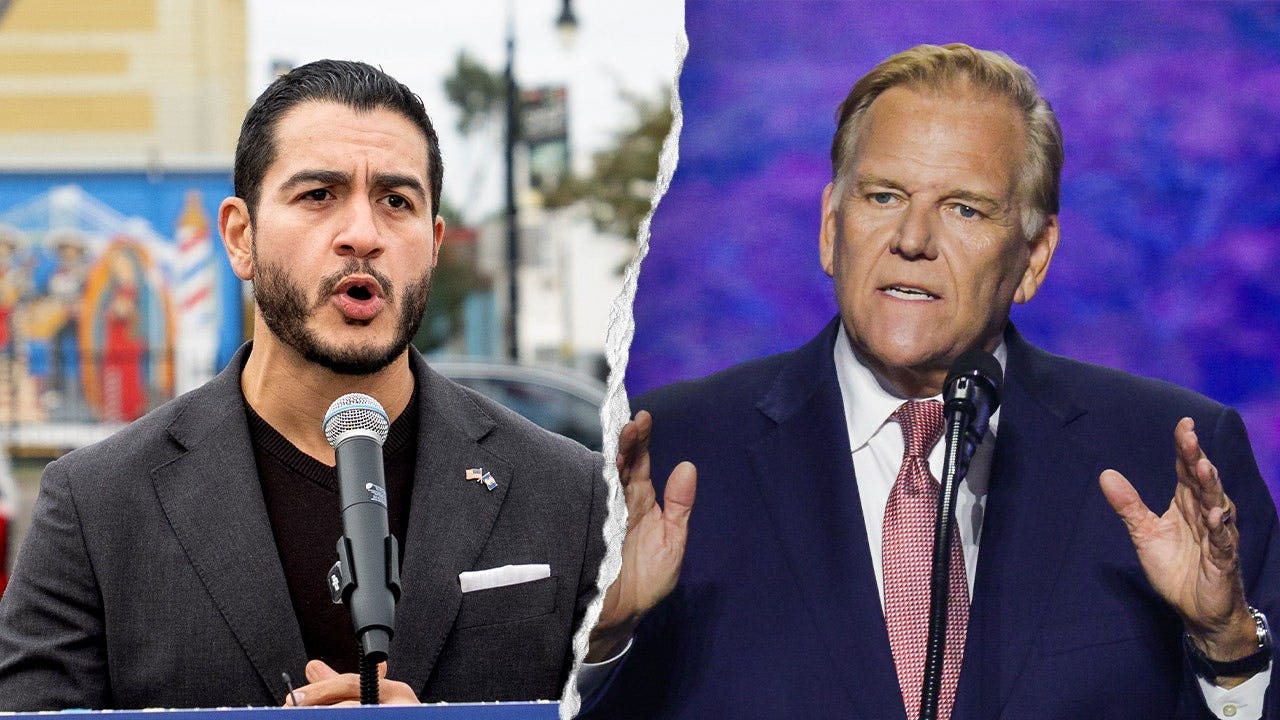
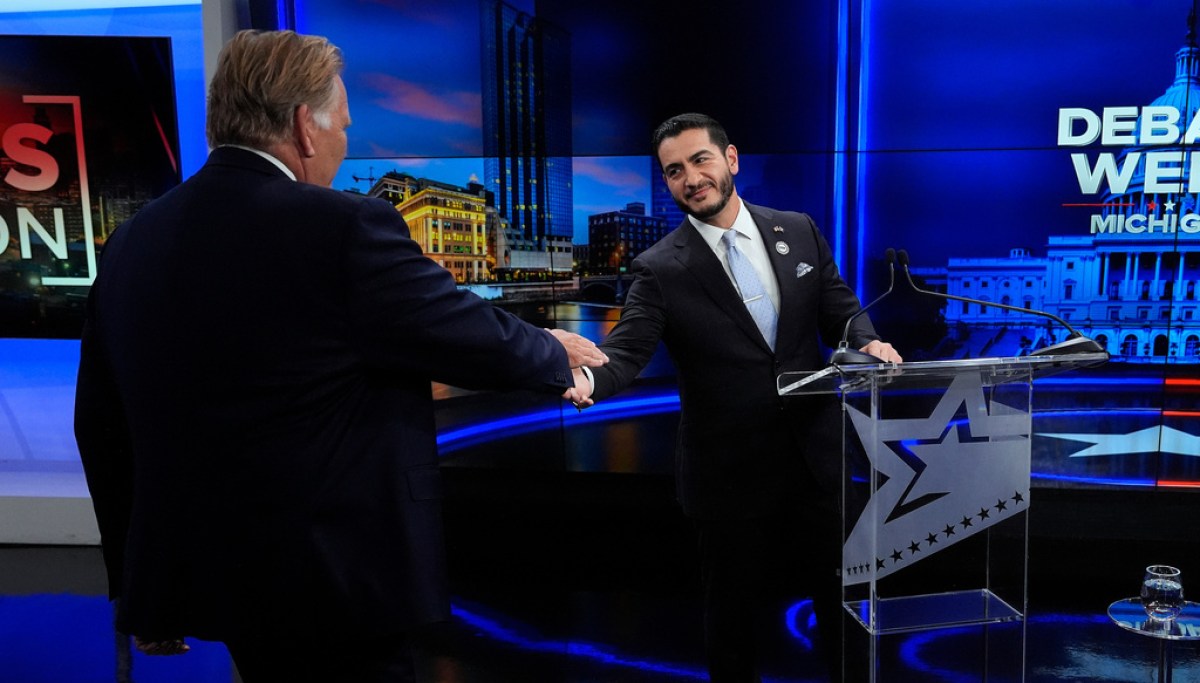
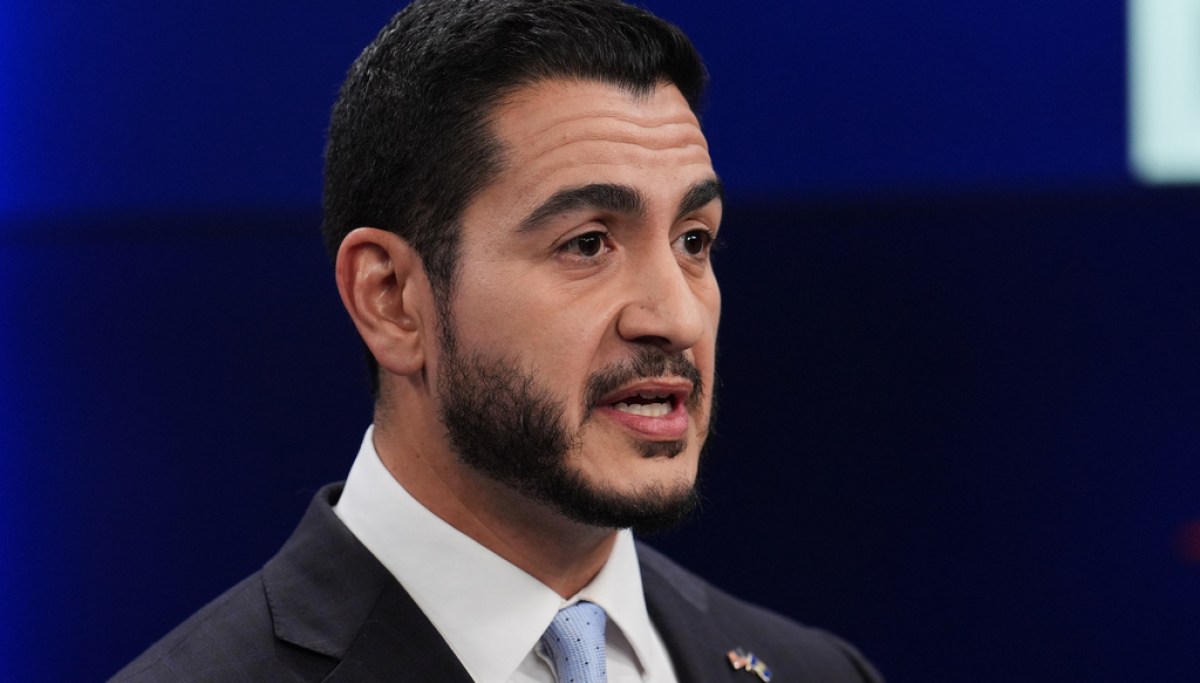
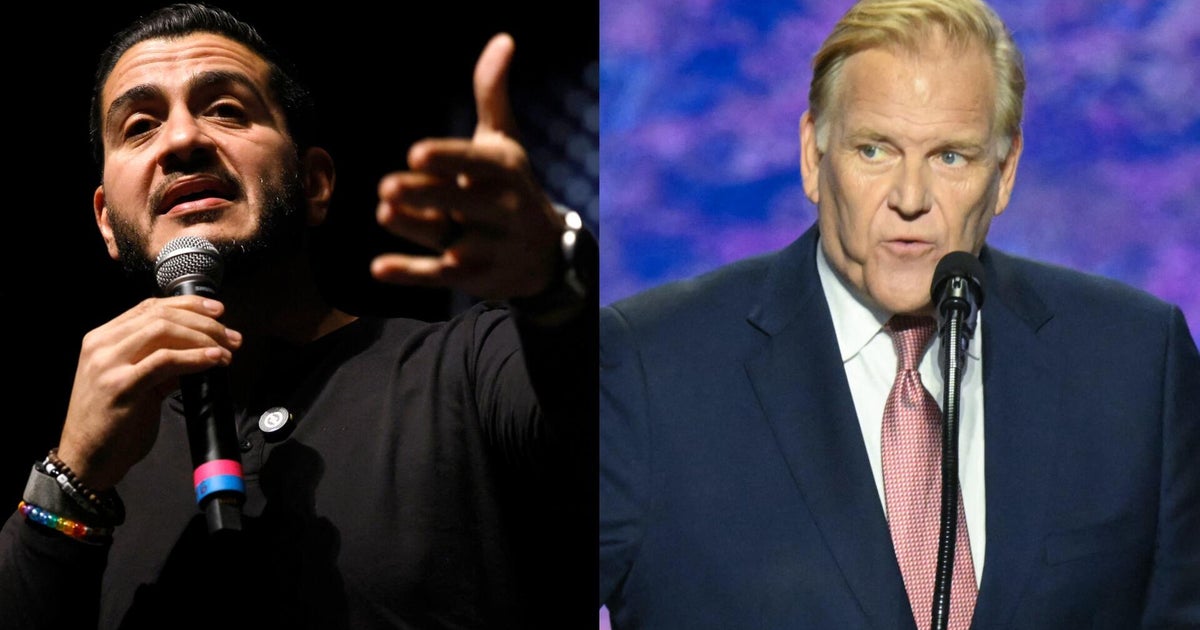
Photo via New York Post

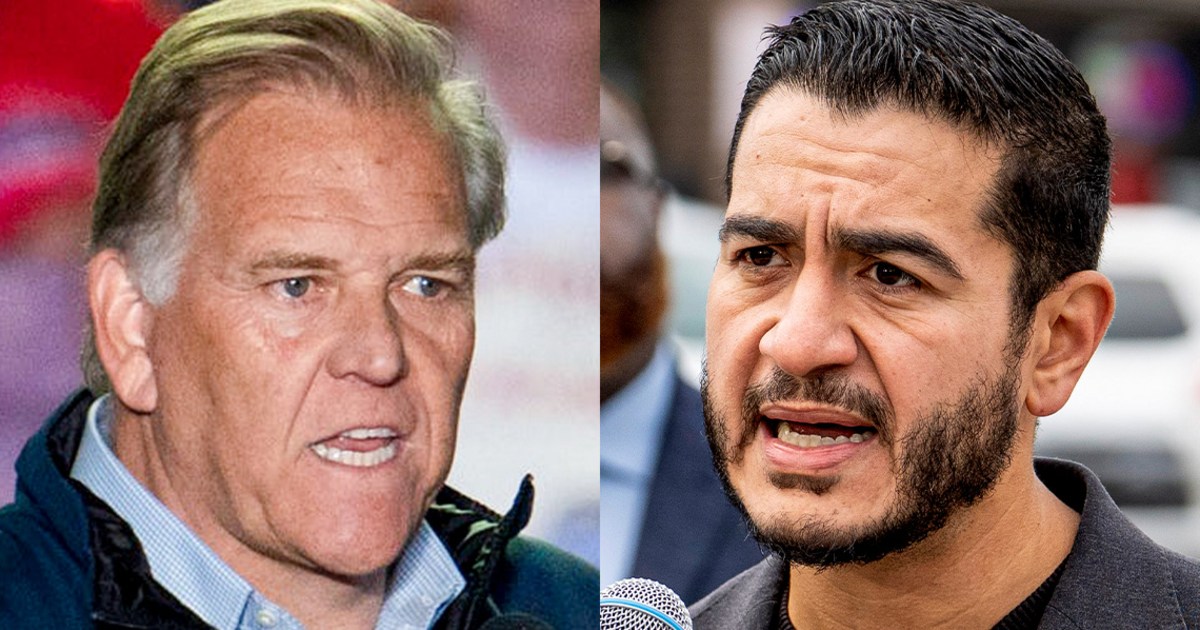
Abdul El-Sayed under fire from Jewish Dems after refusing to call Israel a US ally

Read the original at New York Post ↗
Cite

Goelz, A. (2026, October 9). Abdul El-Sayed under fire from Jewish Dems after refusing to call Israel a US ally. New York Post. https://nypost.com/2026/10/09/us-news/abdul-el-sayed-under-fire-from-jewish-dems-after-refusing-to-call-israel-a-us-ally/

Dated when The Aporia collected the article, usually within hours of publication. Check the original for its exact date and byline.

New York Post · collected 2026-10-09 · by Ally Goelz

Quick Summary

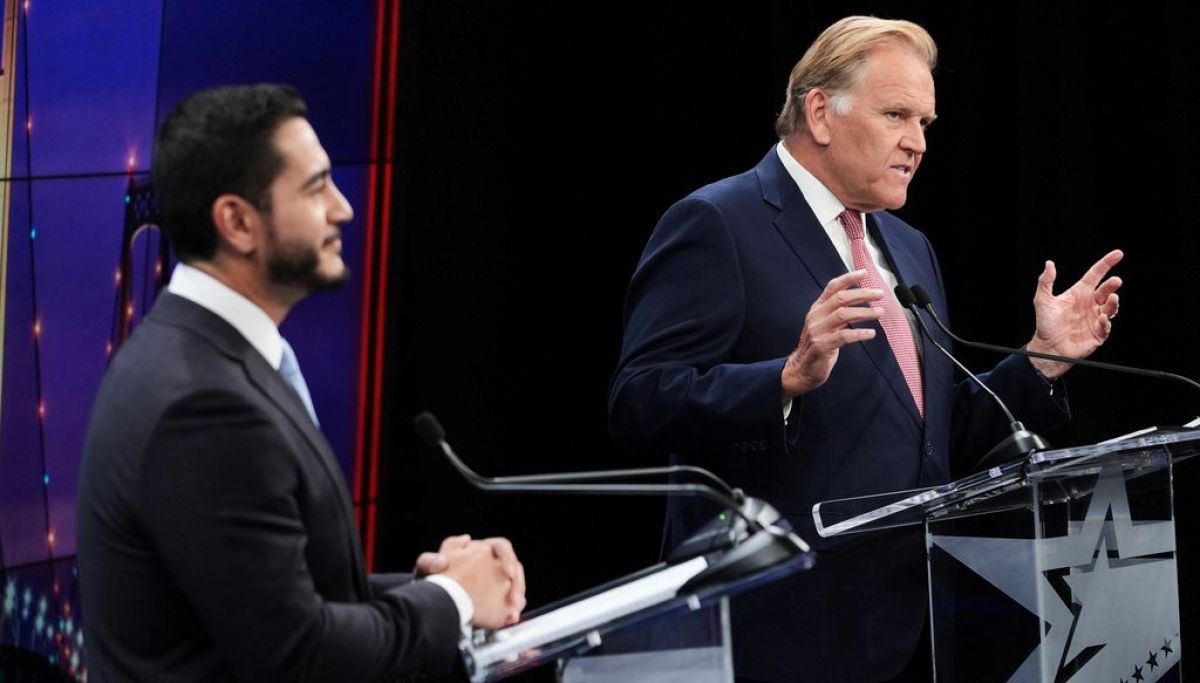
Abdul El-Sayed, a Democratic Senate nominee in Michigan, faced backlash during a televised debate when he refused to label Israel as a U.S. ally if it leads the country into unnecessary wars. This stance has raised concerns among Jewish Democrats who are questioning their support for him. During the debate with Republican rival Mike Rogers, El-Sayed declined to directly compare the threats posed by Iran and Israel, leading political analysts to suggest that this could harm his campaign's momentum in Michigan.
Written by AI on 2026-10-09, from this article's own text only (the story summary below draws on all the coverage).
See how they differ ↓

AI analysis

Story summary

On October 8, Abdul El-Sayed and Mike Rogers faced off in a heated Senate debate in Grand Rapids, Michigan, for the state's open seat. The Democrat, El-Sayed, dodged questions about whether Iran or Israel poses a greater threat to the US by focusing on domestic issues like education and healthcare. Republican Rogers accused El-Sayed of being a "con man" without a medical license and called him a "sock puppet" for President Trump. The debate also touched on Iran, tariffs, and immigration, with both candidates engaging in personal attacks rather than substantive policy discussions. This race is crucial as Michigan's Senate seat could influence the balance of power in the chamber.

Written for “Michigan Senate Debates” on 2026-11-20, grounded in this article and the 23 other(s) covering the same event.

How they differ

11 outlets covered “Michigan Senate Debates”.

What each outlet says

One AI summary per outlet of its latest article on this story, written from that article alone and checked against it. Open the article for the outlet's own words.

New York PostThis outlet9 Oct

Abdul El-Sayed, a Democratic Senate nominee in Michigan, faced backlash during a televised debate when he refused to label Israel as a U.S. ally if it leads the country into unnecessary wars. This stance has raised concerns among Jewish Democrats who are questioning their support for him. During the debate with Republican rival Mike Rogers, El-Sayed declined to directly compare the threats posed by Iran and Israel…

Abdul El-Sayed under fire from Jewish Dems after refusing to call Israel a US ally (this article)3 articles from New York Post on this story
CBS News9 Oct

CBS News reporters Skyler Henry and Aaron Navarro discuss the recent heated Senate debates that took place in Georgia and Michigan on Thursday evening. The article recaps the significant moments and arguments from these debates, providing insights into the candidates' stances without personal commentary.

Recapping fiery Senate debates in Georgia and Michigan →7 articles from CBS News on this story
Washington Examiner10 Oct

Washington Examiner columnist Guy Benson criticized Michigan Democratic Senate nominee Abdul el Sayed for his debate performance regarding the Israel-Iran conflict, calling his responses non-answers and insufficiently critical of Iran. During a debate on Thursday, WOOD TV8 moderator Rick Albin asked el Sayed which entity posed a greater threat to the United States: Israel or Iran. El Sayed dismissed the question as…

Guy Benson slams el Sayed’s debate answer on Israel-Iran conflict: ‘Shouldn’t be difficult at all to answer’ →5 articles from Washington Examiner on this story
Fox News9 Oct

President Donald Trump claimed in a Truth Social post that Republican candidate Mike Rogers "completely obliterated" Democratic opponent Abdul El-Sayed during a debate on Thursday night in Michigan. Trump called El-Sayed a “Jihadist lunatic” who hates the country and Black people, while praising Rogers as an American patriot and a strong contender for the Senate seat. The article includes El-Sayed's response…

Trump says Rogers 'completely obliterated' El-Sayed in debate →2 articles from Fox News on this story
Daily Mail9 Oct

Democratic Senate candidate Abdul El-Sayed and Republican Mike Rogers engaged in a heated debate Thursday night in Michigan, trading personal insults as they campaigned for the seat left open by outgoing Senator Gary Peters. Rogers called El-Sayed a "glitchy AI chatbot" and accused him of being bought off by Hamas, while El-Sayed labeled Rogers as weak and a "sock puppet" for President Trump on Iran policy. The…

'Con man' vs 'sock puppet': Michigan Senate rivals trade savage insults as 'glitchy AI chatbot' jab lights up debate →
NBC News9 Oct

In a Michigan Senate debate, Democrat Abdul El-Sayed and Republican Mike Rogers clashed over issues like Iran’s war, gas prices, and tariffs. The debate, hosted by WOOD TV in Grand Rapids, saw each candidate attacking the other's credibility and positions, with Rogers calling El-Sayed a "con man" and El-Sayed accusing Rogers of changing stances to appease President Trump. The exchange included personal jabs about…

Sparks fly as Abdul El-Sayed and Mike Rogers face off in first Michigan Senate debate →
Show 5 more outlets
Toronto Star9 Oct

During a heated Michigan Senate debate, Republican candidate Mike Rogers faced criticism over President Donald Trump’s tariffs on Canada. The discussion arose early in the debate when Rogers was questioned about an advertisement where he stated "Canada is not our enemy," despite his history of supporting Trump's trade policies. Voters may see this as significant in the upcoming midterm election given both…

Michigan Republican faces pressure during heated debate on Trump's Canada tariffs →
CBC9 Oct

Mike Rogers, a Republican candidate for U.S. Senate in Michigan, faced criticism during a debate about President Donald Trump’s trade war with Canada. The debate highlighted how Rogers’ previous advertisement stating "Canada is not our enemy" conflicts with his support for tariffs. When asked to clarify, Rogers expressed desire to see the trade deal resolved and claimed higher U.S. tariffs on Canadian goods are too…

Michigan Senate hopeful Mike Rogers faces pressure over Trump's trade war →
Al Jazeera9 Oct

In Michigan's contentious Senate race ahead of the U.S. midterm elections, Democratic nominee Abdul El-Sayed and Republican candidate Mike Rogers engaged in a heated debate filled with personal attacks and accusations related to El-Sayed's Muslim identity. Rogers accused El-Sayed of being soft on terrorism and having ties to individuals listed on terrorist watchlists, while El-Sayed defended himself against these…

Key takeaways from US Senate debate in Michigan between El-Sayed, Rogers →
The Guardian9 Oct

The article reports on key takeaways from Senate debates held in Michigan, Georgia, and Maine during the US midterm election season. Affordability emerged as a central theme across all three debates, with candidates addressing issues such as gas prices, groceries, housing, and healthcare costs. In Georgia, Democrat Jon Ossoff accused Republican candidate Mike Collins of supporting policies that benefit data center…

US midterms: key takeaways from Senate debates in Michigan, Georgia and Maine →

Where they agree and split

Agreed

AI · cited, from two or more outlets

  • The Senate candidates debated on Thursday night, with both engaging in personal attacks against each other.23

Disputed

Picked by our model, which is sometimes wrong

  • El-Sayed refused to answer whether Iran or Israel is a bigger threat, while Rogers accused El-Sayed of having foreign sympathies and being soft on terrorism.53

Framing

How the first headlines put it

  • CBS News framed the event as high-stakes Senate debates in multiple states, while Daily Mail highlighted personal insults exchanged between candidates.12
  • New York Post focused on El-Sayed's refusal to answer a question about Iran and Israel, whereas other outlets emphasized the overall tone of the debate.67
Attributed to a source1
Stated as fact10
The headlines (11)

El-Sayed refuses to say whether Iran is more of a threat than Israel in stunning Michigan Senate debate moment New York Post · attributed to a source

Michigan, Georgia holding high-stakes Senate debates CBS News · stated as fact

'Con man' vs 'sock puppet': Michigan Senate rivals trade savage insults as 'glitchy AI chatbot' jab lights up debate Daily Mail · stated as fact

Sparks fly as Abdul El-Sayed and Mike Rogers face off in first Michigan Senate debate NBC News · stated as fact

El Sayed dodges question on whether Israel or Iran poses greater threat to US: ‘Both of them have proven dangerous in their own way’ Washington Examiner · stated as fact

Michigan Republican faces pressure during heated debate on Trump's Canada tariffs Toronto Star · stated as fact

Michigan Senate hopeful Mike Rogers faces pressure over Trump's trade war CBC · stated as fact

Michigan Senate debate erupts into personal attacks as Rogers, El-Sayed clash over Israel, Iran and more Fox News · stated as fact

Key takeaways from US Senate debate in Michigan between El-Sayed, Rogers Al Jazeera · stated as fact

US midterms: key takeaways from Senate debates in Michigan, Georgia and Maine The Guardian · stated as fact

WATCH: Biggest moments after candidates face off in high-stakes debates in race to midterms ABC News · stated as fact

Words to watch (2)

Guy Benson slams el Sayed’s debate answer on Israel-Iran conflict: ‘Shouldn’t be difficult at all to answer’ Washington Examiner

El-Sayed refuses to say whether Iran is more of a threat than Israel in stunning Michigan Senate debate moment New York Post

The full story: what happened, how it changed, and all 24 articles →

Compared with similar articles

This article reads unscored and hedges 10% of its claims. Each row says how that neighbour differs.
Washington Examiner
Leans right Hedges 1 of 29 claims Outlet record 67/100
Washington Examiner
Leans left Hedges 0 of 24 claims Outlet record 67/100
“While both articles discuss Abdul El-Sayed's comments during a debate on October 9, 2026, they focus on different aspects of his responses and the reactions to them.”
CBS News
Hedges 1 of 2 claims Outlet record 67/100
“While both articles discuss a debate between Mike Rogers and Abdul El-Sayed, Article B focuses on the aftermath of the debate regarding El-Sayed's stance on Israel, rather than describing the debate itself.”
NBC News
Hedges 3 of 60 claims Outlet record 78/100
“While both articles cover debates between Abdul El-Sayed and Mike Rogers on October 9, 2026, Article A focuses on their main debate covering various topics, while Article B specifically highlights a separate incident where El-Sayed faced backlash for his comments about Israel.”
Washington Examiner
Leans left Hedges 4 of 40 claims Outlet record 67/100
“While both articles refer to a debate between Abdul el Sayed and Mike Rogers on October 9, 2026, Article B focuses specifically on El-Sayed's comments about Israel, which is not the sole or main focus of Article A.”
The Independent
Hedges 0 of 32 claims Outlet record 59/100
“The articles describe different aspects of the same general topic (Abdul El-Sayed's candidacy and controversy), but they are not reporting on the same specific incident or time.”
Al Jazeera
Leans right Hedges 5 of 69 claims Outlet record 60/100
“Article A describes a debate between El-Sayed and Rogers, while Article B focuses on a controversy regarding El-Sayed's stance on Israel that occurred during or as part of the same debate. They are related but describe different aspects.”
Fox News
Hedges 0 of 19 claims Outlet record 67/100
“Article A discusses Trump's reaction to a debate where Rogers performed well against El-Sayed, while Article B focuses on the backlash El-Sayed is facing for his stance on Israel during the same debate.”

Story

Michigan Senate Debates
Politics · 24 article(s) covering the same event. Compare every outlet's account →
How this article was measured signals, leaning charts, publisher record, byline, topics and claims

Signals How these are calculated →

Claims extracted
40
sentences that state something as happening or true
Uncertain
10%
4 of 40 hedged ("reportedly", "may", "according to")
Leaning
withheld
no quote in the article backed the model's score
Publisher signals
66/100
New York Post's corrections and hedging, across everything collected from it. Not a measure of accuracy.
Outlets on this story
24
Politics
Same framing elsewhere
1
articles that frame the event the way this one does
Analyzed 2026-10-09 · how these are computed

How this is being covered How these are calculated →

Article leaning vs. publisher reliability
Source leaning vs. consistency

Publisher

New York Post · 21382 article(s) · 41 correction(s) detected
Running correction rate · 41 correction(s)

Who wrote this

Ally Goelz
38 article(s) here · 1 carrying a prediction
Van Hollen also claimed that Schumer’s team circulated a list of senators expected to back the incumbent leader — but that it included lawmakers who have already pledged their support to Van Hollen. “I can tell you that a number of those people on that list have actually committed to voting for me, and the others are very open to the idea of change,” he told CNN’s “State of the Union.
Bessent blasted the newspaper during Friday’s interview, stating his team has asked its editor not to publish the image because it could expose the exact location of his home.
“If the independence of the judiciary is eliminated, the Constitution as adopted in 1789 will no longer be the same,” Alito warned.
The incoming senator, who made Medicare for All a centerpiece of his campaign, said he would accept the president’s branding in exchange for a system guaranteeing Americans coverage from cradle to grave — without copays, premiums, or deductibles.
Flanagan, Minnesota’s lieutenant governor, will become the first Native American woman elected to the upper chamber.
The 2026 midterm elections will feature 36 gubernatorial races, with voters determining which party will shape the political direction of most states across the country.
“Democrats should understand that the allegation is almost certainly true — whatever conclusions they draw from that point could vary — and her denials calling it a right-wing, Islamophobic or racist conspiracy are almost certainly not,” Radinovich wrote.
National GOP operatives now fear the fallout could threaten the Senate re-election campaign of Republican Jon Husted in a state Trump won by 11 percentage points two years ago.
News of the search warrant, whether properly predicated or not, could affect voters’ decisions, which is exactly why federal law enforcement should not engage in such conduct when voters are casting their ballots.
Also by Ally Goelz
Nothing else under this byline is closely related to this article, so these are simply their most recent.
All 38 articles by Ally Goelz →

Topics

Democratic Democrats Iran Israel Jewish

Subjects

El-Sayed PERSON · 13× Israel GPE · 7× Jewish NORP · 6× Democrats NORP · 5× Rogers PERSON · 5× Dulio PERSON · 4× El-Sayed’s PERSON · 4× Democratic NORP · 3× Iran GPE · 3× The Post ORG · 3×

Narrative

El-Sayed sparked controversy Thursday night when he said he does not consider Israel an ally if the country draws the US into wars it does not need to fight, sidestepping a direct comparison between Israel and Iran. “He, himself, has created this predicament and he now comes off as confused and inauthentic,” Jeff McCall, a professor at DePauw University, told The Post.
framing: assertive · carried by 1 article(s) · first seen 2026-10-09
Abdul El-Sayed is facing fresh backlash over his stance on Israel after the Democratic Senate nominee clashed with Republican rival Mike Rogers during a heated debate — with some Jewish Democrats questioning whether they can support him, and experts saying his words could come back to haunt him.

Claims (40 extracted, 4 hedged)

Abdul El-Sayed is facing fresh backlash over his stance on Israel after the Democratic Senate nominee clashed with Republican rival Mike Rogers during a heated debate — with some Jewish Democrats questioning whether they can support him, and experts saying his words could come back to haunt him. uncertain
words → face → him
El-Sayed sparked controversy Thursday night when he said he does not consider Israel an ally if the country draws the US into wars it does not need to fight, sidestepping a direct comparison between Israel and Iran. “He, himself, has created this predicament and he now comes off as confused and inauthentic,” Jeff McCall, a professor at DePauw University, told The Post. asserted
McCall → spark → Post
He said that this debate shows that El-Sayed is “failing the rhetorical challenge.” asserted
Sayed → say → challenge
“I don’t consider an ally a country that takes us to wars we don’t need to fight,” El-Sayed said during the debate in Grand Rapids, Michigan, hosted by NewsNation and Nexstar’s WOOD-TV. asserted
Sayed → consider → NewsNation
The exchange came as Rogers grilled El-Sayed over his lack of statement marking the third anniversary of Hamas’ Oct. 7, 2023 terrorist attack on Israel. asserted
Rogers → come → Israel
El-Sayed insisted he had condemned the attack, but accused Rogers of turning other people’s pain into “political theater.” asserted
he → insist → theater
The comments have reignited questions about El-Sayed’s relationship with Jewish Democrats, some of whom have expressed reservations about backing the progressive candidate because of his views on Israel. asserted
some → reignite → Israel
The Michigan Democratic Jewish Caucus has not formally endorsed El-Sayed, despite supporting other candidates in federal elections. asserted
Caucus → endorse → elections
The Post reached out to the group for comment but did not immediately receive a response. asserted
Post → reach → response
The debate drew further scrutiny after El-Sayed dismissed questions about his handling of the Oct. 7 anniversary following the event. asserted
Sayed → draw → event
A political science professor at Oakland University, David Dulio, told The Post that Thursday’s debate was so important because El-Sayed is “arguably more to the left” than other progressives — like Sen. Bernie Sanders (I-VT) and Sen. Elizabeth Warren (D-Mass.) — on foreign policy. asserted
Sayed → tell → policy
Dulio said the big moment of the debate was when El-Sayed was asked which country posed the greater threat to the US: Israel or Iran — which the Democratic candidate wouldn’t answer. asserted
candidate → say → which
“Many Jewish Democrats in Michigan have been skeptical of El-Sayed and have expressed uncertainty about his candidacy,” Dulio said. asserted
Dulio → express → candidacy
“They were likely listening for a question like this to help them make up their minds.” asserted
them → listen → minds
When it comes to whether Jewish Democrats will be the deciding factor of the race, Dulio said his response could cause a “wobble” in the El-Sayed campaign — despite it humming along since the primaries. uncertain
it → come → primaries
“These positions could come back to haunt him,” Dulio said. uncertain
Dulio → come → him
“‘Dems for Rogers’ is real but we don’t know how big it is. asserted
it → know → Rogers
I imagine this is something that’s exceedingly difficult to poll. asserted
that → imagine → ?
Rogers will look to grow this group and I imagine Rogers’ campaign will have those debate clips in an ad very soon.” asserted
campaign → look → ad
One Democratic insider told The Post that outreach to Jewish Democrats is “an area of continued focus” for El-Sayed’s campaign. asserted
outreach → tell → campaign
“There will still be Jewish Michiganders who don’t vote for him, but I think he’s reaching those who are open to voting for him,” the source said. asserted
source → vote → him
Former GOP Rep. Peter Meijer, an Iraq war veteran, criticized El-Sayed’s response when asked which country posed the greater danger to the US: Israel or Iran. asserted
country → criticize → Israel
El-Sayed called the question “dumb” and a “ridiculous hypothetical.” asserted
Sayed → call → question
Meijer agreed that the question was poorly framed but argued that El-Sayed could have given a straightforward answer about the two countries’ relationship with the US. “He criticized Mike Rogers for asking him to condemn Hamas, Hezbollah, Al Qaeda, saying they’re scary words, but he hasn’t condemned them,” Meijer said on CNN. uncertain
Meijer → agree → CNN
Meijer added that El-Sayed’s response raised questions about whether his approach was political strategy, or reflected a deeper reluctance to address the issue. asserted
approach → add → issue
“At a certain point, it goes from either this is political malpractice at best, or he [El-Sayed] can’t, or he won’t because of something deeper — and that’s far more troubling. asserted
that → go → something
And I just don’t get it because I don’t want to get it because it really is dark,” he added. asserted
he → get → it
The controversy follows weeks of public disagreement among Jewish Democrats over whether El-Sayed’s positions on Israel should disqualify him from their support. asserted
positions → follow → support
In an Oct. 6 MS NOW interview, one lifelong Democratic voter said her decision hinged on Israel. asserted
decision → say → Israel
“I just would love for him to make a definitive statement, like just saying ‘I would like everyone to know I support Israel,’” she said. asserted
she → love → Israel
An Oct. 7th Republican Jewish Coalition ad featured lifelong Jewish Democrats in Michigan who said they “will never vote for Abdul El-Sayed. asserted
they → feature → Sayed
“I will never forgive El-Sayed for excusing the terrorists who caused this terrible incident,” one voter said. asserted
voter → forgive → incident
Another criticized his response in the immediate aftermath of a Michigan synagogue attack, recalling his comment that “hurt people, hurt people.” “And he is giving permission for another person to do it again,” the voter said. asserted
voter → criticize → it
El-Sayed was also pressed by reporters Friday about whether he was still mourning the death of Iran’s Supreme Leader Ayatollah Ali Khamenei. asserted
he → press → Leader
He declined to discuss the subject, telling reporters he was “not interested in talking about this” and urged them to ask about health care instead. asserted
he → decline → care
At the beginning of El-Sayed’s Senate bid, he campaigned more heavily on foreign affairs. asserted
he → campaign → affairs
McCall said that given El-Sayed’s prior statements, it would seem “unlikely” for him to modify his rhetoric “enough to ease the minds of supporters of Israel.” asserted
him → say → Israel
During Thursday’s debate, El-Sayed reiterated that he does not want US tax dollars funding weapons for foreign countries, including Israel. asserted
dollars → reiterate → Israel
He also said he would not support being drawn into a war with Iran. asserted
he → say → Iran
Rogers, meanwhile, defended Israel’s right to exist and protect itself, arguing that the US should stand by the Jewish state. asserted
US → defend → state
Give feedback · no sign-in needed

No sign-in needed for now. Your note is sent without a name, so it cannot be answered.

History Support