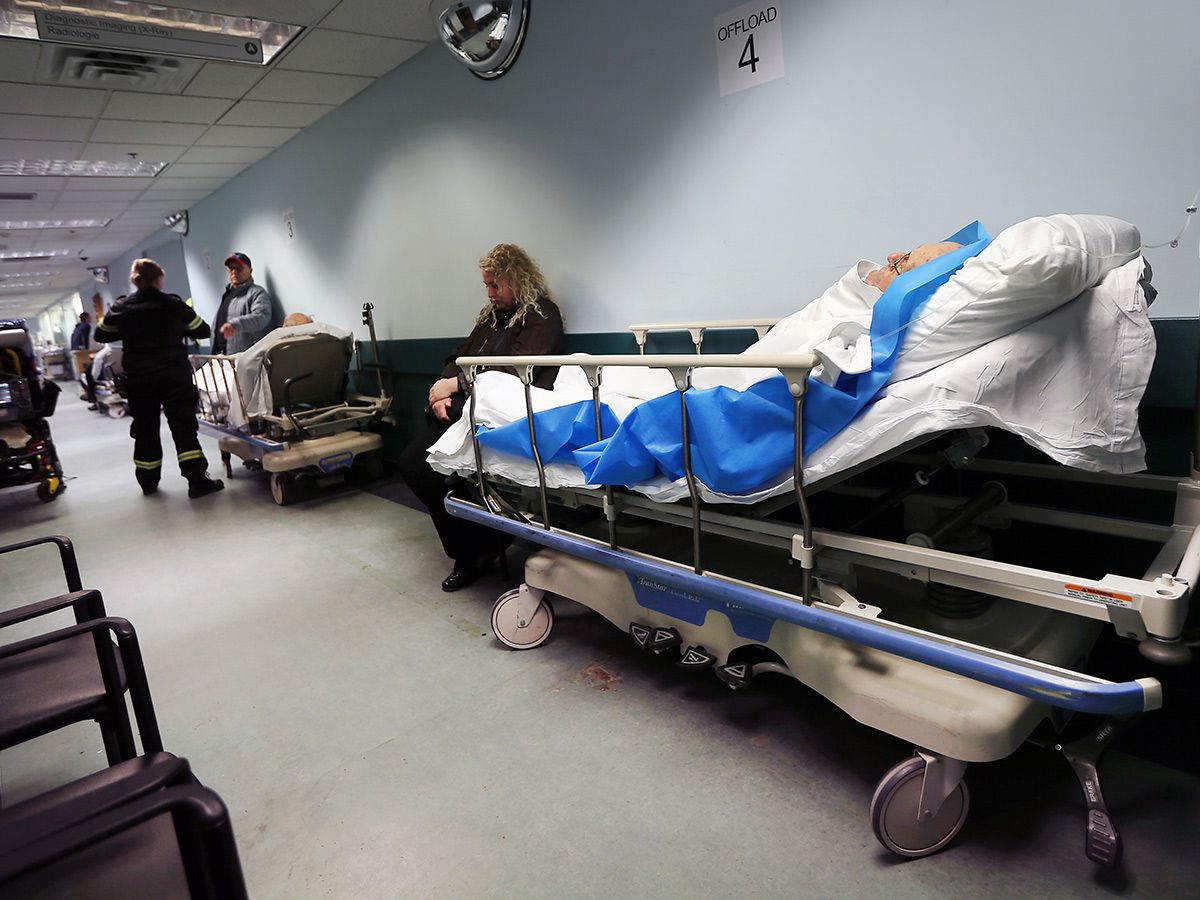
Photo via National Post

Why Ottawa plans to allow MAID for people incapable of consenting moments before death

Read the original at National Post ↗
Cite

Kirkey, S. (2026, October 9). Why Ottawa plans to allow MAID for people incapable of consenting moments before death. National Post. https://nationalpost.com/news/maid-consent-legislation

Dated when The Aporia collected the article, usually within hours of publication. Check the original for its exact date and byline.

National Post · collected 2026-10-09 · by Sharon Kirkey

Quick Summary

The Canadian federal Justice Minister Sean Fraser announced plans to introduce a bill that would allow for “advance requests” in medical aid in dying (MAID), enabling individuals diagnosed with serious and incurable diseases to consent to MAID before losing mental capacity. Critics warn this could lead to euthanasia being administered when the individual is no longer capable of giving informed consent, raising ethical concerns about who should make the final decision once a patient loses their ability to decide for themselves. The proposed change would amend the Criminal Code’s requirement that individuals must have the capacity to give explicit, final consent immediately before MAID administration.
Written by AI on 2026-10-09, from this article's own text only (the story summary below draws on all the coverage).
See how they differ ↓

AI analysis

Story summary

Justice Minister Sean Fraser announced on Wednesday that Canada will indefinitely exclude people whose sole underlying medical condition is a mental illness from eligibility for medical assistance in dying (MAID), following recommendations by a parliamentary committee. This decision comes despite previous plans to lift the ban in March 2027 and reflects ongoing debate about expanding MAID access to those with solely mental health conditions. The government will introduce legislation this fall to maintain this indefinite exclusion while also allowing individuals diagnosed with an illness that would eventually impair their ability to consent to provide advance requests for MAID.

Written for “MAID Policy Exclusions Mental Illness” on 2026-11-20, grounded in this article and the 11 other(s) covering the same event.

How they differ

9 outlets covered “MAID Policy Exclusions Mental Illness”.

What each outlet says

One AI summary per outlet of its latest article on this story, written from that article alone and checked against it. Open the article for the outlet's own words.

National PostThis outlet9 Oct

The Canadian federal Justice Minister Sean Fraser announced plans to introduce a bill that would allow for “advance requests” in medical aid in dying (MAID), enabling individuals diagnosed with serious and incurable diseases to consent to MAID before losing mental capacity. Critics warn this could lead to euthanasia being administered when the individual is no longer capable of giving informed consent, raising…

Why Ottawa plans to allow MAID for people incapable of consenting moments before death (this article)3 articles from National Post on this story
CBC7 Oct

Justice Minister Sean Fraser announced that the Canadian government will indefinitely extend the ban on medically assisted death (MAID) for individuals suffering solely from mental illness. This decision follows a special parliamentary committee report and internal departmental review. The government plans to introduce legislation this fall, which also includes provisions allowing advance consent for MAID in cases…

Ottawa to indefinitely extend MAID exclusion for people solely suffering from mental illness →2 articles from CBC on this story
Global News7 Oct

Justice Minister Sean Fraser announced that Canada will not extend medical assistance in dying (MAID) for individuals solely on the basis of mental illness, as the current law excludes this criteria and is set to expire in March 2027. The government plans to introduce legislation maintaining this exclusion indefinitely and will instead focus on expanding MAID access for people who have given consent at a time when…

Canada won’t expand MAID for mental illness alone, minister says →
BBC7 Oct

Canada has suspended plans to allow medically assisted dying for people with mental illness alone, citing a lack of consensus on eligibility criteria. Justice Minister Sean Fraser announced Wednesday that a new law will indefinitely postpone this expansion, which was previously set to take effect in March 2027. The government also intends to introduce legislation allowing patients with progressing incurable…

Canada suspends plans to expand assisted dying to people with mental illness →
South China Morning Post7 Oct

Canada will not permit medically assisted suicide for individuals suffering solely from mental illness, according to the justice minister's statement on Wednesday. This decision addresses one of Canada’s most contentious healthcare issues, following the legalization of assisted dying for those at the end of life in 2016 and its extension to people with serious and incurable illnesses in 2021, even if death was not…

Canada will not allow assisted suicide for those with only mental illness →
The Guardian7 Oct

Canada's federal government announced it will advance legislation to indefinitely bar individuals whose sole health condition is mental illness from accessing medical assistance in dying (Maid). This move comes as a response to ongoing debates over expanding eligibility criteria for the program, which currently allows terminally ill patients and those with reasonably foreseeable death access to physician-assisted…

Canada to extend assisted dying exclusion for people whose sole condition is mental illness →
Show 3 more outlets
The Free Press8 Oct

Prime Minister Mark Carney’s government announced on Wednesday that it will introduce legislation this fall to halt the expansion of medical assistance in dying (MAID) for people whose sole reason is mental illness. The decision follows an advisory committee recommendation against expanding MAID eligibility, which was set to make Canada one of a few countries allowing such procedures based solely on mental health…

Canada Makes It Harder to Die, but There’s a Catch →
Toronto Star8 Oct

Justice Minister Sean Fraser plans to introduce legislation this fall that would remove eligibility for medical assistance in dying (MAID) for those with solely mental health conditions, setting a deadline of March 17, 2027, for the change. The bill will also allow advance requests for MAID from individuals who could lose their ability to consent due to an incurable illness, before the capacity is lost. However…

Carney government to bar MAID for mental illness alone, permit advance requests →
The Globe and Mail8 Oct

The Canadian federal government plans to revise medical assistance in dying (MAID) regulations by prohibiting access solely due to mental illness while allowing eligible patients to make advance requests for MAID should they lose cognitive capacity later. Justice Minister Sean Fraser made this announcement, citing pressure from an upcoming vote on a Conservative private member's bill that would similarly restrict…

Morning Update: Canada reshapes future of MAID →

Where they agree and split

Agreed

AI · cited, from two or more outlets

  • Canada will not extend MAID for people whose sole underlying condition is a mental illness.23
  • The government plans to table legislation this fall that addresses both the exclusion of MAID for those with solely mental health conditions and advance requests for MAID.25

Disputed

Picked by our model, which is sometimes wrong

  • While some outlets report on the government's decision to indefinitely exclude people whose sole condition is a mental illness from accessing MAID, others highlight concerns about allowing advance requests for those who may lose their ability to consent.24

Framing

How the first headlines put it

  • CBC focuses on the government's announcement of next steps for medically assisted dying, while Global News highlights Canada’s decision not to expand MAID for mental illness alone.12
  • The National Post emphasizes the bill set for this fall that will bar people with a sole condition of mental illness from MAID, whereas The Free Press presents it as making it harder to die but includes a catch regarding advance requests.36
The full story: what happened, how it changed, and all 12 articles →

Compared with similar articles

This article reads unscored and hedges 9% of its claims. Each row says how that neighbour differs.
Toronto Star
Hedges 4 of 33 claims Outlet record 64/100
The Guardian
Leans right Hedges 3 of 26 claims Outlet record 64/100
“The articles discuss different aspects of Canada's planned changes to MAID legislation: Article A focuses on extending the ban for mental illness, while Article B discusses allowing advance requests for MAID.”
National Post
Leans right Hedges 1 of 18 claims Outlet record 60/100
“While both articles discuss similar topics and mention the same minister's announcement, they focus on different aspects of the MAID legislation: Article A emphasizes barring people with mental illness alone from accessing MAID, while Article B focuses on allowing advance requests for MAID when a person is no longer capable of consenting.”
Global News
Hedges 0 of 9 claims Outlet record 63/100
“The articles describe different aspects of legislative changes regarding MAID in Canada; Article A focuses on maintaining the exclusion for mental illness alone, while Article B discusses allowing advance requests for consent.”
BBC News
Leans right Hedges 0 of 16 claims Outlet record 65/100
“The articles describe different aspects of Canada's policy changes regarding medically assisted dying (MAID), with Article A focusing on suspending plans to expand MAID for mental illness, and Article B discussing future decriminalization of advance requests for MAID when people are no longer capable of consenting.”
The Globe and Mail
Leans right Hedges 1 of 38 claims Outlet record 51/100
“The articles discuss different aspects of Canada's medical assistance in dying legislation: Article A focuses on barring access for mental illness alone, while Article B discusses allowing advance requests despite loss of capacity.”
CBC News
Hedges 1 of 17 claims Outlet record 72/100
“The articles describe different aspects of the government's announcement regarding medical assistance in dying; Article A focuses on the general next steps announced by Justice Minister Sean Fraser, while Article B specifically addresses the plan to allow MAID for people incapable of consenting moments before death.”
The Free Press
Hedges 0 of 9 claims Outlet record 96/100
“The articles describe different aspects of legislative changes related to MAID in Canada; one focuses on halting expansion for mental illness while the other discusses allowing advance requests.”
National Post
Leans left Hedges 2 of 14 claims Outlet record 60/100
“The articles discuss different aspects of the MAID legislation and do not describe the exact same incident occurring at the same time.”

Story

MAID Policy Exclusions Mental Illness
Politics · 12 article(s) covering the same event. Compare every outlet's account →
How this article was measured signals, leaning charts, publisher record, byline, topics and claims

Signals How these are calculated →

Claims extracted
67
sentences that state something as happening or true
Uncertain
9%
6 of 67 hedged ("reportedly", "may", "according to")
Leaning
withheld
no quote in the article backed the model's score
Publisher signals
60/100
National Post's corrections and hedging, across everything collected from it. Not a measure of accuracy.
Outlets on this story
12
Politics
Same framing elsewhere
1
articles that frame the event the way this one does
Analyzed 2026-10-09 · how these are computed

How this is being covered How these are calculated →

Article leaning vs. publisher reliability
Source leaning vs. consistency

Publisher

National Post · 1242 article(s) · 2 correction(s) detected
Running correction rate · 2 correction(s)

Who wrote this

Sharon Kirkey
5 article(s) here · 1 carrying a prediction
“What we typically hear is, ‘If we were just able to properly fund the health system, everything would be OK.’
One anecdote that has stayed with her is the story of a mother whose autistic daughter ate her lunch in a bathroom stall because she couldn’t tolerate the sounds of other children chewing in the school cafeteria.
In a surprise move this week, federal Justice Minister Sean Fraser announced the Liberal government is fine-tuning a bill to be introduced sometime this fall that, in addition to placing an indeterminate hold on MAID for mental illness alone, would decriminalize “advance requests” for doctor-administered death.
Doctors couldn’t fully understand what was feeding the infection.
Midway through, the policy was partly rolled back: In May 2024, possession of any amount of drugs in all public places, including hospitals, on transit and in parks, was re-criminalized, though possession below the 2.5 gram threshold remained legal for adults in certain designated spaces, including private homes and overdose prevention sites.
Also by Sharon Kirkey
Nothing else under this byline is closely related to this article, so these are simply their most recent.

Topics

Alberta Canada Liberal The Criminal Code University of Toronto

Subjects

Quebec GPE · 3× Charlie PERSON · 2× Liberal NORP · 2× Alberta GPE · 1× Canada GPE · 1× Fraser ORG · 1× Netherlands GPE · 1× Sean Fraser PERSON · 1× Trudo Lemmens PERSON · 1× University of Toronto ORG · 1×

Narrative

Likewise, some wondered how to manage circumstances “where the person meets the conditions set out in their advance request but appears to refuse MAID after they have lost capacity.” “Euthanasia for people who are incapacitated is a very, very delicate matter,” Montreal family physician Laurence Normand-Rivest said this week at a press conference on Parliament Hill organized by the Euthanasia Prevention Coalition.
framing: assertive · carried by 1 article(s) · first seen 2026-10-09
In a surprise move this week, federal Justice Minister Sean Fraser announced the Liberal government is fine-tuning a bill to be introduced sometime this fall that, in addition to placing an indeterminate hold on MAID for mental illness alone, would decriminalize “advance requests” for doctor-administered death.

Claims (67 extracted, 6 hedged)

Just as one debate over euthanasia is being settled, another is emerging over Canada’s plans to allow people to consent to medical aid in dying (MAID) at some future date when they are no longer of sound mind. asserted
they → settle → mind
In a surprise move this week, federal Justice Minister Sean Fraser announced the Liberal government is fine-tuning a bill to be introduced sometime this fall that, in addition to placing an indeterminate hold on MAID for mental illness alone, would decriminalize “advance requests” for doctor-administered death. asserted
that → announce → death
Critics say the government is preparing to cross a new line, this one based on the fundamental principle of consent. asserted
government → say → consent
Performing euthanasia on the basis of a person’s advance request “will mean that people will receive MAID when they no longer understand what is happening to them,” said Trudo Lemmens, a University of Toronto professor of health law and policy. asserted
Lemmens → perform → law
Another thorny ethical concern: who makes the final call that it’s time to act on an advance request once the person has lost the capacity to decide for themselves? asserted
person → make → themselves
The Criminal Code generally requires that a person have the capacity to consent to receive MAID immediately before death is administered. asserted
death → require → MAID
The Liberal government is proposing to change that. asserted
government → propose → that
Here’s a look at why that’s making some people nervous. asserted
people → ’ → ?
Advance requests would allow people who have been diagnosed with a serious and incurable disease that will eventually lead to incapacity to draft a document outlining the specific conditions under which they would prefer to die, which would then be provided after they have lost capacity. asserted
they → allow → capacity
In its report following a “national conversation” on the issue, the federal government offered the hypothetical example of a man named “Charlie” who, after being diagnosed with Alzheimer’s disease, “decides that should his health decline rapidly and he starts experiencing intolerable suffering after he has lost capacity to make health care decisions, he would like to have MAID provided.” asserted
MAID → follow → decisions
His advance request would set out conditions that, for Charlie, would constitute “endurable and intolerable suffering,” a formal criterion for MAID. asserted
that → set → MAID
That could include not being able to feed himself, get out of bed or recognize his children. uncertain
That → include → children
If these conditions were to arise, the advance request would state that it would be his explicit wish to be provided MAID. asserted
it → arise → MAID
The Criminal Code currently requires that a person have capacity to give explicit, final consent before death. asserted
person → require → death
The only exception involves people who are close to a natural death and have already been approved for MAID and have a date set, but are at risk of losing capacity before the scheduled date. asserted
date → involve → date
In those cases, people can sign a waiver of final consent. asserted
people → sign → consent
In March, Alberta became the only province to explicitly ban advance requests for MAID. asserted
Alberta → become → MAID
Fraser said it will be up to provinces to decide whether to allow people to make advance requests. asserted
people → say → requests
On Oct. 30, 2024, Quebec joined the Netherlands in accepting advance requests for people diagnosed with dementia and other serious conditions that will lead to incapacity. asserted
that → join → incapacity
However, as the Montreal Gazette’s Aaron Derfel has reported, with no amendment to the Criminal Code, many MAID providers in Quebec are anxious about being prosecuted, despite the province’s directive to criminal prosecutors that pursuing doctors who comply with the provincial law would “not be in the public interest.” asserted
who → report → interest
Even then, about 3,000 advance requests have now been added to a Quebec registry; between 30 to 40 deaths have been performed under the directives so far. asserted
deaths → add → directives
What have Canadians said about advance directives? asserted
Canadians → say → directives
According to the federal government’s recently conducted national conversation on the issue, an online questionnaire completed by more than 46,000 adults between December 2024 and February 2025 found 69 per cent supported advance requests for people diagnosed with a serious or incurable condition that will lead to a loss of capacity. uncertain
that → accord → capacity
Twenty-six per cent said they oppose them. asserted
they → say → them
Some participants in roundtable discussions said final consent is “an essential guardrail. asserted
consent → say → discussions
Without it they said that vulnerable individuals would be at risk,” according to the report. uncertain
individuals → say → report
Some questioned how people can make a truly informed decision, given they don’t know for certain what they’ll be experiencing in the future. asserted
they → question → future
Likewise, some wondered how to manage circumstances “where the person meets the conditions set out in their advance request but appears to refuse MAID after they have lost capacity.” “Euthanasia for people who are incapacitated is a very, very delicate matter,” Montreal family physician Laurence Normand-Rivest said this week at a press conference on Parliament Hill organized by the Euthanasia Prevention Coalition. asserted
Rivest → wonder → Coalition
“They don’t have the privilege to consent at the moment where we kill them,” Normand-Rivest said. asserted
Rivest → have → them
“They show a lot of resistance. asserted
They → show → resistance
They need to be sedated. asserted
They → need → ?
They don’t want an injection, and to have an IV … asserted
They → want → IV
People think it will be a peaceful death but in fact we see a lot of struggle and battle when doctors euthanize incapacitated patients,” she said. asserted
she → think → patients
Dr. Laurent Boisvert, a MAID provider and president of Quebec’s Dying with Dignity association, said that, in his experience, deaths performed under advance requests aren’t nearly so disturbing. asserted
deaths → die → requests
He has personally performed three or four such MAID provisions. asserted
He → perform → provisions
“I didn’t have this type of problem, but I know that at some point I can be in front of a patient who is quite aggressive, who doesn’t want to be touched and we need to sedate this patient” in order to insert the IV, Boisvert said. asserted
Boisvert → have → IV
“But calling this a distressing procedure, I don’t think so.” asserted
I → call → this
People can appoint one or two trusted people — a spouse, an adult child — to make sure their advance request is respected, he said. asserted
he → appoint → people
In conversations with colleagues, “it seems that it has worked well (with) no big problems at this time,” Boisvert said. asserted
Boisvert → seem → time
On the morning of her death, the doctor secretly slipped a sedative into the woman’s coffee. asserted
doctor → slip → coffee
…and 27 more, not listed.

Give feedback · no sign-in needed

No sign-in needed for now. Your note is sent without a name, so it cannot be answered.

History Support