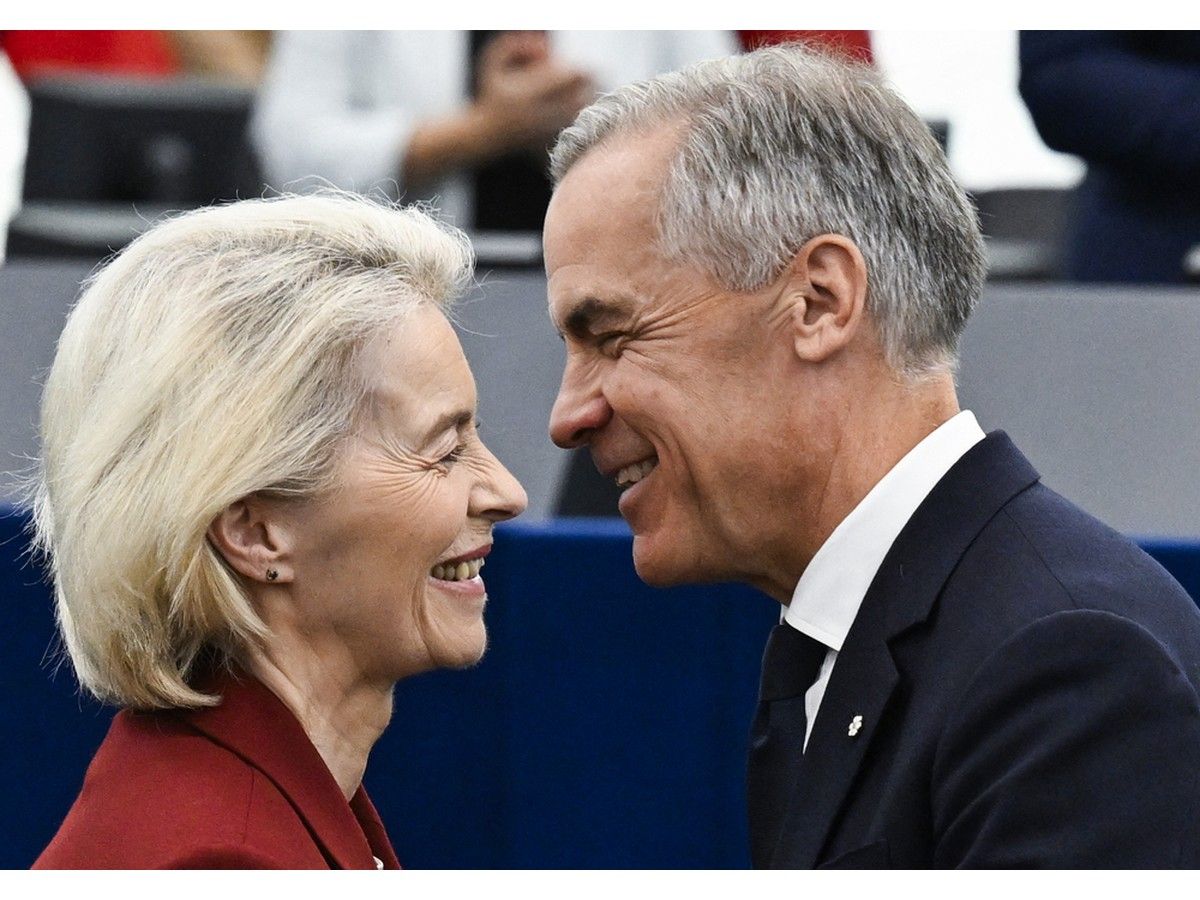
Photo via National Post

Barry Appleton: Trump’s demands to change our laws must be rejected

Read the original at National Post ↗
Cite

Special to National Post. (2026, September 7). Barry Appleton: Trump’s demands to change our laws must be rejected. National Post. https://nationalpost.com/opinion/barry-appleton-trumps-demands-to-change-our-laws-must-be-rejected

Dated when The Aporia collected the article, usually within hours of publication. Check the original for its exact date and byline.

National Post · collected 2026-09-07 · by Special to National Post analysis

Quick Summary

The article is an opinion piece by Barry Appleton, who argues that Canada should reject US demands to change its laws regarding online streaming and cultural sovereignty. The US had demanded that Canada drop its digital legislation, which requires streaming platforms to promote French-language content for Quebec users, but the Canadian government disputes this characterization. According to the author, a trade deal with the US would require Canada to surrender regulatory control to American interests, undermining the country's sovereignty.
Written by AI on 2026-09-07, from this article's own text only (the story summary below draws on all the coverage).
See how they differ ↓

AI analysis

Story summary

As of September 4, 2026, a tentative trade deal between Canada and the U.S., aimed at avoiding damaging tit-for-tat tariffs, collapsed just hours before its deadline. This breakdown triggered President Donald Trump to impose new 50% tariffs on $28 billion worth of Canadian exports. Prime Minister Mark Carney responded by announcing Canada's intention to match these tariffs dollar for dollar to protect domestic workers and businesses. The escalating trade tensions have led to the U.S. Justice Department ordering a freeze on all antitrust work with Canada, exacerbating the economic conflict between the neighboring countries.

The dispute has also spurred a "Buy Canadian" movement among consumers who are actively seeking out locally made products over American alternatives as part of their show of solidarity amid the ongoing trade war. Additionally, retaliatory tariffs have been imposed on various goods including dairy, motorcycles, and alcoholic beverages, further complicating economic relations between the two nations. This conflict comes amidst broader political tensions highlighted by President Trump's repeated rhetoric about annexing Canada. Despite historic close ties, both countries face significant challenges in resolving their trade disputes amicably.

Written for “U.S.-Canada Trade War Escalates” on 2026-11-21, grounded in this article and the 53 other(s) covering the same event.

How they differ

20 outlets covered “U.S.-Canada Trade War Escalates”.

What each outlet says

One AI summary per outlet of its latest article on this story, written from that article alone and checked against it. Open the article for the outlet's own words.

National PostThis outlet7 Sep

The article is an opinion piece by Barry Appleton, who argues that Canada should reject US demands to change its laws regarding online streaming and cultural sovereignty. The US had demanded that Canada drop its digital legislation, which requires streaming platforms to promote French-language content for Quebec users, but the Canadian government disputes this characterization. According to the author, a trade deal…

Barry Appleton: Trump’s demands to change our laws must be rejected (this article)13 articles from National Post on this story
CBC11 Sep

The article reports on the election promises of major parties in Quebec's 2026 election, specifically focusing on child care and family benefits. Coalition Avenir Québec is promising a back-to-school supplement of up to $250 per child, a tax credit for up to 75% of school-day child-care fees, and conversion of 10,000 private child-care spots into subsidized ones. The party estimates that over half a million children…

See what Quebec's major party leaders are promising during the election campaign →7 articles from CBC on this story
The Globe and Mail9 Sep

U.S. President Donald Trump has issued an executive order banning imports of Canadian alcohol, motorcycles, and some dairy products in response to Canada's countertariffs. The ban affects a broad range of alcoholic beverages, including beer sold in cans and bottles, rye whisky, and various types of wine. A recent poll by Nanos Research found that 80% of Canadians support or somewhat support dollar-for-dollar…

Morning Update: Adversity ahead →7 articles from The Globe and Mail on this story
Time11 Sep

Lynn Henderson, a 47-year-old Canadian consumer from British Columbia, is one of many Canadians boycotting American products due to the ongoing trade dispute between the two countries. According to a Build Canada poll, 69% of respondents reported choosing Canadian products despite higher prices and 55% said they had stopped buying specific American brands. The "Buy Canadian" movement has been revived amid a…

'Buy Canadian': Meet the Consumers Boycotting American Products as Trade Rift Widens →3 articles from Time on this story
Toronto Star6 Sep

Prime Minister Mark Carney announced that Canada's counter-tariffs will take effect on Tuesday on $28 billion worth of U.S. products, a response to the United States imposing tariffs on Canadian goods. Financial conference Scotiabank's global banking and markets financial summit starts on Wednesday, amid growing concerns about the Canadian economy due to the trade war with the US. Transat A.T. Inc., an airline…

Five things to watch for in the Canadian business world in the coming week →3 articles from Toronto Star on this story
Global News9 Sep

The escalating US-Canada trade dispute has taken center stage in Quebec's provincial election campaign, with major parties offering competing visions on how to protect jobs and businesses from tariffs. The CAQ leader, Christine Fréchette, unveiled measures aimed at shielding Quebec's economy, including prioritizing Quebec-made goods and changing the public procurement process to favor Canadian firms over US…

Trade war takes centre stage in Quebec election campaign →3 articles from Global News on this story
Show 12 more outlets
The Guardian8 Sep

Canada has imposed retaliatory tariffs on $20bn worth of US imports, effective at 12:01am on Tuesday, in response to US President Donald Trump's decision to impose a 50% tariff on Canadian goods. The targeted sectors include steel, dairy, appliances, and electronics, with tariffs ranging from 15% to 50%. Tensions between the two countries have intensified, with Trump criticizing Canada's trade practices and making…

Canada’s retaliatory US tariffs take effect as trade dispute grows →2 articles from The Guardian on this story
The Independent6 Sep

American tourism organizations are trying to woo back Canadian visitors who boycotted the US due to President Trump's comments about making Canada the 51st state and the ongoing trade war, which has resulted in import taxes of up to 50% on Canadian products. According to Statistics Canada, Canadian residents made 25 percent fewer return border crossings and spent $2.4 billion less on travel to the US last year…

The US wants to win Canadian visitors back, but tourists say ‘it’s a wasted effort’ →2 articles from The Independent on this story
Reason11 Sep

Canada has imposed a 50% tariff on aluminum ferrules used in pencil manufacturing as part of its retaliatory measures against US tariffs. This specific product was swept into the conflict because it is made of aluminum, which is subject to the same tariff under US Section 338 of the Tariff Act of 1930. The Canadian countermeasures match US tariffs dollar for dollar and rate for rate, resulting in a de facto 50% tax…

A 50% Tariff on Pencil Parts? Welcome to the U.S.-Canada Trade War. →2 articles from Reason on this story
Fox News5 Sep

The US Justice Department's antitrust division has been ordered by its chief, Lynda Marshall, to pause all work with the Canadian government amid intensifying trade tensions between the two countries. According to a report, officials were instructed to halt cooperation on cases and policy issues starting from Wednesday, but the DOJ disputes this claim, saying only that a meeting was delayed for preparation. The…

DOJ ordered to freeze antitrust work with Canada as trade tensions intensify →
ABC News (AU)6 Sep

Canadian Prime Minister Mark Carney ended comprehensive trade negotiations with the US two weeks ago, and Canadians are now bracing for potential economic consequences. Canada is already facing tariffs on key exports such as steel, lumber, and automobiles. According to a recent poll, three-quarters of Canadians approved of Carney's decision to walk away from trade talks. Trade consultant Kelly Ann Shaw notes that…

The US-Canada 'divorce' and the $1.2 trillion fallout →
The Free Press8 Sep

A columnist for This Week in Canada argues that Americans are unaware that Canada views them as enemies, citing recent surveys showing a significant shift in Canadian attitudes towards the US. According to a Leger survey, 41% of Canadians now see the US as an "enemy country", up from 26% since June 2025. A Politico poll found that nearly half of Canadians consider the US a bigger threat to world peace than Russia…

This Week in Canada: America Is Our Enemy and Doesn’t Even Know It →
BBC8 Sep

Canada has imposed retaliatory tariffs on US goods worth nearly C$28bn ($20bn; £15bn) as of Tuesday, in response to the ongoing trade tensions between the two countries. The counter-tariffs, which range from 15% to 50%, affect hundreds of American products, including steel, furniture, and clothing. Despite both sides expressing a desire for a deal, US Trade Representative Jamieson Greer suggests that Canada is…

Canada braces for prolonged trade war as counter-tariffs on US take effect →
ABC News (US)9 Sep

President Donald Trump has issued proclamations to ban certain Canadian goods, including alcohol and dairy products, from entering the US starting September 29. The banned items include sparkling grape wine, whey protein, and non-alcoholic beer, among others. A total of 50% tariff will also be imposed on additional goods, such as golf carts and bamboo furniture. Trump's move comes in response to Canada's retaliatory…

Trump ratchets up trade war, moves to ban many Canadian goods from entering US →
Semafor9 Sep

A senior Trump administration official said that despite escalating tensions, the countries will try to negotiate an offramp from their trade dispute. The US has imposed new tariffs on Canadian goods after Canada retaliated with its own tariffs, further escalating the trade war between the two nations. A key North American trade pact, the USMCA, is now likely to be renewed, as it faces opposition due to the ongoing…

US-Canada trade war escalates amid tit-for-tat tariffs →
Al Jazeera9 Sep

Al Jazeera's Yasmeen ElTahan reports on the ongoing US-Canada trade war from an explanatory angle. The article doesn't provide specific numbers or a concrete timeline, but it appears to be ongoing. The trade war is affecting various products, including toilet paper, which has become unexpectedly entangled in the dispute.

The losers of the US-Canada trade war →
Los Angeles Times9 Sep

A trade war between the US and Canada has escalated as Ottawa's retaliatory tariffs on American goods took effect, imposing duties of up to 50% on over $20 billion in U.S. imports. President Trump had previously imposed tariffs on Canadian exports, prompting a breakdown in trade talks between the two countries. In response to the new tariffs, Trump threatened to remove access for Canadian businesses to key American…

Canada's tariffs go into effect, spotlighting soured relations with U.S. →
NPR11 Sep

The US-Canada trade war is causing headaches for auto-parts makers due to tariffs on aluminum and steel, which have been enacted by both countries since August and January respectively. Canada has imposed retaliatory tariffs on various US goods, including steel and aluminum, adding to the uncertainty faced by major carmakers. According to analysts, the smaller businesses that supply big companies with thousands of…

The U.S.-Canada trade war is creating a headache for auto-parts makers →

Compared with similar articles

This article reads unscored and hedges 2% of its claims. Each row says how that neighbour differs.
National Post
Leans left Hedges 6 of 32 claims Outlet record 60/100
CBC News
Leans right Hedges 14 of 89 claims Outlet record 72/100
CBC News
Leans left Hedges 1 of 29 claims Outlet record 72/100
“The events described in both articles seem to be related to federal-provincial relations and trade negotiations between Canada and the US, but they are not clearly referring to the same specific incident or occurrence.”
The Globe and Mail
Leans left Hedges 1 of 58 claims Outlet record 51/100
“Article A describes the collapse of a trade deal and imposition of tariffs, while Article B discusses the details of US demands made during negotiations”
Toronto Star
Leans left Hedges 1 of 49 claims Outlet record 65/100
“Although both articles mention a dispute between the US and Canada over trade talks and cultural/language protections, they describe different aspects of the situation”
Retaliation Different event
Reason
Hedges 3 of 43 claims Outlet record 67/100
“Article A discusses a leaked term in trade negotiations, while Article B reports on Canada's retaliatory tariffs against US goods, which is a separate consequence of those negotiations”
Los Angeles Times
Hedges 3 of 45 claims Outlet record 95/100
“Article A describes leaked terms of US-Canada negotiations, while Article B reports on Canada's tariffs going into effect in response to soured relations with the US”
The Globe and Mail
Hedges 0 of 36 claims Outlet record 51/100
“Article A reports on a specific incident where the US asked Canada to drop its digital legislation, while Article B mentions a 'trade war' and countermeasures without referencing this specific incident”

Story

U.S.-Canada Trade War Escalates
Economy/Business · 54 article(s) covering the same event. See how they differ ↑
How this article was measured signals, leaning charts, publisher record, byline, topics and claims

Signals How these are calculated →

Claims extracted
58
sentences that state something as happening or true
Uncertain
2%
1 of 58 hedged ("reportedly", "may", "according to")
Leaning
withheld
no quote in the article backed the model's score
Publisher signals
60/100
National Post's corrections and hedging, across everything collected from it. Not a measure of accuracy.
Outlets on this story
54
Economy/Business
Same framing elsewhere
1
articles that frame the event the way this one does
Analyzed 2026-09-07 · how these are computed

How this is being covered How these are calculated →

Article leaning vs. publisher reliability
Source leaning vs. consistency

Publisher

National Post · 1242 article(s) · 2 correction(s) detected
Running correction rate · 2 correction(s)

Who wrote this

Special to National Post
104 article(s) here · 1 carrying a prediction
As the incoming B.C. Conservative government prepares to deliver on its promise to repeal the Declaration on the Rights of Indigenous Peoples Act (DRIPA), Grand Chief Stewart Phillip, president of the Union of B.C. Indian Chiefs, stated this week that doing so would be a “declaration of war.”
Buying through us may earn us a commission, which supports our work.
Based on a leaked draft “EU-Canada Joint Summit Statement,” much progress is expected to be made at the summit in areas such as defence and security, critical resources and digital research and communications technologies.
Last month, the Law Society of Ontario (LSO) did not agree to a formal request from 10 lawyers who wished to add to their Annual General Meeting (AGM) agenda a motion that could have revoked accreditation from Toronto Metropolitan University’s (TMU) Lincoln Alexander School of Law.
Buying through us may earn us a commission, which supports our work.
2026-10-28 · assertive framing · On the map: A new view of renting in Hamilton
It’s the story of one student, but it could be any student at any North American university.
Work, save, take a risk, start a company, buy a home, raise a family; the expectation held that effort might lead somewhere and that children could inherit better prospects than their parents.
Premier Paul St-Pierre Plamondon has vowed to defund the office of the lieutenant governor, said he will seek legal advice on keeping the Crown’s representative out of the opening of the legislature and has promised to cut Quebec’s ties to the monarchy.
St-Pierre Plamondon will lead a minority government, five seats short of a majority, and has promised to wait until Donald Trump leaves the White House in January 2029 before holding a sovereignty referendum.
As we wrap up a month of what has the potential to be one of the biggest missteps in British Columbia, or Canadian, political history, it bears examining whether David Eby’s attempt to position himself as a modern day Joseph McCarthy dedicated to rooting out thought criminals from his opposition will be ultimately effective.
Also by Special to National Post
Nothing else under this byline is closely related to this article, so these are simply their most recent.
All 104 articles by Special to National Post →

Topics

American Canada Canadian Ottawa Quebec

Subjects

Canada GPE · 6× Canadian NORP · 5× American NORP · 4× Ottawa ORG · 3× Quebec GPE · 3× Canadians NORP · 2× Washington GPE · 2× Jamieson Greer PERSON · 1× Mark Carney PERSON · 1× The United States GPE · 1×

Narrative

Barry Appleton is the interim director of the Balsillie Legal Advisory Centre at the Balsillie School of International Affairs, adjunct professor at Wilfrid Laurier University, managing partner of Appleton & Associates International Lawyers LP, and a co-director of the Center for International Law at New York Law School.
framing: assertive · carried by 1 article(s) · first seen 2026-09-07
He still confirms that American negotiators had questions about online streaming rules, and he listed “digital trade alignment” among the things a deal would contain.
2026-09-07 · National Post
Barry Appleton: Trump’s demands to change our laws must be rejected · assertive framing

Claims (58 extracted, 1 hedged)

The United States pressed Canada on the protection of the French language and our culture until the very last minute of negotiations. asserted
States → press → negotiations
Reporting on the leaked terms adds that Ottawa was asked to scupper its digital legislation. asserted
Ottawa → leak → legislation
The American side disputes the characterization. asserted
side → dispute → characterization
Trade representative Jamieson Greer calls Canada’s streaming rules “the farthest thing from the red line,” and Canada’s minister for trade with the U.S., Dominic LeBlanc, has welcomed Washington’s withdrawal of its positions on language and culture. asserted
minister → call → language
He still confirms that American negotiators had questions about online streaming rules, and he listed “digital trade alignment” among the things a deal would contain. asserted
deal → confirm → things
A demand that can be withdrawn can be made again. asserted
that → withdraw → ?
Recommended Videos Quebec’s Bill 109, An Act to affirm the cultural sovereignty of Quebec, was adopted unanimously by the National Assembly last December and will require streaming platforms and device makers to surface French-language content for Quebec users. asserted
Bill → affirm → users
Its constitutionality is contested, because broadcasting has long been federal ground; that argument belongs to Canadian judges applying the division of powers. asserted
argument → contest → powers
A foreign government put the repeal of Canadian statutes on a tariff schedule and came close to getting it. asserted
government → put → it
That is the logical end of a bargain Canada has been making quietly, and without argument, since the first free trade agreement. asserted
Canada → make → agreement
Whether our laws survive is a question for our courts. asserted
survive → survive → courts
I spent my career on the free trade side of it. asserted
I → spend → it
I advised Ontario’s cabinet committee during the original NAFTA negotiations and the government of British Columbia during its implementation. asserted
I → advise → implementation
Open markets made Canadians richer, and I would make that case again tomorrow. asserted
I → make → case
Having sat through those early trade rooms, I can tell you we never intended free trade to mean regulatory surrender. asserted
trade → sit → surrender
Somewhere along the way we confused two things. asserted
we → confuse → things
Neoliberalism was an argument for restraining our own government. asserted
Neoliberalism → restrain → government
In the digital economy we turned it into an argument for not governing at all, and assumed a rulebook we declined to write would stay blank. asserted
we → turn → argument
It filled with somebody else’s. asserted
It → fill → somebody
A market is a set of rules: property that can be owned, contracts a court will enforce, entry that is possible for a firm with a better product and no incumbent’s permission. asserted
that → own → product
Someone writes those rules. asserted
Someone → write → rules
I agree with the familiar complaint about Canadian economic policy, then part company with it. asserted
I → agree → it
Ottawa protects the wrong things. asserted
Ottawa → protect → things
It shelters cartels in banking, telecom, airlines and dairy, which raises prices on Canadians and manufactures most of the irritants that dominate every negotiation we enter, and it then declines to protect competition in the one market where Canadian firms are price-takers with nowhere to go. asserted
firms → shelter → market
We were promised that a fat, lazy incumbent invites competition. asserted
incumbent → promise → competition
Digital markets run the other way. asserted
markets → run → ?
The more users a platform has, the more data it gathers and the better it gets at keeping them asserted
it → have → them
, so the leader pulls further ahead each year. asserted
leader → pull → ?
Nobody catches up from behind. asserted
Nobody → catch → ?
We over-govern where we should compete. asserted
we → govern → ?
We under-govern where we are being farmed. asserted
we → govern → ?
Take the market Canadian businesses actually buy in. asserted
businesses → take → market
An advertiser bids for inventory on an exchange owned by the company, Google, that also owns the publisher’s ad server. asserted
that → bid → server
In April 2025 an American federal court found that arrangement illegal. asserted
arrangement → find → April
Canada’s Competition Bureau filed its own case in November 2024, and twenty-one months on, the Tribunal has disposed of a preliminary motion while the liability hearing has not started. asserted
hearing → file → motion
Now consider what Washington calls unfair. asserted
Washington → consider → what
The 2026 National Trade Estimate Report lists, among barriers to American trade in Canada, an entry titled Sovereign Cloud Initiative, whose offence was that Shared Services Canada asked suppliers whether Ottawa’s own data could stay in Canada. uncertain
data → list → Canada
Two entries above sits Buy Canadian, which gives Canadian bidders a 10 per cent credit at evaluation and excludes nobody. asserted
which → sit → nobody
The Buy American Act of 1933 adds 20 per cent to a foreign bid before it is weighed against a domestic one, 30 for a small business, 50 at the Pentagon. asserted
it → add → Pentagon
The Berry Amendment, a 1941 law requiring the pentagon to buy its food, clothing and textiles from American producers, has never been waived under any trade agreement the United States has signed. asserted
States → require → agreement
…and 18 more, not listed.

Give feedback · no sign-in needed

No sign-in needed for now. Your note is sent without a name, so it cannot be answered.

History Support