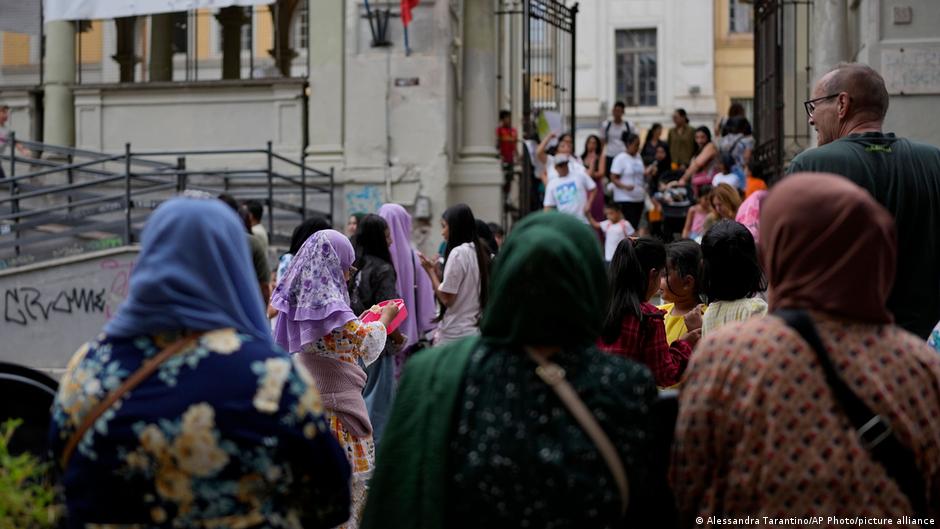
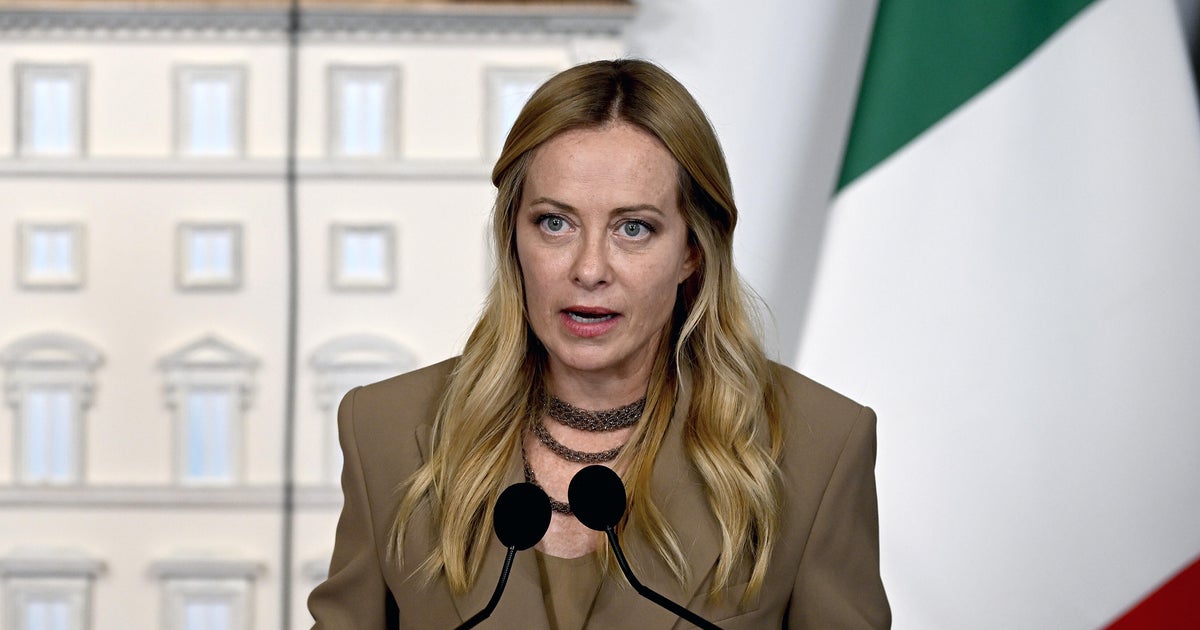
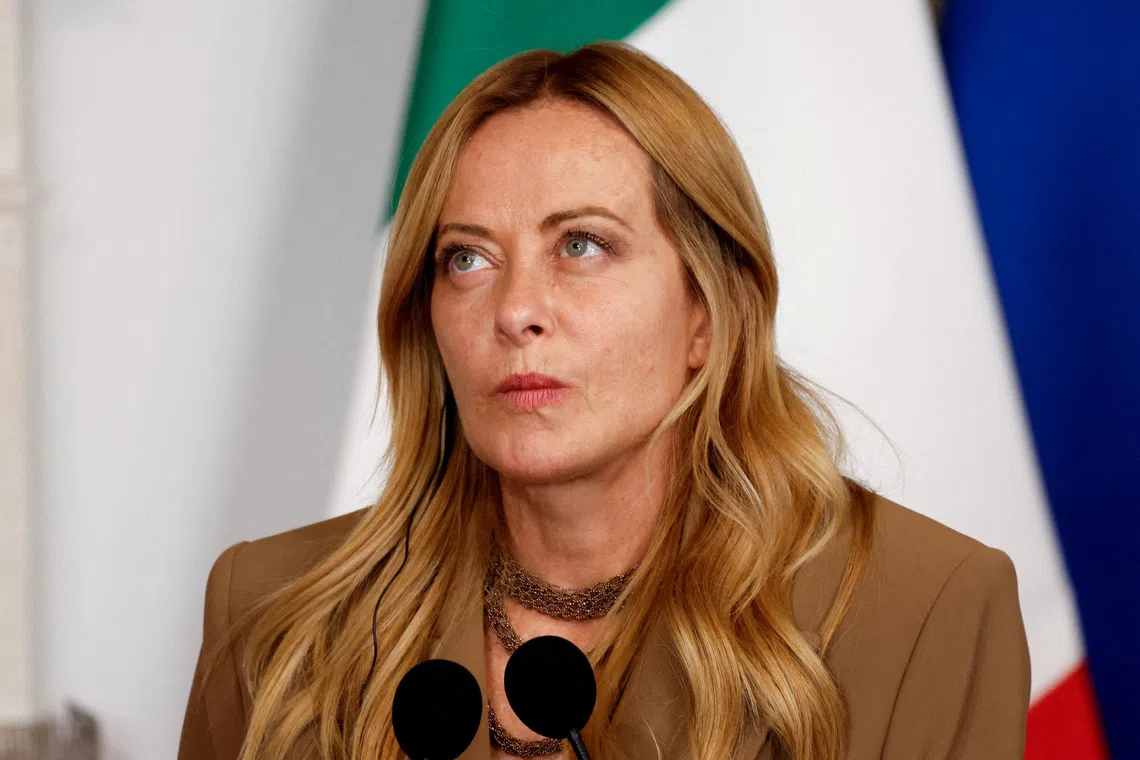
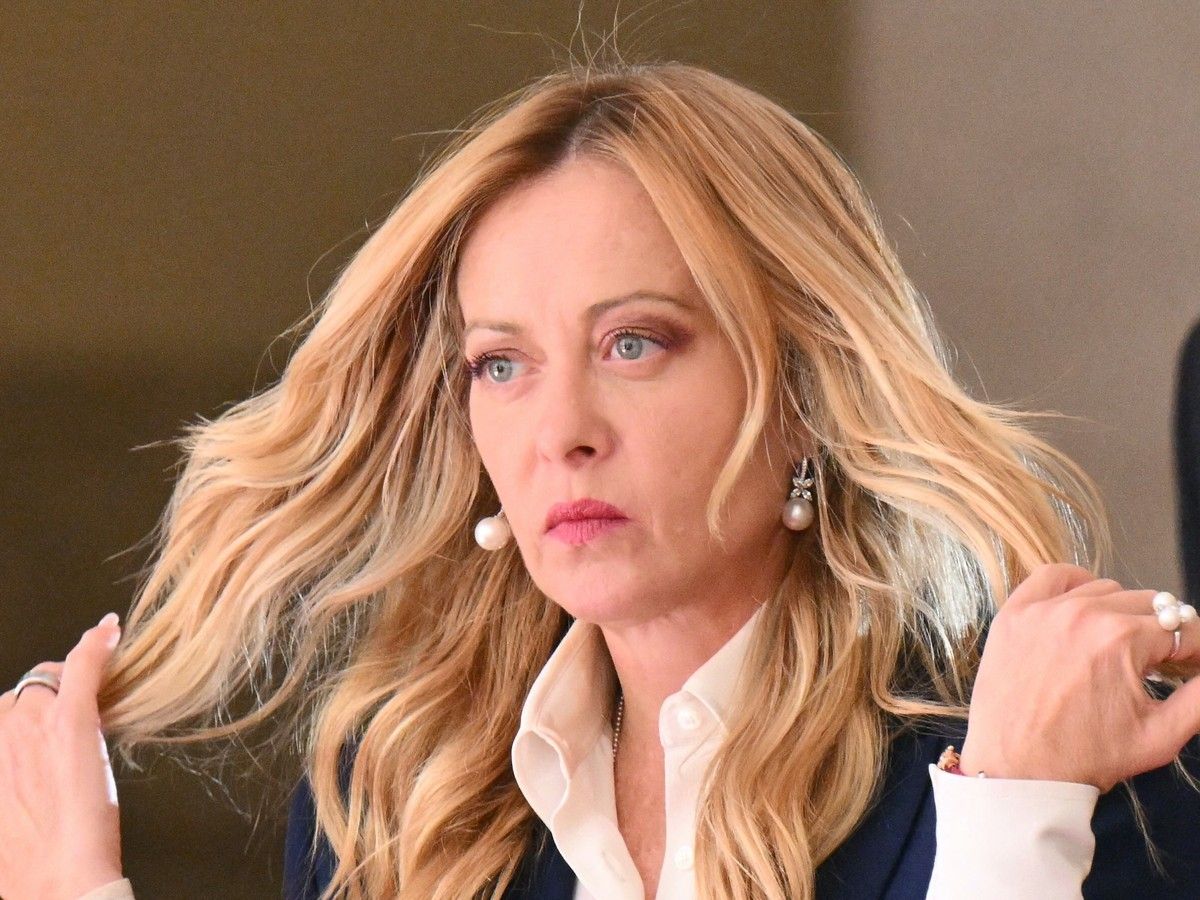
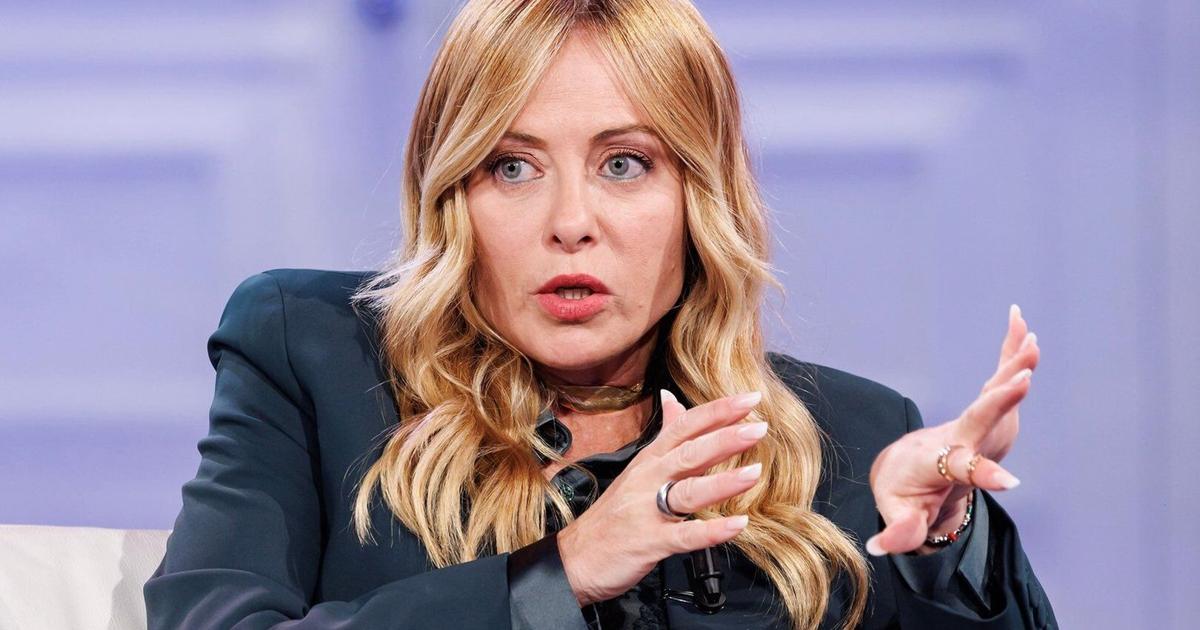
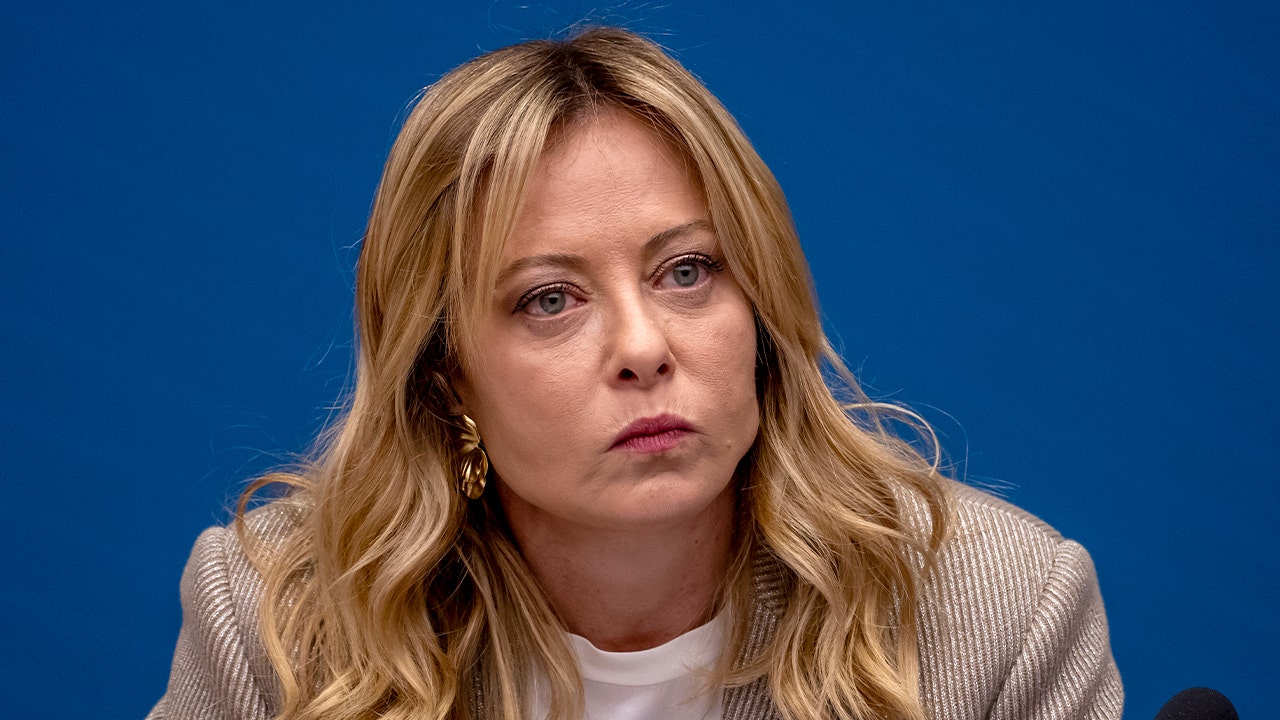
Photo via The Guardian

Meloni accused of election shift to right after ’shameful’ cap on foreign children in classrooms

Read the original at The Guardian ↗
Cite

correspondent, A. K. E. c. a. (2026, September 25). Meloni accused of election shift to right after ’shameful’ cap on foreign children in classrooms. The Guardian. https://www.theguardian.com/world/2026/sep/25/giorgia-meloni-italy-foreign-children-schools

Dated when The Aporia collected the article, usually within hours of publication. Check the original for its exact date and byline.

The Guardian · collected 2026-09-25 · by Ashifa Kassam European community affairs correspondent

Quick Summary

Rights campaigners criticize Italian Prime Minister Giorgia Meloni's government for implementing a decree that caps at 30% the number of non-Italian speaking students in classrooms and bans burqas and niqabs in schools, arguing it is an attempt to appeal to far-right voters ahead of next year’s election. The decree also mandates parents to attend Italian language classes if their children struggle with integration or language learning; non-compliance could result in fines up to €1,000. Education Minister Giuseppe Valditara estimates the measures will impact about 1,000 classrooms, or roughly 0.3% of total classrooms nationwide. Rights advocates argue that this move is politically motivated and masks a lack of substantial policy achievements by Meloni’s government.
Written by AI on 2026-09-25, from this article's own text only (the story summary below draws on all the coverage).
See how they differ ↓

AI analysis

Story summary

Giorgia Meloni, Prime Minister of Italy, announced on September 24 at a youth event organized by her right-wing Brothers of Italy party in Rome, plans to ban face coverings like burqas and niqabs in schools. She also proposed capping the number of foreign students per class, requiring parents of foreign students facing integration difficulties to learn Italian, and making it mandatory for students to attend school with their faces uncovered. Meloni emphasized that immigrants must learn Italian, understand Italian culture, and respect Italian rules if they want a future in Italy. This move is part of efforts to address the contentious issue of migrant integration amid high levels of immigration to Italy, due to its location in the central Mediterranean. The proposed measures need Cabinet approval before being presented to parliament for final passage within 60 days.

Written for “Italy Limits Foreign Students, Bans Burqas” on 2026-11-21, grounded in this article and the 19 other(s) covering the same event.

How they differ

15 outlets covered “Italy School Ban Burqas Limit”.

What each outlet says

One AI summary per outlet of its latest article on this story, written from that article alone and checked against it. Open the article for the outlet's own words.

The GuardianThis outlet25 Sep

Rights campaigners criticize Italian Prime Minister Giorgia Meloni's government for implementing a decree that caps at 30% the number of non-Italian speaking students in classrooms and bans burqas and niqabs in schools, arguing it is an attempt to appeal to far-right voters ahead of next year’s election. The decree also mandates parents to attend Italian language classes if their children struggle with integration…

Meloni accused of election shift to right after ’shameful’ cap on foreign children in classrooms (this article)
The Straits Times24 Sep

Italian Prime Minister Giorgia Meloni passed rules on September 24 limiting foreign students at schools and banning face coverings. The measures aim to counter National Future's rising popularity; this far-right party advocates for "remigration" and criticizes Islamic influence in classrooms. Starting from the 2027-28 school year, a cap of 30% will apply to non-Italian pupils, with fines up to €1,000 for face…

Beset by far-right rival, Italy's Meloni tightens foreign pupil rules →2 articles from The Straits Times on this story
Al Jazeera21 Sep

Giorgia Meloni, Italy's Prime Minister, intends to prohibit the wearing of burqas and niqabs in schools while also limiting the ratio of foreign students in classes. This policy announcement is aimed at bolstering her support as she prepares for upcoming elections in the country.

Meloni promises to ban burqas, niqabs in Italy’s schools →2 articles from Al Jazeera on this story
Toronto Star24 Sep

Italy's government, led by Prime Minister Giorgia Meloni, passed a decree on Thursday that restricts the number of students with limited Italian proficiency in each classroom and prohibits face-covering Islamic veils in schools. The measure is intended to promote integration through better language acquisition and has been endorsed by right-wing political allies.

Italy approves limits on non-Italian speakers and veils in school classrooms →2 articles from Toronto Star on this story
The Hindu25 Sep

Italy’s government, led by Premier Giorgia Meloni, passed a decree on September 24, 2026, to limit the number of non-Italian speaking students in each classroom to no more than 30% and ban face-covering Islamic veils in schools. The measure aims to enhance integration through language learning but has faced criticism from educators and opposition parties over potential logistical challenges and its politicization of…

Italy decrees limits on non-Italian speakers, veils in school classrooms →2 articles from The Hindu on this story
CBS News21 Sep

Italian Prime Minister Giorgia Meloni announced plans to limit foreign students to about 30% of classroom populations and ban face-covering garments like burqas and niqabs in schools. According to ISMU ETS Foundation data, currently, non-Italian citizens make up approximately 11.6% of total school enrollment. The measures aim to promote integration and gender equality but would be unique in Europe if implemented, as…

Italy's Meloni plans to limit foreign student numbers, ban face coverings in schools →2 articles from CBS News on this story
Show 9 more outlets
Dawn20 Sep

Prime Minister Giorgia Meloni announced plans at a youth event organized by her party to ban face coverings like burqas and niqabs in schools and limit the number of foreign students per class. She emphasized these measures as part of her right-wing agenda aimed at addressing cultural integration challenges related to immigration. While not specifying exact numbers, Meloni noted that nearly 12% of Italian…

Italy to ban veils in schools, limit foreign students per class, Meloni says →
Times of India20 Sep

Italian Prime Minister Giorgia Meloni announced plans to limit the number of foreign students per classroom and ban burqas and niqabs in schools during a youth event hosted by her party. She stated that classrooms with a high proportion of non-Italian speaking students hinder integration, emphasizing that Italian children should not feel like minorities in their classes. Meloni also stressed that no one can hide…

Italy to limit foreign students, ban burqa and hijab in schools →
South China Morning Post20 Sep

Italian Prime Minister Giorgia Meloni announced plans to introduce a measure that would ban burkas and niqabs in schools and limit the number of foreign students in classrooms. Speaking at the youth wing of her nationalist party, Meloni emphasized the importance of learning Italian language and culture for immigrants who wish to integrate into society. She did not mention restrictions on hijabs during her speech.

Italy’s Meloni plans to ban burkas, niqabs in schools and cap foreign pupils in classrooms →
National Post20 Sep

Prime Minister Giorgia Meloni announced plans to ban burqas and niqabs in schools and limit the number of foreign students per class. The measures aim to address integration issues amid high migration rates. While there is no current law banning full-face veils specifically, a 1975 law prohibits garments that make identification difficult without justification. Foreign students currently account for nearly 12% of…

Italy banning burqas, niqabs from schools: PM →
New York Post20 Sep

Italian Prime Minister Giorgia Meloni announced plans to introduce legislation capping foreign student numbers in classrooms and banning burqas and niqabs in schools. The measure would also require Italian language lessons for parents of foreign students with integration difficulties. Speaking at a youth wing event, Meloni emphasized the importance of cultural assimilation and respect for national rules for those…

Italian PM Giorgia Meloni to ban burqas and cap foreign students: new measure →
Daily Mail21 Sep

Italian Prime Minister Giorgia Meloni announced plans to ban burqas and niqabs in schools and cap the number of foreign students per class. The specific maximum number was not disclosed. Meloni stressed the importance of language integration, arguing that a high percentage of non-Italian speaking students hinders effective education. With 11.6% of Italian school enrollees being non-citizen students, the move…

Italy will ban burqas in schools and limit number of foreign pupils in class in new crackdown by PM Giorgia Meloni's hard-right government →
Washington Examiner21 Sep

Giorgia Meloni, the Prime Minister of Italy, announced plans to ban burqas and niqabs in schools as part of a proposal aimed at integrating foreign students into Italian society. The plan would also limit the number of foreign students per classroom and mandate Italian language lessons for some parents. During a party gathering, Meloni emphasized that face coverings must be removed for school attendance, though she…

Giorgia Meloni plans to ban burqas and niqabs in Italian schools →
Fox News21 Sep

Italian Prime Minister Giorgia Meloni announced plans on September 20 to introduce legislation that would limit the number of foreign students in Italian classrooms and ban burqas and niqabs in schools. The proposal aims to promote cultural integration and protect Italian cultural identity, with Meloni arguing that high concentrations of non-native speakers can hinder learning for all students. Students without…

Italian PM pushes foreign student cap in classrooms, burqa, niqab ban in schools →
Deutsche Welle25 Sep

Italy's conservative government has approved measures banning burqas and niqabs in schools and setting limits on foreign students with poor Italian language skills to 30% per classroom. Prime Minister Giorgia Meloni defends these rules as tools for integration, while opponents like opposition leader Elly Schlein denounce them as divisive. The decree affects approximately 1,000 classrooms nationwide, about 0.3% of…

Italy to ban burqa in schools, limit foreign pupils →

Where they agree and split

Agreed

AI · cited, from two or more outlets

  • The decree aims to limit the number of foreign students with limited Italian proficiency in classrooms.53
Quoted from the coverage (2)

Meloni did not specify what the maximum number of foreign students per class would be.

5 outlets

A 2008 ruling later clarified that full-face coverings may be worn for religious or cultural reasons if the face is revealed when identity verification is required.

4 outlets

Disputed

Picked by our model, which is sometimes wrong

  • Supporters say the measures will help integration by avoiding 'ghetto classes,' while opponents warn they could force students to attend distant schools.63
  • Meloni claims her government's actions are tools of common sense that do not divide, but critics accuse the government of using immigration as a political issue.64

Framing

How the first headlines put it

  • The Straits Times focuses on the specific measures announced by Meloni, while Al Jazeera emphasizes the ban on burqas and niqabs.12
  • Fox News highlights the political context of the announcement, whereas The Guardian frames it as a move to court far-right voters ahead of elections.74
Attributed to a source3
Stated as fact6
The headlines (9)

Italy to ban veils in schools, limit foreign students per class, Meloni says The Straits Times · attributed to a source

Italy to ban veils in schools, limit foreign students per class, Meloni says Dawn · attributed to a source

Italy banning burqas, niqabs from schools: PM National Post · attributed to a source

Italy to limit foreign students, ban burqa and hijab in schools Times of India · stated as fact

Italy’s Meloni plans to ban burkas, niqabs in schools and cap foreign pupils in classrooms South China Morning Post · stated as fact

Meloni promises to ban burqas, niqabs in Italy’s schools Al Jazeera · stated as fact

Italian PM Giorgia Meloni to ban burqas and cap foreign students: new measure New York Post · stated as fact

Meloni plans to ban burqas and niqabs in Italian schools, and cap foreign students in classrooms Toronto Star · stated as fact

Meloni plans to ban burqas and niqabs in Italian schools, cap foreign students in classrooms The Hindu · stated as fact

The full story: what happened, how it changed, and all 20 articles →

Compared with similar articles

This article reads unscored and hedges 15% of its claims. Each row says how that neighbour differs.
Deutsche Welle
Hedges 2 of 18 claims Outlet record 95/100
CBS News
Hedges 1 of 19 claims Outlet record 66/100
The Straits Times
Hedges 2 of 17 claims Outlet record 64/100
The Hindu
Leans right Hedges 5 of 34 claims Outlet record 60/100
National Post
Hedges 2 of 12 claims Outlet record 60/100
Toronto Star
Leans right Hedges 0 of 2 claims Outlet record 65/100
Fox News
Hedges 2 of 20 claims Outlet record 66/100
“Article A describes the announcement of legislative plans by PM Meloni on September 20, while Article B discusses criticism and approval of a decree passed by the government after the initial announcement.”
CBS News
Hedges 1 of 19 claims Outlet record 66/100
“While both articles discuss Meloni's plans to limit foreign student numbers and ban face coverings, Article A describes her announcement during a speech on Sunday, whereas Article B discusses the passing of a decree and reactions from rights campaigners, indicating different stages or aspects of the event.”
The Straits Times
Hedges 1 of 12 claims Outlet record 64/100
“The articles describe related measures but different time points or stages of implementation - Article A reports on PM Meloni's announcement, while Article B discusses reactions and actions after the decree was passed.”

Story

Italy Limits Foreign Students, Bans Burqas
Politics · 20 article(s) covering the same event. Compare every outlet's account →
How this article was measured signals, leaning charts, publisher record, byline, topics and claims

Signals How these are calculated →

Claims extracted
34
sentences that state something as happening or true
Uncertain
15%
5 of 34 hedged ("reportedly", "may", "according to")
Leaning
withheld
no quote in the article backed the model's score
Publisher signals
64/100
The Guardian's corrections and hedging, across everything collected from it. Not a measure of accuracy.
Outlets on this story
20
Politics
Same framing elsewhere
1
articles that frame the event the way this one does
Analyzed 2026-09-25 · how these are computed

How this is being covered How these are calculated →

Article leaning vs. publisher reliability
Source leaning vs. consistency

Publisher

The Guardian · 3772 article(s) · 8 correction(s) detected
Running correction rate · 8 correction(s)

Who wrote this

Ashifa Kassam European community affairs correspondent
6 article(s) here · 1 carrying a prediction
The veto would do little to actually prevent abortions from taking place, she said.
The protests themselves, however, point to what seems to be a diverse response to a common crisis: the growing perception, particularly among younger generations, that governments are unable, or unwilling, to deliver when it comes to affordable housing, social equality and robust public services.
Just imagine what would happen to our society if more and more women disappear from public life.”
Barrot said his government would work to counter these efforts by foreign entities.
Tusk instead hinted that his government was intent on doing things differently, telling reporters that it would not prosecute those who helped to facilitate abortions.
Thursday’s decree also sets out that in cases where students show persistent problems with integrating or struggle to learn the language, their parents will be referred to social services and will have to take free literacy and Italian language classes.
Also by Ashifa Kassam European community affairs correspondent
Nothing else under this byline is closely related to this article, so these are simply their most recent.
All 6 articles by Ashifa Kassam European community affairs correspondent →

Topics

Brothers of Italy Brothers of Italy’s Italian Italians Italy

Subjects

Italy GPE · 4× Meloni PERSON · 4× Brothers of Italy’s ORG · 2× Italian NORP · 2× Brothers of Italy ORG · 1× Daniela Ionita PERSON · 1× Giorgia Meloni PERSON · 1× Giuseppe Valditara PERSON · 1× Ionita PERSON · 1× Italians NORP · 1×

Narrative

Tarchi said: “Many of the FN’s potential voters are former supporters of Giorgia Meloni’s party who are disappointed that, once in power, the leader softened many of her previous stances regarding the European Union, which she had harshly criticised; immigration, on which she had made radical proposals that were later abandoned; and other issues.”
framing: assertive · carried by 1 article(s) · first seen 2026-09-25
Thursday’s decree also sets out that in cases where students show persistent problems with integrating or struggle to learn the language, their parents will be referred to social services and will have to take free literacy and Italian language classes.

Claims (34 extracted, 5 hedged)

Rights campaigners have accused the Italian government of ramping up divisive rhetoric in an attempt to court far-right voters ahead of next year’s general election after it passed a decree aimed at capping the number of newly arrived migrants in classrooms and banning the burqa and niqab in schools. asserted
it → accuse → schools
The prime minister, Giorgia Meloni, who leads the far-right Brothers of Italy party, said her government had approved what she called “commonsense measures that do not divide but genuinely help to integrate”. asserted
that → lead → what
Writing on social media, she added: “A limit of 30% in classrooms for students who do not adequately know Italian, plus tools to learn our language and a halt to burqas and niqabs in school.” asserted
who → write → school
The announcement was a toned-down version of comments she had made earlier in the week at an event organised by Brothers of Italy’s youth division. asserted
she → tone → division
“It cannot be that in the classroom it is Italian children who feel left out because they’ve become the minority,” Meloni said as she vowed to “legally set the number of foreign students per class”. asserted
she → feel → class
Thursday’s decree also sets out that in cases where students show persistent problems with integrating or struggle to learn the language, their parents will be referred to social services and will have to take free literacy and Italian language classes. asserted
parents → set → classes
Failure to comply on the part of parents could result in fines of up to €1,000. uncertain
Failure → comply → 1,000
The education minister, Giuseppe Valditara, said the measures, set to take effect in the 2027-28 school year, would affect about 1,000 classrooms, or about 0.3% of the total nationwide. asserted
measures → say → total
Rights campaigners were swift to link the measures to next year’s election, in which Meloni’s premiership is facing an unexpected challenger on the right. asserted
premiership → link → right
“She’s creating an emergency that is not a real emergency at all,” said Daniela Ionita, of the campaign group Italians without Citizenship, pointing out that an estimated 60% of the pupils who could be described as foreign were born in Italy but faced a myriad of hurdles when it came to accessing citizenship. uncertain
it → create → citizenship
“Because there are now new parties pushing from the right, I think Meloni is scared,” she said. asserted
she → be → right
The government said students born and raised in Italy or who had attended at least two years of nursery school or completed three years of schooling in Italy would be exempt from the measures. asserted
who → say → measures
Ionita said the ramped-up rhetoric was an attempt by the government to mask how little it had accomplished during its time in power. asserted
it → say → power
“If you remove every decree linked to security or to migrants, the government’s political and economic programme will fall apart, and very little concrete remains of one of the longest-serving governments of the last years in Italy,” she said. asserted
she → remove → Italy
Marco Tarchi, a political scientist who focuses on the extreme right and teaches at the University of Florence, said the school measures were “undoubtedly” driven by fears of a new political challenge on the right. asserted
measures → focus → right
Since February, a new party, Futuro Nazionale (FN), has galvanised the extreme right, with polls suggesting it could capture about 8% of the vote in an election expected as early as spring 2027. uncertain
it → galvanise → spring
Led by Roberto Vannacci, a former army general best known for self-publishing a book rife with racism, homophobia, Islamophobia and antisemitism, the party’s popularity in polls has eclipsed that of Brothers of Italy’s two coalition partners, the League and the conservative Forza Italia. asserted
popularity → lead → partners
Those who have shifted allegiances include some who had enthusiastically lined up behind Meloni years ago as she spoke of “ethnic substitution” and vowed to install an all-out naval blockade to prevent migrant arrivals from north Africa. asserted
she → shift → Africa
Tarchi said: “Many of the FN’s potential voters are former supporters of Giorgia Meloni’s party who are disappointed that, once in power, the leader softened many of her previous stances regarding the European Union, which she had harshly criticised; immigration, on which she had made radical proposals that were later abandoned; and other issues.” asserted
that → say → proposals
He said Vannacci had capitalised on this, capturing voters with an extreme manifesto that promised “remigration” and limits on the number of foreigners in the country, as well as curtailing LGBTQ+ rights and negating the right to abortion. asserted
that → say → abortion
He said that in order to win back this support, Meloni could have to adopt positions closer to those she held while in opposition. uncertain
she → say → opposition
A glimpse of what this could look like came this summer when Meloni seized on the sudden entry of tens of thousands of people into the tiny Spanish territory of Ceuta in north Africa, said Elisa De Pieri, a researcher at Amnesty International. uncertain
Pieri → look → International
“Meloni immediately exploited the situation in Ceuta, which had absolutely nothing to do with Italy and nothing to do with the Schengen space, but she made it into a supposed crisis for Italy,” she said. asserted
she → exploit → Italy
“And so that’s the mode that I think we’re going to see in the next months.” asserted
we → ’ → months
De Pieri predicted that Meloni “won’t be talking too much” about Italy’s offshore detention agreement with Albania on the grounds that it had not been successful as she would have hoped. asserted
she → predict → grounds
“It’s been very costly, and it’s been struck down repeatedly by national and international courts,” she said. asserted
she → strike → courts
Instead, she expects that Meloni will adopt a more aggressive tone on migration more generally, leading to a polarising electoral campaign whose impact would be disproportionately borne among migrant communities. asserted
impact → expect → communities
The view was echoed by critics of the new measures who pointed out the rarity of burqas or niqabs in Italian classrooms and said the government was simply repackaging previous, unenforced policies, given that the 30% threshold was previously floated by the education ministry in 2010. asserted
threshold → echo → 2010
Save the Children said the overall impact would be to “create ‘first-class’ and ‘second-class’ students”. asserted
impact → say → students
The leader of the Democratic party, Elly Schlein, described the decree as “shameful” and accused the government of “living on a different planet”. asserted
leader → describe → planet
She said Italian parents were grappling with a very different set of issues, citing crumbling school buildings, the high costs of textbooks and low salaries of teachers. asserted
parents → say → teachers
“Faced with all this, the government’s response is to kick foreign children out of the classroom,” Schlein said. asserted
Schlein → face → classroom
“Who do they think they’re kidding? asserted
they → think → ?
After four years of cuts and no serious investment in school buildings, they’re inventing a witch-hunt that targets the youngest children.” asserted
that → invent → children
Give feedback · no sign-in needed

No sign-in needed for now. Your note is sent without a name, so it cannot be answered.

History Support