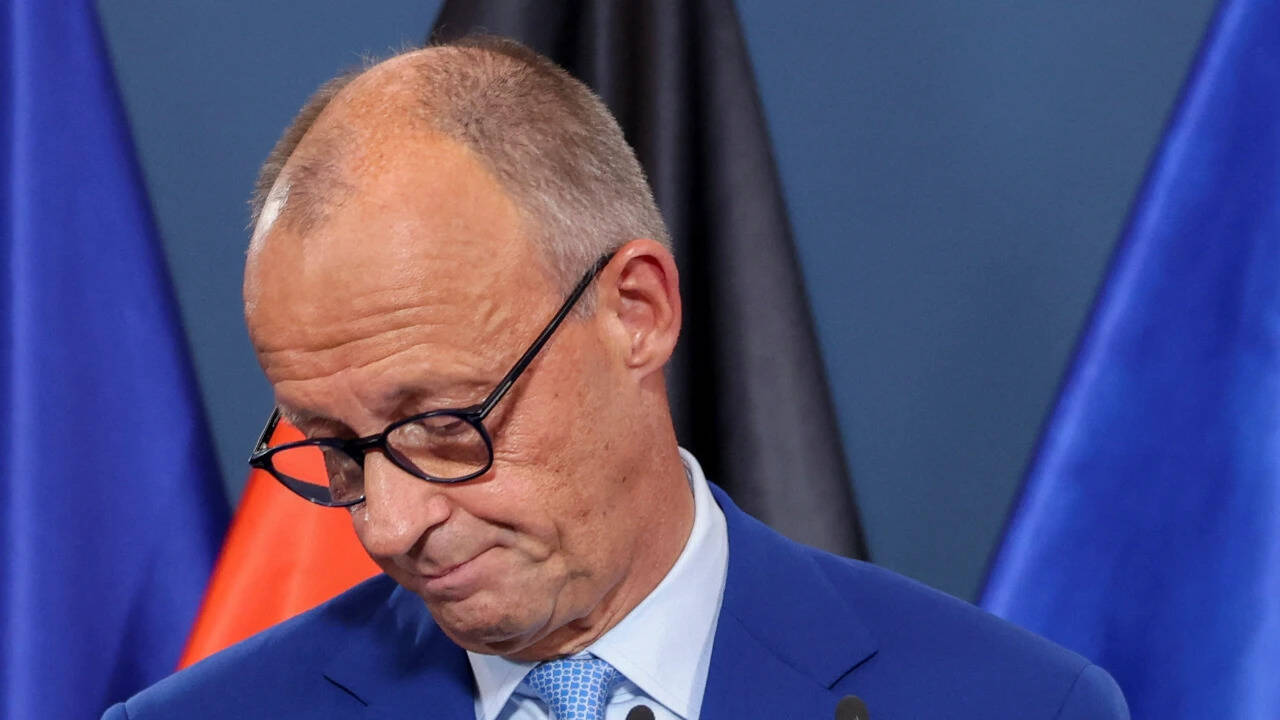
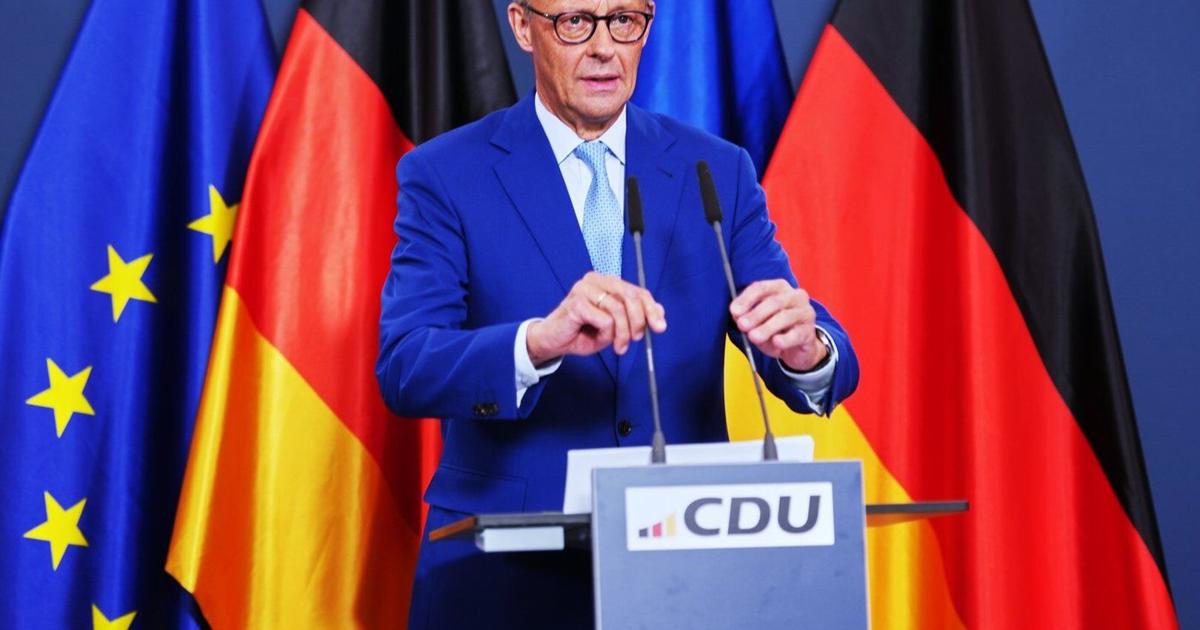
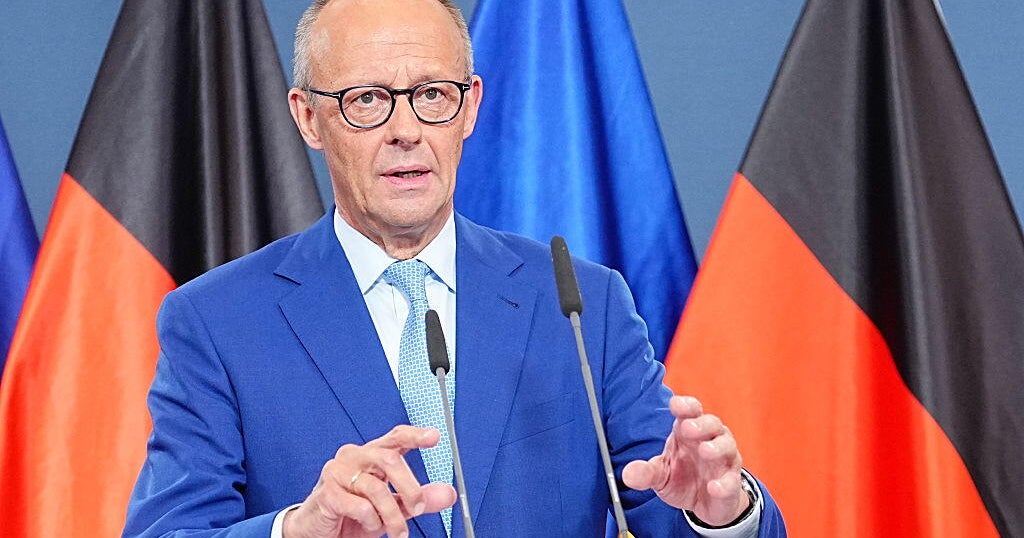
Photo via The Straits Times

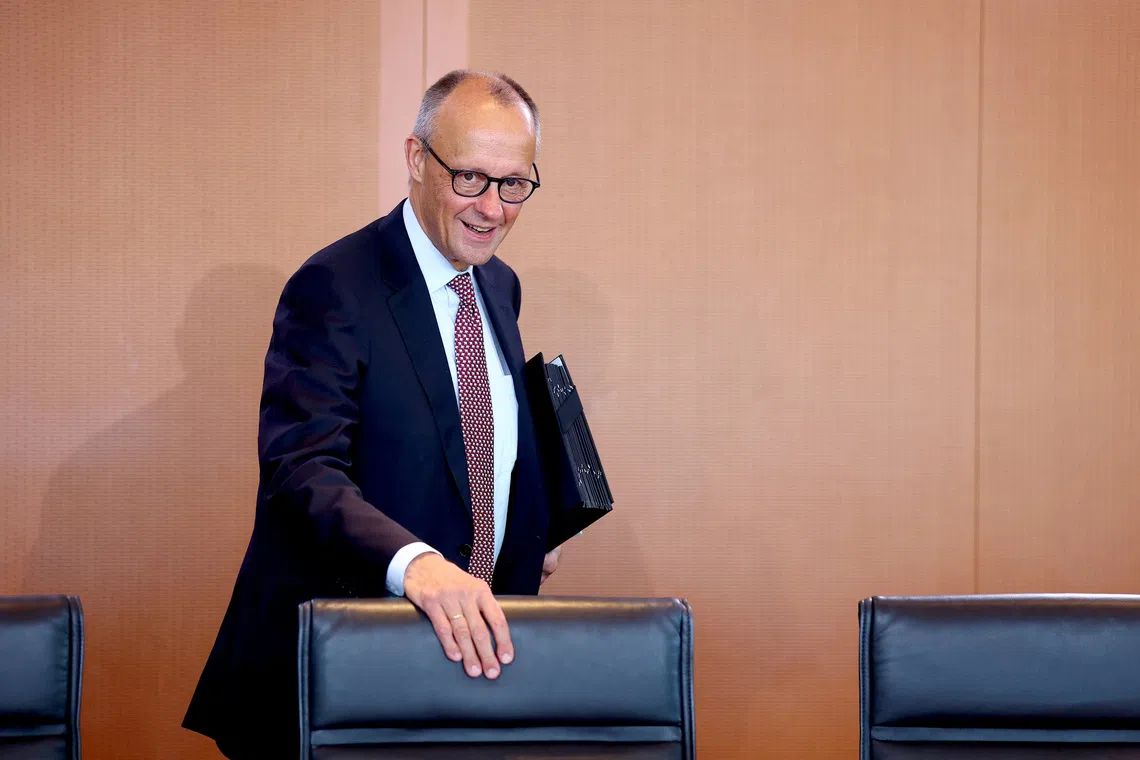
German state election losses risk snarling Merz's reform agenda

Read the original at The Straits Times ↗
Cite

The Straits Times. (2026, September 23). German state election losses risk snarling Merz's reform agenda. The Straits Times. https://www.straitstimes.com/world/europe/german-state-election-losses-risk-snarling-merzs-reform-agenda

Dated when The Aporia collected the article, usually within hours of publication. Check the original for its exact date and byline.

The Straits Times · collected 2026-09-23 · by The Straits Times

Quick Summary

Chancellor Friedrich Merz faces pressure to revise his reform agenda following recent losses by his conservative party in German state elections in eastern Germany and Berlin. The Social Democrats, who are coalition partners with the CDU, have pushed for a more economically supportive policy approach due to voter concerns over rising inflation and living standards. This includes potential modifications to proposed pension reforms that would affect early retirement options, which are particularly contentious in the east where many voters feel they would be disproportionately impacted.
Written by AI on 2026-09-23, from this article's own text only (the story summary below draws on all the coverage).
See how they differ ↓

AI analysis

Story summary

Chancellor Friedrich Merz faces significant pressure as voters in Berlin and Mecklenburg-Western Pomerania go to the polls on Sunday, following the far-right AfD's major victory in Saxony-Anhalt just two weeks prior where it won nearly 44% of the vote compared to the CDU’s 17%. With about 3.8 million voters eligible across both states, the AfD is expected to make substantial gains at Merz’s expense, potentially undermining his ability to push through promised economic reforms. Polls indicate that Merz's approval ratings have fallen to around 14%, and his CDU party risks losing its status as the largest party in Berlin and falling below the threshold for representation in Mecklenburg-Western Pomerania. These outcomes could further jeopardize Merz’s leadership, especially given the CDU’s recent struggles with unpopular reforms and low public approval.

Written for “German Chancellor Merz Faces Election Defeats” on 2026-11-20, grounded in this article and the 40 other(s) covering the same event.

How they differ

20 outlets covered “German State Elections”.

What each outlet says

One AI summary per outlet of its latest article on this story, written from that article alone and checked against it. Open the article for the outlet's own words.

The Straits TimesThis outlet23 Sep

Chancellor Friedrich Merz faces pressure to revise his reform agenda following recent losses by his conservative party in German state elections in eastern Germany and Berlin. The Social Democrats, who are coalition partners with the CDU, have pushed for a more economically supportive policy approach due to voter concerns over rising inflation and living standards. This includes potential modifications to proposed…

German state election losses risk snarling Merz's reform agenda (this article)5 articles from The Straits Times on this story
The Guardian21 Sep

German Chancellor Friedrich Merz met with senior members of his Christian Democratic Union (CDU) party in Berlin following significant election defeats in two states. The meetings come after the CDU lost control of Mecklenburg-Western Pomerania for the first time and saw a strong showing from far-right and far-left parties, particularly the Alternative für Deutschland (AfD), which won 38% in Mecklenburg. These…

German chancellor meets CDU leaders to shore up support after more defeats →4 articles from The Guardian on this story
BBC21 Sep

German Chancellor Friedrich Merz stated his commitment to maintaining the coalition between his Christian Democratic Unionist (CDU) party and the Social Democratic Party (SPD) despite recent electoral setbacks. Following two state elections where the far-right Alternative for Germany (AfD) made significant gains, Merz described these results as a "profound turning point" but denied that his personal unpopularity was…

Merz vows to keep coalition together for Germany's 'democratic future' →3 articles from BBC on this story
Daily Mail22 Sep

Ruth Sunderland discusses the recent political setbacks Chancellor Friedrich Merz faced in Germany with two regional election defeats where left-wing parties and the far-right Alternative für Deutschland (AfD) performed strongly. She highlights economic challenges such as high energy costs, industrial decline, and competition from China, warning that these issues mirror broader European concerns and could deter…

Germany's political and economic problems are sounding a warning for the UK: RUTH SUNDERLAND →3 articles from Daily Mail on this story
South China Morning Post20 Sep

German Chancellor Friedrich Merz faced a significant electoral defeat when his Christian Democratic Union received only 5% of the vote in the state election of Mecklenburg-Western Pomerania, marking its lowest result since World War II. Despite this setback, Merz vowed to continue pushing for economic reforms, dismissing calls for retreat and emphasizing the need for persistence and patience in addressing Germany's…

Germany’s Merz vows to press ahead with reforms after historic state election defeat →2 articles from South China Morning Post on this story
Semafor20 Sep

In German regional elections on Sunday, Chancellor Friedrich Merz's CDU experienced its worst performance in 80 years, described by Merz as a "disaster." The far-right AfD also saw an increase in support, suggesting potential success for far-right parties in upcoming European elections. Meanwhile, other countries like Italy and Denmark are responding to right-wing pressures with stricter policies on issues such as…

Merz's CDU collapses in German regional elections 'disaster' →2 articles from Semafor on this story
Show 14 more outlets
The Independent20 Sep

German Chancellor Friedrich Merz faced significant political challenges after Sunday's state elections where his Christian Democratic Union (CDU) received record-low support of 5% in Mecklenburg-Western Pomerania and came second with 20% in Berlin, behind the Left party. Meanwhile, the anti-migration AfD made notable gains, securing 37% in Mecklenburg-Western Pomerania and 15.7% in Berlin. Despite these setbacks…

Germany’s Merz vows to press on with reforms after historic state election defeat →2 articles from The Independent on this story
Toronto Star21 Sep

German Chancellor Friedrich Merz is struggling to maintain his position after his Christian Democratic Union (CDU) suffered significant defeats in regional elections in Berlin and Mecklenburg-Western Pomerania, dropping below the 5% threshold needed for representation in one of these regions. This loss marks the first time since Germany’s federal republic was established that the CDU has failed to secure seats in a…

Germany's Merz struggles to stay on track after humiliating regional election defeat →2 articles from Toronto Star on this story
Washington Examiner21 Sep

In Sunday's regional election, Alternative for Germany (AfD) won 38% of the vote in Mecklenburg-Western Pomerania, significantly ahead of Chancellor Friedrich Merz’s Christian Democratic Union, which received only 4.9%. This follows a previous AfD victory in Saxony-Anhalt earlier this year, further undermining Merz's position despite his assertion that he will remain steadfast as chancellor. Merz described the…

Friedrich Merz says he will stay in power despite another loss to AfD: ‘Disaster’ →2 articles from Washington Examiner on this story
NPR21 Sep

German Chancellor Friedrich Merz remained steadfast after his party suffered significant losses in state elections for Mecklenburg-Western Pomerania and Berlin. The CDU received only 4.9% of the vote in Mecklenburg-Western Pomerania, failing to clear the parliamentary threshold, while in Berlin it placed third with just 18.2%. Meanwhile, the far-right AfD made substantial gains, securing 38.2% in Mecklenburg-Western…

German chancellor stands his ground after his party loses in state elections →2 articles from NPR on this story
Times of India21 Sep

In state elections held on Sunday, the far-right Alternative for Germany (AfD) secured first place with 37% of votes in Mecklenburg-Western Pomerania, outperforming Chancellor Friedrich Merz’s conservative party which received only 5.5%. This marked a significant loss for Merz's party, as it is their worst performance since 1949 at the state level. Meanwhile, in Berlin, the AfD gained strength with 16% of the votes…

Far-right tops another German state vote, Merz party routed →2 articles from Times of India on this story
CBC23 Sep

Germany's recent regional elections have seen significant gains for far-right and socialist parties, with the Christian Democratic Union (CDU) experiencing historic losses. In Mecklenburg-Western Pomerania, the far-right Alternative für Deutschland (AfD) won first place, while in Berlin, the democratic socialist Die Linke unseated the CDU. This shift signals growing political polarization and a crisis for Germany's…

Germany is electing far-right and socialist parties. What does it mean for the country's floundering centre? →2 articles from CBC on this story
ABC News (AU)21 Sep

Chancellor Friedrich Merz has vowed to continue leading Germany despite a poor showing by his Christian Democratic Union party in local elections in Mecklenburg-Vorpommern. The CDU failed to secure at least 5% of the vote, preventing it from entering the state parliament. Despite this setback, Mr Merz's position remains stable for now as the Social Democrats have indicated they want to maintain their coalition with…

German leader Merz clings on after election 'disaster' →2 articles from ABC News (AU) on this story
The Hindu23 Sep

On September 20, 2026, the far-right Alternative for Germany (AfD) won 38.2% of the vote in Mecklenburg-Western Pomerania, marking its second major victory after Saxony-Anhalt earlier that month. The Christian Democratic Union (CDU), led by Chancellor Friedrich Merz, failed to win a sufficient share of votes and was barred from representation in the regional parliament for the first time since modern German history…

ANALYSIS | Merz faces pressure after AfD’s recent electoral wins →2 articles from The Hindu on this story
Al Jazeera20 Sep

Voters in Berlin and Mecklenburg-Western Pomerania are set to cast ballots on Sunday amid concerns over rising support for far-right parties like the Alternative for Germany (AfD). Chancellor Friedrich Merz faces mounting pressure as his approval ratings dropped to 14%, following the AfD's strong performance in Saxony-Anhalt two weeks prior. In Mecklenburg-Western Pomerania, the CDU’s potential drop below the 5%…

Two German states go to the polls after far-right gains →
New York Post20 Sep

Voters in Mecklenburg-Western Pomerania and Berlin cast their ballots on Sunday in state elections where the far-right AfD party is expected to make significant gains. Chancellor Friedrich Merz faces challenges from these results, which could affect his ability to push reforms in Germany’s economy. The AfD's success might lead to its forming a regional government for the first time since World War II in…

German state elections open voting as Chancellor Friedrich Merz aims to keep far-right in power →
CBS News20 Sep

In recent German state elections, Chancellor Merz's Christian Democratic Union (CDU) faced a significant defeat, receiving only 5% of the vote in Mecklenburg-Western Pomerania—its lowest result since World War II. Meanwhile, the far-right AfD saw substantial gains with 37% and 15.7% in Mecklenburg-Western Pomerania and Berlin respectively. Despite the losses, Merz vowed to continue pushing for economic reforms…

Germany's Merz remains defiant after historic state elections defeat →
Sydney Morning Herald20 Sep

Friedrich Merz, the German chancellor, faces another electoral setback as his party, the Christian Democratic Union (CDU), lost ground to the far-right Alternative for Germany (AfD) in Mecklenburg-Vorpommern state elections on Sunday. The AfD secured 37% of the vote, while Merz’s approval ratings stand at a low 10%, with voters criticizing his leadership style and failure to curb the rise of the AfD and implement…

Merz stumbles on after another big election defeat. But for how long? →
Persuasion21 Sep

In recent German state elections, the far-right Alternative for Germany (AfD) performed strongly, securing representation while the Christian Democrats led by Chancellor Friedrich Merz failed to meet the five percent threshold required for parliamentary seats in Mecklenburg-Vorpommern. This outcome marks a historic decline for the Christian Democrats and signals growing support for extremist parties across…

The Last Nail in the Coffin for Friedrich Merz →
The Globe and Mail21 Sep

German Chancellor Friedrich Merz announced that despite significant losses in recent state elections, he intends to continue pushing forward with economic reform initiatives for Germany. He reaffirmed his commitment to the current government's agenda aimed at reviving Europe’s largest economy.

Merz vows to press ahead with reforms after historic state election defeat →

Where they agree and split

Agreed

AI · cited, from two or more outlets

  • Merz's CDU party suffered a historic defeat in Mecklenburg-Western Pomerania with just 5% of the vote, its lowest result since World War II.45
Quoted from the coverage (4)

The strong showing of AfD in the Saxony-Anhalt election has further weakened the chancellor's standing on the national level as well, and in the past two weeks there have been calls even from within his own party to replace him as chancellor.

6 outlets

Despite the strong headwinds, he has repeatedly said that he’s determined to stay on and finish his term as chancellor.

6 outlets

The state elections are taking place in Mecklenburg-Western Pomerania, a largely rural region in the formerly communist and less prosperous east, and in the capital, Berlin.

6 outlets

Merz acknowledged the CDU's result as a "disaster" but struck a defiant note, rejecting any retreat from his government's reform agenda.

6 outlets

Disputed

Picked by our model, which is sometimes wrong

  • The Independent reports that Merz’s leadership was hit hard by his party’s heavy defeat in Saxony-Anhalt on September 6th, while the Washington Examiner attributes this to a broader context of political fragmentation and left-right polarization.12

Framing

How the first headlines put it

  • The Independent frames the event as a test for Chancellor Friedrich Merz ahead of state elections, whereas The Washington Examiner presents it as an arrival of Götterdämmerung for political parties under a Marmalade sky.12
  • The Daily Mail headlines predict the imminent fall of Chancellor Merz due to election defeats, while NPR focuses on Merz’s defiant stance despite losses.76
Words to watch (5)

Friedrich Merz vows to stay in office after CDU ‘disaster’ in German state elections The Guardian

Friedrich Merz says he will stay in power despite another loss to AfD: ‘Disaster’ Washington Examiner

Germany's Merz struggles to stay on track after humiliating regional election defeat Toronto Star

Chancellor Merz schedules crisis meeting as German voters go to the polls in state elections amid EU fears of another AfD victory Daily Mail

German leader Merz clings on after election 'disaster' ABC News (Australia)

The full story: what happened, how it changed, and all 41 articles →

Compared with similar articles

This article reads leans left and hedges 8% of its claims. Each row says how that neighbour differs.
Times of India
Leans right further right than this Hedges 2 of 14 claims Outlet record 59/100
Toronto Star
Leans right further right than this Hedges 2 of 21 claims Outlet record 64/100
The Independent
Leans left Hedges 1 of 16 claims Outlet record 59/100
CBS News
Hedges 3 of 21 claims Outlet record 67/100
Daily Mail
Leans right further right than this Hedges 4 of 36 claims Outlet record 69/100
South China Morning Post
Leans right further right than this Hedges 0 of 7 claims Outlet record 62/100
NPR
Hedges 1 of 13 claims Outlet record 60/100
CBC News
Leans left Hedges 1 of 13 claims Outlet record 60/100
ABC News (AU)
Leans right further right than this Hedges 0 of 3 claims Outlet record 67/100
The Guardian
Hedges 3 of 30 claims Outlet record 64/100

Story

German Chancellor Merz Faces Election Defeats
Politics · 41 article(s) covering the same event. Compare every outlet's account →
How this article was measured signals, leaning charts, publisher record, byline, topics and claims

Signals How these are calculated →

Claims extracted
26
sentences that state something as happening or true
Uncertain
8%
2 of 26 hedged ("reportedly", "may", "according to")
Leaning
Leans left
of the writing, not the subject · beta estimate
Publisher signals
64/100
The Straits Times's corrections and hedging, across everything collected from it. Not a measure of accuracy.
Outlets on this story
41
Politics
Same framing elsewhere
1
articles that frame the event the way this one does
Analyzed 2026-09-23 · how these are computed

How this is being covered How these are calculated →

Article leaning vs. publisher reliability
Source leaning vs. consistency

Publisher

The Straits Times · 5570 article(s) · 7 correction(s) detected
Running correction rate · 7 correction(s)

Who wrote this

The Straits Times
3829 article(s) here · 1 carrying a prediction
The European leaders were meeting as part of the so-called coalition of the willing, which regularly gathers to discuss ways to protect a postwar Ukraine from future Russian aggression.
US peace negotiator Jared Kushner, at the same event, also said that he and fellow negotiator Steve Witkoff had “gotten the Russians comfortable with the concept that any security guarantee for Ukraine would be based on Article 5”.
Takaichi’s China trip this week was her first since suggesting in 2025 that Japan might intervene militarily if China attempted to take Taiwan by force.
But while some believe the success of the meeting could have a stabilising effect on an international order in turmoil, the broad consensus among analysts is that this first-of-its-kind meeting worked more as a confidence-building exercise between the rival nations rather than an immediate, concrete cure to the world’s ills.
Iraqi security forces will deploy in Jurf al-Sakhar, a stronghold of the Kataib Hezbollah armed group, on Friday, security officials told a press conference, under a compromise deal designed to ease tensions with Iran's most powerful Shi'ite militia ally in the country.
Some analysts said the outcome of the Shenzhen summit may actually diminish Trump’s stature on the world stage as he enters the lame-duck phase of his presidency, while bolstering two of Washington’s main adversaries.
Whether or not the allegation is true, “just the news will definitely influence people’s opinions of women who have broken the ceiling or are trying to.” Asian American women working in tech, civil rights advocacy and academia have felt a sense of dread that this ordeal will diminish how their peers are viewed and treated in their workplaces. It is a reminder that no accomplishments will completely dispel centuries-old stereotypes.
Three killed in missile strikes on Kyiv, mayor says, in biggest attack on bridges
The Bill is backed by both the oil and gas industry and clean energy groups, but opposed by many major environmental organisations. The measure now proceeds to the House of Representatives, where Speaker Mike Johnson, a supporter of the initiative, has predicted he has the votes to pass it. But members on both sides of the aisle, including Minority Leader Hakeem Jeffries, have said they want to make changes to the Bill. Some Republicans, including Representative Chip Roy, policy chair of the ultraconservative House Freedom Caucus, have wavered in their support, saying they have concerns about the legislation’s electric transmission provisions. Some progressive Democrats, meanwhile, have said they oppose the Senate version of the Bill, contending it would weaken environmental laws. Representative Bruce Westerman, the chairman of the House Natural Resources Committee, said on Nov 19 he doubted there would be time to make changes to the Bill before Congress’s term expires at the end of December. “If the Senate gets it done then I think that’s what we’ll have to pass in the House,” Westerman said in an interview before the vote.
Their complaint alleged that supervisors had warned that objections would result in “trouble.”
Also by The Straits Times
Nothing else under this byline is closely related to this article, so these are simply their most recent.
All 3829 articles by The Straits Times →

Topics

BERLIN CDU German SPD Saxony-Anhalt

Subjects

German NORP · 6× Merz PERSON · 6× SPD ORG · 6× BERLIN GPE · 4× Mecklenburg-Western Pomerania GPE · 3× CDU ORG · 2× Saxony-Anhalt GPE · 2× Friedrich Merz PERSON · 1× Germany GPE · 1× Social Democrats NORP · 1×

Narrative

The measure was recommended by a government-appointed pension commission as part of a package of measures that included adding a capital markets element to public pensions to keep the system affordable as the population ages. But many in the east, where people typically have lower savings than in the west and lots went through long spells of unemployment in the wake of German reunification in 1990, feel such a change would hit them disproportionately hard.
framing: assertive · carried by 1 article(s) · first seen 2026-09-23
Chancellor Friedrich Merz may have survived the triumph of the far right in this month's state elections in eastern Germany and Berlin but the shock to his coalition could force him to water down his promised reform agenda.
2026-09-23 · The Straits Times
German state election losses risk snarling Merz's reform agenda · assertive framing

Claims (26 extracted, 2 hedged)

German state election losses risk snarling Merz's reform agenda asserted
losses → risk → agenda
Chancellor Friedrich Merz may have survived the triumph of the far right in this month's state elections in eastern Germany and Berlin but the shock to his coalition could force him to water down his promised reform agenda. uncertain
shock → survive → agenda
Merz took the unusual step of announcing immediately after exit polls showed his conservatives were on course for their worst-ever defeat that he would stay in office to get a raft of reforms to the tax, pensions and health systems through parliament. asserted
he → take → parliament
His partners in the centre-left Social Democrats (SPD), who also lost heavily in elections in Saxony-Anhalt and Berlin while holding on in Mecklenburg-Western Pomerania, also pledged to continue their alliance with his Christian Democrats (CDU). asserted
who → lose → Democrats
But there has been increasing pressure from within the coalition for the government to do something to reflect the votes. asserted
government → increase → votes
"There can't be a simple carrying on as normal after the state elections," an SPD strategy document circulated this week said, calling for a "German 'New Deal' that doesn't leave people alone in a period of transition". asserted
that → circulate → transition
It said a special party meeting would be called in December where the leadership would issue new policy proposals. asserted
leadership → say → proposals
Despite stronger-than-expected growth in the first half of the year, surveys showed Sunday's election results were heavily influenced by squeezed living standards and voter worries over economic issues, notably rising inflation. asserted
results → expect → issues
Aware of the mood of the electorate, two days before Sunday's votes in Berlin and Mecklenburg-Western Pomerania, Merz announced a €2.5 billion tax cut and plans for a price cap to help motorists deal with fuel prices sent soaring by the Iran war. asserted
motorists → announce → war
There has also been pressure from his partners to change sections of the reform package that have drained support for the ruling parties in the eastern German states which voted this month, including plans to change the rules on retiring early. asserted
which → change → rules
The SPD letter said there were "open questions" about the proposed scrapping of the option for people to retire on a full pension at the age of 63 as long as they had paid contributions for at least 45 years. asserted
they → say → years
The measure was recommended by a government-appointed pension commission as part of a package of measures that included adding a capital markets element to public pensions to keep the system affordable as the population ages. But many in the east, where people typically have lower savings than in the west and lots went through long spells of unemployment in the wake of German reunification in 1990, feel such a change would hit them disproportionately hard. asserted
change → recommend → them
Eastern state premiers from both the CDU and SPD have already called for the proposed change to be scrapped and the SPD letter said the proposals had caused "enormous uncertainty" among both workers and employers. asserted
proposals → call → workers
Surveys after the elections in Saxony-Anhalt and Mecklenburg-Western Pomerania showed many voters feared for their personal economic security and mistrusted Merz, whose ratings have hit historic lows. asserted
ratings → show → lows
Manuela Schwesig, the SPD state premier in Mecklenburg-Western Pomerania, who has argued strongly against changing the early retirement rules, said this week Merz needed to regain the trust of voters. asserted
Merz → argue → voters
"I don't know if he will succeed," she said. asserted
she → know → ?
In the wake of the defeats, Merz himself recognized that the government needed to acknowledge that many voters did not feel it was being "fair" in its reform plans. asserted
it → recognize → plans
But already there have been warnings that picking apart reform plans agreed over the summer would undermine confidence in German policy planning just as Europe's largest economy looks like achieving modest growth after years of recession. asserted
economy → pick → recession
"If we start this whole process again now, it just delays these reforms and we need them," said Martin Jacob, a professor at Spain's IESE Business School and a member of the German finance ministry's scientific advisory board. asserted
Jacob → start → board
"And this matters, because international investors, German investors, companies in Germany need to know what policy environment they're in," he said. asserted
he → matter → environment
However, opinion polls this week showing the far-right Alternative for Germany (AfD) party with almost 30% support across the country underline the political realities facing the government. asserted
polls → show → government
Merz, an instinctive pro-business fiscal conservative, came to power in 2025, pledging broad reforms to revive a German economy which has seen its industrial base steadily eroded by relentless competition from China and by the abrupt loss of cheap oil and gas from Russia due to the Ukraine war. asserted
base → come → war
Turning his back on years of German fiscal orthodoxy, he unleashed a €500 billion spending package to rebuild Germany's creaking infrastructure and its shrunken armed forces and, after months of wrangling, approved the reform package in July. asserted
he → turn → July
But the political crisis laid bare by this month's elections could now put those reforms at risk, said Carsten Brzeski, global head of macro at ING. uncertain
Brzeski → lay → ING
"Years of economic stagnation helped produce that fragmentation. asserted
Years → produce → fragmentation
Now the fragmentation will make the stagnation harder to escape," he said. asserted
he → make → ?
Give feedback · no sign-in needed

No sign-in needed for now. Your note is sent without a name, so it cannot be answered.

History Support