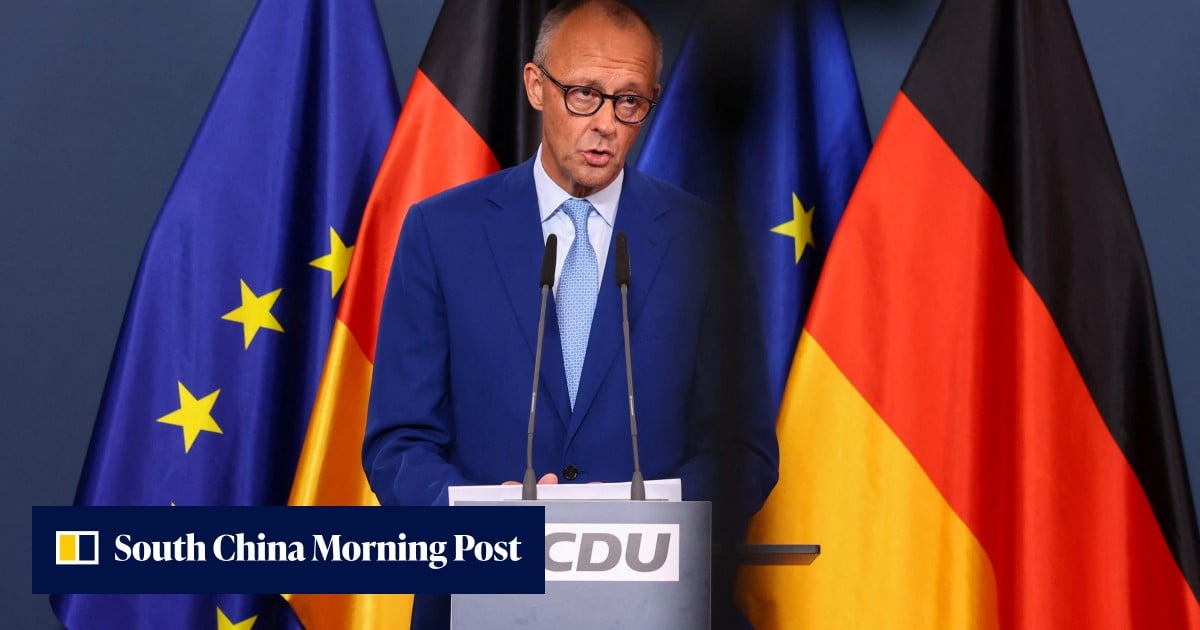
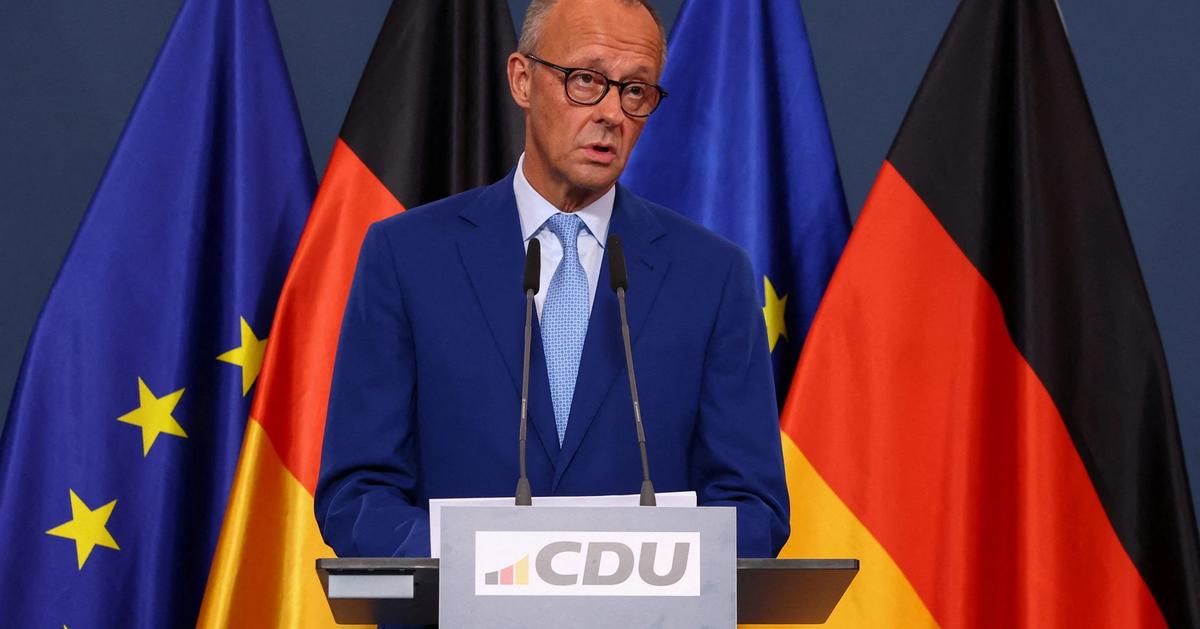
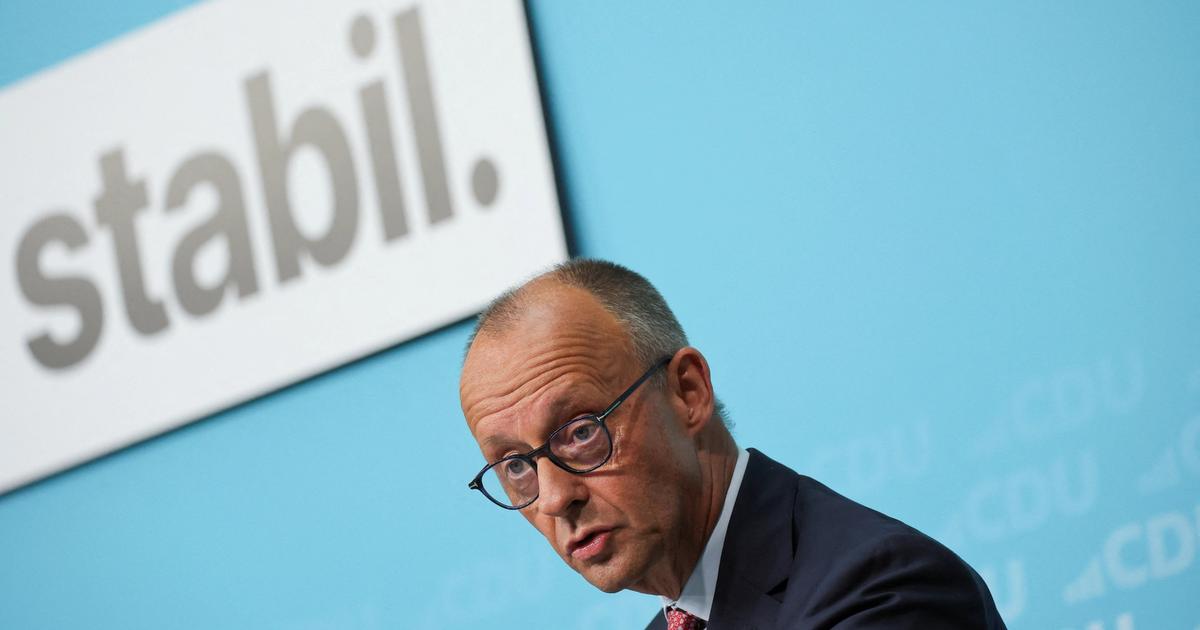
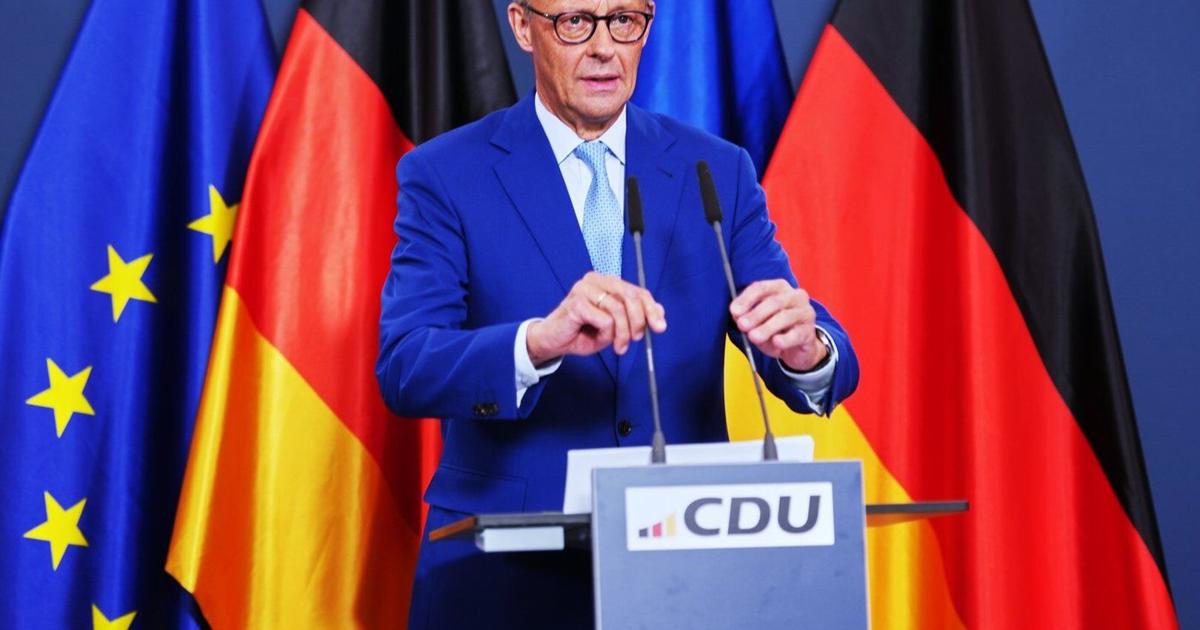
Photo via CBC News

Germany is electing far-right and socialist parties. What does it mean for the country's floundering centre?

Read the original at CBC News ↗
Cite

Stackelberg, M. v. (2026, September 23). Germany is electing far-right and socialist parties. What does it mean for the country's floundering centre? CBC News. https://www.cbc.ca/news/world/germany-state-elections-political-polarization-9.7353444?cmp=rss

Dated when The Aporia collected the article, usually within hours of publication. Check the original for its exact date and byline.

CBC News · collected 2026-09-23 · by Marina von Stackelberg

Quick Summary

Germany's recent regional elections have seen significant gains for far-right and socialist parties, with the Christian Democratic Union (CDU) experiencing historic losses. In Mecklenburg-Western Pomerania, the far-right Alternative für Deutschland (AfD) won first place, while in Berlin, the democratic socialist Die Linke unseated the CDU. This shift signals growing political polarization and a crisis for Germany's mainstream parties, with Chancellor Friedrich Merz facing record-low approval ratings of 13%. Voters are increasingly disillusioned with traditional politics, turning to radical alternatives due to economic issues such as high costs of living and concerns over immigration.
Written by AI on 2026-09-23, from this article's own text only (the story summary below draws on all the coverage).
See how they differ ↓

AI analysis

Story summary

Chancellor Friedrich Merz faces significant pressure as voters in Berlin and Mecklenburg-Western Pomerania go to the polls on Sunday, following the far-right AfD's major victory in Saxony-Anhalt just two weeks prior where it won nearly 44% of the vote compared to the CDU’s 17%. With about 3.8 million voters eligible across both states, the AfD is expected to make substantial gains at Merz’s expense, potentially undermining his ability to push through promised economic reforms. Polls indicate that Merz's approval ratings have fallen to around 14%, and his CDU party risks losing its status as the largest party in Berlin and falling below the threshold for representation in Mecklenburg-Western Pomerania. These outcomes could further jeopardize Merz’s leadership, especially given the CDU’s recent struggles with unpopular reforms and low public approval.

Written for “German Chancellor Merz Faces Election Defeats” on 2026-11-20, grounded in this article and the 40 other(s) covering the same event.

How they differ

20 outlets covered “German State Elections”.

What each outlet says

One AI summary per outlet of its latest article on this story, written from that article alone and checked against it. Open the article for the outlet's own words.

CBCThis outlet23 Sep

Germany's recent regional elections have seen significant gains for far-right and socialist parties, with the Christian Democratic Union (CDU) experiencing historic losses. In Mecklenburg-Western Pomerania, the far-right Alternative für Deutschland (AfD) won first place, while in Berlin, the democratic socialist Die Linke unseated the CDU. This shift signals growing political polarization and a crisis for Germany's…

Germany is electing far-right and socialist parties. What does it mean for the country's floundering centre? (this article)2 articles from CBC on this story
The Straits Times23 Sep

Chancellor Friedrich Merz faces pressure to revise his reform agenda following recent losses by his conservative party in German state elections in eastern Germany and Berlin. The Social Democrats, who are coalition partners with the CDU, have pushed for a more economically supportive policy approach due to voter concerns over rising inflation and living standards. This includes potential modifications to proposed…

German state election losses risk snarling Merz's reform agenda →5 articles from The Straits Times on this story
The Guardian21 Sep

German Chancellor Friedrich Merz met with senior members of his Christian Democratic Union (CDU) party in Berlin following significant election defeats in two states. The meetings come after the CDU lost control of Mecklenburg-Western Pomerania for the first time and saw a strong showing from far-right and far-left parties, particularly the Alternative für Deutschland (AfD), which won 38% in Mecklenburg. These…

German chancellor meets CDU leaders to shore up support after more defeats →4 articles from The Guardian on this story
BBC21 Sep

German Chancellor Friedrich Merz stated his commitment to maintaining the coalition between his Christian Democratic Unionist (CDU) party and the Social Democratic Party (SPD) despite recent electoral setbacks. Following two state elections where the far-right Alternative for Germany (AfD) made significant gains, Merz described these results as a "profound turning point" but denied that his personal unpopularity was…

Merz vows to keep coalition together for Germany's 'democratic future' →3 articles from BBC on this story
Daily Mail22 Sep

Ruth Sunderland discusses the recent political setbacks Chancellor Friedrich Merz faced in Germany with two regional election defeats where left-wing parties and the far-right Alternative für Deutschland (AfD) performed strongly. She highlights economic challenges such as high energy costs, industrial decline, and competition from China, warning that these issues mirror broader European concerns and could deter…

Germany's political and economic problems are sounding a warning for the UK: RUTH SUNDERLAND →3 articles from Daily Mail on this story
South China Morning Post20 Sep

German Chancellor Friedrich Merz faced a significant electoral defeat when his Christian Democratic Union received only 5% of the vote in the state election of Mecklenburg-Western Pomerania, marking its lowest result since World War II. Despite this setback, Merz vowed to continue pushing for economic reforms, dismissing calls for retreat and emphasizing the need for persistence and patience in addressing Germany's…

Germany’s Merz vows to press ahead with reforms after historic state election defeat →2 articles from South China Morning Post on this story
Show 14 more outlets
Semafor20 Sep

In German regional elections on Sunday, Chancellor Friedrich Merz's CDU experienced its worst performance in 80 years, described by Merz as a "disaster." The far-right AfD also saw an increase in support, suggesting potential success for far-right parties in upcoming European elections. Meanwhile, other countries like Italy and Denmark are responding to right-wing pressures with stricter policies on issues such as…

Merz's CDU collapses in German regional elections 'disaster' →2 articles from Semafor on this story
The Independent20 Sep

German Chancellor Friedrich Merz faced significant political challenges after Sunday's state elections where his Christian Democratic Union (CDU) received record-low support of 5% in Mecklenburg-Western Pomerania and came second with 20% in Berlin, behind the Left party. Meanwhile, the anti-migration AfD made notable gains, securing 37% in Mecklenburg-Western Pomerania and 15.7% in Berlin. Despite these setbacks…

Germany’s Merz vows to press on with reforms after historic state election defeat →2 articles from The Independent on this story
Toronto Star21 Sep

German Chancellor Friedrich Merz is struggling to maintain his position after his Christian Democratic Union (CDU) suffered significant defeats in regional elections in Berlin and Mecklenburg-Western Pomerania, dropping below the 5% threshold needed for representation in one of these regions. This loss marks the first time since Germany’s federal republic was established that the CDU has failed to secure seats in a…

Germany's Merz struggles to stay on track after humiliating regional election defeat →2 articles from Toronto Star on this story
Washington Examiner21 Sep

In Sunday's regional election, Alternative for Germany (AfD) won 38% of the vote in Mecklenburg-Western Pomerania, significantly ahead of Chancellor Friedrich Merz’s Christian Democratic Union, which received only 4.9%. This follows a previous AfD victory in Saxony-Anhalt earlier this year, further undermining Merz's position despite his assertion that he will remain steadfast as chancellor. Merz described the…

Friedrich Merz says he will stay in power despite another loss to AfD: ‘Disaster’ →2 articles from Washington Examiner on this story
NPR21 Sep

German Chancellor Friedrich Merz remained steadfast after his party suffered significant losses in state elections for Mecklenburg-Western Pomerania and Berlin. The CDU received only 4.9% of the vote in Mecklenburg-Western Pomerania, failing to clear the parliamentary threshold, while in Berlin it placed third with just 18.2%. Meanwhile, the far-right AfD made substantial gains, securing 38.2% in Mecklenburg-Western…

German chancellor stands his ground after his party loses in state elections →2 articles from NPR on this story
Times of India21 Sep

In state elections held on Sunday, the far-right Alternative for Germany (AfD) secured first place with 37% of votes in Mecklenburg-Western Pomerania, outperforming Chancellor Friedrich Merz’s conservative party which received only 5.5%. This marked a significant loss for Merz's party, as it is their worst performance since 1949 at the state level. Meanwhile, in Berlin, the AfD gained strength with 16% of the votes…

Far-right tops another German state vote, Merz party routed →2 articles from Times of India on this story
ABC News (AU)21 Sep

Chancellor Friedrich Merz has vowed to continue leading Germany despite a poor showing by his Christian Democratic Union party in local elections in Mecklenburg-Vorpommern. The CDU failed to secure at least 5% of the vote, preventing it from entering the state parliament. Despite this setback, Mr Merz's position remains stable for now as the Social Democrats have indicated they want to maintain their coalition with…

German leader Merz clings on after election 'disaster' →2 articles from ABC News (AU) on this story
The Hindu23 Sep

On September 20, 2026, the far-right Alternative for Germany (AfD) won 38.2% of the vote in Mecklenburg-Western Pomerania, marking its second major victory after Saxony-Anhalt earlier that month. The Christian Democratic Union (CDU), led by Chancellor Friedrich Merz, failed to win a sufficient share of votes and was barred from representation in the regional parliament for the first time since modern German history…

ANALYSIS | Merz faces pressure after AfD’s recent electoral wins →2 articles from The Hindu on this story
Al Jazeera20 Sep

Voters in Berlin and Mecklenburg-Western Pomerania are set to cast ballots on Sunday amid concerns over rising support for far-right parties like the Alternative for Germany (AfD). Chancellor Friedrich Merz faces mounting pressure as his approval ratings dropped to 14%, following the AfD's strong performance in Saxony-Anhalt two weeks prior. In Mecklenburg-Western Pomerania, the CDU’s potential drop below the 5%…

Two German states go to the polls after far-right gains →
New York Post20 Sep

Voters in Mecklenburg-Western Pomerania and Berlin cast their ballots on Sunday in state elections where the far-right AfD party is expected to make significant gains. Chancellor Friedrich Merz faces challenges from these results, which could affect his ability to push reforms in Germany’s economy. The AfD's success might lead to its forming a regional government for the first time since World War II in…

German state elections open voting as Chancellor Friedrich Merz aims to keep far-right in power →
CBS News20 Sep

In recent German state elections, Chancellor Merz's Christian Democratic Union (CDU) faced a significant defeat, receiving only 5% of the vote in Mecklenburg-Western Pomerania—its lowest result since World War II. Meanwhile, the far-right AfD saw substantial gains with 37% and 15.7% in Mecklenburg-Western Pomerania and Berlin respectively. Despite the losses, Merz vowed to continue pushing for economic reforms…

Germany's Merz remains defiant after historic state elections defeat →
Sydney Morning Herald20 Sep

Friedrich Merz, the German chancellor, faces another electoral setback as his party, the Christian Democratic Union (CDU), lost ground to the far-right Alternative for Germany (AfD) in Mecklenburg-Vorpommern state elections on Sunday. The AfD secured 37% of the vote, while Merz’s approval ratings stand at a low 10%, with voters criticizing his leadership style and failure to curb the rise of the AfD and implement…

Merz stumbles on after another big election defeat. But for how long? →
Persuasion21 Sep

In recent German state elections, the far-right Alternative for Germany (AfD) performed strongly, securing representation while the Christian Democrats led by Chancellor Friedrich Merz failed to meet the five percent threshold required for parliamentary seats in Mecklenburg-Vorpommern. This outcome marks a historic decline for the Christian Democrats and signals growing support for extremist parties across…

The Last Nail in the Coffin for Friedrich Merz →
The Globe and Mail21 Sep

German Chancellor Friedrich Merz announced that despite significant losses in recent state elections, he intends to continue pushing forward with economic reform initiatives for Germany. He reaffirmed his commitment to the current government's agenda aimed at reviving Europe’s largest economy.

Merz vows to press ahead with reforms after historic state election defeat →

Where they agree and split

Agreed

AI · cited, from two or more outlets

  • Merz's CDU party suffered a historic defeat in Mecklenburg-Western Pomerania with just 5% of the vote, its lowest result since World War II.45
Quoted from the coverage (4)

The strong showing of AfD in the Saxony-Anhalt election has further weakened the chancellor's standing on the national level as well, and in the past two weeks there have been calls even from within his own party to replace him as chancellor.

6 outlets

Despite the strong headwinds, he has repeatedly said that he’s determined to stay on and finish his term as chancellor.

6 outlets

The state elections are taking place in Mecklenburg-Western Pomerania, a largely rural region in the formerly communist and less prosperous east, and in the capital, Berlin.

6 outlets

Merz acknowledged the CDU's result as a "disaster" but struck a defiant note, rejecting any retreat from his government's reform agenda.

6 outlets

Disputed

Picked by our model, which is sometimes wrong

  • The Independent reports that Merz’s leadership was hit hard by his party’s heavy defeat in Saxony-Anhalt on September 6th, while the Washington Examiner attributes this to a broader context of political fragmentation and left-right polarization.12

Framing

How the first headlines put it

  • The Independent frames the event as a test for Chancellor Friedrich Merz ahead of state elections, whereas The Washington Examiner presents it as an arrival of Götterdämmerung for political parties under a Marmalade sky.12
  • The Daily Mail headlines predict the imminent fall of Chancellor Merz due to election defeats, while NPR focuses on Merz’s defiant stance despite losses.76
Words to watch (5)

Friedrich Merz vows to stay in office after CDU ‘disaster’ in German state elections The Guardian

Friedrich Merz says he will stay in power despite another loss to AfD: ‘Disaster’ Washington Examiner

Germany's Merz struggles to stay on track after humiliating regional election defeat Toronto Star

Chancellor Merz schedules crisis meeting as German voters go to the polls in state elections amid EU fears of another AfD victory Daily Mail

German leader Merz clings on after election 'disaster' ABC News (Australia)

The full story: what happened, how it changed, and all 41 articles →

Compared with similar articles

This article reads leans left and hedges 6% of its claims. Each row says how that neighbour differs.
The Independent
Leans left Hedges 1 of 16 claims Outlet record 59/100
Daily Mail
Leans right further right than this Hedges 4 of 36 claims Outlet record 69/100
South China Morning Post
Leans right further right than this Hedges 0 of 7 claims Outlet record 62/100
CBC News
Leans left Hedges 1 of 13 claims Outlet record 60/100
Semafor
Leans right further right than this Hedges 1 of 4 claims Outlet record 64/100
Semafor
Leans left Hedges 0 of 5 claims Outlet record 64/100
“The articles discuss different times relative to the elections: one before and one after, indicating they are describing distinct phases of a broader situation rather than the exact same incident.”
The Guardian
Leans left Hedges 3 of 26 claims Outlet record 64/100
“While both articles discuss elections impacting Chancellor Friedrich Merz's political future, they describe different specific events: one mentions upcoming polls in two states, while the other reports on recent election results in Mecklenburg-Western Pomerania.”
The Independent
Leans left Hedges 4 of 36 claims Outlet record 59/100
“The articles refer to different election contexts and outcomes involving various parties, not a single identical incident.”
Al Jazeera
Leans strongly left further left than this Hedges 2 of 12 claims Outlet record 60/100
“While both articles discuss election results affecting Chancellor Merz and his party in Germany, Article A describes preparations before the elections, while Article B covers reactions to the election outcomes.”
Toronto Star
Leans right further right than this Hedges 2 of 21 claims Outlet record 64/100
“While both articles discuss the election results that caused difficulties for Chancellor Merz's party, they are not describing the exact same incident or timeframe. Article A focuses on the immediate aftermath and Merz's response following the polls closing, while Article B appears to reflect a broader analysis after the full impact of the election is clearer.”

Story

German Chancellor Merz Faces Election Defeats
Politics · 41 article(s) covering the same event. Compare every outlet's account →
How this article was measured signals, leaning charts, publisher record, byline, topics and claims

Signals How these are calculated →

Claims extracted
50
sentences that state something as happening or true
Uncertain
6%
3 of 50 hedged ("reportedly", "may", "according to")
Leaning
Leans left
of the writing, not the subject · beta estimate
Publisher signals
60/100
CBC News's corrections and hedging, across everything collected from it. Not a measure of accuracy.
Outlets on this story
41
Politics
Same framing elsewhere
1
articles that frame the event the way this one does
Analyzed 2026-09-23 · how these are computed

How this is being covered How these are calculated →

Article leaning vs. publisher reliability
Source leaning vs. consistency

Publisher

CBC News · 966 article(s) · 2 correction(s) detected
Running correction rate · 2 correction(s)

Who wrote this

Marina von Stackelberg
3 article(s) here · 1 carrying a prediction
A joint statement expected to be released at the 21st Canada-EU summit in Montreal on Friday will instead use softer language promising closer ties, according to sources who have seen the latest draft of the statement. European Commission President Ursula von der Leyen surprised many last month when she announced the EU would begin the process of making Canada its first "associate member" — a status that does not exist within the bloc — raising questions among some members and Canadian politicians about what that would look like.
Canada's new relationship with EU will be 'closer to membership' than ever, senior officials say Associate membership expected to be main topic at summit this week in Montreal European Union officials say the details and exact title of Canada's possible associate EU membership are still being internally debated — but the 27 countries are united in wanting the "closest possible association" with Canada.
On Sunday, Merz vowed to stay in his role but will do so on increasingly shaky ground, with his approval rating sitting at 13 per cent — a record low.
Also by Marina von Stackelberg
Nothing else under this byline is closely related to this article, so these are simply their most recent.

Topics

AfD Berlin CDU Die Linke Germany

Subjects

Germany GPE · 11× CDU ORG · 5× AfD ORG · 3× Die Linke ORG · 3× Merz PERSON · 3× Berlin GPE · 2× CBC News ORG · 2× Friedrich Merz’s PERSON · 1× Mecklenburg PERSON · 1× the Christian Democratic Union ORG · 1×

Narrative

Die Linke's Elif Eralp, who is likely to become the city’s new mayor, is the daughter of Turkish immigrants and has been dubbed Berlin’s Zohran Mamdani, referring to the New York City mayor, who is also a democratic socialist. "In our city, love and justice won over hate, and today we showed that together and sent this signal out into the world," Eralp said in German to her supporters on election night.
framing: assertive · carried by 1 article(s) · first seen 2026-09-23
On Sunday, Merz vowed to stay in his role but will do so on increasingly shaky ground, with his approval rating sitting at 13 per cent — a record low.

Claims (50 extracted, 3 hedged)

Germany is electing far-right and socialist parties. asserted
Germany → elect → parties
What does it mean for the country's floundering centre? asserted
it → mean → centre
Growing polarization marks unstable future for centre parties and Germany's chancellor Right after the election results came in Sunday night, Germany’s chancellor stood in front of journalists and described it bluntly: "Es ist ein disaster." asserted
Es → grow → it
Friedrich Merz’s centre-right party, the Christian Democratic Union (CDU), has suffered catastrophic losses in a number of recent regional elections. asserted
party → suffer → elections
Over the weekend in the state of Mecklenburg-Western Pomerania, the CDU had its worst performance in history, failing to win enough votes to even keep a seat in the legislature. asserted
CDU → have → legislature
The far-right Alternative für Deutschland (AfD) came in first place — for the second time in just a few weeks. asserted
Alternative → come → weeks
In the city state of Berlin, the CDU was unseated from the other side of the political spectrum, by the democratic socialist Die Linke ("The Left"). asserted
CDU → unseat → socialist
The fact that more Germans now say in surveys that they'd rather vote for a far-right party is a seismic shift. asserted
they → say → party
And for a political system that is designed for stability, the rise of both the far-right and hard-left signals a crisis for the country's mainstream politics. asserted
rise → design → politics
"People are getting polarized more and more these days," said Leonie Siwter, a Die Linke supporter who was celebrating at the Berlin watch party on Sunday night. asserted
who → polarize → night
"In the last few years, our Chancellor Merz has managed with every single announcement to make himself less and less popular," she said. asserted
she → manage → announcement
"They’ve lost a lot of trust." asserted
They → lose → trust
On Sunday, Merz vowed to stay in his role but will do so on increasingly shaky ground, with his approval rating sitting at 13 per cent — a record low. asserted
rating → vow → cent
Elections in Germany's 16 states don't directly impact Merz's job. asserted
Elections → impact → job
But his party's poor regional results challenge his viability as the country's national leader. asserted
results → challenge → leader
Disillusion with the mainstream Like other democracies, Germany is seeing the rise of a far-right, nationalist movement — and in many ways, a radical left in response. asserted
Germany → see → response
"The biggest part why people are voting for the Left Party now is because they’re afraid of the right parties and fascism growing in Germany," Die Linke supporter Michael Berger told CBC News. asserted
Berger → vote → News
The CDU, meanwhile, has been criticized for failing to properly tackle the rise of the AfD and seriously address the issues radical parties are politically capitalizing on, like immigration and housing. asserted
parties → criticize → immigration
Although Germany has one of the world’s largest economies, like other Western countries, it faces slowing growth, high fuel prices and an increased cost of living. asserted
it → have → living
The war in Ukraine along with manufacturing competition from China have also strained the country. asserted
war → strain → country
"In Germany, the economics are going down. asserted
economics → go → Germany
It could not be worse," AfD supporter Daniel Specht told CBC News at a rally in August in the state of Saxony-Anhalt, where the party nearly formed a majority. uncertain
party → tell → majority
"If you elect the old parties, it will not get better." asserted
it → elect → parties
Voters are no longer forming long-term relationships with established parties, according to Anna-Sophie Heinze, an expert in democracy and Europe’s far-right at the University of Lüneburg. uncertain
Voters → form → Lüneburg
“Everything is getting more fragmented in society, and this is reflected in the political system,” she said. asserted
she → get → system
Heinze said an increasing number of German voters, especially young ones, are looking for radical change. asserted
number → say → change
At the same time, more extreme views are being normalized. asserted
views → normalize → time
A postwar system set up for stability Following Nazi rule, Germany’s political system was set up to make it hard for fringe parties to gain power. asserted
parties → set → power
In order to have any seats in the federal and most state legislatures, a party must win at least five per cent of the overall vote. asserted
party → win → vote
Unlike other democracies such as Canada, where one party can easily win a majority, Germany’s system is designed to make it difficult. asserted
it → win → majority
The proportional voting system usually requires parties to form coalitions and govern together. asserted
system → require → coalitions
It’s a natural way to encourage compromise and moderate views. asserted
It → ’ → views
But building agreement across a widening spectrum of viewpoints may become more difficult. uncertain
building → build → viewpoints
Despite holding the most seats in the federal legislature after the CDU, the AfD’s power has been limited because the other parties refuse to work with a party they say has extreme views. asserted
they → hold → views
It wants to severely restrict immigration, set up hundreds of deportation centres and encourage citizens of what it calls "German origin" to have more traditional families with many children. asserted
it → want → children
At a news conference Monday, the AfD’s co-leader Alice Weidel said her party had replaced the CDU as Germany’s Volkspartei, or "party for all people. asserted
party → say → people
" If the AfD garners more voter support, it will become harder for the mainstream parties to block them from power. asserted
parties → garner → power
“We see a weakening of democracy in Germany like we see in many other Western countries," said Marcel Fratzscher, president of the German Institute for Economic Research. asserted
Fratzscher → see → Research
"The political middle of the spectrum has been losing out," he said. asserted
he → lose → spectrum
"It cannot continue its old ways of moving very slowly." asserted
It → continue → ways
…and 10 more, not listed.
Give feedback · no sign-in needed

No sign-in needed for now. Your note is sent without a name, so it cannot be answered.

History Support