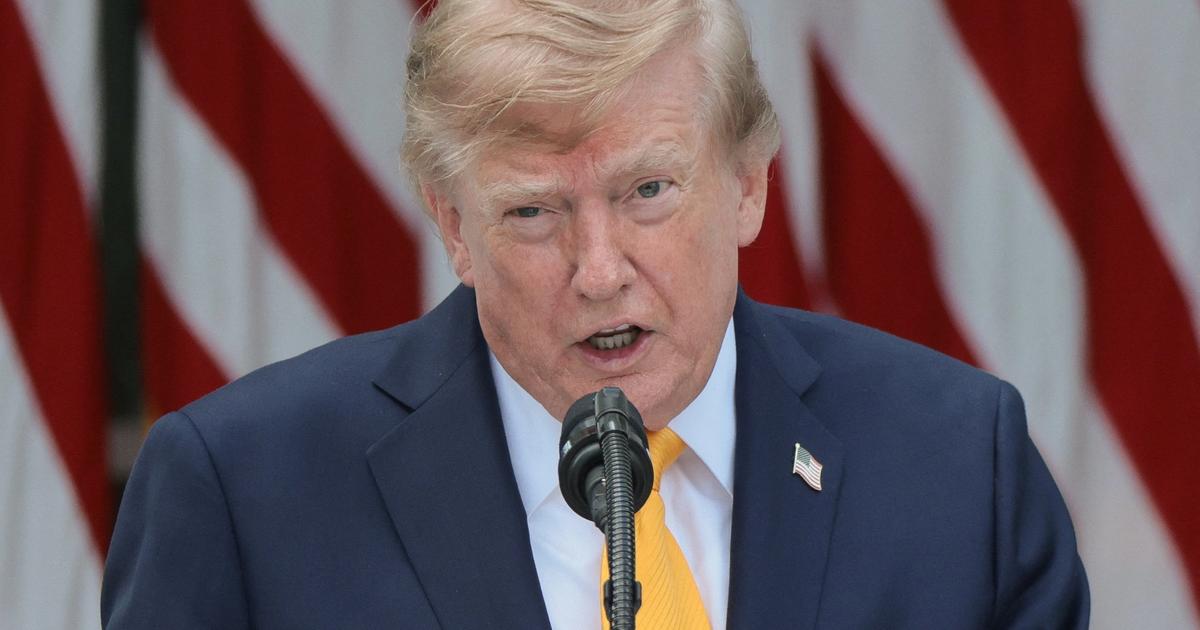
Photo via CBC News

What we know about how the Canada-U.S. trade talks fell apart

Read the original at CBC News ↗
Cite

Burke, A. (2026, August 25). What we know about how the Canada-U.S. trade talks fell apart. CBC News. https://www.cbc.ca/news/politics/carney-trump-trade-talks-broke-down-9.7318903?cmp=rss

Dated when The Aporia collected the article, usually within hours of publication. Check the original for its exact date and byline.

CBC News · collected 2026-08-25 · by Ashley Burke

Quick Summary

Prime Minister Mark Carney and U.S. Vice-President JD Vance have differing accounts of why Canada-U.S. trade talks fell apart. According to Carney, Washington demanded terms that would "destroy" Canadian industries such as auto, steel, and aluminum, while Vance accused Canada of making unreasonable last-minute demands. The two countries were negotiating a deal in which the U.S. would reduce its tariff on Canadian autos from 25% to 15%, but just before the deadline, the U.S. revealed plans to exclude medium- and heavy-duty trucks, including pickup trucks made by Ford and General Motors. This exclusion could have severely impacted around 20,000 workers at Ontario plants.
Written by AI on 2026-08-25, from this article's own text only (the story summary below draws on all the coverage).
See how they differ ↓

AI analysis

Story summary

Here's a summary of the news story:

Naheed Nenshi, the leader of the Alberta NDP, has urged Premier Danielle Smith to cancel or postpone the upcoming referendum on separating from Canada due to the ongoing trade war with the US. The referendum is scheduled for October 19 and will ask voters whether they want to start the process of holding a future binding vote on separation.

Nenshi's demand was met with skepticism by some, who noted that he had previously opposed the idea of a separation referendum. Premier Smith rejected Nenshi's request, saying that the trade war was an opportunity for Alberta and Canada to stand together against the US.

Meanwhile, other provinces are also considering their stance on the trade war. Alberta and Saskatchewan have rejected suggestions that they impose export levies on natural resources such as oil and potash in retaliation for US tariffs, with Premier Smith saying that such a move would be "disastrous" and would harm not just Albertans but also other provinces.

The federal government has announced its plan to impose countertariffs on hundreds of US exports, including clothing and apparel, appliances, and dairy products. However, it has removed seafood and fish products from the list of counter-tariffs due to concerns about broader economic harms. The US has warned that further Canadian retaliation will not be tolerated.

The trade war is also being used as a rallying cry by some who are opposed to separation. A pro-unity group called Forever Canadian has seen an increase in support and interest in its patriotic lawn signs, with over 11,000 viewers attending an online town hall meeting last weekend.

Written for “Canada US Trade Dispute Escalation” on 2026-11-20, grounded in this article and the 53 other(s) covering the same event.

How they differ

19 outlets covered “Canada US Trade Dispute Escalation”.

What each outlet says

One AI summary per outlet of its latest article on this story, written from that article alone and checked against it. Open the article for the outlet's own words.

CBCThis outlet25 Aug

Prime Minister Mark Carney and U.S. Vice-President JD Vance have differing accounts of why Canada-U.S. trade talks fell apart. According to Carney, Washington demanded terms that would "destroy" Canadian industries such as auto, steel, and aluminum, while Vance accused Canada of making unreasonable last-minute demands. The two countries were negotiating a deal in which the U.S. would reduce its tariff on Canadian…

What we know about how the Canada-U.S. trade talks fell apart (this article)12 articles from CBC on this story
National Post28 Aug

Economist David Clement argues that Canada's counter-tariffs will ultimately hurt Canadian consumers rather than President Trump. He points out that tariffs on foreign products are essentially a tax paid by domestic consumers and quotes previous statements from Canadian politicians, including Ontario Premier Doug Ford and Prime Minister Justin Trudeau, who have made similar claims about the impact of tariffs on…

David Clement: Counter-tariffs will hurt Canadians more than they’ll hurt Trump →11 articles from National Post on this story
The Globe and Mail27 Aug

Alberta Premier Danielle Smith and Saskatchewan Premier Scott Moe expressed strong opposition to imposing export levies on natural resources such as oil and potash in retaliation for U.S. tariffs, with Smith calling it a "disastrous policy decision" that would devastate the Canadian economy. The two premiers spoke out despite Ottawa's plan to impose $7.5 billion worth of support package for workers and businesses…

Alberta, Saskatchewan push back on calls for oil, potash export levies in retaliation for U.S. tariffs →9 articles from The Globe and Mail on this story
The Guardian27 Aug

US President Donald Trump has threatened to impose tariffs on Canadian goods, including hockey sticks and tongue depressors, due to stalled trade talks. The US has already implemented tariffs on $20bn worth of Canadian exports, prompting Canada's prime minister, Mark Carney, to announce retaliatory tariffs on $20bn worth of US goods. Trump responded by calling Canadian negotiators "clowns" and threatening to rename…

How to lose Trump’s trade war: test Canada’s resolve with threats to hockey sticks →3 articles from The Guardian on this story
The Independent25 Aug

President Donald Trump has launched a personal attack on Ontario Premier Doug Ford, calling him "less intelligent" than his late brother Rob Ford. The attack was made on Truth Social on Monday amid tensions over tariffs with Canada. Rob Ford, a former Toronto mayor, was known for his right-wing populist style and charismatic personality, which drew comparisons to Trump. Canadian journalists have responded to the…

Trump lashes out at Ontario Premier Doug Ford calling him ‘less intelligent’ than late brother Rob →2 articles from The Independent on this story
ABC News (US)28 Aug

President Donald Trump has signed a proclamation temporarily lifting tariffs on some foreign imports of lean beef trimmings used for ground beef, effective September 1, to encourage a 25% discount on imported beef. This action applies to 300,000 metric tons of additional imports beyond what was already allowed at low tariffs, but does not specify which countries are affected. The move has sparked backlash from…

Trump signs proclamation to pause some beef tariffs despite backlash from base →2 articles from ABC News (US) on this story
Show 12 more outlets
Semafor27 Aug

A US official within the Trump administration is considering potential bans on Canadian imports in response to possible further retaliation from Canada against US tariffs. According to this source, if Canada takes additional steps, the US could impose tariffs or prohibit imports under Section 338 of the trade law. The US has already set a tariff hike for certain Canadian goods to 50% starting January 1. The Trump…

US eyes potential bans on Canadian imports →2 articles from Semafor on this story
Toronto Star26 Aug

Ontario Premier Doug Ford publicly insulted US President Donald Trump on Monday, saying "kiss my ass" in response to Trump's trade policies against Canada. The comment was made during a press conference where Ford also hinted at reinstating tariffs on Ontario electricity shipments to the US if necessary. This is not typical Canadian diplomacy or international discourse, but some are framing it as a long-overdue…

‘Kiss my ass’? Doug Ford finds the perfect words for Donald Trump →2 articles from Toronto Star on this story
Reason.com24 Aug

Yesterday, Donald Trump imposed 50% tariffs on numerous Canadian imports through the use of Section 338, a provision from the Smoot-Hawley Tariff Act of 1930 that has been superseded by new legislation. The article argues that this move is an illegal usurpation of congressional authority and will likely face legal challenges, citing previous court cases where similar tariff attempts were struck down. According to…

Trump Imposes Harmful and Illegal Section 338 Tariffs Against Many Canadian Imports →
The Bulwark24 Aug

Andrew Egger and Catherine Rampell discuss the collapse of trade negotiations between the US and Canada, which has escalated into a full-blown trade war once again. The key issue is Trump's latest tariffs, but the article doesn't specify what numbers are involved. This analysis piece from The Bulwark examines the potential economic consequences for US businesses and consumers as well as the political risks for…

Trump Blows Up His Own Trade Deal with Canada →
UPI24 Aug

US President Donald Trump accused Canada of wanting to reap benefits without being a US state on social media, claiming they had charged American farmers massive amounts of tariffs for years. The statement comes after Canadian Prime Minister Mark Carney announced Ottawa's plan to impose retaliatory tariffs next month in response to the 50% tariffs imposed by the US. These retaliatory tariffs will target various…

Trump says Canada wants 'benefits of being' a U.S. state in trade war →
Letters from an American25 Aug

Canadian Prime Minister Mark Carney has instructed negotiators to walk away from talks with US officials over new 50% tariffs on $28 billion of Canadian products imposed by the Trump administration. The tariffs were announced in July, and Trump cited Section 338 of the Tariff Act of 1930 as justification, which had never been invoked before by a president. This move has led to criticism from Carney, who called the…

August 24, 2026 →
BBC26 Aug

Canadian Finance Minister François-Philippe Champagne announced retaliatory tariffs as high as 50% on $20 billion worth of US goods in response to US tariffs imposed last weekend. The list includes steel, furniture, fresh tuna, and cotton T-shirts, among other products, and will take effect on September 8. Canada's move is seen as a proportionate and strategic response to the US tariffs, which Champagne said would…

Canada announces 'dollar-for-dollar' retaliatory tariffs on US as high as 50% →
Mother Jones26 Aug

Canadian officials announced a $7.5 billion support package to help businesses and workers affected by US tariffs, with measures including non-repayable loans and interest-free loans for small businesses. The package is part of Canada's reciprocal tariff plan, which includes dollar-for-dollar counter-tariffs on US imports valued at roughly $20 billion. According to the article, this approach exceeds any support…

Canada Is Spending Billions to Help Its Workers Survive Our Tariffs →
Los Angeles Times26 Aug

Canada has retaliated against the US by imposing tariffs on $20 billion worth of American goods, including steel, dairy products, and seafood, after President Trump announced 50% tariffs on Canadian goods. The new duties are set to hit a variety of products with tariffs as high as 50%, targeting items commonly found on shopping lists. Finance Minister Francois-Philippe Champagne stated that Canada was forced to take…

Canada retaliates in rapidly escalating U.S. trade war →
The Dispatch26 Aug

The article argues that Trump's trade war with Canada is not about Canada itself, but rather a consequence of the US's geopolitical focus on other countries, particularly Iran. The author suggests that the current situation in Canada is a result of its increased attention from the US. No specific numbers or facts are provided to support this claim, and the article appears to be an opinion piece offering analysis…

Trump’s Trade War With Canada Is Not About Canada →
Al Jazeera27 Aug

Canadian Prime Minister Mark Carney is holding firm in a trade dispute with the US, despite talks breaking down between Washington and Ottawa. No specific numbers are mentioned, but Canada is one of only two countries, along with China, that have retaliated against US tariffs. The article focuses on the potential risks and costs of this standoff for Canada, questioning whether it can afford to push back against the…

How far will the US-Canada trade war go? →
Global News27 Aug

Alberta Premier Danielle Smith rejected calls from the Opposition NDP and former premier Jason Kenney to tax oil exports to the US as a bargaining chip in the trade war between Canada and the US. She warned that such a move would lead to significant job losses and economic harm not just for Alberta, but also for neighboring provinces like Ontario and Quebec. According to provincial statistics, Alberta's oil exports…

Danielle Smith rejects taxing oil exports, pushes increased diplomacy efforts with U.S. →

Where they agree and split

Agreed

AI · cited, from two or more outlets

  • Canada is considering retaliatory measures against U.S. goods to counteract the tariffs imposed by President Trump.45
Quoted from the coverage (2)

U.S. President Donald Trump says Canada "wants the benefits" of being a U.S. state "without being one."

5 outlets

Carney said earlier Monday that Canada may need to move away from matching U.S. tariffs dollar for dollar and instead use more targeted retaliation aimed at protecting Canadian workers and businesses.

4 outlets

Framing

How the first headlines put it

  • The Independent focuses on the personal attack by a Canadian premier against Trump and his predicted electoral defeat, while CBC highlights Trump's accusation that Canada wants U.S. benefits without joining.12
  • ABC News emphasizes the feud between Trump and Ontario Premier Doug Ford over trade issues, whereas The Los Angeles Times frames the event as a rapid escalation in the U.S.-Canada trade war.34
Stated as fact2
The headlines (2)

Vance tells audience at private event that Carney tried to 'out-tough' Trump on trade CBC · stated as fact

Canadian premier brands Trump ‘weak’ and predicts he’ll get ‘slaughtered’ in midterms The Independent · stated as fact

The full story: what happened, how it changed, and all 54 articles →

Compared with similar articles

This article reads unscored and hedges 9% of its claims. Each row says how that neighbour differs.
CBC News
Hedges 1 of 4 claims Outlet record 72/100
National Post
Hedges 1 of 48 claims Outlet record 60/100
The Bulwark
Leans left Hedges 1 of 6 claims
National Post
Leans right Hedges 1 of 24 claims Outlet record 60/100
August 24, 2026 Same event
Letters from an American
Leans left Hedges 4 of 73 claims
National Post
Leans strongly right Hedges 1 of 39 claims Outlet record 60/100
The Globe and Mail
Leans left Hedges 0 of 34 claims Outlet record 51/100
The Globe and Mail
Leans left Hedges 4 of 49 claims Outlet record 51/100
Semafor
Leans right Hedges 0 of 5 claims Outlet record 64/100
CBC News
Leans right Hedges 8 of 56 claims Outlet record 60/100

Story

Canada US Trade Dispute Escalation
Politics · 54 article(s) covering the same event. Compare every outlet's account →
How this article was measured signals, leaning charts, publisher record, byline, topics and claims

Signals How these are calculated →

Claims extracted
45
sentences that state something as happening or true
Uncertain
9%
4 of 45 hedged ("reportedly", "may", "according to")
Leaning
withheld
no quote in the article backed the model's score
Publisher signals
72/100
CBC News's corrections and hedging, across everything collected from it. Not a measure of accuracy.
Outlets on this story
54
Politics
Same framing elsewhere
1
articles that frame the event the way this one does
Analyzed 2026-08-25 · how these are computed

How this is being covered How these are calculated →

Article leaning vs. publisher reliability
Source leaning vs. consistency

Publisher

CBC News · 2377 article(s) · 6 correction(s) detected
Running correction rate · 6 correction(s)

Who wrote this

Ashley Burke
4 article(s) here · 1 carrying a prediction
Announcement comes after U.S. finalized rolling back fuel economy standards Prime Minister Mark Carney and Ontario Premier Doug Ford are expected to unveil new support for auto companies making clean investments during a time of uncertainty caused by the trade war with the U.S., CBC News has learned A source with knowledge of the announcement that is expected later Wednesday said it includes addressing Canada's greenhouse gas standards after the Trump administration made changes on Monday. Earlier this week, the U.S. finalized rolling back fuel economy standards for new vehicles, reversing policies meant to boost fuel efficiency and promote using electric vehicles. Carney and Ford are slated to roll out the support package on Parliament Hill on Wednesday afternoon and are expected to be joined by their industry and finance ministers.
Prime Minister Mark Carney and his British counterpart, Andy Burnham, discussed their financial initiatives and how they could strengthen defence co-operation in Liverpool last week during their first face-to-face meeting as leaders, according to Burnham's office.
What we know about how the Canada-U.S. trade talks fell apart Pickup trucks, tariff relief and trade restrictions were sticking points, officials say Prime Minister Mark Carney said one of the main reasons he walked away from a deal with the Trump administration is because Washington demanded terms that would "destroy" big Canadian industries including the auto, steel and aluminum sectors.
This burdens them with extra weight they don't need, so they may give up other items like ammunition, water and rations, he said.
Also by Ashley Burke
Nothing else under this byline is closely related to this article, so these are simply their most recent.

Topics

American Canada Canadian U.S. Volpe

Subjects

Canada GPE · 10× U.S. GPE · 9× Carney PERSON · 6× Volpe PERSON · 5× Canadian NORP · 4× American NORP · 3× Trump PERSON · 3× CBC ORG · 2× CBC News ORG · 2× Ontario GPE · 2×

Narrative

Concessions Canada was willing to make If the U.S. had agreed to "substantially" lower the tariffs hitting Canadian industries hard, Carney said he was willing to: - Drop Canada's retaliatory tariffs on American steel, aluminum and autos. - Encourage provinces and territories to return American alcohol to the shelves. Carney asked premiers to end procurement policies that exclude U.S. companies from bidding on projects as a retaliatory measure against American tariffs, Nova Scotia Premier Tim Houston said. Ottawa was also prepared to adjust dairy import licenses, giving licenses directly to retailers, an industry source said.
framing: assertive · carried by 1 article(s) · first seen 2026-08-25
What we know about how the Canada-U.S. trade talks fell apart Pickup trucks, tariff relief and trade restrictions were sticking points, officials say Prime Minister Mark Carney said one of the main reasons he walked away from a deal with the Trump administration is because Washington demanded terms that would "destroy" big Canadian industries including the auto, steel and aluminum sectors.
2026-08-25 · CBC News
What we know about how the Canada-U.S. trade talks fell apart · assertive framing

Claims (45 extracted, 4 hedged)

What we know about how the Canada-U.S. trade talks fell apart Pickup trucks, tariff relief and trade restrictions were sticking points, officials say Prime Minister Mark Carney said one of the main reasons he walked away from a deal with the Trump administration is because Washington demanded terms that would "destroy" big Canadian industries including the auto, steel and aluminum sectors. asserted
that → know → sectors
He made the comment while facing calls from the Conservatives to reveal the details of the proposed deal that fell apart late Friday night. asserted
that → make → deal
"We did make some progress in recent weeks," Carney said on Monday in Lévis, Que. asserted
Carney → make → Lévis
"In the end, that momentum reversed and we could not accept what the U.S. had offered, nor could we give what they asked." uncertain
they → reverse → what
U.S. Vice-President JD Vance offered a different version of events, accusing Canada of putting forward "a bunch of unreasonable last-minute demands" and urging Carney to "stop taking advantage of America. asserted
Vance → offer → America
" While the federal government won't publicly reveal the details of the negotiations, Ontario Premier Doug Ford, who has been briefed on the talks, called it a "bad deal" and said he's glad Carney didn't sign. asserted
Carney → reveal → it
Flavio Volpe, a member of Canada's advisory committee on this file and president of the Automotive Parts Manufacturers' Association, said after negotiators agreed in spirit to a potential deal, it was up to dozens of Canadian and American officials to write up the exact wording of an agreement. asserted
it → say → agreement
When that "text started to crystalize," Volpe said, it didn't match what was discussed. asserted
what → start → ?
Here's what CBC News has learned happened behind closed doors. Pickup trucks left out CBC News has reported that before the deal's deadline, one of Trump's top deputies — U.S. Commerce Secretary Howard Lutnick — expressed dissatisfaction with what had been negotiated and pushed for the U.S. to do better. asserted
U.S. → learn → dissatisfaction
Volpe said Lutnick has taken a hard line when it comes to Trump's objective to drain Canada of its vehicle production. asserted
it → say → production
American negotiators had initially agreed to drop the headline tariff on Canadian autos from 25 to 15 per cent, Volpe said. asserted
Volpe → agree → cent
A source said American auto content would be exempt, reducing that tariff rate by up to half. asserted
content → say → half
(The sector had also been pushing for an exemption for Canadian-made auto content, which the U.S. didn't agree to, a source said.) asserted
source → push → which
Then right before the deadline, the U.S. revealed it planned to exclude medium- and heavy-duty trucks. asserted
it → reveal → trucks
That move left out North America's most lucrative vehicles: pickup trucks. asserted
move → leave → vehicles
Ford's F-Series pickups and the General Motors Silverado are made at Ontario plants and roughly 20,000 workers would have been severely impacted, Volpe said. asserted
Volpe → make → plants
"The tariff was going to be so high in those places to not make that product viable," Volpe told CBC's The Current on Monday. asserted
Volpe → go → Monday
Carney called that exclusion a "big change" to the terms. asserted
Carney → call → terms
In the final hours of talks, the Americans also tried to restrict Canada's ability to strike trade deals with other countries, Carney said. asserted
Carney → try → countries
That move would have been a direct hit to the prime minister's strategy to become less reliant on the U.S. and diversify trade. asserted
move → become → trade
"So the idea that the United States would have a word to say in the sovereign decision of Canada to enter into a free trade agreement with another reliable trading partner, obviously wasn't something that we were prepared to consider," Canada-U.S. Trade Minister Dominic LeBlanc told CBC's Power and Politics on Monday. asserted
LeBlanc → say → Monday
The U.S. also wanted Canada to apply sectoral tariffs, primarily on steel and aluminum, to its trading partners. asserted
Canada → want → partners
Countries that have a free trade deal with Canada would face tariffs on imports above 2025 levels, a source said. asserted
source → have → levels
Carney said he was only prepared to align with the U.S. on sectoral tariffs if they benefited Canada. "That's us deciding to do something that's in our joint interests as opposed to being told to do something or being restricted to doing something else," he said. asserted
he → say → something
Steel, aluminum, lumber In the end, the prime minister also said there "wasn't enough movement" on American tariff relief for steel, aluminum and derivative products. asserted
minister → say → steel
Sources said the U.S. had planned to reduce its 50 per cent tariffs on Canadian steel and aluminum to 25 per cent. asserted
U.S. → say → cent
Derivative products would have been subject to tariff rate quotas, a source said. asserted
source → say → quotas
Washington was also talking about dropping a 10 per cent Section 232 tariff on Canadian softwood lumber by Sept. 1, but existing countervailing and anti-dumping duties would remain, industry sources said. asserted
sources → talk → Sept.
Culture Carney said the Americans also pushed against the Canadian requirements for bilingual product labelling. asserted
Americans → say → labelling
U.S. Trade Representative Jamieson Greer dismissed the labelling claim on CNBC, calling it a "funny, fake story." uncertain
Greer → dismiss → it
Carney fired back on Monday saying it's a fact. asserted
it → fire → Monday
He called the labelling issue an American irritant and said in the final hours of negotiations, the Americans took issue with Canadian rules that ensure French-language content is easy to find on streaming platforms like Netflix. asserted
content → call → Netflix
LeBlanc said it was the "cumulative total of a series of things" that surfaced near the end of talks that made Carney decide the agreement in front of them wasn't in the best interest of Canada. asserted
agreement → say → Canada
Concessions Canada was willing to make If the U.S. had agreed to "substantially" lower the tariffs hitting Canadian industries hard, Carney said he was willing to: - Drop Canada's retaliatory tariffs on American steel, aluminum and autos. - Encourage provinces and territories to return American alcohol to the shelves. Carney asked premiers to end procurement policies that exclude U.S. companies from bidding on projects as a retaliatory measure against American tariffs, Nova Scotia Premier Tim Houston said. Ottawa was also prepared to adjust dairy import licenses, giving licenses directly to retailers, an industry source said. asserted
source → make → retailers
The move could have made it easier to sell U.S. milk and cheese in Canadian stores, helping the Americans fill their entire duty-free trade quota under CUSMA. uncertain
Americans → make → CUSMA
The prime minister was elected on a promise to stand up to U.S. President Donald Trump and has promised he wouldn't sign a bad deal. asserted
he → elect → deal
If he hadn't walked away, it would have been up to Carney to sell it to Canadians at a time when polling shows there isn't a lot of support for concessions and key figures were warning against what was on the table. asserted
what → walk → table
Manitoba Premier Wab Kinew said he thought Canada could push for a better deal. uncertain
Canada → say → deal
Former Trudeau-era deputy prime minister and finance minister Chrystia Freeland told Bloomberg News a "bad outcome" would be Canada accepting a deal with permanent sectoral tariffs. asserted
Canada → tell → tariffs
Canada's former chief negotiator during Trump's first administration, Steve Verheul, also warned, sources said, that Canada would be giving up most of its leverage before even entering CUSMA talks. asserted
Canada → warn → talks
…and 5 more, not listed.
Give feedback · no sign-in needed

No sign-in needed for now. Your note is sent without a name, so it cannot be answered.

History Support