Photo via Reason

Court Upholds Suspicionless Cellphone Searches at the Border

Read the original at Reason ↗
Cite

Akintola, T. (2026, September 18). Court Upholds Suspicionless Cellphone Searches at the Border. Reason. https://reason.com/2026/09/18/court-upholds-suspicionless-cellphone-searches-at-the-border/

Dated when The Aporia collected the article, usually within hours of publication. Check the original for its exact date and byline.

Reason · collected 2026-09-18 · by Tosin Akintola

Quick Summary

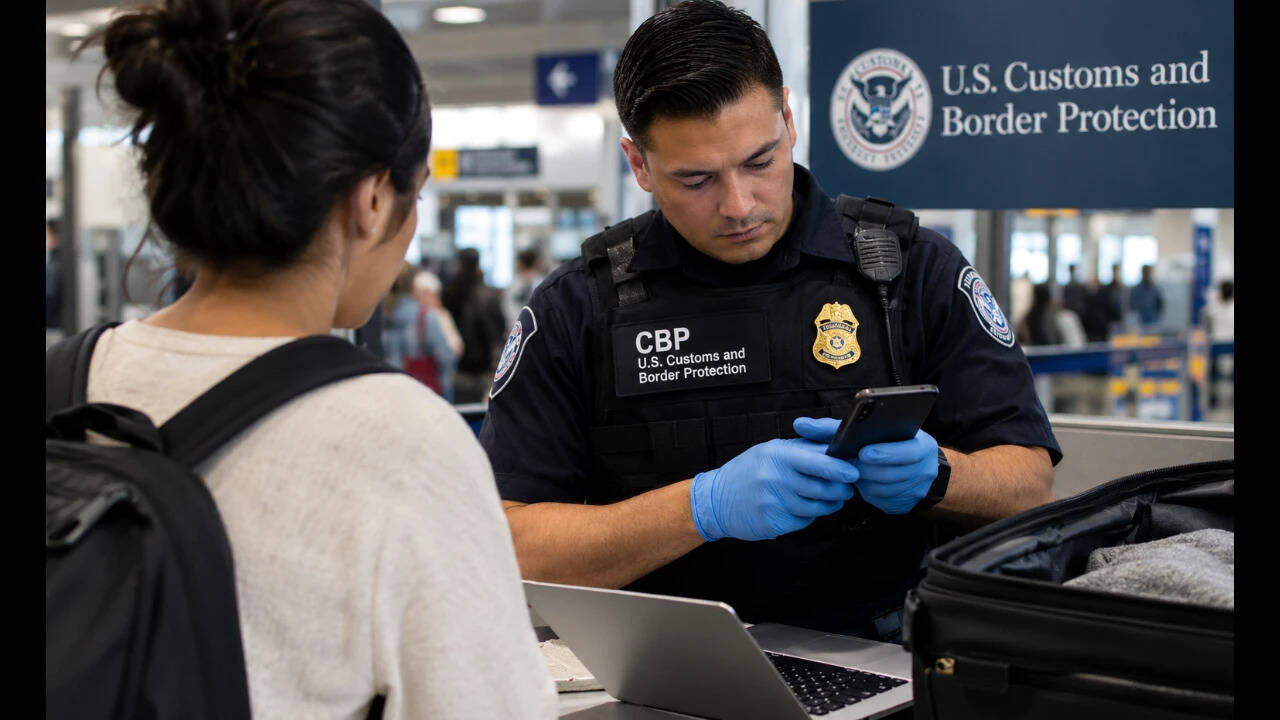
The U.S. Court of Appeals for the 2nd Circuit ruled on Thursday that government agents can search travelers' cellphones at the border without needing any suspicion of illegal activity. The decision overturns previous rulings in cases like Smith and Sultanov, which required warrants for such searches. This ruling applies to states under the 2nd Circuit’s jurisdiction, including New York, Vermont, and Connecticut, and is based on the historical precedent that border searches do not require probable cause or a warrant.
Written by AI on 2026-09-19, from this article's own text only (the story summary below draws on all the coverage).
See how they differ ↓

AI analysis

Story summary

In a recent ruling, the U.S. Court of Appeals for the Second Circuit upheld that border agents can search travelers' cell phones without a warrant or suspicion of criminal activity. The decision was based on U.S. v. Flores-Montano (2004), where the Supreme Court established that searches at borders are reasonable due to the government's interest in preventing the entry of unwanted persons and effects. This ruling stems from a case involving Chinwendu Alisigwe, a Green Card holder whose phone was searched during his arrival at John F Kennedy International Airport in New York City, leading to his conviction for bank fraud and money laundering. The judges rejected arguments that cell phones should receive special constitutional protection due to the vast amount of personal data they contain, likening digital searches to routine physical luggage checks.Critics argue this decision could undermine freedom of speech and privacy rights, while proponents maintain it is necessary for national security and border control.

Written for “Border Phone Searches Allowed” on 2026-11-22, grounded in this article and the 2 other(s) covering the same event.

How they differ

2 outlets covered “Border Phone Searches Allowed”.

What each outlet says

One AI summary per outlet of its latest article on this story, written from that article alone and checked against it. Open the article for the outlet's own words.

ReasonThis outlet18 Sep

The U.S. Court of Appeals for the 2nd Circuit ruled on Thursday that government agents can search travelers' cellphones at the border without needing any suspicion of illegal activity. The decision overturns previous rulings in cases like Smith and Sultanov, which required warrants for such searches. This ruling applies to states under the 2nd Circuit’s jurisdiction, including New York, Vermont, and Connecticut, and…

Court Upholds Suspicionless Cellphone Searches at the Border (this article)2 articles from Reason on this story
Times of India18 Sep

A U.S. appeals court has ruled that border agents can search travelers' electronic devices like phones and laptops without a warrant under the longstanding border-search exception. This decision was made in response to a case brought by Chinwendu Alisigwe, whose phone was searched at JFK International Airport, leading to his conviction for bank fraud and money laundering. The court rejected arguments that cellphones…

US border agents can search any traveler's phone or laptop without a warrant; judges say it's like checking suitcases →

Compared with similar articles

This article reads leans strongly right and hedges 3% of its claims. Each row says how that neighbour differs.
Reason
Leans strongly left further left than this Hedges 12 of 95 claims Outlet record 67/100

Story

Border Phone Searches Allowed
Politics · 3 article(s) covering the same event. See how they differ ↑
How this article was measured signals, leaning charts, publisher record, byline, topics and claims

Signals How these are calculated →

Claims extracted
31
sentences that state something as happening or true
Uncertain
3%
1 of 31 hedged ("reportedly", "may", "according to")
Leaning
Leans strongly right
of the writing, not the subject · beta estimate
Publisher signals
67/100
Reason's corrections and hedging, across everything collected from it. Not a measure of accuracy.
Outlets on this story
3
Politics
Same framing elsewhere
1
articles that frame the event the way this one does
Analyzed 2026-09-19 · how these are computed

How this is being covered How these are calculated →

Article leaning vs. publisher reliability
Source leaning vs. consistency

Publisher

Reason · 1476 article(s) · 4 correction(s) detected
Running correction rate · 4 correction(s)

Who wrote this

Tosin Akintola
28 article(s) here · 1 carrying a prediction
Six USDA employees and the National Federation of Federal Employees, a labor union representing 19,000 USDA workers, filed the lawsuit in May.
On Wednesday, Rep. Robert Garcia (D–Calif.), who will become chairman of the House Committee on Oversight and Government Reform in January, sent document preservation letters to President Donald Trump's family, Vice President J.D. Vance, White House Chief of Staff Stephen Miller, and others, as an escalation of "existing investigations" into allegations of corruption in the Trump administration.
In Caracas, Hegseth said that would include joint training, partnerships, intelligence sharing, and the provision of "defense equipment and capabilities."
2026-11-19 · mixed framing · U.S. and Venezuela Enter Military Deal
Despite some contrary reports, Commerce Secretary Howard Lutnick still appears to be in President Donald Trump's good graces, and Semafor reported that the Commerce boss would be part of Trump's China contingent, traveling with the president to Beijing on Wednesday.
The all-inclusive figure might play well to the president's supporters, but it obscures the atmosphere of fear and illiberalism powering the Trump administration's deportation numbers.
Sponsored by Sen. Shelley Moore Capito (R–W.Va.), chairwoman of the Senate Environment and Public Works Committee, the 494-page bill would modify the federal permitting process by limiting the scope of environmental reviews and expediting the timeline for project approval.
When Democrat Gina Hinojosa is sworn in as Texas governor in January, one of her first acts, "within an hour of taking the oath of office," she recently told The Texas Tribune, will be to "declare a high-cost emergency in the state of Texas and issue an emergency executive order to: one, suspend the gas and diesel tax; and two, freeze electricity rates."
Yet messaging from ranking Democrats makes it clear their inquiries won't be limited to government actions; they will also extend to the actions of private companies and industries they perceive as allies of the president.
Even when they weren't on the ballot, they may have been a factor in the elections: NBC's exit polls report that artificial intelligence and data centers were a "crucial or a major factor" for 56 percent of voters.
2026-11-04 · assertive framing · Ohio Leads a Wave of Local Data Center Bans
In August, U.S. District Court Judge Robert J. Shelby found that federal law did not preempt Utah from enforcing its anti-gambling laws against Kalshi, meaning the platform could not legally operate in the Beehive State.
2026-10-29 · assertive framing · Utah Files Criminal Charges Against Kalshi Co-Founders
Also by Tosin Akintola
Nothing else under this byline is closely related to this article, so these are simply their most recent.
All 28 articles by Tosin Akintola →

Topics

HSI New York South African U.S. the 2nd Circuit

Subjects

Alisigwe PERSON · 9× U.S. GPE · 6× the 2nd Circuit ORG · 5× Caproni PERSON · 2× HSI ORG · 2× South African NORP · 2× the 2nd Circuit's ORG · 2× the Supreme Court ORG · 2× New York GPE · 1× Vermont GPE · 1×

Narrative

In U.S. v. Flores-Montano (2004), the Supreme Court ruled that "the Government's interest in preventing the entry of unwanted persons and effects is at its zenith at the international border," meaning that "searches made at the border, pursuant to the longstanding right of the sovereign to protect itself by stopping and examining persons and property crossing into this country, are reasonable simply by virtue of the fact that they occur at the border."
framing: assertive · carried by 1 article(s) · first seen 2026-09-19
She notes that "while a cellphone search may not be as physically intrusive as a strip search, it is much closer on the spectrum to a strip search than it is to the search of luggage because of the amount of information it reveals."
2026-09-19 · Reason
Court Upholds Suspicionless Cellphone Searches at the Border · assertive framing

Claims (31 extracted, 1 hedged)

Travelers entering the U.S. through New York, Vermont, or Connecticut should be aware: The government can search your cellphone even if it doesn't suspect you of criminal activity. asserted
it → enter → activity
That's the crux of a ruling the U.S. Court of Appeals for the 2nd Circuit released Thursday. asserted
Court → release → Circuit
Judge Steven Menashi writes that "no suspicion is required before the government searches a traveler's property at the border." asserted
government → write → border
Citing the Supreme Court in U.S. v. Ramsey (1977), the 2nd Circuit found that the "longstanding recognition that searches at our borders without probable cause and without a warrant are nonetheless 'reasonable' has a history as old as the Fourth Amendment itself." asserted
searches → cite → Amendment
In U.S. v. Smith (2023) and U.S. v. Sultanov (2024)—cases within the 2nd Circuit's jurisdiction—district courts held that law enforcement needed a warrant before searching a suspect's cellphone at the border. asserted
enforcement → hold → border
Thursday's ruling rejects the warrant requirement, setting a precedent for future cases in the 2nd Circuit. asserted
ruling → reject → Circuit
The case was brought by Chinwendu Alisigwe, a permanent resident of the U.S., who was convicted in 2024 of bank fraud, conspiracy to commit bank fraud, and conspiracy to commit money laundering. asserted
who → bring → laundering
In 2018, the United Kingdom Border Task Force seized a fake South African passport with an American nonimmigrant visa for Wilhelm Heintz. asserted
Force → seize → Heintz
The task force shared the passport with the Department of Homeland Security, which matched it to Alisigwe, who had a pending application for naturalization in the United States. asserted
who → share → States
The fake passport led to a joint investigation between U.S. Citizenship and Immigration Services, Homeland Security Investigations (HSI), the HSI Attaché in London, and the Justice Department. asserted
passport → lead → London
In 2019, Alisigwe was returning to America after a trip to Nigeria when HSI and Customs and Border Protection agents stopped him at John F. Kennedy International Airport. asserted
HSI → return → Airport
When an officer showed Alisigwe the fake South African passport, he "denied knowing when or where the photograph was taken." asserted
photograph → show → passport
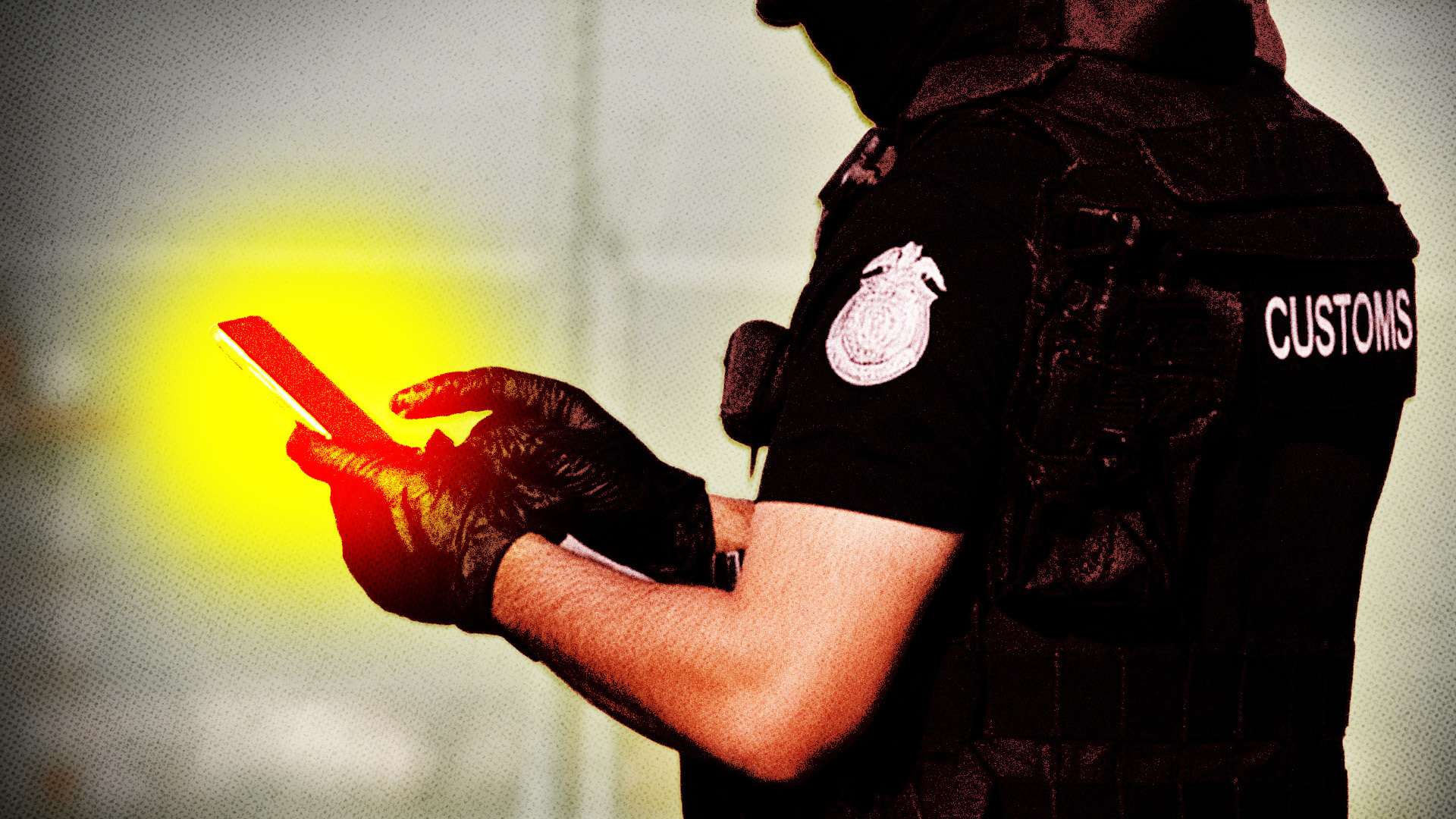
After instructing Alisigwe to unlock his cellphone, an officer then "scrolled through Alisigwe's cellphone and used his own cellphone to photograph images contained in Alisigwe's photo gallery." asserted
officer → instruct → gallery
A few years later, federal officers stopped Alisigwe at the same airport as he returned from an international trip and "manually reviewed his cellphone by scrolling through it and taking photographs." asserted
he → stop → photographs
After finding further evidence to support the fraud allegations against Alisigwe, officers released him into the country. asserted
officers → find → country
He was "subsequently arrested" and charged with a litany of crimes, and he was ultimately sentenced to five years in prison. asserted
he → arrest → prison
During Alisigwe's initial trial in the U.S. District Court for the Southern District of New York, Judge Valerie E. Caproni denied the defence's motion to suppress evidence obtained from the cellphone. asserted
Caproni → deny → cellphone
Caproni accepted that "cellphone searches cannot be conducted without reasonable suspicion of criminal activity because they are not routine border searches," but she reasoned that law enforcement agents "had reasonable suspicion to do so" both times they searched the phone. asserted
they → accept → phone
The 2nd Circuit's opinion goes beyond Caproni's argument, reasoning that the government's interests at the border supersede an individual's right to privacy. asserted
interests → go → privacy
The 2nd Circuit states that the "level of intrusion into a person's privacy is what determines whether a border search is routine." asserted
search → state → privacy
A search can be considered non-routine, the court declared, only if it involves "intrusive border searches of the person," such as strip searches and body-cavity searches. asserted
it → consider → searches
Since a cellphone is merely property, the 2nd Circuit found that its precedents "establish that the government does not need to have reasonable suspicion before searching a traveler's cellphone at the border." asserted
government → find → border
The ruling reaffirms federal courts' interpretation of the constitutional authority granted to the executive branch at border checkpoints, including airports. asserted
ruling → reaffirm → airports
In U.S. v. Flores-Montano (2004), the Supreme Court ruled that "the Government's interest in preventing the entry of unwanted persons and effects is at its zenith at the international border," meaning that "searches made at the border, pursuant to the longstanding right of the sovereign to protect itself by stopping and examining persons and property crossing into this country, are reasonable simply by virtue of the fact that they occur at the border." asserted
they → rule → border
While she concurred with the majority's judgment that "neither a warrant nor probable cause is necessary to search a cellphone at an international airport," Judge Eunice C. Lee declined to cosign the court's attempt to "interpret the Fourth Amendment to accept the further (and seemingly inexorable) diminishment of our privacy by way of suspicionless cellphone searches at the border." asserted
Lee → concur → border
Lee took issue with the majority's opinion that federal officials can conduct warrantless searches "with no suspicion and for any reason (including political or discriminatory ones), without implicating constitutional rights." asserted
officials → take → rights
In her concurring opinion, Lee states that the "unparalleled ability of a cellphone search to invade an individual's privacy should be considered when determining whether the searches of these devices at an airport are 'routine.'" asserted
searches → concur → airport
She notes that "while a cellphone search may not be as physically intrusive as a strip search, it is much closer on the spectrum to a strip search than it is to the search of luggage because of the amount of information it reveals." uncertain
it → note → information
As Lee ultimately concludes, the court's decision erodes the Constitution's privacy protections. asserted
decision → conclude → protections
"Allowing suspicionless searches of cellphones at the border undermines the essential privacy principles the Fourth Amendment was intended to protect," she writes. asserted
she → allow → principles
The court, she says, should "hesitate in creating rules that further weaken this cherished constitutional protection." asserted
that → say → protection
Give feedback · no sign-in needed

No sign-in needed for now. Your note is sent without a name, so it cannot be answered.

History Support