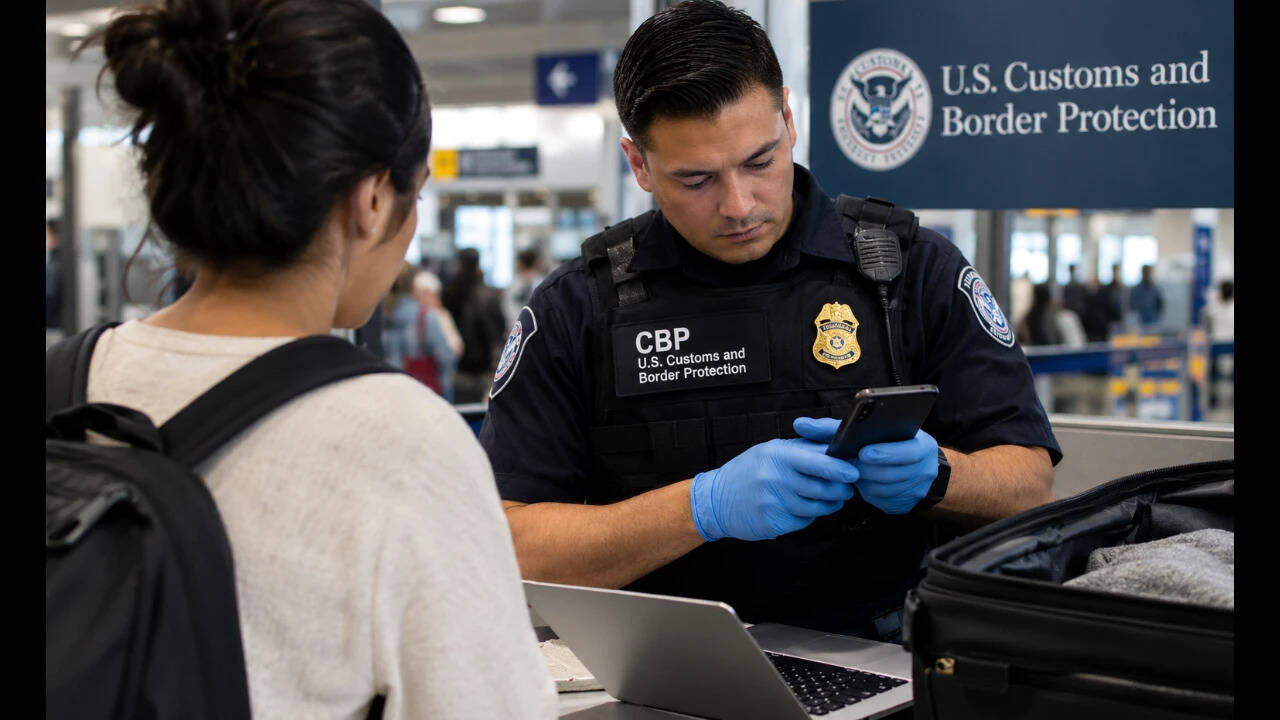
Photo via Times of India

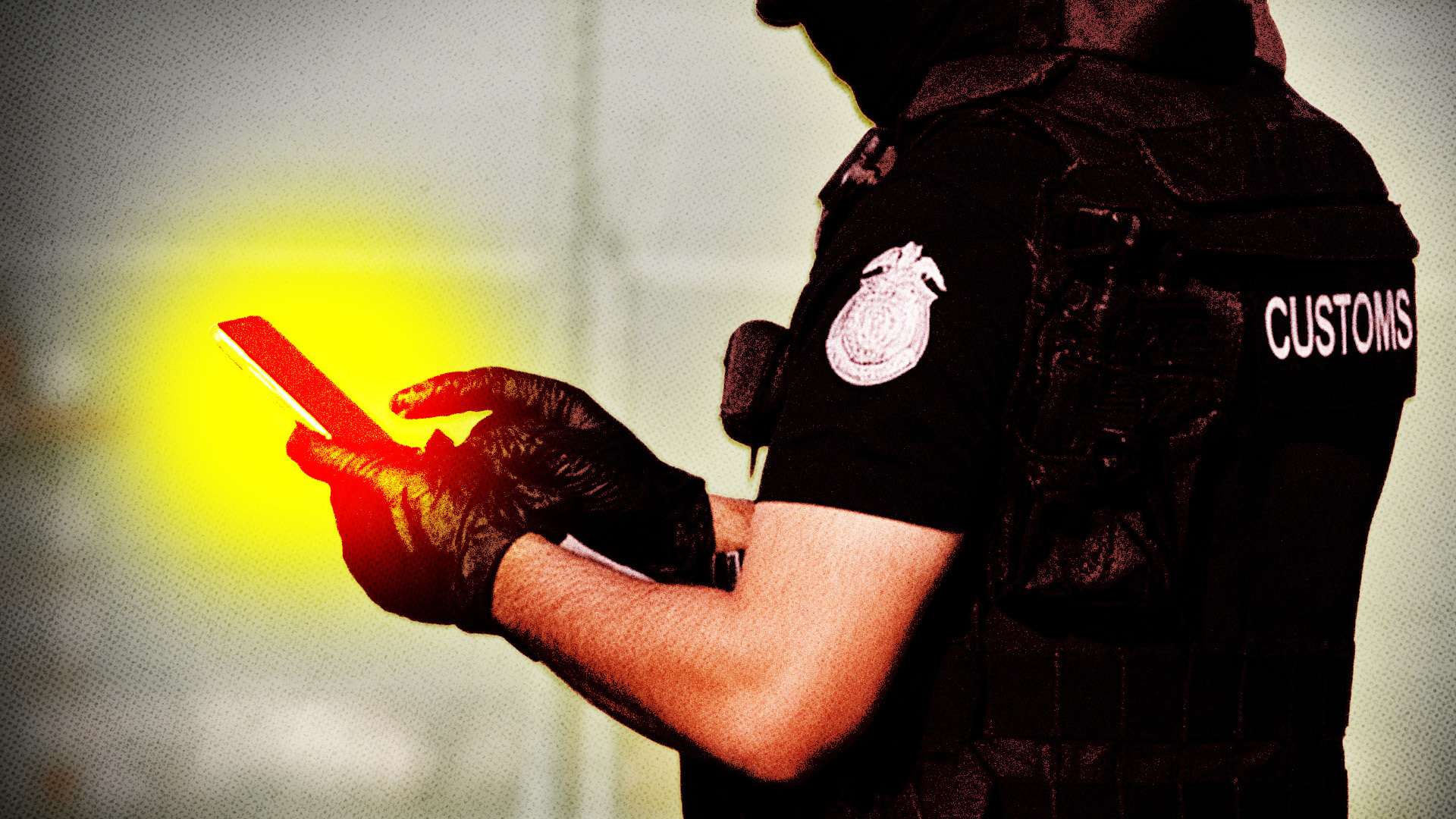
US border agents can search any traveler's phone or laptop without a warrant; judges say it's like checking suitcases

Read the original at Times of India ↗
Cite

Ghosh, P. (2026, September 18). US border agents can search any traveler's phone or laptop without a warrant; judges say it's like checking suitcases. Times of India. https://timesofindia.indiatimes.com/world/us/us-border-agents-can-search-any-travelers-phone-or-laptop-without-a-warrant-judges-say-its-like-checking-suitcases/articleshow/134335822.cms

Dated when The Aporia collected the article, usually within hours of publication. Check the original for its exact date and byline.

Times of India · collected 2026-09-18 · by Poulomi Ghosh

Quick Summary

A U.S. appeals court has ruled that border agents can search travelers' electronic devices like phones and laptops without a warrant under the longstanding border-search exception. This decision was made in response to a case brought by Chinwendu Alisigwe, whose phone was searched at JFK International Airport, leading to his conviction for bank fraud and money laundering. The court rejected arguments that cellphones should receive special protection due to the amount of personal data they contain, treating them similarly to other belongings like luggage or notebooks during border searches.
Written by AI on 2026-09-18, from this article's own text only (the story summary below draws on all the coverage).
See how they differ ↓

AI analysis

Story summary

In a recent ruling, the U.S. Court of Appeals for the Second Circuit upheld that border agents can search travelers' cell phones without a warrant or suspicion of criminal activity. The decision was based on U.S. v. Flores-Montano (2004), where the Supreme Court established that searches at borders are reasonable due to the government's interest in preventing the entry of unwanted persons and effects. This ruling stems from a case involving Chinwendu Alisigwe, a Green Card holder whose phone was searched during his arrival at John F Kennedy International Airport in New York City, leading to his conviction for bank fraud and money laundering. The judges rejected arguments that cell phones should receive special constitutional protection due to the vast amount of personal data they contain, likening digital searches to routine physical luggage checks.Critics argue this decision could undermine freedom of speech and privacy rights, while proponents maintain it is necessary for national security and border control.

Written for “Border Phone Searches Allowed” on 2026-11-22, grounded in this article and the 2 other(s) covering the same event.

How they differ

2 outlets covered “Border Phone Searches Allowed”.

What each outlet says

One AI summary per outlet of its latest article on this story, written from that article alone and checked against it. Open the article for the outlet's own words.

Times of IndiaThis outlet18 Sep

A U.S. appeals court has ruled that border agents can search travelers' electronic devices like phones and laptops without a warrant under the longstanding border-search exception. This decision was made in response to a case brought by Chinwendu Alisigwe, whose phone was searched at JFK International Airport, leading to his conviction for bank fraud and money laundering. The court rejected arguments that cellphones…

US border agents can search any traveler's phone or laptop without a warrant; judges say it's like checking suitcases (this article)
Reason18 Sep

The U.S. Court of Appeals for the 2nd Circuit ruled on Thursday that government agents can search travelers' cellphones at the border without needing any suspicion of illegal activity. The decision overturns previous rulings in cases like Smith and Sultanov, which required warrants for such searches. This ruling applies to states under the 2nd Circuit’s jurisdiction, including New York, Vermont, and Connecticut, and…

Court Upholds Suspicionless Cellphone Searches at the Border →2 articles from Reason on this story

Compared with similar articles

This article reads unscored and hedges 4% of its claims. Each row says how that neighbour differs.
Reason
Leans strongly right Hedges 1 of 31 claims Outlet record 67/100
Reason
Leans strongly left Hedges 12 of 95 claims Outlet record 67/100
“The articles discuss related rulings about border searches but do not describe the exact same legal decision or incident.”

Story

Border Phone Searches Allowed
Politics · 3 article(s) covering the same event. See how they differ ↑
How this article was measured signals, leaning charts, publisher record, byline, topics and claims

Signals How these are calculated →

Claims extracted
24
sentences that state something as happening or true
Uncertain
4%
1 of 24 hedged ("reportedly", "may", "according to")
Leaning
withheld
no quote in the article backed the model's score
Publisher signals
58/100
Times of India's corrections and hedging, across everything collected from it. Not a measure of accuracy.
Outlets on this story
3
Politics
Same framing elsewhere
1
articles that frame the event the way this one does
Analyzed 2026-09-18 · how these are computed

How this is being covered How these are calculated →

Article leaning vs. publisher reliability
Source leaning vs. consistency

Publisher

Times of India · 5552 article(s) · 7 correction(s) detected
Running correction rate · 7 correction(s)

Who wrote this

Poulomi Ghosh
159 article(s) here · 1 carrying a prediction
First Lady Melania Trump has expressed hope that Russia and Ukraine could agree to another ceasefire before Christmas, saying she wants to see more pauses in fighting even as Ukrainian President Volodymyr Zelenskyy accused Russian President Vladimir Putin of repeatedly rejecting proposals to de-escalate the war.
"Xie will receive due process and remain in ICE custody pending her removal proceedings," the department said.
Prince Harry and Meghan Markle's decision to move back to the United Kingdom after spending nearly six years in California may have been prompted by an unexpected immigration issue involving the Duke of Sussex's US visa, according to a new report.
She urged community members to remember that even small gestures of support could make a difference.
The teenager tried to get out of the vehicle but could not open the door from inside, believing that the child safety lock had been activated.
Texas governor-elect Gina Hinojosa has said she will reverse outgoing Governor Greg Abbott's order freezing the hiring of H-1B visa holders at state agencies and public universities, arguing that the state cannot afford to lose access to foreign workers, particularly teachers, even as she acknowledged widespread abuses of the visa programme.
Scholt suggested that her daughter's frequent travel and hotel stays could have contributed to her missing the notification.
However, CNN meteorologist Brandon Miller said thunderstorms were present over the Turks and Caicos and the southern Bahamas on Tuesday morning, areas the aircraft would likely have been navigating.
Vance's comments came after Ingraham asked whether Americans should be preparing for emergencies, pointing to recent technology outages and reports that several countries, including the UK and France, were encouraging citizens to maintain emergency supplies. JD Vance on Pentagon's 90-day preparedness plans Ingraham also raised reports about Pentagon preparations to ensure military installations could operate independently of the civilian power grid for up to 90 days. Vance described the preparations as an example of responsible government planning rather than evidence that a major disaster was approaching.
“What I would say to the White House is transparency is key.
Also by Poulomi Ghosh
Nothing else under this byline is closely related to this article, so these are simply their most recent.
All 159 articles by Poulomi Ghosh →

Topics

California New York City The Second Circuit the First Amendment the United States

Subjects

The Second Circuit ORG · 2× California GPE · 1× Chinwendu Alisigwe PERSON · 1× New York City GPE · 1× Riley PERSON · 1× The Knight First Amendment Institute ORG · 1× The Second Circuit's ORG · 1× the Fourth Circuit ORG · 1× the US Supreme Court ORG · 1× the United States GPE · 1×

Narrative

The judges rejected the argument that a cellphone should receive special constitutional protection simply because it contains substantially more personal information than conventional belongings such as luggage or notebooks.
framing: assertive · carried by 1 article(s) · first seen 2026-09-18
The Knight First Amendment Institute, which participated in the case, said the decision could have implications for freedom of speech, association and the press.

Claims (24 extracted, 1 hedged)

Border agents do not require a search warrant to stop a traveler and go through their electronic items like phones and laptops, an appeals court panel has now ruled. asserted
panel → require → phones
They said the First Amendment does not create a separate requirement that officers obtain a warrant before examining information on a person's phone. asserted
officers → say → phone
The case was brought by Chinwendu Alisigwe, a Green Card holder, whose phone was searched at John F Kennedy International Airport in New York City. asserted
phone → bring → City
He was later convicted of bank fraud and money laundering and it was those border agents who found evidence on his phone. asserted
who → convict → phone
Why the court allowed the phone search The court treated a manual search of a cellphone as a routine border search. asserted
court → allow → search
Under the longstanding border-search exception, government officials generally have broad authority to inspect people and belongings entering the United States without obtaining a warrant. asserted
officials → have → warrant
The judges rejected the argument that a cellphone should receive special constitutional protection simply because it contains substantially more personal information than conventional belongings such as luggage or notebooks. asserted
it → reject → luggage
The ruling also distinguished border searches from ordinary police searches inside the US. asserted
ruling → distinguish → US
In its 2014 decision in Riley v California, the US Supreme Court generally required police to obtain a warrant before searching the contents of a cellphone seized during an arrest. asserted
Court → require → arrest
The Second Circuit concluded that this rule does not apply in the same way at the international border. asserted
rule → conclude → border
The case also raised concerns under the First Amendment because phones can contain journalists' work, private messages, political views, photographs and information about a person's professional and personal associations. asserted
phones → raise → associations
The Second Circuit nevertheless rejected the argument that the First Amendment creates a separate warrant requirement for cellphone searches at the border. asserted
Amendment → reject → border
The court noted that phones can contain both constitutionally protected expression and information that does not receive First Amendment protection. asserted
that → note → protection
It also pointed to the government's authority to enforce immigration and border laws, including restrictions involving certain forms of extremist or terrorist-related expression. asserted
It → point → expression
What does this mean for travellers? asserted
this → mean → travellers
For people entering the US, the ruling means that a border officer does not necessarily need to show evidence of wrongdoing before conducting a manual search of a cellphone. asserted
officer → enter → cellphone
That can potentially affect US citizens, Green Card holders, foreign visitors, students, business travellers and others crossing the US border. asserted
That → affect → border
Civil liberties groups have warned that the ruling leaves highly sensitive personal information accessible to border officials without any suspicion requirement. asserted
ruling → warn → requirement
The Knight First Amendment Institute, which participated in the case, said the decision could have implications for freedom of speech, association and the press. uncertain
decision → participate → speech
Not all phone searches are covered by the ruling An important distinction is that the court ruled on manual searches, such as an officer scrolling through information stored on a phone. asserted
officer → cover → phone
It did not resolve all questions surrounding more intrusive forensic searches, in which specialised tools can extract and copy large amounts of data from a device. asserted
tools → resolve → device
Other US appeals courts have also drawn a distinction between manual and forensic searches. asserted
courts → draw → searches
In July 2026, the Fourth Circuit ruled that manual cellphone searches at the border are routine searches that do not require individualized suspicion, while treating forensic searches differently. asserted
that → rule → searches
The Second Circuit's ruling therefore does not mean that every possible form of digital search at the US border has been definitively cleared of constitutional restrictions. asserted
form → mean → restrictions
Give feedback · no sign-in needed

No sign-in needed for now. Your note is sent without a name, so it cannot be answered.

History Support