Photo via Times of India

Taiwan referendum backs return to nuclear power, overturns decades-old energy policy

Read the original at Times of India ↗
Cite

Patnaik, P. (2026, November 29). Taiwan referendum backs return to nuclear power, overturns decades-old energy policy. Times of India. https://timesofindia.indiatimes.com/world/rest-of-world/taiwan-referendum-backs-return-to-nuclear-power-overturns-decades-old-energy-policy/articleshow/136261614.cms

Dated from the outlet's own feed. Check the original for its byline.

Times of India · collected 2026-11-29 · by Prisha Patnaik

Quick Summary

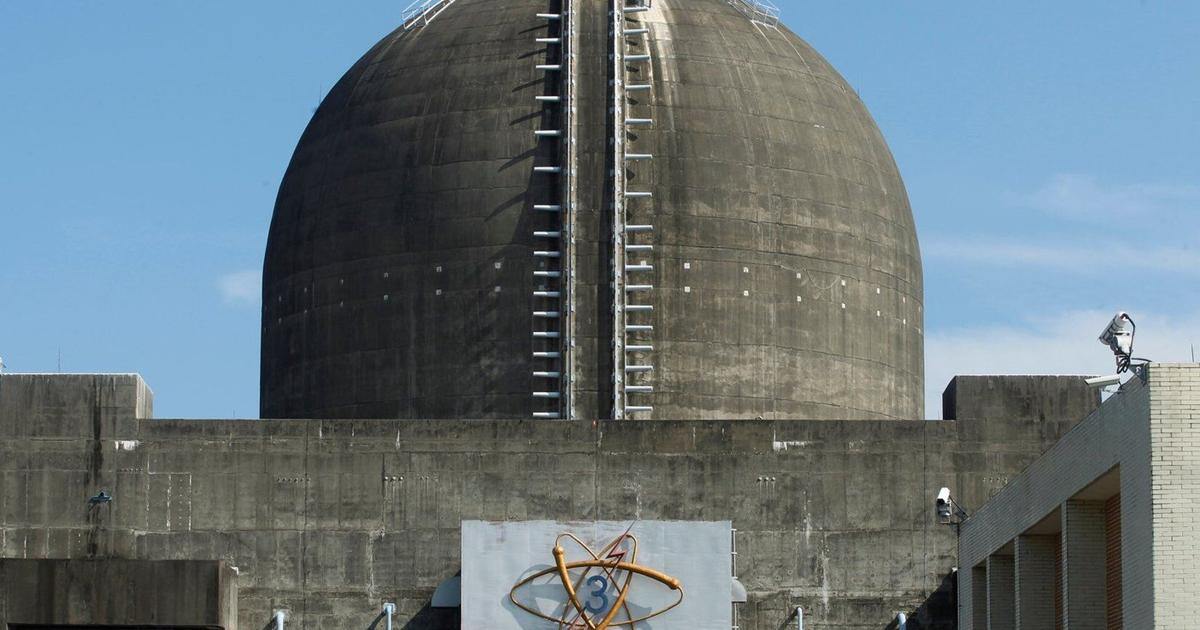
Taiwanese voters approved a referendum to reconsider the use of nuclear power, reversing the ruling Democratic Progressive Party’s “nuclear-free homeland” policy. The referendum, initiated by the opposition Kuomintang, received 61.99% of the vote, with 7,434,677 voters in favor compared to 4,557,768 against. While the result provides a political mandate to explore nuclear power, it does not guarantee an immediate return to nuclear energy. The KMT advocates for nuclear power as a stable and low-carbon energy source, particularly for Taiwan’s growing tech industries, while opponents raise concerns about safety and waste disposal.
Written by AI on 2026-11-29, from this article's own text only (the story summary below draws on all the coverage).
See how they differ ↓

AI analysis

Story summary

Voters in Taiwan overwhelmingly supported a referendum on November 28, 2026, to abandon the country’s “nuclear-free homeland” policy, which required the phase-out of nuclear energy. The referendum, initiated by the opposition Kuomintang (KMT) and held alongside local elections, received 61.99% of the valid votes, with a turnout of 62.79%. A total of 7,434,677 voters supported the proposal compared to 4,557,768 who opposed it. This decision, which surpasses the required threshold of one-quarter of Taiwan’s eligible electorate, now gives the government a mandate to reconsider the use of nuclear power. While the referendum does not automatically mean an immediate return to nuclear power, the KMT argues that it could provide a stable and low-carbon electricity supply for Taiwan’s rapidly expanding semiconductor and AI industries, whose energy demands are increasing significantly.

Written for “Taiwan Votes on Nuclear Power” on 2026-11-29, grounded in this article and the 3 other(s) covering the same event.
Why this leaning score
The model judged this article politically coded and scored it +0.35, but every quote it verified points left, so the score is not published.
Written under an earlier scoring contract, which gave a paragraph rather than checkable quotes. Re-analysing this article replaces it.
Leaning score withheld for article 188252: score contradicts its own evidence · logged 2026-11-29

How they differ

4 outlets covered “Taiwan Votes on Nuclear Power”.

What each outlet says

One AI summary per outlet of its latest article on this story, written from that article alone and checked against it. Open the article for the outlet's own words.

Times of IndiaThis outlet29 Nov

Taiwanese voters approved a referendum to reconsider the use of nuclear power, reversing the ruling Democratic Progressive Party’s “nuclear-free homeland” policy. The referendum, initiated by the opposition Kuomintang, received 61.99% of the vote, with 7,434,677 voters in favor compared to 4,557,768 against. While the result provides a political mandate to explore nuclear power, it does not guarantee an immediate…

Taiwan referendum backs return to nuclear power, overturns decades-old energy policy (this article)
Al Jazeera27 Nov

Taiwan is holding a referendum on whether to revive its nuclear power industry during local elections on Saturday. This vote comes after the country shut down its last operational reactor 18 months ago. The opposition Kuomintang (KMT) and the Taiwan People’s Party (TPP) support the referendum, while the ruling Democratic Progressive Party (DPP) opposes it, citing safety concerns and environmental commitments. The…

Will Taiwan vote to revive nuclear power – and why does that matter for AI? →
The Hindu29 Nov

On November 28, 2026, Taiwan voters approved a referendum initiated by the Opposition Nationalist Party (KMT) to end the island's "nuclear-free homeland" policy, which phased out nuclear power plants. The referendum, which passed with support from the KMT and their coalition partner, the Taiwan People's Party, aims to boost the economy and support industries like AI and semiconductors by ensuring a stable power…

Taiwan votes to end 'nuclear-free homeland' policy; reopen door to nuclear power use →

Where they agree and split

The full story: what happened, how it changed, and all 4 articles →

Compared with similar articles

This article reads unscored and hedges 17% of its claims. Each row says how that neighbour differs.
Toronto Star
Hedges 0 of 2 claims Outlet record 64/100
The Hindu
Leans right Hedges 4 of 17 claims Outlet record 72/100
Al Jazeera
Hedges 9 of 87 claims Outlet record 60/100

Story

Taiwan Votes on Nuclear Power
Politics · 4 article(s) covering the same event. Compare every outlet's account →
How this article was measured signals, leaning charts, publisher record, byline, topics and claims

Signals How these are calculated →

Claims extracted
29
sentences that state something as happening or true
Uncertain
17%
5 of 29 hedged ("reportedly", "may", "according to")
Leaning
withheld
no quote in the article backed the model's score
Publisher signals
58/100
Times of India's corrections and hedging, across everything collected from it. Not a measure of accuracy.
Outlets on this story
4
Politics
Same framing elsewhere
1
articles that frame the event the way this one does
Analyzed 2026-11-29 · how these are computed

How this is being covered How these are calculated →

Article leaning vs. publisher reliability
Source leaning vs. consistency

Publisher

Times of India · 6110 article(s) · 10 correction(s) detected
Running correction rate · 10 correction(s)

Who wrote this

Prisha Patnaik
159 article(s) here · 1 carrying a prediction
Cats and dogs in Britain could lose access to amantadine, a drug commonly prescribed by veterinarians to help manage chronic pain, under the UK's proposed reset with the European Union.
Some shipping executives have suggested that the repeated targeting could be a consequence of the relatively small number of ships still willing to navigate the contested route.
The KMT argued that nuclear power could provide a stable and low-carbon electricity supply for Taiwan’s fast-growing artificial intelligence and semiconductor industries, whose energy requirements are increasing.
The accused, 25-year-old Indian-origin man Samit Apurva Patel, was earlier charged with attempted second-degree murder and carjacking, but prosecutors said the charges would be upgraded to second-degree intentional murder following the driver's death.
It also rejected claims it would suspend counterintelligence operations against Beijing in exchange for the release of South Korean nationals detained in the country.
If it solves the equation, it could reshape everything from drug discovery to global finance, while potentially exposing the encryption that protects the world's most sensitive data.
They have doubled the number of mayoral and county magistrate seats in their controls, giving a boost for Taiwanese president Lai Ching-te ahead of the 2028 presidential race.
The search would continue on Thursday, weather permitting.
The parade, which was scheduled to take place on Thanksgiving Day, November 26, will now begin at 8.30 am local time on November 28.
Baharav-Miara told the court that she and her team would consider the judges’ recommendations and remain open to all options based on the evidence, according to a transcript provided by a Justice Ministry spokeswoman to New York Times.
Also by Prisha Patnaik
Nothing else under this byline is closely related to this article, so these are simply their most recent.
All 159 articles by Prisha Patnaik →

Topics

Democratic Progressive Party's KMT Kuomintang Taiwan Taiwanese

Subjects

Taiwan GPE · 7× KMT ORG · 4× the Associated Press ORG · 2× DPP ORG · 1× Democratic Progressive Party's ORG · 1× Executive Yuan ORG · 1× Kuomintang ORG · 1× Michelle Lee PERSON · 1× Taiwanese NORP · 1× the Central Election Commission ORG · 1×

Narrative

Political science professor Wei-hao Huang of National Sun Yat-sen University told the Associated Press that he had seen little public discussion of nuclear power during the campaign, apart from the issue being raised when it was initially introduced in the legislature.
framing: assertive · carried by 1 article(s) · first seen 2026-11-29
The KMT argued that nuclear power could provide a stable and low-carbon electricity supply for Taiwan’s fast-growing artificial intelligence and semiconductor industries, whose energy requirements are increasing.

Claims (29 extracted, 5 hedged)

Taiwanese voters have backed a proposal to abandon the island's "nuclear-free homeland" policy, reversing a key plank of the ruling Democratic Progressive Party's energy agenda. asserted
voters → back → agenda
The result gives the government a political mandate to reconsider the use of nuclear power. asserted
result → give → power
The referendum, initiated by the opposition Kuomintang (KMT), was held alongside local elections on Saturday and saw 61.99% of valid votes cast in favour, according to the Central Election Commission. uncertain
% → initiate → Commission
A total of 7,434,677 voters supported the proposal, compared with 4,557,768 who voted against it. asserted
who → support → it
Turnout stood at 62.79%, with the referendum meeting the required threshold of at least 5,000,959 affirmative votes, equivalent to one-quarter of Taiwan’s eligible electorate. asserted
referendum → stand → electorate
The question asked voters whether they supported the government using nuclear power to boost the economy and scrapping the “nuclear-free homeland” energy policy. asserted
government → ask → policy
The KMT argued that nuclear power could provide a stable and low-carbon electricity supply for Taiwan’s fast-growing artificial intelligence and semiconductor industries, whose energy requirements are increasing. uncertain
requirements → argue → industries
However, the result does not mean that Taiwan will immediately restart its nuclear plants or build new ones. asserted
Taiwan → mean → ones
The island’s last operating nuclear power plant was shut down in 2025, although it is undergoing refurbishment and could potentially resume operations in about two years, according to the Associated Press. uncertain
it → operate → Press
Nuclear power is not legally prohibited in Taiwan; its use has instead been governed by the government’s energy policy. asserted
use → prohibit → policy
The referendum therefore removes a major policy barrier to reconsidering nuclear energy, but any decision to bring plants back into operation will involve further assessments and political negotiations. asserted
decision → remove → assessments
What happens to Taiwan’s nuclear policy now? asserted
What → happen → policy
The DPP government said it would respect the referendum result but insisted that any return to nuclear power must ensure plant safety, resolve nuclear waste disposal and build public consensus. asserted
return → say → consensus
Executive Yuan spokesperson Michelle Lee said the Cabinet would continue to accelerate renewable energy development, while President Lai Ching-te has previously said he would not rule out nuclear power. asserted
he → say → power
KMT leader Cheng Li-wun, meanwhile, called for Taiwan to “restart nuclear energy as quickly as possible”. asserted
Taiwan → call → energy
The opposition argues that nuclear power could provide stable, low-carbon electricity for the island’s AI and semiconductor industries while strengthening energy security and stabilising prices. uncertain
power → argue → prices
Safety, waste concerns remain asserted
concerns → remain → ?
Opponents have questioned whether nuclear power is a suitable solution for Taiwan, given the island’s exposure to earthquakes and the location of nuclear facilities near geological fault lines. asserted
power → question → lines
Concerns over the earthquake resistance of nuclear plants and the long-term disposal of radioactive waste remain unresolved, they argue. asserted
they → remain → waste
They have also maintained that developing nuclear power plants is expensive and time-consuming, and that investment should instead be directed towards renewable energy to meet the growing electricity needs of the technology sector. asserted
investment → maintain → sector
The National Nuclear Abolition Action Platform expressed disappointment with the referendum outcome, arguing that the wording of the question presented nuclear power as a means of reviving the economy without establishing a direct link between the two. asserted
wording → express → two
The group described the proposal as a “push poll” and said its passage did not give the government a blank cheque to pursue nuclear energy without considering the associated risks and costs. asserted
passage → describe → risks
The referendum also drew scrutiny over how much attention the issue received during the election campaign. asserted
issue → draw → campaign
Political science professor Wei-hao Huang of National Sun Yat-sen University told the Associated Press that he had seen little public discussion of nuclear power during the campaign, apart from the issue being raised when it was initially introduced in the legislature. asserted
it → tell → legislature
Huang suggested that the KMT may have used the referendum to mobilise its supporters and increase turnout in the local elections. uncertain
KMT → suggest → elections
A history of nuclear referendums Saturday’s vote was Taiwan’s fourth nuclear-related referendum in eight years and the first since the island resumed holding referendums alongside elections. asserted
island → relate → elections
The practice had been suspended by the DPP-controlled legislature in 2019 and reinstated by the opposition-dominated legislature last year. asserted
practice → suspend → legislature
This year's referendum recorded a turnout of 62.79%, higher than the 41.09% recorded in 2021 and the 29.53% turnout in 2025. asserted
referendum → record → 2025
The 2018 vote, which was also held alongside local elections, had recorded a turnout of 54.83%. asserted
which → hold → %
Give feedback · no sign-in needed

No sign-in needed for now. Your note is sent without a name, so it cannot be answered.

History Support